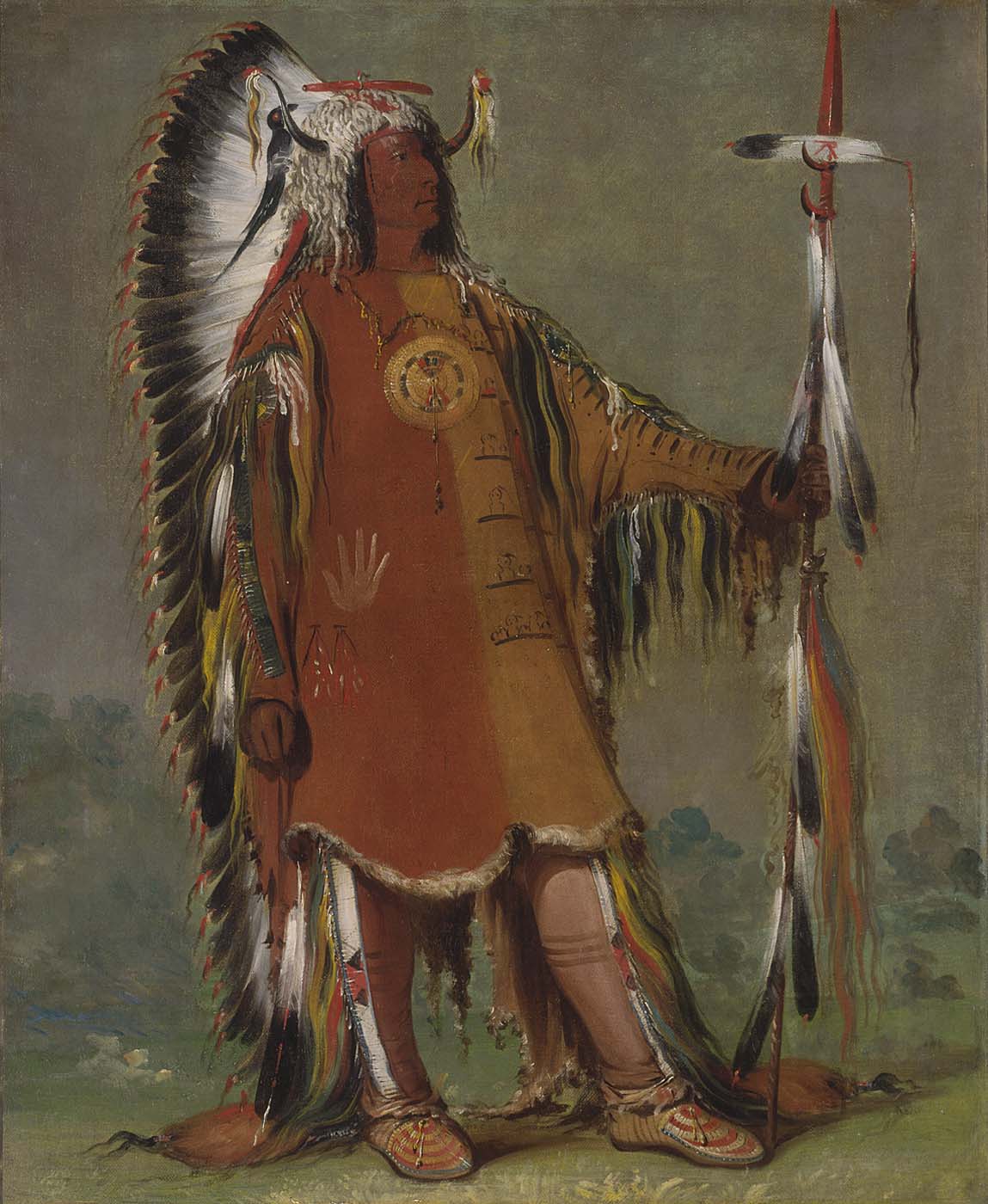
Mato-Tope (Four Bears)
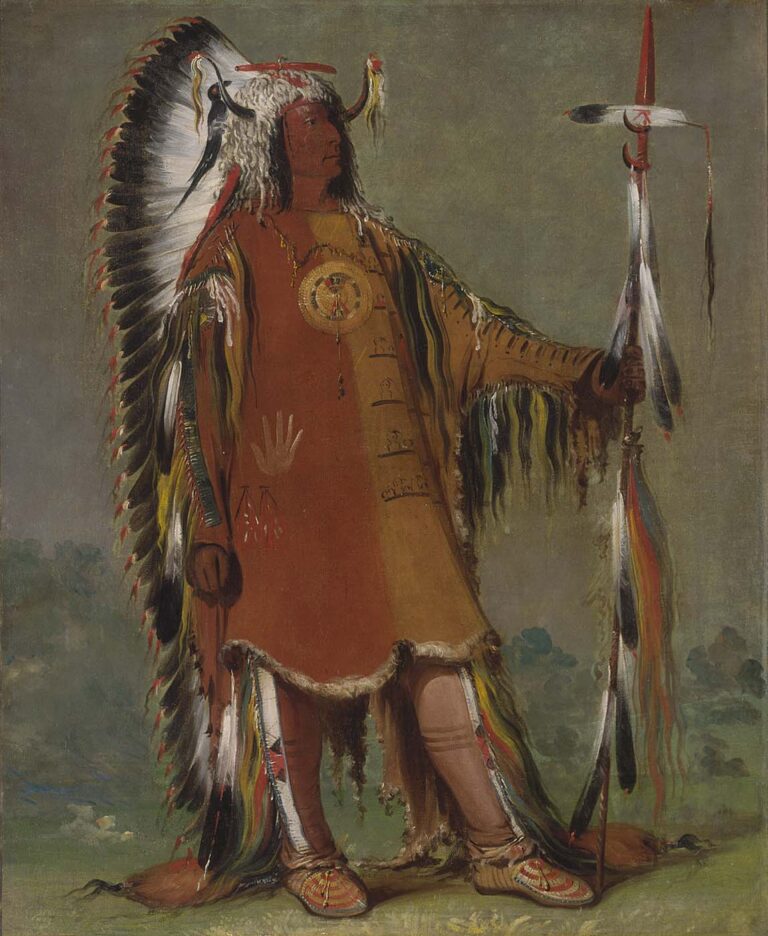
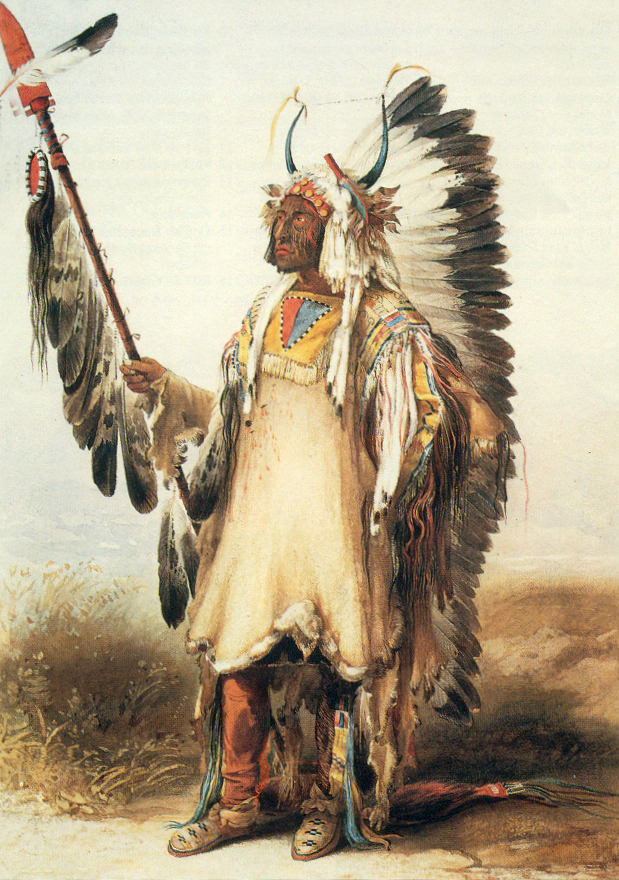
Mato-Tope, or Four Bears (c. 1784–1837), was a renowned war chief of the Mandan people who became one of the most documented Native American leaders of the early 19th century. Although he was born after the Lewis and Clark Expedition passed through the Mandan villages in 1804–1805, Mato-Tope rose to prominence in the same communities that had provided crucial assistance to the Corps of Discovery during their winter at Fort Mandan. He was famously painted by both George Catlin in 1832 and Karl Bodmer in 1834, who produced the celebrated portrait "Mato-Tope, A Mandan Chief" depicting him in full ceremonial regalia. Known for his bravery in battle — including a legendary hand-to-hand combat with a Cheyenne chief — Mato-Tope was respected by both his people and the European and American visitors who documented Mandan culture. He died tragically during the devastating smallpox epidemic of 1837 that nearly annihilated the Mandan nation, reportedly delivering a powerful speech condemning the whites for bringing the disease before his death.
Portrait: George Catlin, 1832