Pehriska-Ruhpa (Two Ravens)
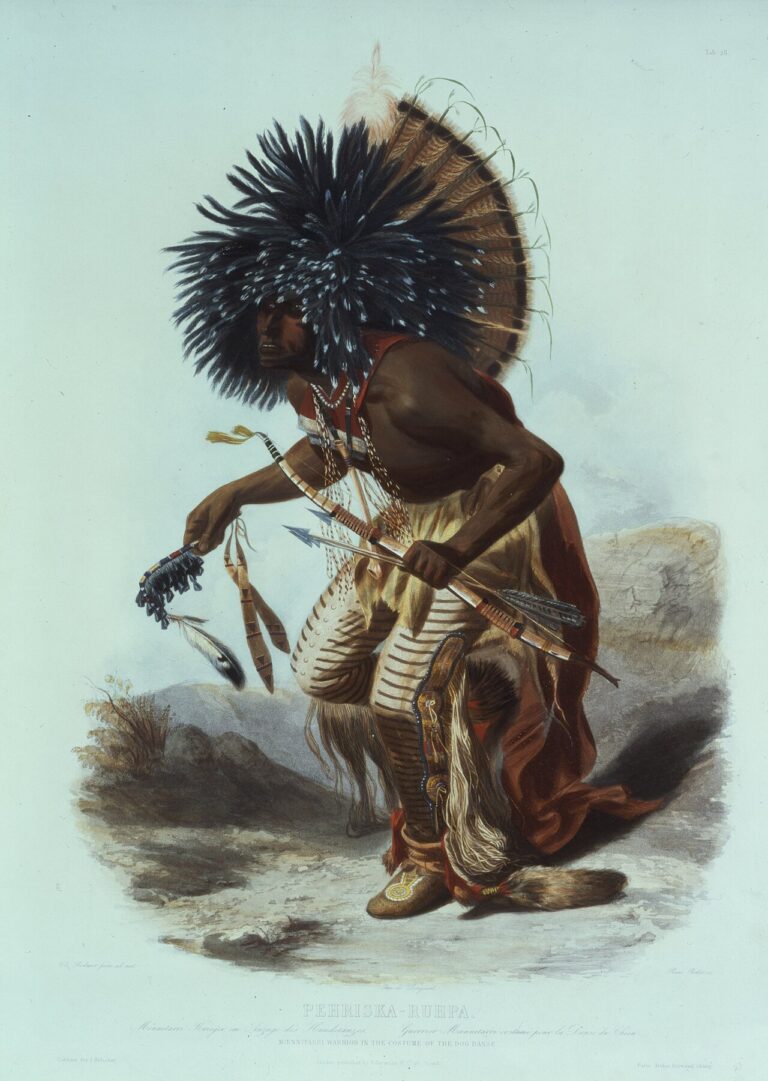
Pehriska-Ruhpa, or Two Ravens, was a prominent Moennitarri (Hidatsa) warrior of the early 19th century, immortalized in Karl Bodmer's iconic 1834 painting "Pehriska-Ruhpa, Moennitarri Warrior in the Costume of the Dog Dance." The Hidatsa villages along the Knife River in present-day North Dakota were among the most important Native communities encountered by the Lewis and Clark Expedition, who spent the winter of 1804–1805 at nearby Fort Mandan. The Hidatsa provided the expedition with crucial geographical knowledge about the upper Missouri and the route to the Rocky Mountains. Pehriska-Ruhpa is depicted in elaborate ceremonial dress of the Dog Society, one of the Hidatsa military societies, including a distinctive feathered headdress and painted body. Bodmer created the portrait during Prince Maximilian of Wied-Neuwied's scientific expedition up the Missouri River in 1833–1834, which followed the same route Lewis and Clark had traveled three decades earlier.