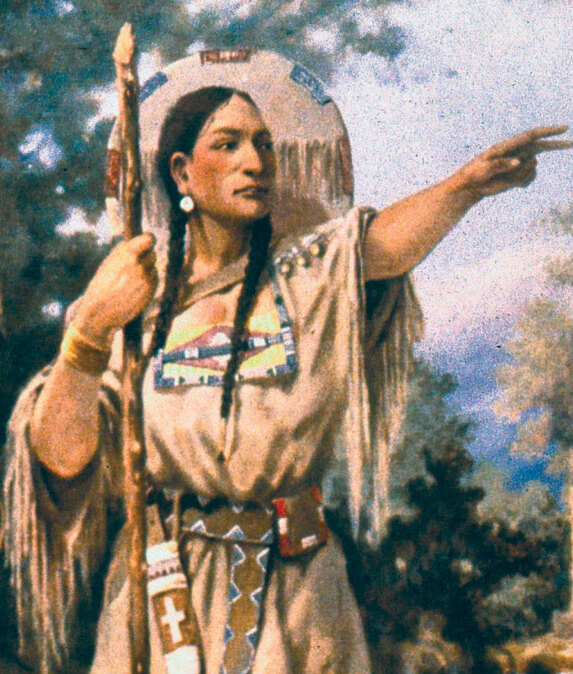
Sacagawea
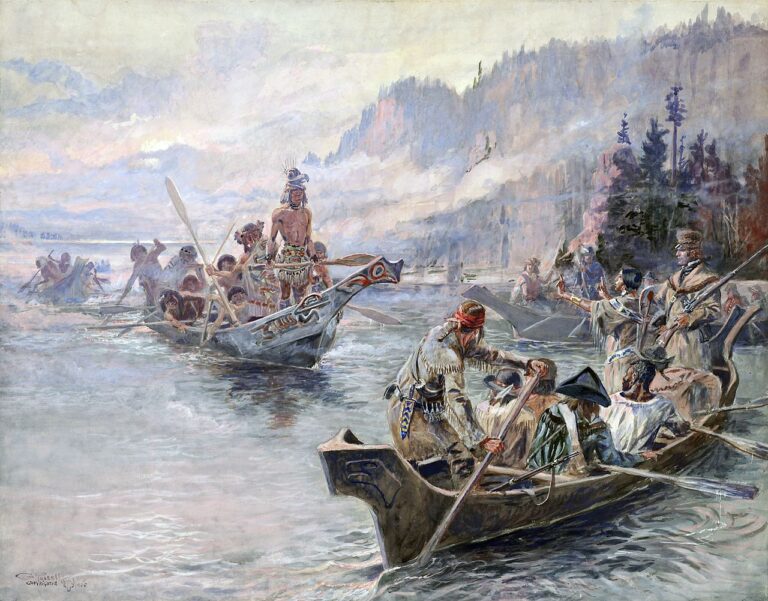
Sacagawea (c. 1788–1812 or 1884) was a Lemhi Shoshone woman who accompanied the Lewis and Clark Expedition as an interpreter and guide from Fort Mandan in present-day North Dakota to the Pacific Ocean and back. Captured by a Hidatsa raiding party around age 12 and later purchased by French-Canadian fur trader Toussaint Charbonneau, she joined the expedition with her husband and their infant son, Jean Baptiste, who was born just two months before departure in February 1805. Sacagawea proved invaluable to the Corps of Discovery: her presence with an infant signaled peaceful intentions to the Native nations they encountered, she identified edible plants and geographical landmarks, and at a critical juncture she recognized the homeland of her own people, the Shoshone, facilitating the acquisition of horses essential for crossing the Rocky Mountains. Her emotional reunion with her brother Cameahwait, who had become chief of the Lemhi Shoshone, is one of the most celebrated moments of the expedition. Sacagawea is one of the most commemorated women in American history, with more statues dedicated to her than any other American woman.
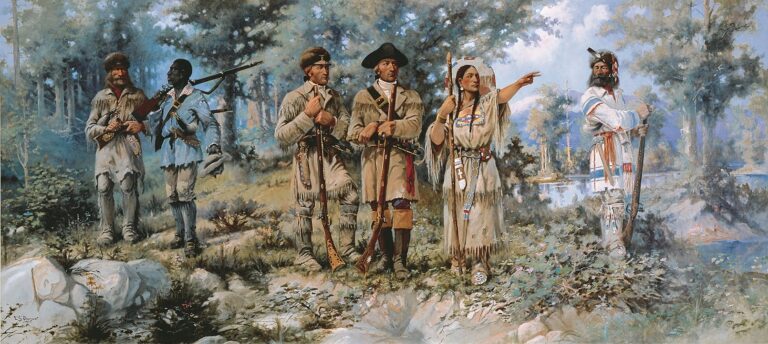
Portrait: Edgar S. Paxson, 1912
Related Locations
Art (6)