Clint Brown
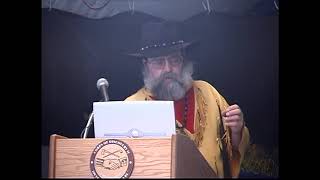
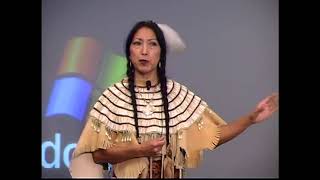
good afternoon ladies and gentlemen welcome to the ten many voices in the core Discovery 2 just tell you a little about us we are traveling exhibit we've been traveling since January of 2003 we started off at monachella at Thomas Jefferson's house and we're going on to the ocean and back just like Louis and Clark did 200 years ago we'll finish up in October of 2006 in St Louis and uh that's what we've been doing for the past 2 and a half years and the next person coming has probably been with us since the very beginning um his name is Clint Brown he is grovont and he does live on the grovont reservation here in Montana he's going to be talking about their history and culture along with his wife Wanda and they also have with them today their three-year-old son Clint Jr so I'm going to hand this over to Clint anybody understand that that'd be cool if he did I introduced myself in my my first language my grovont language my ceremonial name is wasbe aot which means bar robe in in my grovont language uh I'm an enrolled member of the grovont tribe and the fort balp Indian Reservation here in the state of Montana up on The High Line Highway 2 um Grant is a French word for big belly kind of fits me some of my partners but not all of us have big bellies the way we got that name is uh when our people met uh a French Trapper up in the Saskatchewan area they were uh trapping along the the South Saskatchewan River the the these French fur Trappers were and they ran into our people we call ourselves the Anin which means the white clay that's what we call ourselves when we when we address each other but we met this Trapper a long time ago he had no idea what I was saying and I could not understand him so the only way we could communicate at that time was through sign language and where we stayed at that time on the south saskatchwan Rivers was by the waterfalls The Falls there's a huge uh set of falls on the south sukatan river and our sign language at that time for Falls which meant waterfalls to us in Sign Language this French f rapper with a pen or some ink and a paper he wrote down hey we met some big bellied Indians today we'll call them the grovont and that's how we got our name that's that is our government name so to speak is is grovont and we call ourselves the white clay uh I'm here today to explain to you folks a little bit about the north central plain's Native American way of life the Indian people when LS and Clark came through the Missouri River and and they uh they kind of came through our hometown our hom ground I'm going to explain to you folks a little bit about the way our people lived a little bit about some of the things that I'm wearing I've chosen to wear my dance regalia everything that I have on is something that my ancestors would have wore at one time probably during the Lewis and Clark area before and after I'm sure it's a great way to explain each and every part it goes into a little bit of history and a little bit of of our our Legends and our our beliefs I also I'm very fortunate today I have my wife to come here with me usually I have my daughter come and she dances with me my daughter is now at starting high school so that kind of got put on the back burner H but I brought my wife today and she does all of the bead work I thought it would be excellent to bring her along and kind of explain to you the different stitches I guess there's different ways of putting them beads upon the fabric and uh we're going to have her explain that a little bit later on and uh and show maybe show you how to do some of that first of all what I'm wearing on the top of my hat is what we call uh a roach this right here is a roach and it's made out of porcupine hair um in the winter time the porcupines have really long guard hair and this is what we we make a roach out of our ancestors would have used this for a type of camouflage back long ago when the grass was tall where we came from along with all of the fringes that you see it would help us kind of blend into our surroundings they would use turkey beards horse hair and of course porcupine hair and this is It's called a roach the men would wear it inside that roach I have two eagle feathers these two eagle feathers represent my grandmother's one on my mother's side and one on my father's side I believe that every time I put these two feathers on that I too would carry that same wisdom that the makushi carry or the old ladies we all know how grandma knows when we're doing wrong and we're doing right and Grandma pretty much knows everything but I believe that when I put these two feathers on I carry that same wisdom that them two ladies carry my father my father's side and my mother's side the way I hold my roach on is I have a braid coming straight out of the top straight out of the top of my head and there's a hole in the bottom of this roach I run that s uh braid up through there and then I poke the stick through that braid and I call it a scalp block that's how I hold my hold my hat on so to speak I don't know if you've ever been on the Eastern front of the Rocky Mountains but we get some pretty good wind over there and I've never lost my hat yet so but that's that's the headgear there's another headgear that our men would wor wear this right here is a War Bonnet it's made out of eagle feather this was something that our leaders our uh spiritual leaders our our probably some of our most we would say our most respected people would wear their bonnets this way or wear their feathers this way I wear the two feathers on top of my head that represent my grandmothers the men that would wear their feathers this way were probably the most respected people in those camps those were the men that uh had all of the knowledge and the wisdom that we would look up to or that we would yearn to uh to learn eagle fethers Native Americans are the only one who can legally possess eagle feathers we're the only ones in the whole United States who can legally possess these eagle feathers even as Native Americans as Indians I have to earn the right to carry these eagle feathers I have to prove to my grandparents my uncles my grandfathers my father I have to prove to them that I will take care of them in a manner that is is is uh that they that they I guess they wish me to we treat these like one of our brothers each one of these eagle feathers we also have to do a good deed to earn them just because I'm a Native American doesn't mean that I could have an eagle feather for each feather that I have I have to earn the earn it these Four Feathers were given to me for going to college and uh getting my Bachelor's degree my family believed that I had done good things for my family my people by going away to school so the four years that I was gone they gave me an eagle feather for each year now as a I guess it would be a warrior or uh a a just an everyday common man this is where I would carry my eagle feathers all of the Good Deeds that I had done I would carry them on a staff or a stick something similar to this the men who are our leaders this is where they would carry their eagle feathers they would put theirs on their head and wear them around the camp so if you walked into camp and you've seen a gentleman carrying a stick a staff and it had no eagle feathers on it and you seen a gentleman standing next to him with about 8 10 12 eagle feathers on it that gentleman with eagle feathers on it would be the person that you would want to talk to because that would be the person who has probably a little higher ranking in the social status and then if this person with eagle feather is on his staff was standing next to one of these gentlemen with a War Bonnet on that would be the person you would want to speak to we have to earn these feathers we treat them like a family member they're very respected to us uh we take really good care of them people always uh you might see at a pow out if their feathers ever dropped on the ground we have a ceremony to pick that up it's it's it's a a retreat ceremony it would be like during the battle we would go and get our wounded and bring it back that is the way we would treat a fallen eagle feather now below my my hat and my my roach I guess so to speak is one of the most important things to our our Indian people and that's our hair we believe a hair is our hair is a direct link to Mother Earth we believe that is what we are made of that sand and that that dirt is the same thing that our hair is made of that kind of go goes along with the fact that uh when the men would go and scalp if you took that man's hair you took his soul this braid right here was one of the most important braids probably for the enemies of the the Northern Plains Indians this braid right here is what the young a braid that the young men would wear when they were going to battle and this right here was the only way you could tell if them young men were going to battle this braid right here I would put in my hair before I left my camp for my enemy if I believed that my enemy was so good that he could overtake me in battle I would fix my hair for him meaning I would hang a braid in my face and he could grab that braid with one hand make one slice and take that hair my soul then or my my spirit then belonged to that man at the same time at e and at day I was challenging that man to come and get my hair when we brush our hair we never take it and we never throw it away we never cut our hair on a full moon once we've been married we never let another woman touch our hair meaning I've never been to a a a a beauty salon and had that somebody else wash your hair and make you fall asleep you know once I once I became came married that never happened nobody no other female will ever touch my hair I guess one of the things that uh you know when you when you brush your hair and you get a little bit of hair in your brush my grandmother gave me a little bag I take that hair and I put it in that little bag and when I'm someplace where I feel really good someplace where I feel comfortable some place where I feel at home and it doesn't necessarily have to be on the reservation it's someplace where I feel good maybe I'm fishing or hunting I'll take that hair out of that little bag and I'll put it back in Mother Earth cuz that's where I come from and I believe that hair belongs to Mother Earth and nobody else it is my sole belonging my sole wish to never let anybody else take my hair or touch it that's why Indians are really they're really um superstitious about our hair even our race horses or our rope horses I grew up on a ranch I grew up Team Roping and roping calves bulldog and I've done all of that I've tagged calves my dad had some uh horses that he used to race now and then at the crow Fair some of them other Indians they'd go over and try to pull hair out of them horses tails you know try to use medicine on each other we believe that we believe that if if uh my wife always teases me I don't know if this is true or not she never told me she said I have a piece of your hair You'll Never Leave Me thought whoa but we believe that way that that's one of our beliefs our our our one of our things that we base our our life around so the hair is very important you could tell if a person was married by the way they wore their hair if it was braided or unbraided you could tell if a person was unmarried you could tell if a person was looking for a mate you could tell if a person was mourning if they had lost a loved one you could tell if a person was just coming out of a ceremony meaning uh maybe the young ladies the young uh females they're unable to touch the eagle feathers until they've had their first moon or their first menstrual cycle and there's a ceremony for that they cut their hair a certain way now besides the the I guess um what a person would wear for headgear and the type of hair we have colors that belong to certain tribes long ago it's not so much today but long ago where I my people lived the grovont people the the white clay people where we lived we could go outside of our lodges and make the colors red and black real easy by the by the plants that grew there farther east from us the Asino people the nakota Lakota and Dakota people they could go outside their lodges and they make the color yellow and blue real easy so it was kind of a geographical thing the colors that you would see on on a a regalia or a person's moccasins or in their shirts or or their their bead work or their quill work without ever talking to them you would know which basically where they came from Simply by the color that they would use in their dye and the color that they would might use in their bead work or or that type of thing the cins would use a blue and a yellow growant would use the uh black and the red the crow people they live south of the muscle shell on the Yellowstone River there's a a a MTH that grows only in that Yellowstone River that makes a pink a mauve and a yellow and those are the colors that the show The Crow people would put on their their regalia so we could tell each other apart simply by our colors it'd be like if this side of the room was all wearing green and this side of the room was all wearing black I might think these were uh Green Bay Packer fans and these might be Raiders fans so without ever opening our mouth and talking and of course our languages are different we would know who that person was what his rank was what his social standing was what tribe he belonged to what was going on in his life meaning by which way he wore his hair without ever opening your mouth or talking to that person all of that could be relayed by what you'd wear what you would have on the way you wore your hair now within the colors we' have certain designs that would belong to certain families we would call him Clan system some of you might have heard that the term Clan Clan is a family system it's a group of people that did their ceremonies together they named their children together they raised each other's children if we had a camp of a thousand lodges inside them lodges there may be six or seven maybe up to 10 people would live in one Lodge long ago so of course if we went to move and we had a th000 lodges and may say 10 people in there that'd be 10,000 people of course the natural resources couldn't sustain a movement of a group that large so we'd break down into smaller groups Clans family systems we might move in a group of 10 or 20 lodges it would make it much easier for us to find berries to find firewood to travel in smaller groups than it was to travel in the larger groups that's what we call a clan system or a family system each Clan system or family system would have a certain design this design right here belonged to my clan the Bear Lodge Clan and so um once again without ever opening our our mouths there was a lot could be told by what we were wearing and and uh the colors and the way we wear our hair this right here is a breastplate the men would wear it for a type of of uh armor before the guns came we fought with sticks and stones and this was kind of a way to help protect our chest the men would wear chokers they would trade hides they would trade uh horses they would trade weapons for one little shell the shell is something that they would put on their neck and it was there to help protect their neck during battle all of this was something that they would wear probably they would have worn before the the firearms made it to our people uh on my back I have what I call a bu a bustle is an arrangement of eagle feathers uh once again there was different tribes would arrang their eagle feathers different ways a good example is the Battle of the Little Big Horn there was approximately six or seven different tribes there some were friendly some were not in the the late light of the uh of the end of the day or the early morning the smoke and the fog if you could look in front of you and see these people moving you might not be able to distinguish the colors or the design but you could see that outline of that bustle that arrangement of feathers would let you know hey this man belonged to this certain tribe the style that I have on belonged to the Sue tribe or or the cabin or the Su people and it's a large we call it a men's Northern traditional today and it's the round bustle design on that bustle we have you'll see some of them feathers have these white dots we call them a hail Stone right here those dots that you see on that bustle they represent that my family had sponsored a ceremony for a whole year or for the whole ceremony for instance for instance my family had sponsored a Sundance and that's a four-year commitment those little white dots on them eagle feathers represent that they represent that my family fed they helped uh shelter all of the people that came to the Sundance for four years in a row we provided them with food shelter water a lot of times gas money to help get there and back that's what that little white dot represents that little white dot that you see on that inside row of feathers I wear very proudly because it says that my family had sponsored that ceremony for them four years now on the end of them feathers we have horse hair just like the end of these feathers we have horse hair hanging out of the end horse hair to us uh our once the horses came to our people it represented longevity before that our people simply carried everything on our backs or we carried them on dogs by the way our people didn't eat dogs cuz if we ate dogs then I carried everything that don't make much sense to me once the horses came we could put our lodges and all of our furnishings and belongings on that horse and it would travel on and on forever and ever it represented longevity so for each Good Deed that was done to earn this eagle feather for each good thing that had I had done for my family for my people I put horse hair on the end of it I believe that that good deed that I had done will go on forever and ever with that horse hair hanging out of the end it represents longevity that way and we believe that okay I am going to I I like to dance so I'm going to dance one for you guys I'm going to dance one song and then I'm going have my wife stand up and explain a little bit about the bead work uh some of the different stitches this song that I'm going to dance to is what we call a stooping song and it's a a duck and dive song and this song uh is something that came from the npers people this is a stooping song and this story you could that's good I'll stay right here this song came from a a gentleman I'm not sure what the gentleman's name was but it was told to people uh before the the Treaty of 1855 that a stooping song represented the calvary that came above a large surrounding or a large Gathering of nesper people and this Calvary pulled up on this Ridge up above this camp and they fired their cannons off and you will hear during this song as this song is going along all of a sudden it's got a boom boom boom boom boom boom boom boom boom there's two to each little interval we call it a duck and a dive or a stooping when the men are dancing and you hear that downbeat it's like we're ducking that cannon fire and there's two to each one and we always tease each other about getting shot cuz if you're dancing along and you don't duck then we say you got shot but as I'm dancing to this song each time that stick hits the drum as he dancer my feet have to hit the ground that's why I got these loud bells on before it was see this guy right here this park ranger he made me wear them before because I kept sneaking up on him and stealing his lunch can't sneak up on him no more but it's the men would put these bells on their ankles to challenge that drum when that stick hits that drum my feet have to hit the ground when that drum stops I too have to stop and the style of dance that I'm dancing the men's Northern traditional I also tell a story while I'm keeping in time with that drum during the stooping song I'm telling a story of how I've gone and picked up my Fallen brother and I had carried him home I had gone and picked up my Fallen neighbor and carried him home there's four push-ups to this song so I'll pick up four people I'll will think of four four people that I have in my family that have been in a service I have a couple of uncles that I lost in Vietnam I have a uh uh my one of my dad's real close friends that we lost in Korea those are the type of people that I think of when I do these these uh this is a military style song It's a song that the only the men would dance to and it's called a stooping or a ducking di here we are ready to go Midnight Express the contest is on all he where all right I'm getting too old for this I'd like to have my wife introduce herself hi my name is Wanda Brown and I'm enrolled at the Fort bellut reservation I'm an enrolled as cabin my husband is an enrolled grov on and our children are enrolled to cins um I'm here to talk a little bit about the bead work and uh the different styles I think the first thing people need to realize is bead work is actually an uh art form you just don't jump into bead work and start beating um I learned this from my mother and she learned this from her mother uh there are many different styles of bead work there's a flat s or flat we also have a Peyote Stitch which is a round Stitch uh like Clinton has the geometric designs it's more grov on and these are also his colors this uh flat is also this is my daughter's and it's more of the cinin colors we also have called The Lazy stitch on the outside of these is a lazy Stitch and I'll explain all of these to you uh first of all when when you're beating and I brought some examples to show you I started this this um work for my husband when I got hurt last fall so this is a long process um you don't go inch by inch you go millimeter by millimeter when you're working on this so when if if you get a j chance to come up and look I this is unfinished work and you can look at the back of it to see how each Stitch is going we lay beads out in a straight line and every two to three beads we come back through the f Fabric and and uh tack it down okay and another form of bead work is the Brits um you're also welcome to come up here and look at them this also has our seal on it as does Clint's uh vest has a seal on it no uh there we also have earrings that will match it uh this actually this bead work was done by Clint himself he made this for our son you come up and look at that it's got a form of flat Stitch and lazy stitch on it what I didn't mention was the lazy Stitch um on the outside instead of going flat in one line like these we go over we go five beads through the fabric back up five more beads down through the fabric back up on a peot stitch which is these you go round in a circle you start in one Circle and you continually move up making a design these are interchangeable you could take the uh different handles on these fans and you could match them up and interchange them they're actually what they are is uh this piece is a 3 and 1/2 inch choke out of a 12 gauge shotgun yeah for certain they uh this little piece right here bolts out of the top of that shotgun choke and the bottom piece you can get them in lengths and what my wife does is she'll cover it in leather I guess or fabric and she'll pee Stitch around it and then I do the Feather work on these fans my wife has done all of the bead work this vest that I'm wearing tell them about this vest how long it took couple years uh Clint's vest took approximately two years a vest of this size would run a vest of this vest of this size would run approximately two three $4,000 easy um Clinton's hold bead work set if we were to if I were to sell the set that I'm starting on now we could easily run into $10,000 to purchase a set like this what we're going to do is something a little different than what we usually do we usually you might see people talking about this bead work we've got it set out here we didn't bring anything that we wouldn't want you to touch other than our eagle feathers we would ask that you might be real gentle with those and respect those for what they are but what we wanted to do was open it up we've got plenty of time left we'd like to ask you guys if you're interested to come forward handle this take a look at some of her bead work her stitches her knots if that's something that you were interested in we could tell you about it till we're blue in the face but if you come up and have a look at it while it's in progress it might make a little bit more sense to you uh so if any right now if anybody's got any questions we have a a mic uh if you folks would like maybe we'll just open it up for you folks to come on up have a look for those of you that want to if any of you have any questions raise your hand we do have a mic mik I can bring it around so Clint and everyone else can hear you hi I want to ask where where first of all the gro Ventra uh are located where was your traditional territory and where is your reservation our reservation right now is in North Central Montana which is where uh up by H uh we're I think I'm about 431 miles from home from where I live right now uh we're about 50 mil about 40 some miles south of the Canadian border and about 2 miles north of the Missouri River our reservation runs between the milk and the Missouri River right in North Central Montana right on Highway 2 and our our traditional home ground long ago was farther east and up in the uh Saskatchewan area so we're we're actually pushed farther south I I come and do talks with them I come and do lectures with them as often as I can uh like I said um my dad owns cattle he's getting about 70 some years old and so that he's kind of slowing down and I'm I'm getting kind of bumped into that a little more than I really wanted to but you know how that goes we just finished hanging by the way hey the headdress you know we're so used to seeing that in movies and what have you is it what tribe or is that typical or where does that come from it's typical of the Northern Plains people you know uh there's one thing I didn't explain and it's a war paint huh anybody hear the term war paint there's no such thing as or paint there never was the paint that the men would be wearing is something that they would earn for completing all of our Ceremonies for instance uh just like our teachers today they have to go to school they got to learn certain ways to pass information on to our children and US same thing long ago we would have to learn our ceremonies the best places to find these certain items as each as we completed each ceremony and one once we finished all of our ceremonies as an adult male we then were called a teacher or a painter we were then given paint and what that paint would represent is if there was a young man or a young male that had no male figures a young boy had no male figures in his life he could go to any one of them people with paint on and that man would show him how to fish how to take care of his horse how to hunt paint was something that you were given once you you completed all your ceremonies granted some of the men did put it on their face when they go into battle but that wasn't the idea there's no such thing as war paint that paint that them men would wear would be they would be proud to wear it because they have completed all their ceremonies they were a bigger and a stronger man because of so we have one more C the the headdress is very similar to that as well it it was only the the leaders like I said before you know like in the movies you see um all these men with paint on they're all wearing warb Bonet first of all we got too many CH you know all of these people and they were all yipping you know making this this noise that noise uh you know like woo woo woo woo like that that was something only the females did so unless they were one of them funny ones you know I I don't know but that there's a lot of things that Hollywood and and even I as a little boy used to run around and do that and my grandmother please don't do that only the females would do it and they would do it when they were calling their relatives good question very good question we have one question back here Clinton uh the voices that accompany the drum beat uh do they have does that have significance good question some of the uh some of the songs like that one we just heard it had it had words in it those words were sung by a cre a Creed drum from Canada uh I I'm not exactly sure what they say but when that that same song is sung in in the the cineo people those words and they say grandpa I have come for you in the first pushup Uncle I have come for you dad I have come for you and brother I have come for you and what that that's a retreat song and those words will they they say it's our songs are one little bitty songs hang over four times and each one has a different saying in that one some of them are kind of like chants you know um we have uh a song that my little boy this little three-year-old he sings in the morning and it's our coming Day song in the morning him and I sing this when we wake upy hey hey hey and to our people that's a coming Day song we thank the crater for a chance to use something else that nobody nobody in this I get something every morning that nobody in this room gets nobody the Pope the president at the same time you folks all get that exact same thing we get a chance to use a day that nobody else has ever been in we get a chance to use a day that nobody else has ever roed or made better what we do to that with that day is up to each and every one of them thank you good our enrollment at this time is approximately 6,000 enrolled members we live on a reservation with two tribes the cabin and the groon there's approximately 10,000 enrolled members on the reservation total about 6,000 are a cine I mean a grovont and about 4,000 are a cine of which approxim imately about 3,500 live on the reservation so roughly half of our enrolled members do live on the reservation a few years back our grovont language was falling to the Wayside we now have a community college on our reservation we've got some great uh I guess some some longevity programs that have been put in place this gentleman right here Mr Daryl Martin not too long ago was our president of our community council at home at Fort balet he's from the same reservation I'm from and his gentleman like this who had put things in place uh to help preserve our culture and our language we now as a speaker I go into the elementary school and teach our language to the second third and fourth graders hour and a half each morning and each afternoon we teach that in our 2-year Community College so we are language is coming back long ago the very first born was given to the grandparents and you then learn your language your culture and your way I'm the the oldest in our family I lived with my grandmother as a little boy I learned a lot about our culture and our ways I learned how to speak grovont but guess what I learned the female dialect huh I grew up talking like a woman and now my uncles and everybody they would you know they would have to straighten me out but still I learned a lot of our ceremonies and our songs it it I may have learned it in the female dialect but it wasn't hard to transfer it over to the male dialect so I I I'm very fortunate that way that I I did learn some of that you know a lot of our our young kids go through their whole lives and don't even know that they're uh White Clay people they go through their whole life thinking they're groon you know I mean that's a government name that was given to us no um he asked a good question about uh problem between the different tribes and marriages long ago um we used to always teach tease each other as Indians that was tease us grovont of being big bellies I said there's a reason for that in the winter months when all of you Indians are sitting along the river you could see all your ribs us growant are just full we're good Hunters that's why I tell them long ago we used to uh the crow people would come up to our country and they would steal women and take women home so that they wouldn't interbreed they wouldn't intermar once that Crow woman or once that grovont woman left the grovont people and became she then on any rolls no matter what she was full blood Crow she then belonged to the crow people our people used to uh take cre women there was a lot of I guess stealing of of females long ago and it's kind of funny you know because uh the females used to do everything they would put up The Lodges they' take them down they tan hides they would teach the children they'd make our clothing they did a lot of work I used to ask my grandmother why was it why did the females do everything and she'd say grandson we wanted it done right the first I want to tell you a little quick story about our people there's a gentleman named his name was red whip EA he was a leader of one of our Clans one of our family systems in the early 1800s before um before the reservations were formed our reservation was formed in the late 1800s probably the mid 1800s early 1800s the government used to come and they would bring wagon loads of things to our people and it was a way to get our people to concentrate in one area they would get um four or five Clans together they'd four or five family groups together and they would trade with them maybe once a month once every two months these wagons would come through and all of these Clans these Indians they would meet there that was kind of the way they formed our reservations too that's how they'd say well this group was from right here this is where they would meet the wagon so that would be their Homeland it's Nikita he he would with these this certain group once a month maybe once every two months he would take his people there he showed up there one time and there was no no wagons to trade with nobody there he found a little uh a square kind of a suitcase or a leather leather box a leather suitcase metal frame and had leather in it he camped there that where that suitcase was is that same place where he would meet the the government each and every time certain time of the Moon he would meet them there there was no government there there was no wagons no trade they would trade for glass metal uh clothing sometimes Firearms whiskey they got there and there was nothing so they camped there was just that little box they camped two nights nothing third night third day he he woke it's he called all of the people to come up he opened that box and had hundreds and hundreds of little square pieces of wool he took them pieces and he handed them out to the elderly ladies first then to the mothers with children then to the old men then to the fathers each one of those little pieces were infected with small poox our people at one time stories say they were up to 10,000 Plus or more they dwindled down to less than 2 or 3,000 in about 700 days so when I leave home and I have uncles and I have my clan uncles and I have my ceremonial uncles who say why are you going to Al and Clark thing and talking about our people don't you know what happened to our people that was the beginning of the end to our people this may be true but there's nobody in this tent myself included who could change anything about that there's nothing I can do to change that the reason why I'm going is so that I could tell people just like you folks about my way of life about some of the things that we believe in the way that we dress in our beliefs that I could come and tell you firsthand I personally and truly believe that what the park service is doing for us Indian people is a a great thing it's a chance for us to come and tell you guys about our way of life firsthand as opposed to that little piece that you might read in a history book or you might see in the paper or or something on the Internet I I have people at home will say you should not be doing that but I look at it from an educational point of view and every chance I get I lecture all over I was actually I'm a licensed drug and alcohol counselor at home that's that was my life before I started doing lectures I work in the school I teach our language I look at it from a purely an educational point of view it's a chance for us to come and tell you guys about us I know we only get a short amount of time but I'm going to pretty much guarantee you that most of you folks will leave here knowing something a little bit more about the people in this area these areas that you didn't know when you came here I want to thank each and every one of you for coming hej H hey thank you Clint and Wanda for coming folks our next program will be our last PR of the day it'll be at 6 o'cl and it's called Lewis and Clark