Louis Moler
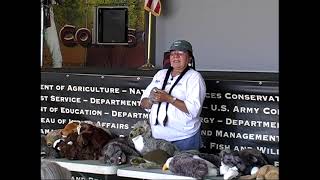
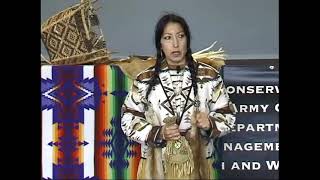
mobile exhibit a mobile National Park the only National Park that actually travels to you or following the lisis and Clark Trail have you heard about the Louis and Clark Trail you have excellent excellent we have maps all around you're going to learn a lot out there outside this tent but today we have leis malater who is the historian and religious leader here in the yaka nation and he's going to share with you a little bit about the culture here so if you give him a round of applause welcome here to the tent and I'll hand it over to him thank you thank you very much as I stated my name is Louis Moler but the people here my Native American people call me Yanti that's the name given to me by my grandfather if you would just hold on to that um what I'm hoping to be able to do is show you a little give you a little information as to who we are why we do the things that we do and so forth if you would just take a look what I just gave it and then pass it on down so that everyone will be able to get a get a feel of it tell taste you know look at it smell it feel it what what we do this is um tuling a Tuli what we do is we Harvest this at a certain time of the year which is right around August and um the the the lady folks will will harvest it they cut it near the bottom then they said it they put them in large bundles and then they set them off to the side so that they will dry they let them dry for about a month they normally grow in marshes very they love the water so they grow there once they're dried they get the lady folks again get they run up to crab Creek they grab some Indian hemp they string it into long strings then they weave them together with that we utilize that that's a very important commodity item for the aomination even today as it was 500 years ago we U we use it for a table they're about um 4 and 1/2 ft wide we roll them out on the ground or on a floor and we serve our Foods we serve our plates we serve our silverware everything is on that and we sit down and we nor we normally eat right off of that and that's our table we also use it as a Shel that that thing there if you look at the very end of the Tulie you'll see it very spongy that sponge is that spongy Type U material is a um resistor it resists water it resists wind so it's very comfortably warm so we utilize it for our winter lodges we we spread we put it we build a wood wooden frame and then we put this over the top of that wooden FR we uh we call like subterraneum dwelling they're about 18 to 20 in into the ground so the wind doesn't come either under doesn't come through and it doesn't come over the top either so it's very warm during the winter time because of that Tulie so that's how important it is and that and and the last thing we utilize this for when we pass on we we dress up our are are dead with the finest clothes that we can we can afford and then we dress we wrap them in the Tuli so you can see how important that Tuli is to us in fact we have gone to some Wars over the fact to harvest these so that's why I had to bring it out and show it to you so that you could feel it and when you see it next time you you drive down a country road are you folks from the valley here when you drive down a country road when you see a lot of water on the side you'll see this these plants they grow up to about 8 ft tall they grow they rain from 4 to 8 ft tall and that's what we use them for so we we still use them as we have in the past I'm with the acation most of my um responsibility is protection of cultural resources and when I say cultural resources I mean Native American as well as non-native Americans historical buildings sacred sites religious sites things of this nature and and recently my wife and I we we belong also to a nro committee which is Native American Graves and repatriation act which is a brand new federal law which allows Native Americans to retrieve remains from all government institutions libraries that that receive federal money universities that rece receive federal money any organizations that receive federal Monies they have to do an inventory of all of the items that they had collected throughout the years and many of The Times They involve remains of that our our past so we have to go through this whole Federal policies and it weighs about 3 lbs this this federal law and we abide by each and every paragraph and so it's it's a very long tedious task for us to go out and retrieve our remains our ancestors and so forth and we're doing it even today it's sad to say but apparently we put our We buried our people in the wrong places in the past so many of the times where we buried them they became construction sites or they became Gams or they became something of that nature where they had to remove them once they were removed back in the 40s the 30s and the 20s and they were given to universities for study and so now that's why we're trying to retrieve them at this time I'd like to turn this over to my wife Marilyn or what I like call refer to as wushta please good morning my name is Gan M that's my English name U my given name that my my grandparents gave me is wushta so each one of us are given an Indian name when we're young and then as we turn adults we get another name that we carry in our belief which is the wash it religion or seven drum you have to have an Indian name when you pass on you can't go to the next World which is your heaven so all of us almost everyone in the tribe has an Indian name I I am the uh curator and the manager for the acam nation Museum and we brought a few of our things from our Museum collection that we wanted to share with you today and uh some I just brought a few basic things as I wanted to share it with you and I think one of the most interesting things is right here can you all see what that is a basket can anyone guess what this is made of any any it's made out of a tree trunk Oak our ancestors there wasn't uh we didn't have the materials or anything so we utilize what was given to us by Mother Earth and when they needed something to cook in they used to cook in these put them over the stove cuz they're so heavy and they take the part of the oak tree you know where the knots are in the oak tree and that's where they cut it out and then they'd make this um they'd uh take their make their own instruments and they'd actually make their own cooking utensils so this is actually could be used as a pot I thought that's really interesting that's part of our collection um okay these here are called shepai in our language shepai that means Indian suitcase these are made out of deer and Elk hiide when our young our men our young men go up and go hunting they skin the deer we use every part of the foods of the deer the fish everything so this is what they've made this out of and they form it let it dry then they form it and then um what they do is when they're going to travel they throw their dried fish their dried Roots whatever in there tie it on to their horse or just carry it like that and you're ready to go so that was our first original suitcase shut this is a I wanted to show you the young ladies this is what's called a uh buck skin dress this is also made out of deer hiide this is a real elaborate one that's out of our collection beautiful beaded one and it's actually made out of deer hi high too usually um there's one for the front and one for the back and then the ladies go around and do their own designs their families this is a young ladyes buck skin dress and they wear it for special ceremonies um what we call our Gatherings our powwows and this is a new item that we just purchased for the acation museum and this is called a wedding veil can I have a could you come up here for a second this is what we call a wedding veil you know when you have your weddings you have the beautiful white and everything this is what we use as our wedding veils then she would have a beautiful white buck skin dress on and this is what they wear in our long houses but that's what's called a wedding veil okay the next thing item we have is called a Horn Spoon it's actually made out of a horn so when they killed like an antelope or something they would go ahead and use the horn and make spoons out of it and this was it must have been uh used it's one a part of our collection also but with the bead work on it so it must have belonged to a leader or a very important family this next item is called a click atat basket and it's made by one of our yaka members her name is NTI kunai she's one of the last ladies on our nation who make such elaborate and beautiful baskets and these are they take a lot of time and a lot of effort because the ladies go out and gather the bear grass and they process it and uh they use certain items everyone have their own how do you say it tricks of the trade how they put the colors in there but these are very very valuable so uh this is really a collector's item actually this next next item is called a corn husk bag and it's actually made you know when you go out and the when the corn comes out and you have the husk on the outside I believe the Hispanic communities use the husk for cooking this is what we use it for we make bags out of it can you imagine how many corn hus you have to strip one at a time to make these bags and actually they make bags bigger than this they're huge like this and they're used would we have our our weddings let's say the young lady this young lady where that wedding veil got married in one of our long houses we have what's called A Wedding trade so the young lady her family would come with these corn hus bags filled with dried deer dried salmon dried roots and the young man's family would show up things to trade with the uh the other families both families has to come and they line things up in the long house and we have what's called A Wedding trade that shows which family has the most and which family is more influential and uh we still do that but we don't do as much on the uh trade very much and then I'd like to show you a couple of bags from our uh collection this is a big beautiful one it's a peacock design the bead work here the beads are made and they're put on one at a time so you can imagine how long these bags are it takes a lady we have some good bead men bead workers also but mostly the ladies but we do have some men who make beautiful outfits okay I'm going to let my husband finish off now thank you Marilyn I think I just have a few more minutes so I'd like to just close with some of the men articles this here belongs to me personally it was made by a gentleman in Seattle a white man made this he made this for the 1962 World spare in Seattle Washington it is originally from a ram and Otter and and so forth the the the material and he gave that to my family my family was the saki family that went to Seattle to perform for the people that came from all over the world in 1962 the Seattle's World Fair and uh they became very good friends and so what happened was is when he passed on he left it in his will that it would revert to our family and then when my grandfather passed away was given to my mother and then my mother handed it down to me cuz I'm her her eldest and I'm the best but we utilize these for the um powow we um we dance in our finest regalia and it's more or less again just to prove to the people that we are who we still are we're still Native American we still hold on to our customs and our belief and that's part of my regalia that I use when I dance and I don't dance or perform very often when whenever I do it's more more or less for because I'm a veteran I'm a combat veteran so normally when they when they call for a combat veterans I will come out with my regelia and dance but normally I'll just sit and watch and enjoy but in closing as you read I don't know if you had the chance to read it but outside there's a little sign out there that says that on April 14th 1806 they were on their way back to the east they came to a village at that point and they spend a night and they met some Native American people those Native American people still exist today some live on the reservation and some still live on the Columbia River and they still practice their TR their belief they still practice their fisherman but they also had intermarriage into other families that had horses so many of the times when Lewis and Clark were coming through they purchased dogs horses and food from the people along the Columbia River but at this time of the year there wasn't too many along the Columbia River except for the fishermen because the salmon hasn't really came come up at this point what we are hoping to do is be right this time of the year everybody coming out of their winter lodges remember we talked about the winter lodges everybody's leaving those winter lodges now and they're going up into the lower levels of the lower Meadows and they're harvesting Roots everything they can Harvest at this point that's what they're doing each time they go out and harvest they bring it back the men are out hunting for fresh game because we've been eating dryed deer meat all winter long now we want some fresh ones and so we want fresh fish we have sucker anybody know what a sucker is there's very little of them today but we're they're starting to return they they're here all winter long so we would eat sucker would eat fresh Roots bitter Roots is our first one actually salary is but we don't have a piece per salary they grow up like they came up last I think it was about 3 weeks ago they came up we've already had a dinner for them now we're having dinners for bitos we say we call it P you call them Bitters and if anybody that ever gone to Montana it's a state flower in Montana so this time of the year we're all out busy harvesting because we only have certain well short very short Winters we call Windows of opportunities you've heard that phrase before Windows of opportunities are very short for us celery at least one week then after that the stems get very hard and the the the nutrition is locked so you only have one weight for celery and you can't preserve celery then we have bitters you can preserve bitters you dry them and then you you put them away and then it goes into Camas and then other bulbs and then throughout the whole year we have about six seasons we have six seasons total throughout the year so we're constantly on the move and we start from the bottom land and we work all the way up to the Alpine regions and that isn't probably August September we're up there in the highlands Alpine area we're up there harvesting we're hunting we're fishing we're doing whatever we can do to gather as many material raw material as we possibly can so that when we start journeying back down our horses and our dogs ourselves we're all packed and we're bringing them all down to the winter lodes so that we can start again so thank you very much we really appreciate your your presence here today and I hope you leave us something thank you all right now School groups you guys are going to go out to a station out there I believe the Dugout canoe so if you follow range Rebecca out there she'll take you out that way Carol Craig is going to talk to you about fish and Carol Craig is the public information manager for the Fisheries resource management of the confederated tribes and bands of yaka Nation I tried saying that five times fast yeah right so let's give Carol a round of applause as today she's going to talk about cultural tradition and treaties on fishing in the yaka Nation all right all right welcome and shaki and that's how we say good morning in the Yakama language have any of you ever gone fishing anyone gone fishing oh good has any has any of your classrooms raised any of the fish to release them in the river and maybe later on you'll get to do that good good lots of smart young students here today uh I visit schools from kindergarten through college level and I travel Pacific Northwest wide to educate the non-tribal public and the school children about what we do to help the salmon in the Yakama Basin and so this is a few slides that I would like to share with you today but when we are young we are taught at a very very young age by our elders that when we were placed on this part of Mother Earth we did not come from anywhere else that the Creator told us that he would give us some gifts and those gifts came in the form of salmon deer elk Roots berries and all of the herbal medicines that we continue to use today but he also warned the tribal people and he said as long as you take care of those resources they'll take care of you but if that salmon ever disappears or the berries or any of them then we too as tribal people will disappear so that's why we try to take care of all of the natural resources that we continue to use today it's very important to us and we also taught to think and plan Seven Generations ahead of ourselves our El ERS tell us that we were not just here put on Mother Earth and then to go away and they tell us that we are preparing for the future generations and they tell us that we're only borrowing the salmon we're only borrowing the yakma language we're only borrowing the water everything and we're preparing Mother Earth for those future Generations so it's like remembering the future and that's very very important to think about uh in planning for the future and uh also uh salmon uh is the first food to reappear in the new year so as the salmon reappear and all the other Foods we hold a first F first food ceremony and we're thanking they created for bringing that resource back to us uh last weekend they just had at Salo on the Columbia River the first salmon feast and so we had visitors from the southwest uh all the way up to Canada that came and joined the tribal people there and we don't have La uh churches on the reservation we call them long houses and so that's what they did they conducted a first food ceremony and and that first salmon came back so we were very grateful and honored that the Creator brought them back uh this is the yak mination emblem right there and this is the emblem for the Fisheries program and what's very very important to understand uh is our reservation right here Back In 1855 the federal government purposely sought out the tribes and they wanted to enter into a treaty and they had been here before and they knew that we had our own tribal government structure our land Etc and so they knew that they just couldn't come over and take it so they entered into the treaty negotiation and before they got there the tribal people thought very carefully about what they were going to talk about all of them did and so when they sat down with the federal government the federal government asked them what would you like to see on this piece of paper and they said first of all we want to retain our tradition and culture that identifies us as yakma people so they said okay they said what else is important they said well we have our own form of religion it's called wasad it interprets to 7 drums we want to be able to keep that so we said all right they said what else is important they said well you've been here on previous visits we still have our own form of tribal government structure we want to run by that which we still do today so they said all right and they said what else is important they said well we know that we're going to have to give up some of our land and that's what they call the seated area that was over 12 million acres of land uh that they gave up and then they reserved an original portion of their Homeland and so that's where that word reservation comes from uh so they said not only do we want to be able to fish hunt and gather all of our Foods on the yakma reservation but the 12 million Acres uh that they gave over to the federal government so that's today why we have the right to go down to the Columbia River to fish uh to go over to the Cascade Mountains to pick our huckleberries uh there's certain digging Roots areas off the reservation and that treaty R is still with us today and this is one of the very most important provisions of the Treaty of 1855 is the right of taking uh fish is hereby secured at all you usual in a custom station so not only on the yaka reservation but those 12 million acres and so I know that they were thinking and talking and planning for Me In 1855 uh because I am part of the Seventh Generation since that 1855 treaty so I know how important that is and in my travels I travel Pacific Northwest wide I always make sure that I hit the antique shops and the secondhand shops and I start Gathering these old photos of the tribal people and I'm very fortunate I think we are very fortunate today to have all of these old photographs uh but my only complaint is while they took those photographs way back then they didn't name the people so it would say Yakama woman yakma man Yakama family and I do a publication called sinit key and sometimes I'll run the photos in there and I've had people help me identify uh the PE the people in these pictures this woman was identified her first name uh isn't known yet but her last name is manik and that's a that's a large family here on the AC reservation and Jerry Manan is one of our past uh chairman of the tribal council this gentleman was identified as Chief in Nasha and also these are Edward S Curtis photos and then these were photos of the tribal people when they travel long time ago they used to say well the tribal people are nomads well we weren't lost and wandering around you would find us where the resources were available at that time so when the fish came to the river that's where you would find them when the huckleberries were ripe then you would find them in the mountains uh they just got through doing what they call their root digging there's certain portions up there if you know where the yma fireing center is there's certain portions where Our Roots grow and so they've cordone that off so those roots will be saved and each year the elders will take the young people up and show them how to dig the roots and berries uh this is a couple of our tribal leaders that went to Washington DC uh they have not been identified and then this one just said Yakama family and I had run that picture in there and then this I found this picture in Ellensburg Washington and his name is Cleveland kamayan and he was the great-grandson of Chief kamin who was our main Chief who signed the treaty In 1855 and then this is Chief Spencer and although Chief kamin was our main Chief back then uh he refused to move onto the reservation he wanted to continue to travel during the seasons and so he stayed off of the reservation so then the federal government appointed Chief Spencer as the first Chief of the yakam nation and then this is one of the natural landbridge that was on the Columbia River and then uh when they were taking the school children to the boarding schools uh they they were going to teach them how to be seamstress uh to be Cooks Etc they didn't want them to carry on their traditions and that was a very very sad time for some of the tribal people and in fact my mom and dad were part of that last generation that were taken to boarding schools my mom lived in WAP and they took her to St George's Catholic School in Tacoma and she was raised there my dad was taken from wapo down to Chima School in in Salem and he was raised there uh so it was not a very very happy time for the tribal people this is Salo Falls I don't know if you've ever heard of Salo Falls but it was what our elders tell us one of the greatest richest economic centers of the tribal world before non-tribal people arrived and they would tell us that when the spring shnook started running up River tribal people would begin to gather there and they said tribal people came from as far away as the Great Lakes the Great Plains the great plateau and the Basin and they would come to this part of the world and they would bring food that wasn't available to us and they would trade for that salmon there were games that went on probably intermarriage it was just a great time of and a great Gathering learning how to get along with one another and they would bring buffalo meat that wasn't available to us and then we would trade the salmon uh these this is an old old photo from the 1920s uh these are earlier 1950s down here and then this young man Holden eels that's also a traditional food of the tribal people uh is Roger dick senior uh the late Roger dick senior and that I remember when I was little my dad used to take us down there and he would get on this little small cable car and they' pull themselves over to one of the smaller islands and I would ask my dad dad can I go with you I want to go with you and he'd tell me no it's too dangerous and I see these pictures today and I think what in the world was I thinking then in N uh in the ' 50s they started making the dance and the United States president and everyone proposed to make the Dell's Dam and we had a delegation of our tribal political people go over to Washington DC and they beg with the Senate and They begged with the congressman and the president of the United States and they said please don't build that Dam there it will flood over Salo Falls our ancient fishing grounds that were placed there purposely for the tribal people please don't do that but it fell on De ears and they built the Dell's Dam finally it was completed and on March 10th 1957 they closed those concrete gates at the dam now the water's gushing and it's starting to flood over cilo Falls and it was a very very sad day for all of the tribal people this would be gone we would never be able to go there again they stood on the sides of the hill and they dressed in their tribal regalia and they were pounding drums and they were sinking and they were crying they were mourning the loss of cidal Falls we would never be able to go down there again and once they said it took about 78 hours before it was completely flooded so it was a very very sad day for all of the tribal people and once that happened uh the federal government Tau that we would lay down our fishing equipment and walk away not understanding that guarantee of that 1855 treaty that said we could fish in perpetuity today we were concerned about there were no fish in the yaka River other streams and rivers they had not been there in the yaka River for over 30 years so our basic philosophy is put the fish back in the river and protect the watersheds where they live and so we were working with the state and federal agencies for almost two decades and we would say take that fish out of those concrete hatches start putting them back in the yma river the Clear Water the Umatilla where they originally were and they haven't been for many years and they would say oh we have to do a study we have to see if that'll really work some of our tribal Elders would say are they going to study the salmon to death finally the plan was approved by the state federal agencies we started doing that several years ago about 4 years ago the first uh salmon came up the yaka River there had been no salmon in the AKA River for over 30 years so if you've been fishing in the yakma river uh that's because of what the yak nation is doing and that's and that process is called supplementation and they would say all right that will supplement that run so when they go and they spawn the salmon AES will be there they will grow up they will go out to the ocean and then when they come back they will be natural spot spers so we know that process is working today and it's for everyone not just the acma tribe and this is also we take care of the fish at all of its life stages from its Inception as an egg here they're taking some of the fish eggs they're putting the milk over it that fertilizes the eggs then it begins to grow this is called the aen stage they're still too little to fend for themselves so there's this little sack there and it holds all their vitamins and their nutrients and then it kind of T tends to disappear and then they can fend for El uh we have facilities that teach our young tribal people they're putting what they call Pit tags on the salmon that way we can follow them we can uh pick them up at one point put them through this small wand and it will give us all the information we need about that fish here in proster Washington we have what we call a steel head uh reconditioning program steel head are the only salmon that don't die after they spawn most of the other fish they spawn and then they'll die but steel head can spawn more than once and so we want to know where they're going uh what w tributaries do they go back down to the Columbia so this technician is inserting a radio radio uh device uh down the salmon this is the salmon and we have circular tanks for them they're at prer and then we release them we feel we feed them Krill which is a natural fish food and then release them to see where they go and while they're out here on the freeway on i82 they have special electronic devices and then they'll go along the river and then they'll feel a beep beep beep and they they can actually follow a steel head so we're always studying the salmon to make sure that they come back for the tribal people this is also prer and this is near the crer dam but there's also a canal that's for the farmers and sometimes some of the fish get stranded like the fish right here and so they'll net them up and then they'll take them and put them back in the yakma river and our Tri our tribal technicians and biologists are very very dedicated people they know how important the salmon is to us and so they'll be working out in the 100° Plus weather the Subzero weather they're there year around as well as making the uh habitat good for them teaching the young people they're taking cutting Willows and they're going to plant them by their rivers and streams to make that um uh stability of the bank much better for the salmon uh there they're building a fence Coastline we work with farmers and it's like our elders tell us everything on mother earth needs water without water nothing would be able to exist and that's including the ranchers uh that uh have cows and so we find grants we work with them they start building fences near the river streams and then where they know there's no fish eggs or samon then they'll make build an opening so the cows can go down and get their share of water as well and then there this was a tunnel up on the near Mount Adams what they call the closed area and it was built way back I think in the 1930s or 40s and they there was a Falls there and they built that tunnel there hoping the salmon would be attracted and it would take him over the falls but it never did work for some reason they never did know why uh just last year we got some federal funding and and worked with the Washington State Department of Fish and Wildlife the national Marine fishery service and they started working on that tunnel and now the fish can go up they are attracted so they make great improvements for the salmon so planting the trees and the all the bushes and everything that you need make it a fish friendly home when they come home this is a culvert that was up on the reservation and of course you can see the waters down here well the s couldn't get up there to continue their Journey so we lowered that Culvert put it directly with the ground and now today we have the fish that are returning further Upstream so we have fish going to the status Creek Yakama Naes River all of the places uh where they used to be and now they are returning again and as well as teaching our children our grandchildren uh passing the dip Nets and the poles these are old photos from Salo uh this is a smaller waterway at Salo uh but today they're teaching the young people people how to fish how to do it and we have not been able to sell the fish directly over the Columbia river banks uh and that was that was not until before excuse me the Dallas dam was built we were able to do that there were that many fish returning but we hadn't been able to do that and just until about 3 years ago so non-tribal people can go directly to the tribal Fishers and buy it for much cheaper than the grocery stores and then each scaffold that you see this is on the click attat river is registered to a tribal Fisher and no one gets on there unless they have permission and uh so if they get permission then they can use their dip Nets or their hoop Nets continue their fishing and you have to be a very strong and agile Fisher to be able to put that pole down in the swirling Waters and they'll do that and they'll go with the water and then they'll fill a bump on there and they know that salmon went in so they start pulling it up like that and then there's a release at the top so then it'll go like that so that salmon won't have a chance to jump out of that net and today we're getting more young tribal women that are becoming tribal Fishers and and each as as one in a family passes on it goes to the next person there may not be any men left and so the women gladly picked that up so today I've seen several several more tribal women that are fishing down on the Columbia River on the yaka River uh different places and also keeping the tradition alive uh cooking the fish like we did a long time ago they're drying it right here preparing it that's basically what we do today cooking it on the sticks over the fire that's probably the best way this is her name is Sharon dick and each year she gets a grant from the Washington historical society and she'll take a young woman under her wing and she'll be their Mentor this young gal was from Nez Pur and she wanted to learn how to dry the fish and so I was down there and I was doing a story for the sinw key magazine and so she showed them how to do that to see to get the uh fish ready prepared to slice it up to do it in the thin slices and then it's right down by the Columbia River she uses cedar wood and that's a natural uh detraction for bugs so I never did see any flies or bugs nearby the dried fish and there they're they're changing it up to a higher space afterwards and it's a very long process because the young lady told me I oh gosh she always made it look so easy and I thought I'd love to learn that she said I didn't realize what kind of hard work went into it and then once she got done uh she gave me a gallon bag like that just stuff full of that dried salmon and to us Tri PE tribal people that's like gold and so I was very very thankful very delici she very soft and pliable so she was a very great teacher to the young lady and this is the old salila long housee that's down along the Columbia River and last year finally two years ago uh they found funding to redo the long housee uh they the Village People there built the long house in the 1970s they were promised that they would replace it when they flooded uh the Dallas Dam but they never did get funding finally they found funding and they started working on it but back in the 70s when they were do that even the kids that are adults now they were 5 years old they said I remember helping and I would take shingles over and they would do uh uh Civic funding and get funding from all the neighboring cities around there and so it was built by hand so here they're tearing it down and they just happened to be doing that last year about this time so there was no long house to conduct the first salmon ceremony so they built a canvas long housee along the Columbia River and they conducted their ceremony there and the young men their tribal men are preparing the fish uh to cook them on the sticks and so it was a great celebration then finally this is part of the new long house uh Commander stro came from Washington DC he wanted to see how it was going along and they were building it and it was just a beautiful site once they were done the kitchen is about three times larger than the old long housee kitchen they have a walk-in freezer they have a walk-in refrigerator uh commercial dishwashers and the tribal women were saying it's so much easier now and then finally last July they had a blessing ceremony for the long house we had many many tribal people there they came from all over we served our traditional foods this is General stro posing with the new uh uh uh chief of the long house uh but we had many many visitors we had people we had our elders there from all over from many many tribes it was such a great day because we finally got the funding it was finally done uh it was just such a happy happy day for all of the tribal people and so that's where they conducted their first salmon ceremony last weekend was at the new long housee and we had many smiling faces and as we serve the food the water is set there first and then uh we take a drink and then they'll serve the salmon the deer the elk The Roots the berries and that's what we consider the salmon deer and Elk are our brothers the roots and the berries are our sisters so we know how important it is to take to continue to take care of them and that's what we uh plan on doing and that's what we uh tell our youngsters so Thea tradition and culture of the acation yes it is alive today the young people are still learning uh how to wear their wing dresses how to braid their hair these young girls were at Salo last year so the the lady was talking to them here take these T Li mats uh take them in and they would set them on the ground and then they started serving the food we're still teaching them our tribal songs they're still dancing they're singing We're still cooking the salmon this is the Wanapum Village up by Priest Rapids uh a couple years ago they were teaching their youngsters they were just about as old as you how to collect those Reeds along the river spread them out and dry and then hook them up and put them together and that's what the long house looked like afterwards so yes the tradition and culture of the yaka tribal people is alive and well today and when I think back to that 1855 treaty I think had that not been there I might not be here today so I know what an important document that is are there any questions no questions okay take out a piece of paper no I'm just kidding I brought some handouts to share with you today and you can come up and get them and just get in line one by one uh hang on just one moment I've got four pictures of salmon there's descriptions on back so you'll know how to color them uh there's identify and label the parts of the salmon internal and external and then here's a life cycle salmon and then here's a fun one follow the directions on here and it'll end up like a teepee you have the teee poles over here but just follow the instructions right here and then you can make your own designs on there and then I also have some um some stickers and it says celebrate the salmon salmon cultures and our tribal Elders always say when you go somewhere always have a gift so I've got some salmon necklaces I'd also like to share with you and I'd like to thank you for your time and I appreciate it let's thank Carol for coming in today children we'll we'll pass them out to your teachers and your teachers then can uh distribute