Tent of Many Voices: 01170302FJH
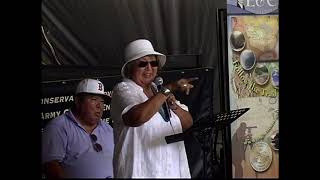
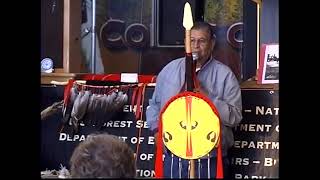
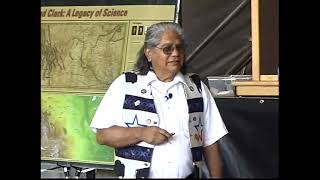
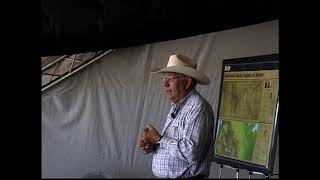
expedition of Ls and Clark and that our main purpose is to commemorate our ancestors for their contributions and preservation of our heritage we intend to include culture resource protection sacred sites protection culture interpretation and education for all those who will be visiting our areas and my final statement is in regards to the nesp war of 1877 as I mentioned there were many chiefs others that were part of that war but there's one statement that I will leave you with and again I'm not saying this in a negative manner but I think that's what we truly believe today but one of the Warriors stated we strive to maintain our historical and cultural values in order to preserve our identity this concept makes us realize the Mal treatment of the Native American in American history which has lived within a stereotyped image even the buck skin and the eagle feather became related to The White Man's devil yet we have managed to survive with the truth we have great pride in our history and our heritage like any other people and I thank you for this opportunity and I invite you to join us in June 14th through 17th 2006 in which the nesp tribe will be hosting a signature event we Welcome to our country with open arms and we hope that you will visit us katua thank you thank you chairman Penny Roberto Bobby Connor and since I massacred names as that's my history I don't say names very well I'm not even going to pronounce your Indian name boban is a director of a of a phenomenal cultural um Institute a a a visitor center of learning fantastic I've been there many times she's with the Confederate tribes of human reservation in Pendleton Oregon prior to becoming the institute's director in 1998 she worked for the US small business administration for 13 years she is a caus yella ners and a member of the Confederate tribes of the umum matella she holds degrees from the University of Oregon and wamit University's Graduate School of Management and she has also been a very effective very effective co-chair of the circle of tribal advisor of the bicentennial Cil Bobby Connor nki sha thoughts maywe good morning good morning the circle of tribal advisers has been faced with an enormous challenge because we had a goal to increase tribal participation in the Bic Centennial many in the media wonder why tribes would want to be involved and some of you may have asked the same question today we are here fulfilling a goal we're about halfway toward that achievement of tribal participation there are 31 members of the circle of tribal advisers representing Nations whose lands the Expedition traversed we hope that the number will will be closer to 70 by the time the end of 2006 rolls around and with Gerard's help because he's visited at least 70 or 80 reservations in the last year we hope to get there the Fulfillment of this goal is very important and I'd like for you to acknowledge uh kota's accomplishment not mine but kota's there are more than a 100 tribal Representatives here representing 25 modern Nations sovereign ations of people and I'd like the Cod reps all of you to stand please if you would like to know more about what we've talked about today please visit the student gallery on the third floor of Nukem hall or the exhibition area where tribes also have displays and products for many event planners and students and Scholars tribes are part of the backdrop to the Lewis and Clark expedition story just part of the landscape through which they traveled that's half right we are part of the landscape but the part that's wrong is that we're backdrop I submit to you we are the story the tribes and the land this story has always been about land it will always be about land people who wonder why we're involved need to understand that we are here today and at every other signature event and Lewis and Clark planning meeting not because it's fun necessarily but because we're still here we are grateful to ancestors who made tremendous sacrifices so that we might be here to tell you their history to take care of the gifts the Creator gave us that you moved on to we can't tell that story if we don't go to the meetings if we don't come to the conferences and if we don't speak to audiences that's why we're here because against incredible odds we have survived the last 200 years or in the case of our friends from monin and other Eastern tribes the last 500 years that's a story that's not told very often we hope that the bicentennial is that opportunity and most of you are in a position to help make that happen I'm going to talk a little about land a little about law and a little about time we've been on these lands for more than 10,000 years it doesn't matter whether it's 9 or 12 or 14 or 18 we've been here longer than anyone else when the Expedition came through our homelands there were no State boundaries there were no County jurisdictions there were no municipalities everybody else in this story is a Johnny come lightly we have a lot to share it's important to understand that relationship with time because many of us come from very small Nations the confederated tribes of the Umatilla Indian reservation is only about 2350 people of caus waa and Umatilla descent the names were now called the people you meet here the six of us here representing the confederated tribes of Umatilla the delegation representing blackfeet and npers and Shaun e and chinuk nalum clup and tiok there are not a lot of us you have the opportunity to learn from those of us who are here and from those who have places for you to to learn about their culture in their Homeland like we do we have been nauma nma token Hima people relatives on the land for a long long time we're not going to go anywhere Maya Lynn recently visited our reservation because we're working jointly on the confluences project to memorialize some of our ancestors ERS and what they've given us and what the Creator's given us and she asked about racism and we told her about racism and she asked how we endure it and answer visitors questions so politely and why and I suggested to her that I've watched my elders endure some horrible things but they have been gracious and polite because we know one thing they don't those who insult us we're going to be here forever we will get the last word being here so long in our homelands has taught us many things that no one else but our people know it's a form of imp pism living someplace for 10,000 years you'll learn a little bit about your home our people make decisions based on that long time on the land and sometimes much to the dismay of other event planners it takes us a long time to make a decision but that's okay we have that time most of the time in some cases we're in a Race Against Time we're a Race Against Time To Save species on the Snake River on the Columbia River and on the tributaries of our Columbia River drainage system we're in a Race Against Time to save the languages that emanate from that landscape we're in a Race Against Time to collect the oral history of our ancestors that's been passed down to our elders and we only have a few who can tell all of those stories in our native languages and the those stories are best understood in those languages Let Me give you some examples first of all we have no word for Wilderness what a surprise do you consider it a Wilderness where you live if you intimately know the curves and hillsides of that landscape the fruits of your mother's bosom that's not Wilderness it's home we don't have a word for art in most of our languages you don't make art for Art's Sake in the old ways when you took a life to make a basket of Cedar coil and bear grass you took the life of an animal for meat and for hides when you took a life you should make whatever you're going to make well with great respect for the life that you've taken and give it a new life that is beautiful so the basket should be beautiful the bead workor glass came from the Earth Earth it should be beautiful that's not art it's respect it is a manner of thinking and being and doing that's given to us in our culture it's a LifeWay it is not a religion it is not a thing we do once in a while for the people who carry our culture who have carried it in secret in they have been called backward Fort Indians blanket Indians people who've gone back to the blanket they've been insulted and ridiculed and denigrated but they hung on to the most precious thing we have our home and our culture it's not without cost some of the costs have been inflicted on our relatives the plants and the animals that we hope to save along with our people some people think it's kind of preposterous that we think the Creator gave us this place to live and I have the pulpit here so I can talk about it it's not Preposterous in Academia this construct is called exceptionalism we were given this gift from the Creator a place to be as a matter of fact our people believe all of the people in the universe were given a place to live and when people immigrated on the Oregon Trail through our country we wondered what they had done to the place where they lived that they needed to live in our place when these people come the Lewis and Clark expedition they see the barren treeless Columbia plane we see a full refrigerator Our Roots our berries the meat the fish the medicinal plants and herbs her s they've sustained us for thousands of years but nobody realized that we had Advanced food preservation technology it didn't require salt it didn't require brine the lessons that the land and the animals have taught us over that 10,000 years are something others should be interested in we have tried to raise money to save languages on many reservations and the reason we do this is that these languages are a reflection of the ecosystem they emanate from that landscape you want to save the ecosystem help save the languages Peter Buffett has invested in the leadership conservation project through ecotrust in Portland Oregon and in Canada and a gift was made to a young man who is nesp person caus named Philip kashkash because of his indigenous leadership in conservation of a language group the language comes from the land the land is home there is nothing peculiar or strange about the idea that the Creator gave us that place to live and take care of what's peculiar to us on the other hand is the idea of manifest destiny that the Creator gave it away twice I think he has a pretty good memory of course that's how the Heen notion of Heaven is constructed anyway right that there's a there's a record of what we've done and when Manifest Destiny the Divine ordination of a people to come and change the landscape and make it productive occurred that was foreign that was alien that was peculiar it continues today all over this country and that's why cultural resource protection and natural resource protection are the top goals of most of the tribes who are involved in the circle of tribal advisers we have to hang on to what we have left and we have to fix what we've made a mess that's our goal for the bicentennial in our homeland five minutes in home two minutes in our homeland we have some goals and one of them is this that the people who live in the 6 and A5 million Acres that was once our domain will know that Lewis and Clark renamed those places they had names when they came those names are still there all of our neighbors in the states and counties that were once our homeland need to understand the 2005 is important to the confederated tribes of Umatilla the confederated tribes of warms Springs the Confederacy of bands and Nations at Yakama the nesp nation because it's the 150th anniversary of our treaty and when we talk about our treaty we're talking about rights that our ancestors were smart enough to reserve so that we could continue our lifeways when we talk about our treaty we're talking about how you got title to our land and Congress didn't ratify most of those treaties only 370 out of 800 plus so when people talk about the place the Creator give us gave us to live you might understand why it's so hard for us to watch it be looted and vandalized and desecrated and bulldozed it is not our mother's bosoms fruits that should be desecrated it is not the gifts the C Creator gave us that should be desecrated it should be eradicated and eliminated is the disbelief in our culture and our history that we carry what should be eliminated is the racism that our people face regularly and routinely and the highest forms of government to the lowest level of Lewis and Clark planning you can help us we invite you to do that thank you thank you very much Bobby we are going to run a little bit over which is no problem this next gentleman is known around the world first thing I want to say is women who are single hide women who are married Hyde this is a great great great friend of mine and a great friend of all of us I have learned a lot from his Nick's gentleman I have learned a lot in character and respect Chief Cliff Snider is a direct descendant of the shinuk chief kamaly who met Lewis and clarkk at the mouth of the Columbia River it says at the end of the trail in 1805 Chief Schneider now serves as an ambassador and he is a great fantastic Ambassador for the shinuk tribe as a member of the circle of trouble advisors with the National Council of Lewis and Clark National Bicentennial he has done many things in his lives ladies and gentlemen he has been an outstanding athlete in college he has been an outstanding person an outstanding Ambassador and an outstanding gentleman Chief Cliff Snider I'm almost embarrassed it's nice to hear nice thanks thank you jar how how you everyone I'm really glad to to see you again I'm really proud to be back in Charlottesville I was here in May with the friends of Pacific County and that's at the end of the trail and I told the mayor I'd mentioned his town of Long Beach there you go mayor ILO and the town of chinuk and we have become sister cities with the town of Charlottesville I've got a chance to meet with the mayor here and everything the last few days and in May and we're really proud of it even at the monan Indian Nation the other day I thought you know you're here and we're at the end of the trail maybe we should could become Blood Brothers as well as being sister cities and that's going to be one of my goals this next year I'd like to thank one of the greatest Indians I've ever never met in my life Gerard Baker he's just fantastic and i' like to thank him and the University of Virginia for hosting this event today in May I got a chance to go through here with cat and I didn't realize how big it was till this time around I got to see more parts of it but who I really want to recognize are the leaders as a circle of tribal advisors you don't see many men's names in my statement now I like to thank Sammy and Bobby and Amy and dark rain and Germaine for all the making it possible for the chinuk Indian tribe to take part in this C well I'm going to say celebration we celebrate is our survival but we'd like to join in in this commemoration thank you very much I'm going to have to put this in Fast Forward because I know we got things to do and I might be repeating some of the things that the other distinguished guests have said so if I get lost here I'm getting a little older and I may have to look at my notes and I'll try and get through as fast as I can there may be a little irony in my presentation to start with but I tried to go over it lightly because I don't want to express any grievance today and I want this to be a happy time as you know the Monica Indian Nation who are the host tribe of this event are unrecognized tribe by the Bureau of Indian Affairs I got a chance to go out to the reservation the other day with the honorable chief and all of his Patriots out there and it's just wonderful put on one of the best dinners I've ever had in my life thank you Chief it's fantastic and here we are the chook Indian tribe who just recently have become recognized again and they were stripped of our recognition with the new Administration if any of you guys have any poll in Washington DC give us a hand will you please and yet both of these tribes have committed ourselves to take a very active part in a leis and Clark commemoration and the reason we are here today the Chinooks I mean is because we joined in a partnership with us fish and wildlife we be going plac of speaking I would say something and they would run a little movies of it and so forth and we attended a meeting in Lewis Sido about 3 years ago and we brought up the fact we were unrecognized and there was an hour discussion with the National Council and it was decided at that particular meeting that we would talk about the next day we did and went on for another hour and at that time the National Council decided that we would include all Indians on the Trail whether they're a recognized tribe or not so the two of us sitting there at that particular time saw it grow to over 60 tribes now on the trail and Bobby mentioned it may be 70 and they're coming from all over sometimes I go to meetings and 45% of the audience are Indians if you look up to the audience today and you can see what I'm talking about also at that meeting it was decided that celebration may not be the way everyone felt about Lewis and Clark making this track across the United States now and that uh maybe we should change that word so they come up with the word commemoration to satisfy both Indians and non-indians so that's why we're here today with that now we realize that the hardship that was encountered and I hear 4,000 miles in one case and 2,000 from this city or from this reservation all kinds of different mileages I don't know how they kept track it in those days and one of the greatest problems I had was meeting with each Indian tribe as I came across there are different cultures there were different features and if you can put yourself just imagine you're in this Expedition put yourself in their shoes and here we're approaching an Indian tribe are we going to be killed or are we going to get help or are we going to get directions and the success as the Lewis and Clark Expedition was probably had a great deal to do with all the Indian tribes helping them along the way well take a little trip with me and I'm going to leave out some tribes because I don't have the time from all but I've been meeting with them in a Lobby and we've been talking about it a lot so lewiis and Clark were passing through and they went met that wonderful tribe the shaes boy they're great people they come to the Teton suo and uhoh look out let's get out of here then they spent that winter that harsh winter they hunted with the mandans you know that tribe those every one of them were handsome all the Indian women were good looking and they eventually found the shonis and then they were spared by the words of wat kuis who has also been mentioned in npar they said the Indians that the white men were good and to do them no harm and because of that they helped them get down the Snake River and onto the Columbia well so far so good on reaching the Columbia River they went Upstream met with the yamas I have a trouble saying the word one one up of on I can't say it it comes out wrong every time and they met with the Walla Wallas and they danced with them and now they're reaching Bonnie con can't say her name again uh met the Ellas and it's Bobby I'm trying to say Bonnie but it's really and I know her that well just I'm getting old at this point at this point they saw yumaa Indian with a red Scarlet coat ooh where' they come from they saw other yellas with sailor clothes and Beads and now they know that this they were getting closer to their goal and that they were going to meet uh some chinuk penutian speaking Indians very soon they did find the Chinooks the Chinooks were traders of the West they were not Warriors we've heard about a lot of the battles and so forth but the Chinooks are just Traders they tried to get the best of you and they would spend days doing it and sometimes they would come out on the bad side but most of the time they won and they had been in business with over 30 ships had come over the bar so in 1792 when Captain Robert gray come across the bar on the Columbia Riva and up to this time they had been trading with those ships all along so these goods were moving up the Columbia River to the UMAS to the nesps and a great trade centers but some of these Indians hadn't seen white people but they knew of their goods well they were within 200 miles they figured of the ocean at this point and they're pretty correct at that point but all of a sudden the languages started to change very radically now Chicago WEA and others in the party who are doing the interpreting had no way of communicating with e chinuk Indians they had a kickish dialect of the penutian language which was very guttural and very hard to even understand let alone figure out what they were saying so they started relying on hand signs sometimes in the paintings you'll see Chicago WEA doing hand signs trying to figure out what everybody was trying to do they came to the wish RAM and and the Wasco Indian country and both of those tribes spoke that chinuk language this area is getting now around the historic salila Falls which is one of the greatest trading centers in the whole world Indians came from Alaska they came from across the Rocky Mountains they came from down the river every place to trade at this particular place they traded obsidian for for fish and vice versa there's some great pictures of local Indians dipnetting salmon at salil of Falls and I should mention this point Bobby and her tribe I really been pushing the Reclamation of this area for when the 22 million people come down the trail at soilo here's these rocks and the waters C cascading through and the slamon are jumping up in the air and so the Indians are dipnetting them but these Falls are gone now it's just flat like a lake it's just like Ilie said that Som day the white man will come and a red fish will come no more because the waters will have been stilled I don't know how she could forecast that but she did that way back then and I I must say even starting here and all the way to the mouth of the Columbia river that schnuck salmon was so thick that they you could walk across the river on them do you believe that some people do the Indians at cilo looked on at amazement as here these cumbersome boats and canoes are trying to get down through the Rapids sometimes they would help them and Portage around but mostly those children NOS were waiting for the canoes to tip over and all the goods would come up on the shore my friend stepen Ambrose I had a great talk with him in Kansas City about this he just thought those chinuk Indians were probably the biggest thieves on Earth so don't leave anything laying around cuz it's going to disappear well at this point the chinuk said we got Chinooks all the way to the mouth of the columb a river and we think that down the river they plan to exterminate you I can understand how they got that message across with a sign language but somehow they did and the message of that how did they know that well the word of their presence was preceding him by canoe Telegraph not the moccasin not the democ in Western Union the kumia river was a CH Indian Super Highway and the canoes were the best in the world I must tell you a story at Fort clat I learn that later on that the Americans copied the designs and models of the chinuk canoes and their new clipper ships and they were the fastest ships in the world as a came down to Columbia gour just picture this now they were rarely as they wrote in the journals we were rarely out of sight of an Indian village and the Chinooks lived at the mouth of every stream along the way and as mentioned here by others women played an important part sometimes a w a woman would be a chief of the village we didn't have that big Village like Sitting Bull had with thousands of tapes and Indians around him be 30 here 40 there 20 there and it might be a boy might be a woman might be a hunter might be a fisherman who' be the leader of that particular group so sometimes people try to Define us as a language rather than as a tribe I disagree with that wholeheartedly and put yourself just get your imagination going now if any of you have been on the Columbia River or going down the gorge and you're going at night the sun has gone down and you're floating down this real fast stream at this point and you look over on the shore this stream that stream that stream every one of these Indian Villages nobody just had one canoe they had lots of canoes piled up on the sand around and everyone those Villages had hundreds of campfires just put yourself in that thing what a sight that must have been going down that River seeing hundreds maybe thousands of campfires and in the daylight look up there that's Mount Jefferson that's Mount Adams that's Mount St Helens and that's Mount Hood and even like Mount rineer up further north there were all kinds of Legends senator around these huge snowcap Peaks as I mentioned before and I've talked with jard about this when I asked him about how tall the Mand an were and how short and how different cultures were and how people appeared differently Indians were not one big monolithic group we didn't all look the same we didn't all have the same values we didn't all have the same agendas when I'm visiting at local grade schools I talk a lot to third and fourth graders they get down and floor and I have a whole Library full of them and I ask these kids will you please describe an Indian me because you know they haven't had that much out of book so far at that point well almost all of them will say here's this tall beautiful IND with red skin feathers in his hair riding an appaloosa Pony Hing Buffalo a jarge property and someone who lives in a teepee well in contrast the Kors are now meeting these Indians have a completely different appearance they're smaller in size sometimes I'll take an Indian headpiece and put it on the fourth grader and It just fits and so they just can't believe the Indians are that small here are these Indians that are smaller 5'5 would probably be average big muscular shoulders paddling those canoes knobby knees from kneeling in the boats paddling it doesn't quite look like that plane's Indian and all the chuks in the very highest class had flattened heads had a completely different appearance and if I may quote Steven D Beckham the famous author up here only their slaves had those ugly round heads now we don't see any more tepes or we don't see any more Tuli houses made of reads but now we're seeing big plank houses and they're made of split Cedar and fur and many families would live in one of these houses wooden structures but they also use them for processing plants and food preparation skinning and doing the work that they have to do I know at one plank house at catle where leis and Clark stopped on the way back in 1806 there were 14 long houses 900 chinuk indans and here was a plank house that was 220 ft long made a split Cedar many many families living in that can you remember I get I got to get to this quick can you remember would you think about about putting that 220 ft structure into a football field how much room you'd have left and think of the roof repair bill over 300 well I'm just going to skip over here faster but I will say one thing the kids will ask me questions like where' the chooks come from heck we didn't come from any place they think we come across a varing straet but most of us feel we've been here forever we were put here by the Creator over 10,000 years ago or at the beginning of time whatever it is in fact we've lived here probably Lewis and Clark figured that there were 16,000 Chucks living in this area at that time and there were more Indians living on the west coast than there were white people people living on the east coast and you've heard that well I'll tell you this we are still 2,000 strong every Indian that's been up here today has said something about we are still here dur despite uh displacement and disease I'll tell you one thing that Chinooks are a sovereign tribe we have we've got we have a we have a council we have a tribal chairman and I just want to mention this when you're reading the books we have a chinuk wind we have a chinuk jargon we have a chinuk Army helicopter we have a $3 million chinuk Bar Pilot boat we have a chinuk Wind Casino and we have the most famous chinuk fish in the world and our office is in chinuk Washington if they say we don't exist that is a misnomer well I passed Beacon Rock they went by my third gr ant statue ILY and the Vancouver Waterfront 7 foot bronze statue that would rival Chicago is Statue and it overlooks the Portland International airport on the other side where Len Clark stayed well there's a beautiful painting in the tent by Charles Russell showing my fourth great-grandfather kley meeting leis and Clark with Chicago WEA up in the front of the boat doing hand signs don't kid yourself it wasn't a sunny day the waves were this High the wind was a blown the trees are falling down and they had to kind of rescue him put them in the Cove gave them three fish to eat so they might survive you heard about to vote the first woman ever to vote in America Chicago WEA the first black man who had a chance to vote York they told him to go across the other side because there's more deer here but there's more elk on the other side and besides you'll be able to see the ships as they come in well they voted they decided to go over they put up a port clouds for the for the winter they saw rain every day except for 12 days through that winter and only a little bit of sunshine for 6 days but I'm going to hurry through this now D had to leave you know that the clups took very good care of them they were our relatives we just married back and forth there were no state lines in those days we're all the same Indians we all spoke the same language and they left got ready to leave of course they got three meals a day cu the Indians helped them with food but the ship Lydia came in while they were there they didn't see it the chooks on the other side said it's s the tuns have already gone back so they missed that free ride home how history would have changed if they got back on that boat rather than coming back to the planes well they decided to come back I just took two little Tales here they left the they left the fort Kam who is the chief of the classs left it to uh uh got the they left at toell and his tribe we have some of his uh descendants up here in the crowd today who feel they still own port clat rather than it being belonging to the national parks no one's proved that it doesn't belong to them but they took off and HOH we need more one more canoe so they stole a canoe and so they took off and they thought well Indians been taking things from us may it wouldn't hurt they got up the river and they took the wrong Channel and here come an Indian after a cath L chuk just a peddling to beat the devil and he finally reached him and he said you're in the wrong Channel come back here guess what that was his canoe so he had another canoe of his own so they decided at that point give him two elk skins and everybody was happy well the ship Lydia came they told him they were gone so it disappeared here and they got that and so the people had one more little incident that I have to tell you about besides the fact of thinking about packing a baby all the way across the continent and taking it back how would you like to pack how how would you like to be in Janie's shoes and carry that baby that far on those times let alone today but anyway this SK CH saw this beautiful Newland dog whoops so he stole it and Lewis got mad and he was chasing after him he sent two or three guys after him and we might not have just had three people killed on the Expedition but more so they threatened the Indians and they got the dog back well I just want to say now the Expedition had failed in Chinook landland think about how history would have been changed and because of successful Jefferson could claim expansion to the West Coast I just can't leave without saying something nice about cat in off she has traded me so great over these last three years I almost have AER but you and your staff have been so wonderful at monello I have to applaud you and I think everybody else should applaud you for the job I leave you ha you masi for listening to my story but remember the seven chinuk directions I think you know the people been listen to me over the times know what they are there's East and there's West there's North and South there's up and there's down and there's a direction of your heart soaka thank you very much Chief and as a moderator here I have one of the toughest jobs in the world I want to thank we haven't got time for questions and I guess the questions I hope you have a lot of them because we these folks are not only here all week we have American Indian in this campus all over the place and I think we open up a dialogue we open up learning we open up communication and I encourage you to take advantage of that not only now but the rest of your lives for not for not for you but for your children and bring them with you as well at some point I would like to also thank cat Emma for her kind generosities in all these years I've known her we became great friends and we'll continue to be friends long after uh we are gone from from this particular Hill in this area so thank you Cat for everything you have have done for us as American Indian people here in Virginia especially there's other people there's always people behind the scenes folks I want to recognize two people right now very briefly and I would like to have semi Meadows take stand up and take a bow please for all of her work all of her work another one another one I like to recognize right now again who's going a lot of work behind the scenes we never hear about but a lot of work and that's Janna prit oh yeah stand up please and I want to apologize to my panel for cutting them off all the time but again they're going to be here very distinguished panel and I would like to add one more thing besides the panel I would like to have every American Indian in this room stand up and take a ball please 45% in Indian Country we Never Say Goodbye so we'll just see you on the trail hey hey call Sammy supposed to