Tent of Many Voices: 03120401F
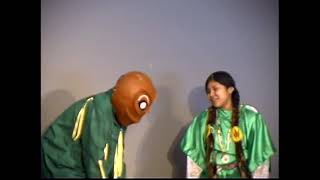
we lose a fact only he sees if you see the rifle but we creep up to the r it begin to turn us slowly toward Shore we lose a few things I sa the whole Expedition you ah see thank you but I fear that no one would remember I Fe that no one will remember any of the good things that I do it is because of that accident out in the woods with Captain Lis still I cannot speak of it let us sing another song huh ah we both men we boers we have many songs that we sing to make the work go easier all the time when we are rowing the boats we are singing the songs so I would like to sing one of my favorites with you it is called janula it mean I hear The Mill at the Mill are the stones that grind the wheat now I will sing the common part and then I will teach it to you so I may all sing it together now everybody sing with me very nice here now I will sing the verses but first I must tell you what they mean for they are in the fren it is a young woman speaking she says my father built the house he built it with three on one two three three carp in buildings and the youngest is her sweetheart then one of the carp TI jump on the set table TI tip on from the Shoni Nation who live there in the Rocky Mountains these horses they carry our things as we walk many many sleeps to cross these mountains many nights we have nothing to eat we must eat some of our horses now horse it is not bad H it is better than dog but when you have much hunger even the little doggies they're good with a pinch of salt huh we but though we have much hunger we work together and we cross those mountains then we must cut down big trees for to make new canoes and then the Columbia River we go and every day the river goes wider and wider and shake alling for the doctor doctor said Shake That Shake that little get up D now you ain't sick all you need is a Hickory Stick shake that little shake that little cannot succeed in our voage we cannot even survive on a way home we meet chief deant of the wala wala nation and we are very hungry so he bring us many roasted fishes for to eat there are those of us who do not like fish so we rast some dog and we have a great f Feast when we are done with our Feast Chief Yap says my people wish to see you dance so that night 500 people maybe more both of the waa Wala and shnap Nation they come to our camp and they gather around the biggest fire of the boage first we dance for them and then they dance for us all of them men's women's and childrens they make a great circle around the fire and then the drumming begins with drums such as this one many drums and rattles and singing beautiful singing as if you can put the Fire in the Sky into sound the Indians dance about the flames and then they come to us to the members of the Expedition they reach out their hands and they guide us into their Circle where we dance among them Chief Yap says my people will be Lonesome when you are gone but we will dance day and night until your return that then he says that to remember us he wishes to learn one of our medicine songs to themselves and sing it with great pride so let us all sing this one together with great pride huh Yan dood went to riding on a stuck a p in his and called it macaron keep it up y do find music the St the behind and I went down we saw keep it up y the music and the step and with the and there was Captain Washington Upon A SL St shout to his men I there was a mar it up musep thank you we leave the Indians that we cross the mountains we have Many Adventures and then finally we are racing home with the current of the river toward friends family and honor as great explorers at the first Americans to cross the continent but I fear that the honor will not be mine it is because of that accident I think I must tell you about it now I do not think I can wait any longer it happened as I say just in the last Moon about a month ago we are almost home we see a great herd of elk on the side of the river so we paddle our boats to show and I go out hunting with cap Lise we track the along the side of the river cap L you go one way I go the other then there in the trees I see a brown shap moving and I think to myself ah I have found our dinner a nice fat elk so I raise my rifle aim and Fire go now I will become Captain Lise Cru out you SC you have shot me for many sleeps Captain Lis he cannot stand nor can he sit he must lie in the bottom of the boat until his wound la thank you very much you thank thank you all so much it was really a pleasure to play for you uh my name would I'm not being misten okay we like that that country Mexico now is I had to slavy calling chains will fear them not we trust in God new Eng's God for when God ins us oh were ships were shly my the comes on with all our troops Veterans and to be for are re I have your invit dad hey l as you can tell that's why I talk softly so you come closer so uh but uh I welcome you all and I it's great to see so many people here and um and they have some some children that have been able to come from their from St Michael's cool um so that I'll let we'll turn over to Bob Bob good morning I'm Bob archabald I'm the uh president of the National Council to Lewis and Clark Bicentennial as well as the head of the Missouri Historical Society over on the other side of Forest Park and I want to welcome you all here and a number of people have said to me uh please tell audience members and anyone else who's here to please turn their cell phones off oh so we can start with turning off S of Good and Evil and that point at which human beings with the knowledge of Good and Evil became capable of making choices of choosing to do good of choose choosing to do things that are ugly choosing Beauty uh choosing the right or choosing the wrong and in some ways what we're here to commemorate today is really in part the tragedy which is the legacy of Lewis and Clark the dispossession of many people the oage included I'm also reminded of Frederick Douglas less ugliness more Justice more fairness and more Beauty and so with that I welcome you all here this morning and it's now my pleasure to introduce Leonard maker who is a distinguished oage Elder director of planning and velopment for the oage nation a fluent speaker of the oage language he is a historian and a keeper of traditions thank you Dr Lord and we all ask each of you to pray with me I'm not the only one that should be pray think of all the good things that you've seen here and have heard and will hear here so I'm actual moment of reverence our dear heavenly father we're coming to you this morning thanking you for this most wonderful day you have made for us in this good weather you have made and again we we come at this time of the new year to to to ask your blessings on this special occasion and in this special place here and all these good people who have been gathered here to observe this wonderful commemoration of our people's presence here in this country that was once ours we come again today today to ask you to watch over this activity here today and ask you to bless each one who had an opportunity to participate in the making of this great occasion and in in this piece of work that's been done here the artists and all those who have supported her we ask that you just bless the good people here in this state and this city who have been wonderful to us and have welcomed us here again back to our homeland so today we just we're mindful of all those good things you have done for us and again we thank you for this great country of ours whose history now we all share and for all this wonderful things that share together so we put these things in your hands today believing that you are truly our Lord and Savior Jesus Christ that through you all things are possible and we just raise up our voice to you in praise and glory and worship and ask these things in your precious name amen amen I'd like to ask Elizabeth Sayad who is the chair of the Louisiana Purchase by Centennial to say a few words I just want to welcome everyone here we are so delighted to have this very creative and moving work as is a part of the three flags thank thank everyone very much for coming and I have a few people I I would like to thank first and foremost Matthew my wonderful colleague and um and the oage nation who has been so very generous to to teach us to listen to us to Mentor us um many many people and so please forgive if I forget anyone but St Louis um city parks and Forestry Department have been very helpful I see some of them here um thank you so much for your support um members of the national signature event committee have helped us our work for a very brief presentation and understood what we were up to and what we were about and chief grade began to immediately teach us some things that were very important for us to know we went to the reservation in Pusa Oklahoma and Katherine redcorn who's the director of the museum organized or artfully created an incredible day for us in which we met and learned from many people so here at the site you will see this very old red oak tree trunk Matt and I were walking looking for a special place and we wanted an open canopy because we knew we wanted to plant a special sapling that we could Mark in the oage way of of bending a branch down which would then later go grow go to the Sun and Mark away so and I believe Sean will talk about this a little more but I wanted to especially let you all know that the branch is pointing Eastward and there's a short path to the east if you would like to make a brief meditative walk along that path it points to a New Day to a new beginning to better relations between all peoples and between us in the environment and and that is the way that Matthew and I would like to to commemorate this day to honor the ancient oage Presence by planting a new tree that encourages growth and vitality um in honor of the oage culture and language and all of our relationships and I think that Matthew has something he would like to sh uh I just wanted to reflect with you just quickly about uh how I came to to very much be interested in what we decided to do here um in January when the Lewis and Clark exhibit opened in the Missouri historical uh there was a there was an opening ceremony and a series of symposiums and talks that were given and for me personally I felt uh very compelled um realizing that there was a lot of it seems like there's always been a lot of talking you know a lot of discussion going on a lot of sharing of information and that's a very wonderful thing and I think that that was a great start at that time in January and I felt as an artist as I do for my work as I believe I could speak for Karen with her work uh it's an opportunity for us to do something physical get my friend Chief Jim Ron Gray principal chief of the oage nation um like to just um keep my comments relatively brief on this because there's a this is a I want to hear what many of the other people that are up here today just have to say about this um I know for the tribe standpoint as I may have mentioned before um we left a lot of ourselves here when we left these lands uh that had been our homeland for for generations and generations and um we left our Mark here as you can see in the Mounds and the various Village sides that have been uh discovered or or accidentally discovered over the years um and our presence is still felt in the streets and the names of towns and lakes and rivers and cities and uh but very little is known about the people themselves and I think after this weekend I think that's going to change and uh and I and and because of that uh all these gestures of Goodwill by the community here um I felt compelled to um to acknowledge at least the an opportunity to kind of extend the tribe's cultural influence in this area not in a grand way that um but more of in a humble uh simple way uh of this tree planting as uh many of you know the story of American Indians in the East have been uprooted moved to a distant land now known as Oklahoma and this is a opportunity to kind of um acknowledge the the passing of the an entire Society from this area but in a way that doesn't really imply anything other than the fact that that we were here but in in such a humble way and especially with the tree in such a vulnerable state you can easily understand how tenuous this gesture is because environmental forces vandals animals Anything could happen to disrupt this thing in the future but the fact that we're all here today and we're working on this to try to make it possible for this thing to live I think is a is a perfect symbolic gesture of what this event meant to me and hopefully to all of us involved that uh hopefully we can build a new relationship that could be symbolized by a tree that could very well last for 250 years and on that it's worth it's worth participating and it's worth having hope that uh this thing will last long after we're gone and uh and it'll be a good way to remember our people's presence here thank you for the invitation to be here today and um uh when Karen first called me and asked me uh you know what what can I do how can I commemorate the O ages and so uh we decided that she would visit the museum and I asked asked her uh what time she would be there and then I planned for elders to be there to meet with her people and traditional people to come and visit with her uh and we met from 9:00 in the morning we didn't even break for lunch I had lunch sent in and we talked till 7 that evening oh and I think all preaches here uh uh none of us is more important than the other whatever and um and uh I'm just glad to be here today and uh I just wanted to say that uh we feel like we're residents of Missouri too we're formerly from here and uh and you're the show me state so show me that we are thank you thank you Pastor now I call on Nori Boyd executive director of the Missouri Arts Council thank you the Missouri Arts Council is very proud to be be part of this event and to be part of the commemoration of the Lewis and Clark we are sponsoring uh partners with the National Assembly of State Arts agency the National Endowment for the Arts the New England foundation for the Arts and various other Statewide Arts councils across this area that the Lewis and Clark path took and our local partner uh that is helping us with some of the artist sponsorship is the regional Arts commission here in St Louis so we're quite pleased that the Arts have had a major part in this event today there's a very thin line between Arts and Humanities and some people say the humanities are history and the art is is Art yet before cameras before cam quarters before tape recorders history was recorded through the written word and through pictures and art depictions few more I'll take to the musicians and singers thank you very much thank you so much now I call on I'd like to address chief my elders Foresters singers brothers and sisters and I'm very happy to be here I think this is a Monumental moment in all our history our history is tied together and as an further example of that there is not more than a there is more than a few here that are related to Captain Nathaniel hail prior who was on the Louis and Clark expedition he married an oage and the rest is history I believe we've come home this exhibition that's going on in the museum here at the St Louis Art Museum these objects I would like all the citizens to try and take ownership of this because we belong to you and you belong to us and I'm very honored to be here and I thank you for this time Mr van be course don't sing talk first and see later good morning and uh good to see everybody this morning and and it's good to have our elders here our people here with us today and it's uh very touching on what you all are doing here for our people it's a historical moment here and uh we I've heard about uh just read about this what's going on what's Happening here today at this uh pointing tree and and it just feels good that we're able to come back to where our people used to be our our ancestors of all of us here that that made it that made the the trip back to Oklahoma and our parts just uh we're going to sing a couple of songs here today and bring God into our midst and uh and bring him here with us as we uh carry on this uh this occasion here so the songs that we're going to sing today is going to we're going to call upon almighty God to come here and be with us here look down upon us today so with that that's all I want say you at this time I thank you for this occasion today as I said couple months ago I'm glad to be here with my ancestors in this area here and it's a your people and my people lot of commemorating a lot of stories about that and is and I uh like this tree little tree they use that in a Native American Church from 1800s this way we try to uphold that tradition our elders sit down for us it always been said that what they said back there we're saying it today they said everything we trying to uphold what they' done back there like there ceremonial dances na American church we still involved in that like I said there tree that's what they use back there they could not that longw build it up we going evening time stay all night midnight stop going into a new day they always say what happened back there yesterday forget about it look forward that's what they tell us we try to do that if they were here today they would be talking those things their language our language some of us know how to use that language today we thankful for that and these songs my nephews going to sing they call me Uncle that's a good word Uncle I'll have one if he was here he would he'd be doing this what I but they call him Uncle call me Uncle that's a good word and these songs that we going to sing you can visualize back there when they were here they had old sages singing Old Sage songs but come this away we got uh the ceremonial dancing like that big drum they had here you want to hear that that's a blessing for the Indian people to hear that drum that's a blessing on there these are songs that he's going to sing it's going to be a blessing to you for us continue on with one and these songs they have a prayer song and it's good they do that but you get closer to almighty God when their song sing when hear that song hear that drum and ceremonial dances that's when all everything gets together all those ages maybe this they have it in summertime maybe you people Venture down that way four days all month of June we have it down there that's what they done back then that song that the seral dancers brought even to our tribe in 1800s we try to uphold what they brought here be careful with them they said take care care of him take care of it's going to take care of you in the future to almighty God and his songs that his nephew is going to sing like you said that's Prayer song they have them songs it's like the church got songs in there you get get close to God you can hear those songs Church same way here in people understand those song Our People different tribes all the United States there's over 500 tribes of Indians in the United States understand to God pray to him as I said the other day at the Museum our people are praying people when that sun comes up he to pray I noon evening time still that way they said you ask almighty God he's going to fix this way whatever you want to ask you it's been that way your people said that my people said that different tribes of Indians understand that and those songs that they going to sing is going to it's a prayer song and I want to thank you for listening to me and and I want to God bless each every one of us here today thank we're going to now make a bit of transition me watch see msh I'm cold that tree may be an intangible thing to you intangible it may be a uh a non life thing to you this ground you're standing on May look like it's not not much to it but when our people talk to the elements Sky the Sun the trees the birds ground they listen they listen to us listen to our people you that are biblical go back to those first days of Genesis and God spoke the word Let There Be Li night day there be time he spoke to the Earth and said let there be Land There Be Water Mass there be the heavens and when he spoke they listened and they did what he said became land became the Sun the moon the elements all that it became from his word so God put that there spoke to those elements and and they became and they listen hence they're sacred from the word of God that sacredness is still there still in this tree still on that ground you're standing on Satan our people that o AG that was here mon why M you why that old one back there that's gone that's buried he understood that and that pressure for our people to Westford that pressure we kept that the few things we kept of that o age you see some of their things that they gave us just a little bit to hold on to those say we still do and this and and we're well with it we're prospering with it and I say it with confidence H AG people are blessed people because from this spot when that pressure come on us things happen in the Divine we called from New Orleans we called that black Rob we called it the rosary the Native American Church come from the South Way deep in Texas and Mexico it come to us and our brothers the con Indians they were dying out and they brought a drum to us those three things I look at that as divine intervention that saved our people and gave us Hope and Faith and regeneration for were not for them and we came when we walked into Oklahoma we were devastated Give It Up going there to die but those things came and now look at us healthy we're alive we have little old saes we have old old saes we have all our ways we're going and we're going into going into the future so that's what we're going to talk about today we're going to talk to elements we're going to talk about them open we going to talk about you Lewis and Clark we're going to talk about what what was what is and what will be what we're going to be asking for our people always start as as my my brother van said we we we ask God to come in and be part of this ask him to guide this let him do this we're too little we're nothing let him have a hand in this and when he comes in we're going to turn it over to him because from this spot from what was this was all o AG at one time from Chicago to New Orleans to amarill to Witchita back this way that was oage it was on now we're over there but for a little while for a little while the old s is going to have this this is ours for a little while this right here but Karen and Matthew did we're going to take it just for a little while turn it back to O and then we're going to give it back you and you take care of it you turn this to a nice part clean it go Stoke up clean it up that's what we say clean it up stand up clean it up clean it up turn it green put benches out there make it nice if you call us we'll come help that's we're going to do that for a little while take this make it o Ag and give it back to you back and forth that exchange back and forth you give us some things we'll give you some things that's what Lewis and Clark and Jefferson and Washington and Adams they understood that about the ending respect those men started with respect with the indan read Jefferson's letter and you'll find that how he wanted to treat the Indian he said treat them with respect those men on that expedition Savvi that they understood that somewh New York understood that respect prior shanos saaka Jia they understood that they took that respect and put it in front of them and they left from here in 1804 and they come back in 1806 had it not been for that respect for that Indian they' never made it you walk up to an Indian if you got respect he knows it can see it if you don't have you'll never connect with an Indian if you got respect with you you bring respect stronger than blood so those are the things we're going to do we're going to start now and we're going to turn it over now to our singers my my brother van and his helpers they're going to ask God to come in for a little while be part of this and then after after that we'll have nephew tether this limb because this limb when it's tethered it's going to it's going to Point East MH walk k the way y WI the the wind there's one spot in here we're going to have to hit because there's tree roots's see yeah I'm going to hang on my now we're going to going to give my closing prayer like a what kind of you Jinky walk on to eorn E bet Missouri Missouri ma there it keep you enough on that day they talked of respect and fell fellowship and Brotherhood with our leaders and their leaders on this very ground red oak tree young sapling this land this park w w yink it's good what they did you give this tree strength you give this land strength count walk wel ehorn When you pray our people told us listen I ask you to listen to this prayer to she there there we brought in she walk by strength it thank you at this time like to have our closing song from our singers we'll consider ourselves dismissed up the God up the at this time if you would let's give them a round of applause thank you so all to be with i a I see you again it mess me up great great day yeah guess we better shells are beautiful I said like stes we have to go single excuse me yeah you can