Tent of Many Voices: 05090501
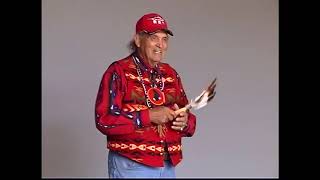
h he hey High Happ Hall I presenter Cheyenne flip and she's going to be talking about brain tanning hides brain tanning hides and I'm going to hand it over to her thank you my Indian name is strong strong Medicine Woman and I've been learning this since I was a little girl but at that time I wasn't paying attention I had to go to college and learn from another person and I like doing this because I like to finish products this is a buffalo hide that was killed up north at the buffalo ranch and it's about a month old since it's gone my when I finish it my younger brother is going to paint on it some of these products that you see up here are finished products this is a ALK hide in the chair it's a commercial hide this is a nether hide that's created into a dress so you can see some of the finished products that you can do with the hides when they're done here's a bag it you can hear it it's loud and sound in the sound and it's parch the moccasins the turtle when the babies are born the mother that's carrying the child the sisters of her are her cousins the females will bead them for her make them for the child here's a vest that I made 10 years ago and I beaded it I finally wore it the other day some um rabbit Furs because of the seasons you get the two different colors of it this is my brother's bear he had to throw that in I didn't have a bear hide now I usually ask the little girls how many of you have Barbie dolls they raise their hand how many of them the heads pop off they're still they're raising their hands this is my Barbie doll her head don't pop off and she's got real hair so a lot of times you see things you don't really know and how they come about these knives are used for helping to tan the hides the moccasins here were given to me by an aunt 35 years ago when I was a Prince's attendant to oil celebration the belt here is also made from leather I've kind of gotten modern and I've got a tool here that I created and made through the classes and I can show you how easy it is this is another bag that was made and you make your BTS from it I'm kind of I'm going to show you a little bit how I do this as I pull down all I'm going to do is scrape the meat the fat because that deteriorates it it's fast easy and simple you could do it in the winter spring summer or fall as long as you get as long as you get the the meat and fat off then you work with this here stuff okay after you get all of this off the light fiber that will be on the floor I usually put a tarp down below to catch it moisten it the white fluffy stuff a little bit water roll it in a bowl when some of my things that need to be cleaned I turn around and scrape it and rub it off to get the dirt and stuff off now sometimes they get wet and really Saka I mean really hard all you do is wet it again work at it rub it off you can clean it back up again a lot of these things will last a long time if you take good care of them just like regular modern clothes so what I do is a brain one animal's brain will take care of itself the tools that we use long time ago also came from the animals these are deer bones I like to collect them after the dogs chew it on them because they get the meat off of them for me take them if I have the meat and fat on it roll it on and pull it off fast and easy and then when a little bit later all you do is come back and rub on it and get the rest of the stuff off of it some people say it's hard but you make it hard for yourself if you don't do it the right way some of the finished products people ask I need some new leather for my kids' leggings and moccasins I what I tell them is go ahead and kill a couple deer I'll teach you how to tan them you'll learn how you and your family and from there on someone else has learned oh thank you ready good afternoon welcome to the T of many voices our next presenter this afternoon is Raymond Ogle and he's going to talk about about setting bold meeting and popler so I'm going to hand it over to him is this mic on Okay I uh got this I guess idea for this uh presentation a while back when U probably quite a while ago when I first started working for the forbeck tribes I was working for the I've been working for the tribes for about uh 30 years and uh a few years into that I was in my 20s maybe probably late 20s uh an elder of the of a tribe who was on the tribal council one day stopped me uh we were uh visiting in the break room and uh and as we were leaving he called my name and he said uh I want to I want to tell you something he said so I stopped and uh he said uh I want to tell you something that was passed down to me when I was a young man he said and I want to uh pass it on to somebody so I want to tell you about it and uh at that at that uh young age I was wondering wonder why he's telling me you know is it real you know is it is it really something that he wants to tell me or is is he just pulling my leg and he goes uh I I said uh what is it and he said well I want to tell you about how some of our sue people got here on the four reservation and uh so then I I I started listening to him and he said um uh as Sitting Bull was passing through here to uh go on to Fort Buford and uh when he decided that you know he left Canada wood Mountain area and and uh they were starving up that way and and there was you know and they were really having a tough time and so I guess uh thinking of the children at that time he didn't want to see his children suffer he he made up his mind that he was going going to uh do what the government wanted him to do which was to to give give up and turn himself in and so uh that's what they were doing they were they traveled down through wood mountain and they came near here and uh I guess uh in doing this they he met with the other leaders of of the the camp and uh they wanted to you know discuss what what else they could do do and uh so during that discussion I guess uh they they considered other options there wasn't very many back in there CU there back in those days because a lot of the game was gone you know the Buffalo they had hunted them near Extinction there was hardly anything left to eat uh they were being uh you know I guess hunted by the by the soldiers and and things like that and they were tired so he finally decided well we're going to we're going to give ourselves up and so on doing that they like I said they camped near here popper and they had the meeting and during that meeting he I guess he he in his wisdom he uh you know decided uh determine that maybe some of the his followers didn't want to didn't want to do what he was going to do you know and so he h he asked them you know in his meeting he he told them he said here's what here's what I plan to do you know H give myself up but if any of you people people don't want to do that uh there was a camp nearby uh I don't know how many miles away but but there was a camp there and he said uh that the people in that camp uh offered to you know provide uh or offered to accept you people to stay with them if uh if you decide you want to do that you know if you don't want to give yourselves up like like he was planning to do and so um several of the families uh decided they wanted to do that and uh and so they they uh they kind of had to do it uh secretly that's why they they wanted to mix in with the other group you know they I guess they didn't trust the uh government as far as what was going to happen to them you know uh if they didn't if they did if they did uh decide they didn't want to go back so so uh in order to do that uh they just uh move their camps without uh you know trying to uh noticed and so they mixed in with the other group um so I guess that's that's what uh Gerald wanted to pass on down to me you know and uh I I I when I first when he first told me that I I was wondering what you know why did he want to tell me that you know but uh it it sign it finally kind of uh you know hit home that you know this this was a something that was told to him and this is the way that our history was was passed on from one generation to the next because we didn't really have a way of you know uh a written type of a language we we there was records kept of certain events that uh they wanted to share um uh by pictures you know they they drew pictures on uh uh you know I guess uh bark and skins and bones and things like that they drew whatever they had to that they could draw picture on they if there was an event that they want to keep a record of then that's what they did but as far as having any type of a written language the uh our our people didn't do that so the only way that they kept uh uh Records is by passing it down from one from the one generation to the next and uh and I guess that's one of the things that uh uh was something that our Native American people I guess had was good memories um I've heard that you know is that Native American people have good memories because of that they have to keep records in their minds you know and share them with other other members you know and uh so I guess that's that's I was I was kind of glad that this was shared with me you know and uh I plan to try to uh do something with this information uh um this is just the first time I've shared it publicly uh I'm I'm hoping that I can make a short story or play out of it one of these days uh and uh I think there is some historical significance to that information so that's why I decided that I wanted to you know do this presentation at this time during the core here Discovery so that's all I have to say does anybody have any questions for Raymond no want to thank you Raymond for coming and I hope you folks have a good afternoon we do Clos in 15 minutes so if you haven't seen any of the other exhibits um feel free to go outside and see them there's the kilbo there's the exhibit tent the TP and a Dugout canoe as well as the National Guard thank you folks for coming and uh thank you for having us in popular Montana thanks