Tent of Many Voices: 05160402T
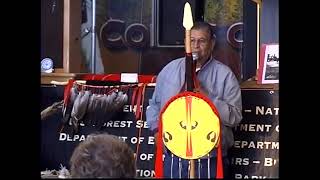
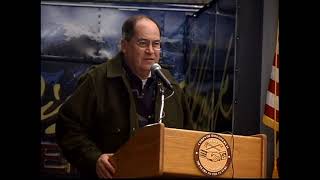
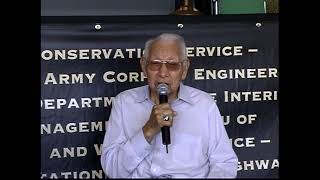
imp the Lear Expedition on Native Americans overall uh I'm going to introduce uh the individuals and talk a little about the moderator Amy M Amy M from left to right uh Mr Alan P his body K and Mr Rob few words about Amy Amy is a a man of the three affiliated tribes of North Dakota she's a nationally recognized scholar advisor and presenter on life and legends of Sago The Interpreter for the ls par expedition in 1999 Amy Mass joined the National Council of the Louis clar B and in 2000 was named the first chairperson on the council circle of tribal advisers Amy received her master's degree in education and marketing and complet for doctoral doctoral coursework at the University of North Dakota she is currently employed as tribal involvement coordinator to the National Council of Ls and Clark Classen she's a member of the board of directors of the North Dakota leou and Clark Fort mement foundation and serves on the North Governor Park advis commit Amy and her family reside near theer river in Western OTA so let me welcome uh the panel moderator Miss Amy M thank you Tom it's great to be here this morning and um we've had a splendid weekend here on both sides of the river and I would like to thank the organizers of this event U Mr Dale Chapman the executive director of the Illinois L par commission and Greg ker from the Sha nation of Oklahoma for all of the work that we have done to bring tribes into this commemoration at this point along the trail and a very meaningful significant and historically appropriate and accurate way and this is the homelands of the Shi uh and these are these we are now in the homelands here on the lower Missouri in the areas that TR to remove from following Expedition and so bringing tries back into the signat events on the FL Missouri has been quite a challenge but we' had some tremendous people who are making all that possible as we Native American people became involved years ago in this planning or in the planning of the threeyear commemoration of the Lou Park Expedition we were continually presented with ideas conversations discussions symposia presentations focusing on Jefferson's Vision the discoveries of Maris and William Clark the exploration and the settling of the West the West however was not an untamed unknown Frontier it was our home millions of Acres of prairie lands mountains Coastal lands were populated by millions our ancestors who for centuries had been living out there quite suc sucessfully I might add living what was during the early stages of this commemoration going as Jefferson's a vision for the West that Vision included the opening and settling of the land out west the creation of an agricultural economy and an agricultural Community the develop an expansion of international trade the creation of an Empire of Commerce our ancestors for centuries have been doing all that and more to very highly civilized organized politically ceremonially ceremonially and socially organized structures within our communities that have been created centuries before Mary leis ever arrived in our home land and have sustained over time and are still in existence today the speakers on this panel will be discussing the concepts of Discovery civilization Wilderness and exploration first by Alan pink Alan will be followed by Lobby Connor who will discuss the longtime existence of tribes along the trail and their encounters with the Expedition and subsequent open of our homelands for American incursion with the subsequent unsettling of the West R Arte will discuss consequences of the ls Park Expedition and the disastrous impact the Expedition had on the removal and dispossession of tribes along this trail that which has created Monumental challenges that our tribal leaders still face today Monumental challenges including recognition an issue that tribes are having a tremendous time with today including the tribe from which was born into the lii I would now like to introduce all of the panelists at this time and after all of the panelists will all speak when all three speakers are finished we will then have a a period of time for questions and answers our first panelist is Alan ping Alan is a member of n tribes and he resides near laway idah Alan has served as the leader of and for his Nur people for most of his life he is a former Tribal Council chairman of the Nur tribe he served n years on their executive their executive tribe of council five of those years he served as the chairman he served 4 years with as chairman of the columia river tribes Indian organization which works for the protection and the restoration of salmon in the Columbia Rivers Ellen K was president of the affiliate tribes of the Northwest he served one term as vice president of the National Congress of American Indians Alan p is a veteran of the United States Marine cor and he spent 1957 in oala in his earlier years he worked as a fighter fighter el west and in the Northwest he narrowly escaped death by fire three times on the yak the UN Nation Allan spent 8 years working with the United States forest service for 3 years he was the tribal leaon of the National Council of the ls Park Vice Centennial he is one of the co-founders of our circle of tribal advisers which currently is comprised of 40 representatives from across the from across the trail actually from coast to coast representing most of the tribes that LS and Clark encountered during the 1803 to 1806 trip through our homelands Alan is currently a member of the board of directors to the National Council of the Lou and Clark High sentennial and he is our chairman of the circle of tribal advisors Alan King is the author of a book of all these people and their homelands and is entitled salmon and people he's currently working on his second book and is contributing a chapter into the Elvin josephy Le Clark from a Native American perspective Book Project Alan retired from his position with the tribe in 2002 and he traveled along the par Trail he has 10 grandchildren Bobby Conor is Kaa you matilla and Miss CSE she is the director of The tamas Cult Institute which is owned and operated by the confederated tribes of Umatilla near Pendleton Oregon toas Institute is a 45,000 ft world class Museum and Visitor Center whose mission is to present accurate history of their tribe the katilla and the Wala and to perpetuate the cultural knowledge of these three tribes and to and to their um oh and also to to contribute to their tribal economy toas exhibits depict the tribe's history including their encounters with the ls Clark expedition and the Oregon Trail migrations through their Homeland Bobby Connor received her bachelor's degree at the University of Oregon and her master's degree in management at Lanette University she is currently the vice president of the National Council of Lis by Centennial founder and one of the co-chairs of the council's circle of tribal advisers and she is the coordinator for the council's national cultural awareness campaign our third speaker is Ron arow Ron arow is len showing from the from Idaho Mr arow is a direct descendant of C the brother of Sania who L and Clark relied heavily upon in their successful passage across viate range of the Rocky Mountains from C a very young Shon leader the Expedition obtained fine horses and a knowledgeable guide before they left that Shon Village in August 1805 and embarked on that treacherous Journey over those mountains R arow is the executive director of the fort lenai Indi community and he is president of lenai environmental and Engineering he is currently the chief executive officer for the fal tribe of Laguna England Luna New Mexico Mr arow has two master's degrees one in educational Administration and the other in environmental science he is a second he's a second year candidate in his doctoral program in education at ID State University and the University of New Mexico R is here we are very honored that Mr is here with us at this again he is here this weekend with his lovely wife Rose and their two grandchildren ladies and gentlemen I would first like to introduce or call on our first panelist Mr alen P thank you and I'd like to express my appreciation for the people that put these events on and I'm honored and privileged to be here to speak before you today and I got involved in this uh Vice and because I perceive something with missing from this whole commemoration and one of the problems I had was there's a number of words that if you use it in a context of from another culture it doesn't fit with our cultural view or perspective and there's no words that fit into this category now you'll see them sometimes in the journals or even in dictionaries or other uses but if you put in the context to our our culture and and the way we view the world then it then it changes but I don't want to change history what I want to do and what I feel is important here is that I want to add to history and that addition is from our perspective the native people of the United States and celebration is one I've heard it used a number of times and and if you look at the bylaws and the operation of the national Ming par by Centennial Council we use commemoration inste a celebration because I felt that there's a certain perspective that celebration projects and that's you know we're joyful for something that's occurring now for Indian people it was a joyful event when we seen Louis M par to a certain extent but then things started to change you know in in in those Changing Times my people predicted that that would happen to us and so we change celebration to commemoration and I think that's a little more fitting and ACC claiming the contributions of what the Navy peoples contributed to the development of this country and I think that's very important so when you use commemoration I think it's more pitting when when it's viewed from the perspective of neers You Know M Sue any other tribes that had Encounters in the first encounters with the non-indian people so this is also reflected in the 1492 you know we objected to the 1492 celebration you know it's unfortunate that that that happened but I didn't want to see that occur with the Gan Clark by Centennial because I think now is a time to educate people and if that means redefining or adding to the definition of words and I feel that needs to be done so we use commemoration instead of Celebration when we interact with TRS another one is the core of Discovery or exploration you know in that context you know it may be well and fitting for a certain culture say yes I discovered but at the same time the ners people discovered LS and CLK because we were in Fort mad in 1804 and why were that many thousands of miles away from our homeland 200 years ago because we wanted to find out what the heck was going on that's why we that far away from our homeland and so we were exploring and discovering who are these new kinds of people that came to our Island and we call this whole United States and Island so we want to know what's going on so how can a different kind of people live east of our territory on the East Coast what east of the Mississippi River how did they live there for 300 years to have us KN about it so we discovered L Park Way they knew that we were even near the Rocky Mountain you know so those are the kinds of things that we need to add to not particularly change but we need to to uh Identify some of these prot perspectives from tribal people and that is one you know we travel in all four directions the M people here we traveled North to a great lake we traveled East over the BS down in Missouri to five Great Lakes and we knew that there was a great river that flowed South to the ocean and of course we went South as well we went so far south that we seen a little animal and we call this little animal K and kqu the nurse means imitate and that little animal is the monkey so that's how far south we tra so now if first people traveled in all four directions then we knew of these people now it's unfortunate that words become descriped and and the way my father used to tell me is that when we these new creatures come into our territory they're going to speak a language we never heard before they're going to have eyes like fish some of them will have their faces on upside down and and they'll bring good things and bad things and they smell and this is before ran C came to our country so we described them this is what he would say we knew what they looked like and how they acted and what they would do and this of course comes into the Prophecies of of our people and of the change in the world and there's so many things attached to this that you know it take a great deal longer for me to try to explain these things but very briefly of course the language they spoke was English and French and other languages and then eyes like fishes with gray and green and blue eyes we call them s height height white eyes so those are kinds of things and then the faces oned upside down by the people with beards and mustache andol on top if there's any of you out there you know who you are so so there's a great deal that we do but at the same time you know we were very cautious and another word that means a little more definition is civilized and unil and you will see this written in the historical accounts also and other terms as well but then who who defin civilization you know it's one that defines civiliz civilization is the one that writes the history and the one who who wins the most marveles in the whole game of life so this is where the definition then becomes critical from another cultural aspect that changes so sometimes I I ask people you know if I was civiliz uncivilized 200 years ago when have I become civilized this is the application applied to my people so just a little word of trying to understand who we are and what divides us and if we understand those things then we can become friends and neighbors and live among each other and the other word that you will see from time to time and that's the word Wilderness this Wilderness you know you know as I went through G great school you know brought up the connotation oh the Wilderness full of wild beast and dangerous things and things that could kill you out there but that was our backyard we were part of the environment we were part of the Wilderness we never considered ourselves separate from all the animals and birds and insects and fish we were part of those beasts as well we call all the animal people are brothers and sisters because we consider them themselves ourselves separate from them and so that is another definition that we need to try to understand and need to understand that the animal people were here first and then the human beings came and then we got in conflict with all the animal people and they said that you cannot do this to us to us anymore you're eating us and you're using our hide and our bones for tools and clothing if you keep doing that we won't talk to you anymore so when the human beings contined this practice then the animals said well let's sit down and talk this over and so the agreement between the human beings and the animal people is that the animal people will become M because they talk to everybody they could understand each other and we could understand all the animal people but then when we abused them then they said we will not talk to anymore they became M and that's the way we are today so we agreed in turn if we use you then we will talk for you among the human beings because you cannot talk among the human beings yourself so that's way it is today so I thank you for listening I appreciate your attention thank you very much good day name is Sal I want to express before I begin to talk to you my gratitude to my ancestors and the ancestors of all of the na people who made sacrifices wise decisions and face challenges on our behalf so that we might be here we modern people are humbled by the Legacy they've left us they could have killed Leon Park many times and did not they made choices that were very difficult so that we might be here and some of the choices we face today are small compared to the choices they faced in the interest of setting the record straight about this context of Park Expedition I'd like to point out that the Northwest Ordinance of 1787 when this was still the northwest of the United States here in this area instructed that utmost good faith shall always be observed towards Indians and that lands could not be taken without the consideration of Rights of occupancy of the natives and proprietorship of the natives in my homeland in the Oregon Washington Idaho area we were influenced as Alan has already pointed out by the fact that more than 30 ships had reached the coast of what is now Oregon and Washington by the time leis and Clark arrived when the Expedition arrived in our homeland the land was ours we understood that it was the place the Creator gave us to live it was the only place the Creator would ever give us to live it is still the place the Creator gave us to live it is our home not a Wilderness as Alan said it was not part of the United States when they came there Russians Spanish British and French were interested in our neck of the woods and they sought control over the economics of our region and the Expedition came to help establish that route when Louis and cl came to our home we were regarded by President Jefferson as Nations we are still Nations today this story was is and always will be about land it will always be a story about land while Wars are fought over religion and philosophy and control of Economics But ultimately it's about land our home as alen pointed out was not an unoccupied Frontier words we don't have in our indigenous languages when they left North Dakota and came to what is now the Columbia Riv Plateau they encountered the most populous area they had reached when they reached the desper villages coming down the s River to The Mid Columbia to where our people were camped many villagers many lodges many of those Villages one right after another dry thousands of pounds of fish they had not been in such a populated area since they left Fort M and at the time Fort Mandan or the Mandan Villages near Fort Mandan were more populated than St Louis when they came to our homeland we had law we had philosophy we had a variety of forms of architecture the homes we lived in were completely dependent on easily renewable resources we were mobile we had alliances with Nations near us and far from us with reciprocity agreements in our transportation routes we were not heathens Squad drudges thieves Savages or even Chiefs a word that is from our borrowed language English whose Origins are from a neighbor in the United Kingdom of England we were peoples whose identities emanated from our families our Clans and our villages we had social order we had names for the places and all of the names for the places in our homeland were stories every single story was shortened into an abbreviated fashion that you would Now call a name but Louis and Clark came and renamed rivers and places as if they had not had names before one of the unfortunate parts of the lisis and Par journals but also fortunate is that they tried very hard to write native words sometimes they became very very close to the actual pronunciation sometimes they came close to the namin that people call themselves sometimes not in my homeand call themselves wul Louis and Clark called it wala wala wala wala is the place and KY has from the Ser of tribal advisers has one of our homeland Heritage Corridor maps that you're welcome to take to see the na place names in our homeland compared to the names of Le and Clark Lewis and Clark when they came through our homeland were for a variety of reasons not considered very able many modern Americans read the journals and Marvel of the accomplishments of Louis and Clark where our people thought they were living precariously where they didn't belong on our first one of our first meetings with them they bought 40 dogs to consume they were afraid of the fish Clark remarked that he enjoyed the boiled fish cooked for him by a man we point that out to all the men at home the boiled fish was cooked by a heated rock in a tightly woven watertight basket and it was tasty one of our leaders served him roasted mullet or a sucker fish it was a white beat fish and it was tasty but there were two problems it could not afford to buy dried fish from us because they were poor when they came to our country and we knew from trading for thousands of years with other people in homeland how to price our prods when Louis and Clark came our ners relatives Al ancestors escorted these strangers into our homeland and there were some remarkable things they noted in the journals this is one of the very good things about the journals they noted the division of labor between genders and people they talked about anagrus fish salmon but they didn't understand the life cycle of the salmon that travels the world and comes home again to spawn and die which is why they were afraid of all those dead fish that were floating in the river that we call Cre they noted that we had lofty elegantly formed horses and that men and women could ride equally well they know that the picketed graves and burial grounds for the most part they respected them something we hope that everyone who travels the trail today will also do leave the arrowheads where you find them leave the S of rocks untouched please we were we had a very lean nutritious diet with a great deal of variety probably 30 kinds of roots six kinds of berries and today notably scientists have learned that the darkest fruit for instance aqu berries or blueberries have the highest proportion of antioxidants we might have learned something about our diet from living on the landscape for thousands of years we had handsome men we still still do we had a variety of forms of games we still do some people politically prefer not to see tribes involved in game get used to it we've been doing it for thousands of years we had Norms of hospitality that were unequal we still do and we had captives people call them slaves anthropologists in particular but if you forget to leave our homeland we could marry you off we might put you to productive labor when you come to visit make sure you know where you leave your car when Louis and Clark arrived in our homeland we were the only people there with all of our relatives and animal people but somehow between their arrival in 1805 and the beginning of my involvement in plany meetings with this Ste people in 1998 we fell off with maps the circle of tribal advisers has been working very hard with the National Council to put tribes back on the map to make sure that we're not invisible during this by sentennial because you don't know how to find us we are trying very very hard to connect our history historical homelands as well as contemporary homelands through these Maps we want you to understand that our knowledge of the ecosystems in our homelands represents knowledge that can help America protect its resources if America listens the circle of tribal advisers has a few messages that I want to share with you now so that you understand very clearly what we come here to say we're still here we're not extinct we may live somewhere else but you can still come visit us today and if you'd like to come visit us the circle of tribal advisers have prepared a directory to help you travel the trail and visit Indian country and Katie has those directories and she'll be handing those out as well we want you to know that this is still a story about the land and since it is now our mutual Homeland we have to all take good care of it including the water that gives all things life we want to remind you as Alan has that this is a celebration for us but a commemoration we want you to be respectful as you travel through not only our homelands today but the homelands of our people for thousands of years and we want this country to recognize the contributions that American Indians have made not only in the form of our land and our knowledge and all of the species of plants and animals and fish that we have contributed to your diet but we want the nation to recognize the contributions made from our philosophy and our religion and our laws and most of all we want to take care of the gifts that the Creator gave us in all of their forms winged in the water on land even the Rocks talk in our belief system we hope that when you come to visit Indian Country you can think about things and hear the stories in the place where the stories began when LS and Par traveled our landscape we were not the backdrop to the story the plants and animals were not the backdrop to the story we are the story that L and CLK traveled through thank you afternoon you know kind of after listening to P like to thank F here particularly as Amy said earlier to that's a we're from l s we if we are called by our Ally s the people the headwaters of of of the CL River and so th into country you know I heard a couple speak yesterday the L very frankly they very fond of her contribution help and assist and guide the court govern partaking in this in the C call courts govern the role she played as a mother as a friend I think demonstrates truly the the the the most touching humanistic side of motherhood has lost V the coin that was presented in res of p i was there in daying that happened with first lady you know it was a it was a special moment for the to have to have our grandmother to be HED that fion res on the US coin as I gr through grew up in in L High County we talking the birthplace sa the birthplace of the L people for 12,000 years long before the time of we look at the history of this country those tribes who play a significant role in this let say along the for Discovery to accomplish this go as second we was brought back into the valley bir place my we asked her to continue to assist these men the white men the titles we call Title in the last on and also the black one we call the the black white man New York we got pushed into L my country you know because of the pl PR we see the early rivals caners who want the L might occupied as far north as great fall Montana the Yellowstone you look at sh let me give you kind of little history here history l in sh hisory Chon speakers consist of Indian people from the present B San California through NADA through California through East Oregon the P our cousin as far north as can as well as in Utah Wyoming of Easter Eastern brother sisters as far south as North Texas New Mexico commandes we all speak sh about the L we occupi the East West Montana s yes we have exp The Black Crows man Ed us as well our Ally I he way from the speak sing a song yesterday at the at the college here College understand was also directed we had I could growing up in Sal in 1955 born 1955 count half my people spoke s so s joint Jack Teno the son of our last really honor Chief Endo at a NES house I've talk in the past with that with the other neser people most SL Thunder from reservation we had an alliance with many of our classes and and and really and honestly I think you know what happen was inevitable people have like let me get remind the contribution sa me and wife as long as they gu we hold fond we close to our hearts we are very static of contribution a little piece of History they car themselves as well my people but what happened later it's difficult to some they accept in 1867 gr General stat elect High India reservation by executive order 100 by 100 m reservation of my valy 1906 T Roosevelt St them high their homelands we were placed on for H Indi a another tribe reservation a tribe that we shared the same language with the same Tri we also F periodically as it came into our head did the S so still today Alis are exiled within the four hall renovation we're third classing within the forall reservation remember this is the same Tri a couple of years ago we recognized s like by us C the same tribe that helped for discover CH his goals the same tribe that provided was the tribe of Saia as well as the tribe of John Baptist AR p and our contribution to America is very tremendous very very Bond very proud of but to see what has happened to us is really difficult difficult to accept today why did it happen to my people it's something we can't even answer among ourselves today I look at the society here today you know you know majority people in here of the dominant race Europe Americans now you guys must be here for a reason you must follow probably students of L CL R and I have this in the past with number of hisor very M St Ambrose who talked about the L par invol the Daniel what it means to Le my people it's very difficult to to like Mr P this CA the celebration commemoration appropriate the L high right now is like we have never lost our Indi this but the only way we're going to return to L High Valley to be restored as a tri again to have Congressional Act return some land back to l l High County still 94% land today as we know they L High county says L medicine will we one of the medicine PRS one spoke at the at the big PR Wyoming my the massive varal SI their people goes back over 12,000 years about my family that was bomb the US Cal because way of BU is not non Christian and they BL up our remember this is the people sa we were talking about they gave so much to this cath when it's in the Di gave gave the to the now this story this story is it's very soon to many tribes look at the people of Chief Joseph they came through our Valley Le Valley trying to get away from Calvary in the present day of L and then the under the Moonlight under the Moonlight the L up with the left the for 160 horses and L ride it's not any the B were in a valley in L High County basically we're goinging to attack the the fleeing as Indians but the L High people we provided to this group of people Val 5al my like like about this called who n the the G jti you look also sh Brothers over in Oregon we were briefly recognized by actions of Bill Clinton president we turn around as and was again recognition by secretary nor we got the one there Falls I'm not recogn we have the little Montana as well the 53 something plus that recognized by over 150 non recognized tries this country and many of us like play a significant role and I was talking to V Park the great Grand Park we're talking about the red hair the war chief if you read the 1855 Jal of the LDS church when he established the LDS Mission Valley it was a redhaired l red that's the leg you know people the son of and so you know our relationship was the country go beyond the Court Discovery you look at the L my son was great our John Baptist CH and it's very difficult you know us as a father tell and a grandfather as well I let my children who res for reservation you know we yearn and bring going back to the valley the valley fors into the valley when new walk in the cor and it's it's a Dream It's a hope that we still Envision today as a trial that's our bir place the L High Valley create the L High Heritage also helped create the L call saage way there in LH High Valley I was working with a bu of B from University of in Canada there go Alim off the only place in the world is plan GR help development of milk in the wildlife be we partaken as as we ate the Buffalo the El and the moose and the deer White House the you know the if you look at the L Valley we are surrounded by Ms to the east we have mountain range to the north we have S through the Beast we have the L it's our it's our belief among our people we came from the Heavens to look at the B Mountain it touches the heavens the sky above so this is home to L people they home to s or home to her son as well but today we have a sa C City not one L IND County Today is know I think if we talk the par was and second today I think they would have liked to come back 200 years later seeing the one of my people prospering in their Valley cuz we were friends to the for there were friends to our grandmother S as well as her son pal you look at the earlier about Civ life look that the Civilized Tribes out here West of Mississippi who talk about cre chcka we move west across Mississippi to other Indian lands civilized I guess it's it's something we Define we thought we also we believe in a God one God my grandfather great grandfather Pearl old man is the last Le of their C our medicine man he came came the same equivalent to your give hope those your C for those of yous as been prophets he was the sign for 1867 we have the flag that given to him the sign of the Tre a religious man man at peace we're not we were fishermen we Hunters that's that's you look at the s e is showing the bage and the P are sister they to us as the sity people one we eat the the S the S the fall Su the winers still called the winner s it's it's just it's an unfortunate that what happened to Mayor crimes that Park fory met 200 years ago when has happened to us today we're exiled from our own homel today what's it going to take for us to return for help return to Indian people to their homelands you know I had the pleasure of going up to lii County first first 15 years of my life going up through I remember seeing all these Le and Par fls road maps you know Le and Par the bird place and most recently saw the the the trail for the the our Valley with the ners people as they fed the gallery on the way to Canada I come out here just the other day and saw again the same fla I grew up with the pla that the L white people are proud of you know our contribution to America we are proud of what the role second we have played go something as well and U you know we are we are glad to participate by S but I wish there was could under different conditions and recently we had a national Federation of women legislators support a resolution ask to return L high back people backing by my count and we're also asking our the L par senate committee who Head Up by Larry Craig Senator Craig Mel and also Champion Senator Hill it's not this the high where other tribes Sy tribes if we can just look back and open our hearts open our minds look at the needs of these people the Navy people who play such a such a manous role in helping for Discovery Alan mentions Discovery yes you know Liv been in that Valley for M almost 12,000 years I think we discovered that love my country it was home to us it always be home to us today the only time land those back by my county is to be buried in our Valle it's a shame these are the these are descendant of Zia and her brother the only time we come back to W county is when to get bured but today we we are we are very honored to be here we honored to see the app for our grand grandmother we read chapter people and pal and this last week the ne press published a book called The sa people I worked with Washington University for almost 8 years that book published we po work with G mol as well this the most contemporary history to love my people our strugles today as we know today BR the return to God for our Val and uh we hope that people like themselves and support the recognition my people other times also recognition as I'll be allow to return that same hear about the sh we're also remitted in homelands we were friends and allies to the fire Park you know we hav't forgotten where we're from those promises are made to My People by Mary L and park who still hold close to her today and we hope for very than for thank you so very much Alan King Bobby Conor and R we have time for just a couple of questions and we have the mic back here so if anyone questions for any of the panelists uh thank you for your presentation uh my question would be as you point out second sorry I your name thank the events of years ago how would you parallel that to similar events say two Millennium ago as other cultures were stereotypes barbarians and Bal where these new terms were coin and other cultures were pushed out of the way by soal Civ civilized people would you say that there's a very close parallel to that and history has repeated itself well it uh you know this this isn't the only people worldwide that's been pushed aside by socaled civilization you know this is happen worldwide you know South America and other places as well so I guess the definition of civilization is the one who applies it and then of course you get Manifest Destiny you know that says well in the name of Christianity we're going to explore and and possess you know unoccupied lands and so you get into the context of the Explorer and the Discover and that's international law by soal called civilization or civilized country so uh in our respect what happened to us we thought we were more civilized than other people so if you look at it from our side you know it's quite different and because this the history has been written by those that one soal one you know they Define what it is backook will be Avail next week BR ration we also have projects and confederated tribes of you are working on the reprints of the Tha Indian the Imperial tribesman of old Oregon with the University of Oklahoma press we're working on tribal history co-authored teams for each chapter by tribal Elders um Tri staff and Scholars and then we're working on a native place named Atlas so I think um many many tribes and uh Indian Scholars are working on publishing material because so much that has written about us is limited in its perspectives uh hopefully our B that work I work on Dr she Edward she enti historian and we hope to have a book about R Park and asers specifically the book we just focused on that and hopefully will find a publisher by next year in thank you and just one final hist Americans you need to remember there are many books out there about our histories where our elders have been interview way back into the late 1800s early 1900s um interviewed perhaps but still written and interpreted from a non indan perspective and remembering again that leis and Clark has never been a priority for our SES and so Louis and Clark from a Native American perspective is a very New Perspective that is being presented by Scholars such as those that you see here today um I think that that's going to wrap up our panel we have another discussion I want to thank again I am so honored to know and to work with these individuals Alan K Bobby Conor and R AR thank you all for being here thank you and you know the panel you you grac Us by your presence here today we can't thank you enough for being you're taking the time to do this to help us all learn uh the lessons that we should have learn all time uh we have a a symbolic gift for each of you so I'd like to ask Alan to please come forward first and maybe you do theor and um Bobby you're right and imine Jack let's give another round of applause we uh for for Greg pitcher and Amy we have a another symbolic gift for them they were here on the torrential downpours of the first two days so PR we have a an umbrella and a rain jacket from L Clark community so the next time to come back to see us they'll be dry thank you all for being here thank you so much we cannot thank Dr Dale Chapman enough um youran tribal involved in here is an example that I hope we see with every signatur event from here all the way out to the Pacific coast and back to that final event in St Louis in 2006 thank you so very much have 32 I would also like to thank each of the panel for joining us today like to thank you each for visiting as well next presentation inside the tent will begin in just a few minutes and that is going to be by Tony Gerard and he will be giving a program entitled and cl vman so if that's something that's interesting to you please stick around there will be another program starting in moment walk good afternoon everyone and welcome to the cor Discovery 2 we are a mobile exhibit that's traveling across the country over the next 3 years following the RAB L CLK and right now you are inside of the 10 and this tent has been set up for us to bring in different speakers of different backgrounds with different expertise to share different view points of the L Park Expedition and we are very fortunate