Tent of Many Voices: 06120605
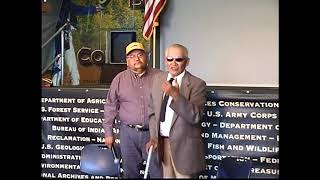
and gentlemen welcome to the tent of many voices this tent is part of a traveling exhibit following the Lewis and Clark Trail we have followed it all the way to the Pacific Ocean and now we're on the return Journey just as they were 200 years ago so 200 years ago today Lewis and Clark were standing up in a cus Meadow at what is now known as weite Prairie and they said described how beautiful it is there this tent we bring people in to talk about different aspects of the Lewis and Clark Story different parts of the Native American story or the local history and culture and at this time we're pleased to have with us Silas Whitman and he's going to talk about nesper cultural resources so let's please make him welcome thank you it's my second opportunity and I appreciate that uh being here to talk about culture resources I um had to ask the person who actually is responsible for culture resources for the tribe on behalf of the tribe and uh letting know wouldn't be talking specifically about the things that that he does but more in line of how we broach the subject relating to culture resources there are a number of us who consider ourselves traditionalists who look at culture resources as everything that falls under what the trib's treaty resources are be they Fish Wildlife uh Roots berries water the land itself all those resources are Salient to our culture that's why we have uh attended culture resources to uh everything that we're responsible for working on part and parcel of that is also the identification of our spiritual direction of what we do with culture resources everything has a use and purpose originally every use and purpose and resource had a song and it also had a approach that would be put together on a yearly basis our year was comprised basically 13 months predicated on the seasons and the last um group that I spoke with I emphasize if you can imagine in your mind a wheel within that wheel there's light life or as we tell ourselves the center of the Earth where we live where we feel comfortable where we protect there a matriarchal society that that is depended upon the females in our society providing everything for us as we move through that the wheel is fed more or less I remember Alan SLU senior as he Junior here telling me fish was oil that made the wheel go around and as they came in that started Life As We Knew It it was interesting talking with a lot of the elders that are gone now and asking for their counsel and their advice and their wisdom about how we would approach that they said you have to follow it as it makes the wheel move you're supposed to walk along that path and as you encounter those things that are necessary that support a nourish and a richer life each one has a purpose and each one changes to another the interesting observations that we made it made me take a step back and look at everything that I as a young child with my grandfather my uncles would you know they would caution me to look at things differently than just looking at it and walking on example is um back with fish from the ocean into the river there are two fish as they come up River they take a different path and hands a different color word that I remember growing up in Pendleton would apply itself to that one fish they look the same but one when it would get into the headat become the other would become and I often wondered about that because at one point in time you can't distinguish between the two until they get to where they they go back to where they were born to die it's kind of a dichotomy realizing that the cultural teachings that I grew up with taught us the same thing that we conduct ourselves in the same way and we appreciate those things that we do hence everything that we regard is a cultural resource that applies to us of how we conduct Our Lives how we maintain ourselves the use of culture resource today is probably the the Bellwether if you will of how we conduct ourselves as people as a npers or Anu we conduct ourselves according with those things that have brought us into this world whether it's through our name or the Deeds we do or the path in life that we choose as long as revolves within that Circle the things that we do within there are how we engage and how we are going to be treated when we conduct ourselves into the Afterlife the example there I use with my own mother mother was ready to go she said I lived a long life I'm tired I've seen everything within the circle I've seen it all and I'm tired so okay okay Mom we sit and talk real late at night I went on a trip and I came back and I heard mother was really sick my sisters my four sisters got jealous of the fact that she was ready to go and said you can't leave us mama you can't you can't so they got in they cooked up the medicine did what they had to do and I got back and was at home and she says I was ready to go and they wouldn't let me go now I'm going to suffer and I remember that I am going to suffer I said jeez mom you're preaching to me he said well everything that I've seen now I got to go back through and if I do things right maybe I can see all those things again but why I'm tired so I thought about that you know and that was a real important cultural teaching because you never she said if I get somewhere you pull that plug remember I don't want to suffer and I thought about that thought about that and to me that's kind of a direction of how you want to conduct yourself you don't want someone to continue to you know fuss over you while you're suffering the thing is in with with animals and I often wondered about the U people that got in the old days I'd ask my my P camei Jen Ezekiel I asked her where did these people go that need to take care of they just went went yep they just went finally I asked my mother says um tell me more about these people say well what they teach them is that after their Journey is complete if they have touched everything around them then they're able to leave and they're comfortable with that and these little old ladies that my mother said that she used to see they would sleep on the floor my grandmother's house one blanket and I asked well who were they said they were orphans said they were orphans from the war nobody wanted them they came back all their people were gone nobody take care of them and so they would stay there and Mom say one day they'd be gone because they're taught that when their time comes with your dignity intact you go out and so that was amazing to me that that uh that still occurred you know the 20th century but there are many things culturally we try to imp CL out on each other in a way of saying look at these things and how you conduct your life how do you treat things how do you treat your neighbor how do you treat your family you never offer conjecture if there's an answer you give an answer one way or another there's no inet so as I told the group the other day life within that Circle would would be a a blessing if we were able to follow that in a way that originally it was maintained I had a long discussion one day with Elmer Paul whiskey Paul he just showed up and when Alan Pinkham was the chairman he was saying make sure you grab these guys and talk to them just talk with them and see what they're going to give you in order to press on and move with developing a program that you need Elmer was kind of quiet he uh wouldn't say a lot unless he pushed him he just came in one day into my office and sat down in a chair and flopped there and was looking at me giv me that glare he was famous for I says to you know what what what do you want what what's up and he said okay I want to talk about my treaty rights I want to talk about fish I want to talk about something you need to know something okay I tell one minute it says let me call one of the biologists in here and listen but who is he I don't want to say no he's a fish doctor he's a doctor of fish oh oh okay have him come in so Ed is an older gentleman pretty well respective of our ways I told him says you don't write things in front of him if you're going to ever learn a lesson put it up here listen to it listen to it and I'll help you later on Elmer proceeded to talk about when he was a little toddler about how we would rideing a Buckboard as far as it go up the clear water then up to to uh where the cellway came in apparently they there was just about only so far they could go and he'd go with his uh grandmother and his aunt on Horseback and they had to go clear up what's called the mudder Corridor up on top by horseback into the bitter Roots each time they would go to a certain stream or location they would have fish they would catch roots to dig berries to pick and they would continue to go on he would drop clear down into the Salmon River come down hit the Snake River by the end of the year when a snow would fly they'd be at lewi and coming back up laway and he was telling us because that was his last trip that he took back then so things have changed now but he gave us the names of all the locations the fish and everything and Alan suu senior he verified all those places for for me we conducted one other interview after that that's all we got after that Elmer wouldn't say anymore but within that he felt the need of identifying within that Circle all those things that we did to conduct our lives and we wondered at that because we don't do those things anymore we see that people tell us some things maybe will never be attainable anymore but there are other things to do that would substitute for that and so those are the things that I would impose as a cultural lesson looking at all the resources that we have of giving that to my great grandchildren my grandchildren seeing if they will pick that up and learn I don't know about my children if they're going to retain it or not because they've been in society a little too long that's the danger part so to this day we try to as culture resource people practicers keep ourselves one foot in one society and one in the other and try to make it work one of the new things that I've seen goes back in here the reason I I was late a few minutes late is that I've been talking with people again about uh fire management working with some people about putting together the traditional view of how the tribes use fire controlling grounds where you live setting backfires some some of the tribes have particular people that they're the only ones that are the keepers of the fire who apply the fire using it to uh encourage your crops using it to encourage growing areas for forage for livestock and so forth and if there is a major fire about how to conduct themselves to do the firefighting without the techniques they use today but actually just going out and setting a backfire to approach it and let it burn out there are many little simple things like that but one of the things that that I was taught through these people is that in using science there is a way where we can survive by using those tools that are there when several of us got together back in 1987 88 said we had to find a way of integrating those things that we know those things within that wheel if we put all the information out be it for fire be it for Fisheries be it for wildlife we have to find a a way of sustaining and surviving it our ways our spoken words our oral Traditions now have to be written down because they're are practice so we encouraged a bunch of young biologists scientists and in the process we educated our own with an idea that what we have is considered a science so we appended a simple term called in cultural science because we' use and sustain our culture based upon what science would tell us and our own observations over eons of time about practices be they in fires be they in animal husbandry be the in fish biology that replication over eons of time is the same as aggressive research to where everything is done by replication over and over and over and over again so we said we know where those fish went we know where those animals went we know how they conducted themselves we know precisely when they did the things necessary to survive as we did that too so with that the commitment at that time in 1987 and ' 88 was that the staff we had until we got our own people trained in that would be to follow a legacy of culture to the science so that we'd be able to restore those elements of the wheel which for why we were had a bent about restoring wolves grizzly bears we were castigated in the state the states because they said how acious of you to try to reintroduce things that are harm to people as know humans are the are the most dangerous predator out there not a grizzly bear or wolf or coyote or fish but a rattlesnake when you play with the ecosystem and change it culturally our Resource Management tells us that you're upsetting the balance the wheel becomes in inoperable or if it's like a tire it gets flat it doesn't work one begats the other soon we have a problem I use the example of uh brother Jean McVey I got bit up by some mosquitoes out in the porch of the house and I was scratching and moaning my fate there I says wonder why the Creator saw it in his omnicient wisdom to bring mosquitoes in here and chew us up he said easy silly because the dragonflies need the feed the bats need the he proceeded to give me this liy of all those things are dependent upon it okay okay noas noas you made your point everything had the stated purpose it is that when we go and change things we follow within our culture a way of of respect for everything but when you change it to try to overcome it not manage it but overcome it then it because something that then retaliates my cousin Leroy when we're in the house he's like my mother he uh he likes to have spiders around and oh they catch the Flies and the gats and stuff for that's her natural food and so he had this urge of trying to stomp on one like that and he says no no wait wait wait wait he'll pick it up he run out the door open the door and he lets it out then what if you get with a big one what if you get a brown recluse said well I'll put gloves on then I'll throw them out okay I can't beat his logic you know so like with snakes my oldest boy always walked around with a snake wrapper on his arm I was telling Lee that said Le I did that too so my mom didn't appreciate it but you have a cause and effect of respect for the culture resources which become respecting yourself respecting other people and a big thing about mipu is helping other people helping them with the resources so that you understand more about us because it's our job to obtain greater understanding of people not to be understood ourselves that become selfish in vain we're taught we follow the precepts of that management within wheel if we follow it the simple things we're doing and we can not be afraid when the time is here and we can walk straight through head high in the midst of doing all that in today's governments the things that are lacking ironically it's like there's a a v near on the Wheel of Life where everybody has to participate represented by some form of government even a poor salmon we get coming back one fish that comes to Clearwater River has to go through 26 jurisdictions of catch and of bother before he comes back spawn and die with us we have to go through our our government structure to protect those interests as I mentioned for all people culture resour itself needs the activities of our tribal government in a form of policies the environment needs a policy everything needs a statement everything needs a policy it's almost like in our old ways where everything had a song that's what allowed it to be protected everyone heard it now the song is like the people piece of shap music called a policy we have to sing to the choir all the time you know and the people get mad at you because you're talking to them know probably several of you here probably man people talking on and on and on so but those are the things that we tried we grow to try to respect and keep that respect moving and some choose a different way the culture resources teaches us about medicines about how we conduct ourselves internally losing a lot of our medicines the applications of the medicines are being lost often times it's being lost by commercialization where they're appropriate or expropriated out there for use and we go out and we share that with people to go out to help themselves and all of a sudden it ceases to exist because somebody else's greed wants to put it on a market and sell it then now there's a lot of things that we normally took for granted we could go out and dig or pick ourselves now we have to pay for it the danger points there when you try to share with something somebody always finds a way that they want to use it they prostitute the very action that you have so the culture resource people have an unenviable job trying to protect that even to the point of our own bones of our ancestors those are for sale apparently so as we look at that the people that work in this field specifically have a huge tremendous obligation and it's one that sometimes at a thankless job if you're managing the whole apparatus of all the resources culture resources it's an ongoing teaching job because you're having to learn all the time you're learning and you're learning and learning and sadly a lot of it is done without benefit of having your own language to interpret it or to actually in our way maybe one term one saying can Encompass four or five different things so hopefully that in in the promotion of culture resource management is that we're going to be able to revive and keep those things going to where besides the respect of the resources that we respect to ourselves start learning different things about our own language our own histories my grandfather used to tell me same my father said too be sure do not repeat his they'll be ignorant of your history otherwise you're bound to repeat it and right now we're running out of things that we can lose so with that uh I'd like to questions if anyone would uh have anything to ask Stephen let me come over with the microphone so everyone can hear you yeah in the cultural resources today uh how how big a role is uh we used to hear a lot about the timber is there still a big role of for in uh with the nest P's Timber Holdings and Tim plans for the future with the woods um my understanding I that two weeks ago that there's quite a push on inventory of Timber resources um the concern we had was about a lat te Timber and there are several people here that have their own a lotted Timber uh the program from the tribe has identified certain areas that they want to promote for Timber operations I had even heard a rumor that there was consideration about uh growing not just uh conifers or pine but also looking at U um paperwood whether it's a cottonwood or poppers that's a big money market area and there there was a actual interest in trying to see if that was something they could do right now is I understand that Mark that discussion about that market is still up in the area identifying lands to do that that's something critical you said that your children were in society too much and your grandchildren and great grandchildren would be more apt to absorb all these things when when did the American Indian uh really come out and be part of society with their thinking was there a time like when you were young or when you were a little bit older what well the um several individuals maybe took us a different path there's been a history of our several older people that went on and got higher education degrees and so for one that comes to mind Dr Finny he had a lot of uh saying how things were set up that we working on today um we're just talking about um Dr Hayes back when I when we were coming back from Fort Hall I brought uh Leroy through the North Fork Salmon River My cousin Leroy and we came up at Mont Bora and I was showing him the area where Dr Hayes was uh sent because there was a cultural request that he go down and minister to the Shon banet and that they do some evang evangelizing there so he and others rode by horseback down from uh Cami down past mon Bora into Fort Hall and Dr Hayes even though he's educated man Highly Educated his administration was done with these people at home um Dr miles was another one all these people had seen these different things about what they needed to do the promotion of the education was based upon when the turn to the resources would occur the stuff with Fisheries as again as example because I was there quite a bit but getting the biologists trained to come back and do the work the Foresters those kids that went to school and got the Forester degrees uh people in enforcement getting formal degrees coming out and doing that in business there certain times going through the this the new period of of the tribe from 1960s on to now within every within every 10 years there was a new twist that they went so there were different ones that got educated there one group one year became teachers uh got sociology degrees another Bunch came back got business degrees another Bunch the newer Bunch came on to Forest The Sciences forestry and Fisheries then of course law enforcement the thing that to to remember is that the tribe has been a treaty tribe and live lived under the precepts of what the treaty dictated to it as far as its livelihood um doing the agricultural work I don't believe I can't recall anyone that has the agricultural degree to do the work out there uh formally for farming and that type of thing or for livestock entrepreneurial things everything's done basically with with what you know and um I'm still waiting it to have someone who an equine specialist has a degree in in horse biologies of course people working in cattle and that type of thing maybe that's coming Bon work you know maybe that's a new thing that will come in I know that there are several of our kids that want to go into marine biology wanting to go from the ocean clear up to here to the headwaters knowing what it is at every cycle of these animals and then what every cycle of the animals that depend on them what that constitutes meaning it' be more graduate work so each one of those is is Catamount to a time and period in in our tribal current affairs and history how that's going to go forward public administration is a big one and there's not enough health is another one we um we have helped me out here both Tri there's one doctor or two how many medical doctors one okay two I I think I thought there was two two medical doctors I know my my youngest son do accepted to University of Oregon Medical School so he's heading there in January so I don't know what he's going to do but you know he's uh he's going to go and stay in Portland live there so but uh most of these kids that are going on I call them kids you know that a lot of them have taken jobs with the tribe or with agencies getting what's called technician skills meaning they want to know a little bit about how we can do things with with uh support biology what are the technical aspects you know of the of the degree area they're working in then from there it's a stepping stone for them going back up into school and getting a higher education degree the tough thing is trying to get them encouraged to go into take their graduate work a lot of them get a 4year degree but anymore it takes what 6 years to get a 4-e degree so so by that time they pretty well burned out so it's it's hard for them to go back that's why I really appreciate those who got their graduate work because they really had to go through a lot of Agony to get that graduate degree so you know I'm hoping that things will will change here soon and I'm curious to see what kind of a response we're going to get from our our students how they going to go out and do that what I saw before is that one of the people as a president that's been probably people say has been bad reputation it was 1968 that the state's rights and for tribal folks and the Indian Bill of Rights was actually signed in we were in Washington when that happened and I was totally unaware of that till we were in Washington we went to a a party and you guys are saying yeah said the president and just signed it in so what's this well you recall we we were citizens 1924 buying liquor and voting and uh a whole lot of things Insurance driver's licensees weren't attainable to us till later on in the 50s so all of a sudden 1968 we finally get our own civil rights that dis flored me I said wait wait a minute here and we were going to a White House sponsored function from President Nixon and he'd signed that in and I guess a lot of pressure was on him from the western states not to sign that because they wanted to control the tribes they coming from yet our people were going to War veterans so forth coming back and being denied at a lot of places where they were still denied I had a friend from Fort Hall he came into my office one time I work for governor Andrew slammed down this poster he said you think we've come very far come I or know look at this he flipped it over I took it out of a window of a uh of a restaurant honor says no dogs no Indians allowed I said what yeah I took out the resturant in Po aell and He Flops it down I'm in a governor's office working there with the governor He Flops it down so I take it in to show the Govern just came out of your front window your door your office what anyway but um yeah that's long way on that question another question we have time for maybe one more question did you have one up here all right Mr Whitman will you tell me or will you tell all of us um about your family heritage about my family heritage well my um grandfather was from the Snake River Highlands and um his uh mother was from the um white bird group his uncle was uh to the um there's no longer any more of left there's a few in White Bird are left um my father's Bunch were El paway and poo and my mother was um people came from Cami and Grandpa's uh paternal side was uyama that's right that uyama glorious CRI that area there and uh malakan was his chief and um they um then Chief amales from CA was the original Whitman penalty and um so the those are my my ties into those various what describes my Heritage and um a lot of that we have been a lot of us raised certain way we're not allowed to really talk about the details of those things the after effects of the Exile in Oklahoma uh people that were left in Montana buried others that survived in Canada and uh some never came home uh one of the lessons that I learned from my mother she and her brother younger brother they had to go to Canada to Pinter Fort McLoud to visit their people there in Canada and my grandmother was married to a blood man from that area Fort McLoud they had to go across the border this is the 1920s I believe they as net purches they weren't allowed to go back and forth so they went there and they went to a Tippi in tent and they were told you stay here you can't leave you stay here don't talk to anybody cuz they couldn't speak any English they could only speak n and so different people would come in to speak to them in their own language and they'd want to know about different families what's so and so doing how many kids they have what are the kids' names and they couldn't figure it out cuz they're little well who are these people we don't know who they are but they were coming in they knew the famili they did they were an exile and so a lot of the people probably that are here have different family members that went at that time up into Canon and stayed there and anyway at the end of that mother said that they left and they had to catch a ride back to to camei with a with a who was a crater and they were back in the Buckboard but she never forgot that is that uh among our people our numbers were quite high in population till in the aftermath of the war they're very low but there were people that had everybody was taught you have your mother father here and you're you're supposed to be able to look at them in all this way it's your circle that was broken as people were scattered out in the aath of that then we've lost so many people so it's hard to determine your relationships and you you have to keep things retained here and I admire people who have a straight relationship who know exactly where the people are coming from you know because that's part of your family history it gets transmitted on to different different folks and supposed to help people in that sense so anyway all right let's please thanks Wen for coming in is our pleasure to have you with us syus and to the audience it's our pleasure to have you here as well our next e e e