Tent of Many Voices: 06190503
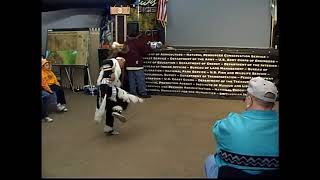
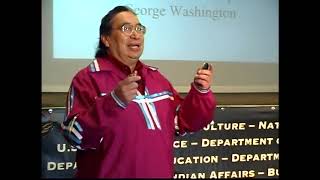
her welcome Cy ladies and gentlemen I'm very honored to be here but before I begin to you in the tongue of Sak and people so ladies and gentlemen I'm very honored to be here I'm very proud and honored to have the blood of a very famous young young Native American woman I'm so honored that uh I've been traveling extensively throughout the United States I had the opportunity to have an audience with President Clinton I had an opportunity to speak at the Smithsonian and many many opportunities because my ancestor exemplified for me what road I should seek among the Native American people we all believe in the Red Road of Life all of us have a red Road even our White relatives here you have a red Road all of us have a road in this life and it is a road of this young woman that came about with the Lewis and Clark expedition that they wrote about her that they told about her and it is through her that we the lhai Shashi the Aika people are known about today through that young woman you know first thing I want to share with you that shason people historically encompassed a large part of the United States we were a large nation and if you can imagine Europe Europe is a European nation right and what kind of tribes would we find in Europe English Italian Norwegian all different kinds of tribes right that we would find over there in the European nation well the shonis were a great big nation historically and they're also composed of many tribes you have the DUI you have the AA you have the pengu you have the sui you have the yamba and if you notice we're all identified with a dika dika is what we are identified by the primary food sources in the area that we lived in and SA je people came from the Aika can everyone try that AA let's try that again a so when you see a historian and they say to you where does sakaia come from and you'll impress them by saying a she was part of the salmon Eater people she was a salmon eater one of the only sasonian tribes primarily identified with eating the salmon the salmon came the furthest Inland into her people's land and it is by the life of the salmon that we symbolize our life our life begins in a cradle board much like this one every tribe has a cradle board every tribe and these cradle boards are not just cradle boards they're just not a carrying device they're not a car seat they're very spiritual very very spirit spiritual zachia was taught from the time that she was a little girl about her Indian culture in fact her culture when she was born in 1788 she was taught her lesson she was born in Salmon River Country and one of the first lessons she was taught was to be very quiet she was in a cradle board just like this one here this is a Naga cradle board this is our car seat this is our carrier this is our spiritual holder for our babies it's very ceremonial you'll see here the buck skin she was taught to um appreciate and respect the four-legged the plants she was taught to appreciate the plant life the hoop was to always look heavenward and look up to the heavens and so in this way of life her lesson began in the Cradle board she also learned many things about her environment Native American people were very very aware of their environment in fact most of us are cradle board babies everyone in here if you were a cradle board baby raise your hand were you a cradle board baby I was a cradle board baby and when we're cradle board babies we were taught to be very aware of our environment do you know that many times we'll look down because we know a lot about you just by watching you and so this is part of our environmental teaching everything that we learned began from a time of our life our first lesson that we were taught in life sir we were taught to be very quiet why do you think children were taught to be very quiet why do you think the enemy yes we had enemies the Lash Shashi people the AA obtained horses from their commanche brothers and sisters did you know that the commanches are Shon they're shonis but they're a different kind of shon than we are each Shian group was very distinct from the other just like when you go to Europe the Italians were very different from the Spanish right so the shonis were very different and they were influenced by their environment um saaku people had their own leaders they had their own Heroes they had their own nutag they had their own stories about the land on August 17th 2004 we're inviting you to Salmon I meant 2005 sorry August 17 2005 I get those senior moments but we want to invite you there but there is a hot springs up on the hill where many people swim and you know that hot springs there you know who it belongs to it belongs to so aich so aich do you think we would go swim there could you tell them what soich means something that guards the Springs a Monster yeah so she knew all about these places all about these places but what I wanted to share with you is that they were very distinct we even have our own dialect do you know that the shason banic down in Fort Hall you you know what they call the beaver head they call it BJ you know what that means Buffalo heart they called it Buffalo heart and if you drove down to the shason and banic tribes it would only take three hours in today's driving time to drive down there and do you know how they say the common words such as scissors they say dzika you know what the Lash Shoni say we say kugi do they sound the same no we had a different Native American epistemology we had a different way we were more like the plateau tribes the NES Pur the Flathead tribes we had alliances with different tribes we had alliances with the crows we had alliances with the Flathead we even had alliances with the Crees the Crees we called them ano and I'm honored to be here in onot land with all of you in fact the Crees dance the same form of Sundance we do because we shared the crows dance the same form of sun dance we do we shared we had alliances with certain tribes but there were certain tribes we didn't get along with we got the horses and that made us strong and we rode out all over the Plains and we chased the black feet back up into Canada and we joke around and we Chase those other Crees up into Canada and we joke around we chased all the tribes into North and South Dakota and so that didn't make us very well liked by other tribes but the horses gave us the ability to travel and we traveled far in fact there was a historian his name was chavalier DEA fendra fancy name and he came in 1738 up into the northern part of the United States and Canada and he said he wrote about the snake Indians and he said that they were very formidable and he said they didn't hesitate to fight despite the season despite the time of day so they were very much feared by their enemy tribes and so this is one of the reasons the first lesson that we taught sakaja and we were taught by our people sir if you don't mind was if the baby cried its nose was pinched do you hear him his nose got pinched and so that was the first thing why do you think we didn't want the baby to cry you said the enemies right wild animals Grizzlies a Grizzly could rip apart of Tepe in no time and that's the way it was that was the way of life but some we had tribes that were our fearsome enemies we had the black feet the Bucky we had the we had all the tribes of North Dakota you know we I accuse crober of being genericized Native American people putting them into cultural regions you know how he said you're the Plains Indian you're the plateau Indian well shon's did the same thing we primarily genericized those tribes and called them bom that means those that would cut off your head and put it on a pole so we would tell our kids sh bombes sh and so we would teach teach our children from the time that they were little but the most important point that I would like to make is that when saak was 3 years old she was given a name could you send Malia up here please Malia received her name last year she was three years of age Malia kimik Malia is one of our youngest limai shonis a familial lateral descendant of sakaia she was given her name last year she among the lashi people we give names to our children when they're three years of age and the name that she was given is bishan not and one of the most important things that we do during that ceremony is we also Pierce their ears and if you will notice her beautiful earrings one of the things that i' would like to share with you is that we teach teach our children about their culture when they're very young if you will notice I have a cradle board here I put my children and my grandchildren in this cradle board but I want to share something of Malia's yeah this is Malia baby and so in this way we teach the culture to our children she learns to appreciate the Cradle board and the cultural significance of the Cradle board at a very young age so let's give her a big round of applause for coming up and being brave when sakaia was three years of age she was given a name she was given a name sir I'm going to need you to come here could you bring your hat with you okay put your hat down here and sit right there sit right over there okay Lucille I want to share with you how she received her name now among our people we receive our name at three years of age we get our ears pierced now I told you we were more like the Plateau Indians and that was a significance of saaku people we were very much like the plateau this is considered our gold and our money so we like all the bling bling okay so at this time I'm going to share with you a little bit about our language sakaj jia's name traditionally is Saka let's try that Saka everybody try it Sak s again Saka and what does that sound like it sounds like Sakia right and it is okay I'm going to share with you something about the language okay Lucille you're going to help me with this this is this man's hat right okay now listen to our language I asked her whose hat is that and she pointed to him okay now let's pretend like he's a little child yeah and among Native American people we're just like any other race we're like any other race you can say okay in Indian language you can still use words of end so if she said if you could have heard her with the with the mic I asked her whose hat is this and she goes suck a hat do you hear me suck a hat because he's an adult now I said to her I said to her whose hat is who whose little hat is this and she goes it's his little hat so she uses a term she would say Sak hat well sakaia had a weia this is a little girl's weia Malia k mik k mik this is a little girl's WEA the mother's WEA is is much bigger and this is a burden basket come here Malia the burden basket was used to carry our Willows Willows to make our cradle boards Willows to make many of our things and it was generally carried in a variety of ways it was carried across the shoulder across the back and it was carried by the children and again we taught our children from a very young age their duties within our people and that is called a weia so it was in the same way when we're naming our children we name them at such a young age that the words have endearment and so this is Sakia WEA so in this way when when somebody was asked who WEA is that instead of saying Saka weia they would say sakaia this belonged to sakaia so if that basket was sitting there and I said to her she would say s she' point to her sakaia that is her burden that is the that is sakya's name that is her burden and in our culture the language prophetic they say our name comes back and serves us again and again do you believe that sakaia carried many burdens in her life yes she did sakaia it means that is her burden this is a burden BAS and so ladies and gentlemen my point is her name that was given to her is Saka chaia it was a name when my little granddaughter was given her name we had a feast we had a dinner we had an enjoying time with her it was a time of great joy just like my ancest when she was given her name Saka that is her name now I'm going to go one step further many of you have heard of her captivity and I'm going to get a captive here sir could you come here Emilo could you please come up front sir could you come here yes okay this is my captive Indian people captured other tribes we captured other tribes for the purpose of Economics now I could probably trade you off to that Indian woman down in Nevada that makes good he that older one that big one yes and I could make me a good trade now the lihis weren't liked by other tribes because at that time we were we would attack tribes on our horses so I'm going to show you how sakuya's name changed okay you're my captive okay I captured him out by the Great Falls okayo okay now before I begin I want you to understand that every tribe has a different way of speaking there's so much I'm trying to squeeze everything in but this is what I want to share with you before we move to him okay in Creek Country right here their greeting word for saying hello is hello hey okay so he does it it's Dan right d okay Dan let everybody try that d okay you go to the seal tribe they have their own greeting you go to the youth tribe they say maquas you go to the Cherokee tribe they say ooco you go to the Crow tribe let's try what the let's try the hello word in the Crow tribe show baji okay did any of them sound the same no so when we talked to people we used our hands and I'm going to teach you guys a sign language at this time and I'd like to teach you how to say what is your name let's try this okay Point shake your hand and bring your hand sharply across your forehead okay here we go what is your name okay let's do it again what is your name okay here's my captive okay you saw the sign language right okay okay my captive and Brian Brian hug Brian Lenard Brian dunard dunard Brian dunard dunard dup dup dup dup done up done up okay done up done up done up yeah okay thank you do you think sakaia would have argued with an enemy tribe that would give her a name you know what we called him you know what we called him we called him kneecaps his name is kneecaps we'll find out later how that serves you prophetically okay thank you okay thank you thank you everyone these were supposed to be my mean Warriors okay thank you okay what I wanted to share with you is that tribes did when they captured someone they did change their names and we changed the names of our captives if your name was Wula we would probably change it and if we couldn't say it we just call you suoman we would call you Old Crow man we'd call you uh um old a jibway man and that's the way our people did today we even still distort your name if your name was Zeke we would call you zish if your name was Sally we would call you sad so we distort your name and it was in this way that my ancestor went among a tribe and her name was chain ched and she was probably very frightened when she was captured there's nothing more that irks me to no end when I find in books and in speeches saying that she was happy to be in a village that fed her plenty of food I don't know of a child who' want to be taken from their home I don't know of a child that want to be taken from their home her mother was killed her family was killed when she was taken how could she find joy in that and I believe firmly and our people believe in our history that her name was distorted from Saka chaia to what's that other word Chicago Chicago WEA yeah something like that I don't know some kind of saga Gaga gagy gy or something yeah now you think about it ladies and gentlemen you have Elizabeth Smart do you remember her you remember she was taken from her family her captors called Augustine and her family called her Elizabeth and the name Elizabeth was probably given to her in a good way in a loving way by a loving family but by her captor she was called Augustine how do you think it makes her family feel if you walked up and you said how is Augustine doing would you hurt their feelings ladies and gentlemen we feel the same way are you going to call her by the GW or are you going to call her by her given name Saka let me hear from you what are you going to call yes and when you go out there and some historian comes up to you and says her name is soggy wagy goggi gy or whatever they say you're G to say no it's not it's Saka and you know where I heard it from her great great great grand niece that's her name that's her noney I went to a gathering down there in southern um Southern Southeastern Oregon I went down there and there was a there was a stage there and I told them people I says when you come to honor her son pom I says do not call oh that that GW anyway the GW right don't don't I me well I said don't call her that but there was a scholar who flew in he was a Lewis and Clark scholar and he comes up to the stage and proceeds to share his great wisdom with us and he said I'd like to tell you the history of Sagi gagy wagy or whatever that is and you know what happened the whole Podium blew over everything on the stage blew down and I told him I told you not to call her that and you know who else did not call her by that name I meant who strengthened the fact that her name was said with a G A J do you know who else said that Clark Clark in his last account that historians use as the accurate date of her death he wrote her name with a J when President uh when President uh Clinton we were given she was made an honorary Sergeant it was spelled with a J and when her people saw her it was very highly likely that when they saw her they went Sak Saka and so ladies and gentlemen if I can carry one message to you she gave much in this country she gave much of her life give her the joy of her traditional given name that was given to her by her loving family and her people suaka I'm going to turn the time over to um Lucille and Emma Lucille is a Elder from our tribe and uh she's going to say a few words and here's your dis one back are you going to hold it or do I hold it okay oh my name is uh Lucille poy Eldridge and my people are from the aikat tribe and uh and my ancestors are all born there my great great grandfather great great grandmother my father and I come from them descendants of Zia from salon and here I have pictures here that I have to show to the people here and uh and pictures of my my great great grandfather born in salmon and that's where my uh my grandfathers come from this great great grandfather and here's uh my uh here's my great great grandmother his wife my great great grandmother and then here's the okay and here is uh one of their sons my grandfather my father's father and they were all born in salmon and uh and this is this is my father son of that my grandfather and this is my mother here come from that from uh from boisey Valley side on that one and this is my grandmother from boisey Valley that was removed from Boise Valley and my mother comes from that and uh the picture stuck together oh here it is and this one here is uh is the way they uh the Cowboys look like at the time when they lived in Salmon they had cattle and they had horses when they were removed they left everything in Salmon they didn't take it with them when they went and moved to Fort Hall they didn't have nothing so and and this is my grandmother here that was removed from salmon I mean from boy Valley he was 1867 that was in the 1800s my great great grandfather's from salmon and then here's my father when he went to the boarding school when they were taken away from their parents to go to school in the boarding school in for Hall all the children were taken from homes to go to a boarding school that's where he met my mother and that's where he they got married and that's where I come from and this is the old Elder is from from salmon too can you read that can you this is her ancestor Andrew hona this is her ancestor who came from The limh High Valley and what she's sharing with you ladies and gentlemen is Treasures in her life and saguia people lived in the lhigh valley and the Legacy or the impact of the Lewis and Clark Expedition was that our people were forcibly removed from the valley in 1907 in 1907 her family left and was forcibly removed to Fort Hall but there were some of us who fled back and lived in in lived in Salmon it was our beloved Homeland and this is what she wanted to share with you as an elder is her treasures and her history of where she came from thank you okay Emma's going to come up and conclude for us I hope you don't mind I've got a few notes here just to keep me on track it's a honor and a pleasure to be here amongst you people especially the ano we call him the cre we call him ano as my sister had said before to be here in this country and and um my name is Emma George I'm a salmon eater I was born and raised in the Salmon River Country the birthplace is sakah home Homeland where she was raised and as my other as my sister Rosen had stay prior to that they were living in that area and they're traveling they were migratory peoples and they traveled throughout the area the shonan nation as a larger group extend we're the most northern shonan tribe down to California and so it is a great nation and within that Nation there are nations that are more distinct and unique we are one of the shonan Nations one of our oldest names amongst the shishoni people was called weai that means from the knife the arrowheads and then there were different colors of Wei n Enga Wei OHA Wei Dosa Wei asan beat Wei gray knife white knife Yellow Knife red knife and there was our kamanche brothers they were called dowii and they still are called that today we're called the Asian we Asian we Asian weat and um Saka jia's people when she was a young girl she was taught about her cultural lifeways she was taught how to do things she spoke her language she learned about D Soo our mother earth she was taught about the natural uh life cycle about natural law and the seasons and how to live and survive and um from that time when she was 12 years old she was well schooled she was knowledgeable about uh geology um herbs Foods uh different yeah botney different things medicinal things for example when um they said that Sakia had almost died when she was um up here by Great Falls and LS and Clark had said that they had given her some we call it abhe beat some medicine and they had given it to her and when they given it to her she was a she had overcome her sick but in there there was no mention of saak Jia advising Lewis and Clark to prepare this medicine so to make her better but when we looked at that we said that okay we understand another thing is the the documentations in the Lewis and Clark Journal most of the language the Shon words that you that you read and there are the uh Indian words are mainly Shon I mean a as earlier my sister said honey and bump that means beaverhead that's an example for one AA we AA salmon eaters and um so those are some of the things that in her short life this young woman has touched our lives and she continues to touch it today 200 years later 1805 she had returned to her Homeland 200 years ago and today we're celebrating that in samon Idaho this coming year but um in our Indian ways we're taught we believe there's Universal teachings among amongst Indian people and there's teachings amongst the Indian tribes but we believe that we are what we are the oldest upon the North American the American Indian people and we believe that because of our values and our teachings as many nations rise up and fall we've been able to be where we are at today and continue to live and make our life upon Mother Earth because of those teachings in reality we should have been annihilated wiped off the face of this Earth but that did not happen and uh um going back to our original teachings Creator We Believe gave us teachings he gave each different groups of people original teachings about life about how to live their life and he gave the Indian people teachings one of the first teachings that we believe is our one of our first values our beliefs is Creator that's number one in our lives and like when we get up in the morning we thank creator for life just um living life and when we walk up on Mother Earth those are original teachings and through those values we're able to live I just want to quickly share some things because of those original teachings we're able to live and then Mother Earth Mother Earth is our mother each and every one of us here today we walked here we believe that as each of us live we make our lives upon mother earth when we come into this world we put our feet upon her and we walk but none of us walk the same path that's like the Sundance Road none of us will ever walk the same path I have sisters here um you may have a companion you don't walk the same road each of us when we come here when we leave here we only cross paths and in that way we walk upon our mother earth and that's our road of life and she feeds us and she clothes us one time this old man he said everything we need is here the water um the food wood fire all the natural elements and then he went into more depth he said uh the wood makes buildings the wood makes pencils the wood makes paper it's it's a simplified concept but it's very complex and um so I just want to share those things with you and why do you ask why is she telling us about this how does this what does this have to do with Louis and Clark and saach JIA okay well I'm going to take you back when Lewis and Clark signed the letter to come here and they spoke with Thomas Jefferson they agreed to come on this exploration or Expedition and um Thomas Jefferson had said it's going to take a thousand years for us to build our country where we are today and it's only been 200 years and when Lewis and Clark came came through here through the Indian Country he said this is the most beautiful land I feel like I'm in Paradise it is so beautiful and they stood in awe of this country and um there's a place up in the Salmon River Country and this place is where the Waters Divide from where you can step over the Missouri River one foot you can step on this side and the water flows the other way that goes through the Columbia River into the Pacific Ocean and the water from this way goes into um the Gulf of Mexico and it runs into the Mississippi River just from this tiny little bit of water coming out and my hopes are that what is going to befall the future generations of our people 200 years ago here we are today what are we going to do for our children our children that are here and I would like to share a poem with you that I wrote I think it's important because uh we have two Indian people they have two books of knowledge one book's a white man's knowledge the other book's the Indian knowledge and it's really not written and so in some ways we I feel we are more more worldly and we speak more languages in that sense we have more understanding and I think that's ultimately what it is to have more understanding why close yourselves off I don't understand why people close themelves off from each other because again our our values are important to us as who we are as um Native people when Columbus came he said that the Indian people were childlike because they were loving and because they were giving see that's one of our Indian teachings we call it uh giveaway and that everyone is our brothers and sisters and that you help each other out but in today's world it's not like that you can look around and people will turn from their brother or sister and so I think how are we going to determine the future for our younger Generations what do we want this world to be like we have to consider all those things and in closing I would uh like to share a poem with you says teach them the TR truth about the first Americans teach learn that let them learn the rich history and culture of their forefathers for it good one of the first te teachings amongst native people is to have respect beginning with oneself let them learn and let them grow without fear and doubt of their own worth and this is my prayer for our future generations with uh under standing for our brothers and our sisters for we are the children of our father and our mother and I would like to share that with my my white brothers and sisters today that are come here um and I'm just grateful and I'm thankful and I'm thankful um for the blessings and I wish would like to invite you all to samon Idaho August 17th 2005 beginning at 4 o00 there's going to be a special honoring for sakaia our people haven't done that our a DI up people in 1907 we are forcibly removed from our homeland and so at this time we're going to have the opportunity to come back and we're going to honor her in what we call a Mahi and this is a special honoring where uh she is going to be honored this is for people that have been captured or returned from war and so at that time we're going to have this mahoy and we'd like to all invite you to come if you are able this one day and um I would just like to end it there and thank you very much thank you very much I'm going to turn the mic back over to you but I I do want to say this one thing and this is the this is the point the Lewis and Clark Expedition was through divine intervention and we want to thank this Expedition 200 years ago happened not just for any purpose it happened to give us a voice here and this 100 years Native American voices are being heard so we'd like to thank you and we wanted to come up and thank you for this opportunity thank you thank you very much for coming and sharing the story of Saka Jia with us ladies and Gentlemen let's thank the limai Shon again for coming and present