Tent of Many Voices: 07180602
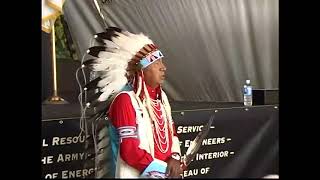
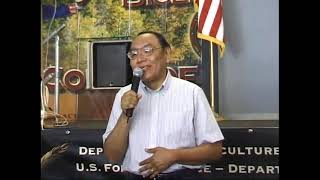
e all right thank you first of all I'd like to say uh good morning how are you all doing this morning fine okay great that's great um as I was introduced uh again my name is Marvin dos I'm with the L cor Battlefield National Monument uh and I'm with the inter division uh the lead park ranger um the battle A Little Big Horn you know is one of the most talked about battles it's one of the most famous battles this battle was a mystery controversial why well you know because from what today that's called the Reno Creek to the last than Hill you know there was no survivors there to tell of what happened all 225 soldiers annihilated there but it's a accounts and then also uh archaeology in the field of archaeology uh archaeologists that were out here you know their their findings of artifacts you know spend cartrid cases and uh we we put those two together and this is what we assume of what happened on that day uh throughout the summer uh we have programs uh three three topics and those are uh repeated you know throughout the day uh one topic is the battle talk which uh talk about events that led to the Battle of Little Big Horn in 1876 uh the Battle of Little Bighorn itself then aftermath of the Battle of Little Big Horn other program we have is a US calvalry Soldier in 1876 uh talks about the soldiers uh in 1876 uh those that were at the battle at the time of uh of the battle uh we talk about their their way of life you know like Hollywood version you know you see uh big tall handsome soldiers you know like John Wayne and uh uh Charleston hon you know big fancy blue uniforms yellow stripes yellow bandana and black hats you know it life life wasn't like that with the soldiers back then or the seventh Calvary by the time they reached his area they were pretty well Ted and uh by the way you know back then when uh you wanted to join the calvary as we see again movies you know John Wayne you know back then uh these these two guys would have made it as Calvary soldiers uh because there was a height limit back then when you wanted to join the calvary you couldn't be no more than U 5'8 the average height of the soldier in 1876 the battle little Bigg horn is uh 56 so if you were over 5'8 you would have made it as a soldier they'll send you to the Infantry so these uh two two gentlemen would have made it as Calvary the reason why is because that you know on these campaigns uh the military the Army back then you know the calvary Soldier the horse you know there was a weight limit on that horse with the equipment that they had to carry plus the height the weight of the soldier that's why the soldiers were you know not that tall and uh so that's what we talk about you know the life the calvary soldier in 1876 the other program is the Indian village uh this program started off with the cultural the ways of the Indians the tribes at the time Orin the area at the time of the battle of borns uh particularly the Plain Indians uh their way of life uh you know at that time the Indian the tribes the Plains Indians you know their their way of life was a buffalo you know the Buffalo was a Mainstay of the tribes at that time the Buffalo that provided them with food shelter you know every every part of that Buffalo was used for something and one of the things that I talked about in this uh Indian Villages you know the tribes that were here at the time of the battle in 1876 a lot of visitors come out and uh the thing that they have on their mind is this Hollywood version of the Battle of Little Big Horn you know cusser on top of the hill saber in one hand and pistol in one hand and thousands and thousands of mounted Warriors circling around him you know it wasn't it wasn't like that uh it didn't counts shine in two moons so we dismounted and we did our fighting on foot once the soldiers or the remaining soldiers reach the top the bullets that were coming from the solders rifles were very deadly it was like humming bees as it wh by it's pretty powerful weapon that every Cooling and every Ravine that led up to that hill was full of Warriors we crawled creeped up towards the top every once in a while pop up behind a brush fire up to the top top go down so that's how the battle with big horn you know there's there's so much misconception about this battle and uh as as I mentioned uh the tribes another thing that visitors come out and uh they see the tribes at that time various tribes one of the largest Gatherings of the Plains you know in movies in Hollywood you'll see the eve of the battle where these Indians dressed in their finest War paints weapons dancing around a bonfire you know Hooper and harling firing their rifles boom boom you know wasn't like that you know this this Gathering is uh 1875 uh ultimum will be sent out to all the tribes they were told that all the tribes that were still roaming the plains they were told that you must return to your agency or reservation if not after January 1st of 1876 we will pursue you so a majority of the tribes uh will return to their agencies or the reservation in the spring six bands under the leadership of Chief syu refus to go back to the agencies on the agencies they will tell the government why should we sign a paper where you tell us you will put us on a land you will provide us with food you will take care of us they said pointing to the ground said This is Our Land and the Animals the deer the analou the elk the Buffalo those our food they provide us with food sheltered and pointing to the skies the heavens the roof over our home said this is our home so with that these bands they they'll head out to the PLS as they were called rors so in 1876 America was gearing up for the celebration of the Centennial year you know four the gearing up for the Fourth of July Centennial last thing or least problems or problems that they want us to take care of is the Indian matter Indian policy say we got to these tribes back on the agencies so in 1876 this three military campaign will be lunched so those are tribes that were here and it wasn't a gathering a largeest gathering and as Chief syu said last thing on our mind was Warfare even though we knew that we were being pursued by soldiers but for the time being we wanted to roam and hunt the planes freely like like our ancestors so in 1876 his campaign was launched pursuing the six bands of the Sue also the allies and Northern cheyen and handful of rap hole in sting we veed off into the Little Big Horn we knew this was Crow country the old men and women and children grew tired we veed off into the Little Big Horn and this is where the soldiers caught up to us tribes that were here you know questions about the tribes that were here about a year ago uh this gentleman had asked me a a question after my program said um you said you're a crow and I said yes sir I'm I'm Crow I'm native of this area and uh also the scouts the other Scouts were ARA and I said yes sir said uh why didn't the Crow and the ARA join the Sue and the Cheyenne and fight he said aren't you all Indians and I said yes sir well we're all Indians said why why why didn't they join fight you know traditional enemies you know as far back as history from Revolutionary War war of 1812 and when France England were here they had tribes on their sides as allies but those tribes are traditional enemies in tribal Warfare so at that time the crow Su traditional enemies Crow arapo traditional enemies and Crow and cheyen traditional enemies later the crow shason traditional enemies Crow blackre traditional enemies we had a lot of enemies back then this leads to my uh program the topic of the crow at that time uh here in this area you know the plains the crow uh even though we were also a migratory tribe which we migrated or branched off uh the hia from Missouri Crossing Missouri onto Yellowstone as far as I remember uh through our uh ancestral uh you know uh stories uh that were told to us by our ancestors and as far back as I remember the crow Aboriginal territory at that time as far back as the late 1600s was a present day Milk River area from uh Montana North Dakota area cutting back across uh towards present day uh Glacier Park uh King Mountain Area uh there's a lullabi in the crow uh lullabi where uh also a story of a young child uh grandmother who uh seeing a little saying that my child you know born inama Jes King Mountain uh today you know King Mountain Glazer Park so those are the stories that we you know the Lis those know how we know where the curl Aboriginal territory was and then from there straight down to uh Yellowstone present day Yellowstone Park cutting back into Wyoming uh down below Buffalo Thermopolis area then straight over towards black hills and then back up towards the Milk River so that was the Aboriginal territory through oral history of the crow now those names those areas were mentioned in a lot of the oral history and as I mentioned Lis and also songs sacred songs and that's how we know and then in 18 As Time came out when the Europeans came a lot of changes and uh his word will start to see Fort ly treaties treaties that was sign government the tribes then we see the territories designating uh each tribe the headman or the chief as they had come together they would State their Aboriginal territory or where their ter territory was one of the earliest Chiefs a Kula Chief sits in the middle land said where my four poles sit is were my home today the present area of the Three Forks area to The Milk River and then down here uh Wyoming and then uh on this side of Wyoming back into ystone is what he as where the crow territory that time and then from there from the 1851 Treaty to 1868 on up um each treaty that was signed every time you know the the government would take away land here there so at one time the crow Aboriginal territory was about 33 million acres to what I had mentioned earlier to today 2.2 million Acres the Cronan reservation and uh you know we're we're fortunate you know the crow today that we still take our Aboriginal territory we're fortunate that you know a lot of people think that just because the crow scouted for the government for lieutenant colonel George arms Custer that is why we are given this land no that was not the case as I mentioned Aboriginal territory again uh couple years ago one of my programs this guy uh who was European you know walked up to me and you know he was he was pretty ticked off you know he said uh you mentioned your you're Crow and I said yes sir I'm I'm Crow goes well he said you know I believe the Sue and shyen should be the ones living here said they're the ones that were here they fought for this land they should be put here on this land this should be their land not you not the crow and I want to know why why are you crows here is it because you scouted for Custer and I kind of look back and then people were starting to gather around me and pointing a finger and I me I said okay wait a minute I said let me tell you how we got this land I said in the for ly treaty you know all the tribes of the planes were gathered each headsman Chief was told to come forward so the government going down a line issuing land to the tribes first tell the shonis you live down here in Wyoming the rap hole the you can live in South Dakota area and Cheyenne's down here black Peet and Seno is up here top Montana going down Nest per is over here in Western Montana and going around and finally it came to the crow said but this land here said this land here is very handsome it's very beautiful and we're going to give it to the one of the the most handsomest tribes the Plains and that's a crow the guy kind of laughed and I went back in uh the late or late 1700s about 1800s one of the first explorers that came to the PLS in their first Contact the tribes were the crow and in their journals they wrote the most handsomest tribes that were Came Upon men were the men of the Crow tribe or the crow Crow people people and I I kind of threw threw that on him so again you know the crow uh here at the time of the battle the crow Aboriginal territory in 1876 the Army would start to use tribes as Scouts also for the tribes at that time when with the for ly treaties you know designate or uh put on the agencies some of them could no longer hunt or some of them couldn't even weren't allowed to carry firearms anymore a lot of things had changed the impact of the Europeans with Fort L treaties so in order to to maintain their their warriorship uh in 1868 in one of the treaties uh the treaty Pro uh prohibited to take arms against their enemies uh so that means that they could not carry the forarms meaning that they could no longer go out and raid you know capture horses and uh capture weapons from the enemies which gave them the warriorship you know meaning that they to gain status to be Warrior ship and uh they couldn't do that so in order for them to to maintain that warriorship that you know status this is when the Army uh uh in uh 18 uh in 1866 the Army uh reorganization act said that Indian Scouts were enlisted men who while they were not solders were nevertheless declared by the Attorney General of the United States to be part and partial of army the service of Indians was provided for by the act of Congress approv approved June 22nd 1866 the language law of the law as it appears in section 1112 of the revised status 1873 being as as follows now this is what the tribes you know in order to maintain that warriorship where they no longer could go out you know their enemies so they join an army to maintain this warriorship and this uh act uh continues the president is authorized to enlist a force of Indians not exceeding 1,000 who shall act as Scouts in territories in Indian Country they shall be discharged when the necessity for their service shall cease or at the discretion of the department Commander it was further provided by the law that Indian Scouts so enlisted or employed by the president were entitled to to receive the same pay and allowance as Calvary soldiers which at that time and for many years thereafter these soldiers or the Indians serve as Scouts were paid $13 a month the same as the enlisted soldiers on this campaign in 1876 you know the C who uh were being pushed back towards West back further in their Aboriginal territory as I mentioned earlier you know the Sue would come in the shyen uh the rapos so at that time the South the East area the East territory of the cro uh Crow territory was literally occupied by the Sue at that time the crows would face crisis you know so this was a time for them to join the Army because they knew that the Army the United States Army was here to remove their traditional enemy puru out of the territories and take them back so that was an opportunity for them to join with the Army also the the Ross they too uh General alred cherry out of Fort Abraham Lincoln in his campaign he had acquired arikara Scouts the same as the ricra like the crow when the Sue came in they literally robbed the araras of their food capturing or you know uh stealing children and you know women so they they too that was an opportunity for them you know to join as Scouts cuz like M Crow they knew the government Army was here to remove their enemy so this campaign that was lach you know we see the crow um Fort Ellis present day uh Boseman Montana at that time the crow uh in the area of uh what we now call the Mission Creek uh this was where the first agency was and uh from there the Detachment of uh Scouts under Lieutenant James Bradley uh will be his the detachments of Indian Scouts total in about uh 50 in numbers as they headed down the Yellowstone later the majority of them will head with or ride down towards the mountains to join up with General crook uh one week before the Battle of Rose but or the battle Little Bighorn the battle Rose but um this 6 hour hour battle that was fought there present day uh outside Shon Wyoming the crows did fought in that battle here the Detachment of or the uh commanding officer uh General Cher uh John given and general Cherry will meet present day rosett Montana and this is where they'll send Custer down the rosett with 12 companies of the seventh Calvary and in that command we'll see six Crow Scouts and these Crow Scouts are uh curly white man runs him White Swan Harry mcon um half yellow face uh these will be the scouts attached to the seventh Calvary now as they March down the rose but early morning they arrived behind what we all call the wolf mountains uh about 4: 4: 5 a.m. now these Scouts will serve as uh these were the eyes and the ears of the command and the crow you know they they knew this area uh traveling at night you know they knew what area they knew what what was out there um in the records of uh this campaign the events uh later uh in the record of events said that these Scouts performed a duty in the field of Colonel gibbons's wing of the Yellowstone Expedition until June 21st when uh Colonel Lieutenant Colonel kuster's command arriving oppos it camp near mouth of the Rose but six of the scouts were detached to the company to his command they participated in the attack upon the Sue Village in the Valley of the Little Big Horn on June 25th five being with major Reno and one with kusser when one was wounded four had headed out from the field the one remained with major Reno these four four scouts or five Scouts would be with attached to Major Marcus Reno and uh except for one crow Scout Curley uh who at the time of the battle um by the way Curley uh the time of the battle was uh 17 years old uh he was the youngest of the crow Scouts um the other five would remain with Reno's command C would ask uh C's command if he stay with his command and permission granted and there um they'll head up towards what we know call weird point today the highest point that uh you see up there from there into the medicine tail medicine tail and from there is where curlyy said later on the anniversary who was out here said this is where I last saw cusser and curly was considered as uh one of the survivors or the only survivor of the battle A Little Big Horn uh curle was told that uh this is not your fight you must leave who was told by uh the chief Scout Mitch Mitch Boer um I mentioned earlier or I read earlier that uh where it says they participated in the attack upon the Sue Village actually they didn't participate it you know they were released once the village was was located um two of them will be heading out towards the other side of the bluff uh where there was a large horse herd uh the other four would remain up on top of bluff so these uh Scouts from uh we talk a little bit about the history of the crow to this point to uh to these four four Crow Scouts who uh served in the military with the Army status uh being recognized as soldiers being paid the same pay as a soldier which was uh $13 a month and when they were on this campaign they got an extra 40 cents per day average uh day of the campaign that time was from uh 225 or uh about uh about uh 225 days to 125 days so you know times uh 40 Cent plus of what they get paid so after this campaign later uh they they would be you know collecting you know pension or if they passed on a family the wife was likely receive that that pension um I like to read a little bit about uh the scouts they're uh when they were born and what they're served as Scouts uh first of all uh curly who uh ranked his rank was Private uh Indian Scout uh he was born in 1856 at the little roseb but creek near the roseb but area um who was with custers colum on June 25th possibly witnessed a fight of the Custer column and later carried the news to the streamer Far West later Curley uh would be interviewed you know after this battle he was one of the most popular uh when after this battle you know they the uh media would come out they wanted to interview somebody about this battle and of course the last Scout that was with kuster Curley so he had a lot of you know uh he had a lot of tension back then it was he was like a celebrity and uh it was stated that later some of the crow Scouts got a little jealous because of he got so much attention and uh these interviews uh later consisted of uh Lieutenant James row you know with uh Thomas leforge interpreter interviewing Curley on uh the uh curly uh passed away in uh May the 21st 1923 and uh he's he's buried at the Lorn Battlefield National Monument the Scout white man runs him who uh ranked private was with also Custer's command um earlier accompanied Sir George Gore on the western hunting trip in 1856 with the Custer column then on June 25th he was here at the Battle of Little Big Horn um white man runs him was also later interviewed by uh Colonel Tom McCoy in the Grahams uh book uh Custer Smith um white man runs him passed away on June 2nd of 1929 uh is buried at uh lch grass and uh Harry marason uh private born un unknown uh served in the Army Detachment of Indian Scouts um who participated or was in the area the time of the battle and uh died passed away on October 9th 1922 uh buried at St an's Cemetery in LG grass and goahead ranked private Indian Scout with Custer column uh who was on top of the hill um he is also uh when he passed away on May 31st 1919 uh he's buried at the kuster battlefield National Cemetery and uh the last not least uh Scout who was also in charge of the scouts by the way uh under Mitch Boer was half yellowface now there's a little story about half yellowface who uh was not recognized even to today where a lot of people think that he should received or be recognized half yellow face uh his rank was Private uh was in a valley and on the hilltop with major Marcus Reno uh he was in the Infantry with Lieutenant James Bradley uh when Reno reach a Hilltop uh they uh set up the second day uh water carrier um volunteers to go down the river bring up water for the wounded um in this um little little jail where um the soldiers went down under the protection of Sharpshooters on the side um filled up cantens and brought up to the top once they reach the top uh one of the soldiers a young Soldier by the name of Madden uh was shot in the hit Madden Rose down the hill by that time everybody was back up on top uh nobody didn't want to go down there and save uh man half H face up on top he'll drop everything without cover uh Sharpshooters or anything he'll run down the bottom there and he'll pick up half aace throw him on shoulder and he'll walk up to the top uh half Hof face saves man later uh the Army DC uh the Army uh decorating these water carriers and the volunteers and the Sharpshooters Congressional Medal of honors all those soldiers were mentioned but nothing was mentioned of half yellow face a lot of people feel today that half face should be recognized for his heroic bravery at time the battle A Little Big Horn you know those mentioned uh well that you know just a little bit about the crow uh the Aboriginal territory of The Crow and how the crows came to be here um today as I mentioned you know 2.2 million acres and all the lands that were taken away you know section here here there you know we're we're fortunate that um that we're still here in our territory um even though lands are taken here and there you know we see the big horn mountains the Big Horn Lake they are in the Cronan reservation uh there's a little story about the Cronan reservation uh the cro the Big Horn Mountains and the Big Horn River you know Nam after the big horn sheep and uh we're fortunate that those are still in the crow reservation and uh i' like to thank um all of you here visitors um I hope uh shed some light on your story about the Battle and also the curl at this time uh we have a few minutes if you have any questions um go ahead and see some answer some questions here well in C we say it means it's good means it's good to see you may have a good day I hope thank you very much right and thank you Marvin Daws with the National Park Service from Little Big Horn Battlefield National Monument so um we'll give him a little round of applause for his efforts today thank you for coming out we appreciate it all right all Next program will begin in about 20 minutes we will have Wales bull tale and he will be speaking on the crow way of life so feel free to come again for e e