Tent of Many Voices: 08110405T
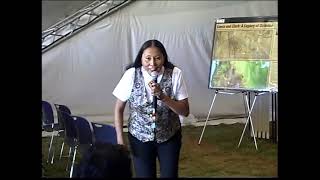
the people who went with them on this journey it's the land that they crossed the people they met and the people that they didn't meet but the people who have come since then and to tell all of those stories we bring people from different backgrounds and different perspectives to come here and talk about their side of the Lewis and Clark Story and today we're very very fortunate to have with us Paul Brill Paul uh has worked with the Native Americans from most of his life he is a genealogist and a consultant and a great friend to the Omaha people so we're very glad to have him here today and he's going to be talking about some of the Omaha uh genealogy so Paul you're on am I I think so are you here they didn't pay the electric bill there we go I thought a genealogist was someone who was a a lover of the I Dream of Genie but I never classified myself as that but about 43 years ago I was selected by the Secretary of the Interior to come to Nebraska and also to South Dakota because things were being done both places to be involved in something that involved the Omaha tribe who had just received an award in the in Claims Commission uh a year or so before and they were able to secure the legislation which was dated September 14 1961 little did I know what I was getting into I came here with a wife and three small children actually one was born in South Dakota the fourth one and uh people back in Indiana actually they don't think North and South Dakota actually are part of the United States because they don't have much population and if you've lived there and gone through Winters you might think the same thing anyway I came here with the purpose of finding out which individuals would qualify under the legislation that was enacted by the Congress of the United States and I might tell you the the uh elements of that legislation came about as a result of lobbying about three individuals who represented the Omaha Tribal Council they are all deceased now they are Alfred Gilton they are manura Morris and Pauline Tindle and these three individuals had come many times to Washington and I have just barely met them because they were around in different sections and they were able to secure the elements that went into that legislation my job my task was to carry out those provisions and to find out if there were really any Omaha Indians here and if there were to make a roll of them and to determine exactly how much Omaha Indian blood they had I didn't know whether they'd be a court low or an ounce or two low but I was going to find out I came at a time when the council had such persons as Valentine Parker senior whose son Valentine Jr on the council just died a couple of months ago and the tribal chairman was Lou a s sui a most generous gentle man and buddy gilin and manura Morris and Pauline Tindle and Craig Woodhall the are such were such outstanding people and for me to meet them was indeed a pleasure and and an honor uh it started out to do that and it ended for me about 2 years later there were other things that were happening but my essential tasks were finished except I had been vaccinated with an Omaha needle and that may be trite but I have been so well treated by so many people that it enabled me to continue an association to and including today and I suspect that when I live to be 150 well I'll still be doing that uh I don't think I owe anybody any money but at the point is I do owe a lot of thanks my profound thanks to members of this tribe you understand the state of Nebraska gets his name from the Omaha word Nas and it means what the Omaha said was the land of the flat water which they gave that name to the Plat River not the Missouri but the plat those were the hunting grounds for buffalo and I remember reading also where the settlers always call this nebras which is that corruption and of course it's been corrupted at least it's stable now after a couple of hundred years it's simply Nebraska but the word is nasaki and the people here the Maha people have been here well I wasn't here when they first came I came a little later but probably as long as 400 years their movement started as a breakoff of the parent language family called the suan they with other elements of it they traversed from Minnesota down through Illinois or Wisconsin perhaps even in Indiana to the Ohio River I found a name of a member in the what would now be the Parker family who had to have been born in the 1700s but his name was oh or a variation of that name I've heard others talk about it but it meant that River now whether they got it from when they lived there and it stayed or where there were other tribes that called it that day because tribes were very Adept at borrowing things from other tribes names and locations in any event they got down to the Ohio and they were part of a group of five called aab branch of the suan language and that includes the omahas the ponas the oage the COA and the K but the call other name is which is where the word Kansas comes from and the Omaha have a Clan which is the K Clan they separated somewhat uh when they hit the Ohio hit to Mississippi now remember they didn't take an interstate back in those days and travel was probably over a period of years some got across the Ohio when it was frozen and that probably is the name for the Cora whose real name is ugak which means Downstream Omaha means Upstream because they and the ponas separated and the oages also went in the middle and the omahas and ponas and the Iowa tribe which is not linguistically that close went up the Mississippi till they hit the de MO River following it West and north and into Minnesota and over into what is now South Dakota and hit the big Sue River came South to the Missouri river which is not too far from here and at that time which could have been as late or as recent as 1650 a lot of experts and you know what none of them were there but they seem to think they know whether that's totally accurate or approximate I can't say whether it was a a parting of the ways because of some internal strife we can't say but the pona language is virtually identical with Omaha you get into the other L oage is similar the word for gaha chief in Omaha in oage it's kahika and in other the quap and call it is even further away but they are in the same family much as we have the romance languages of Latin being French and Spanish and Portuguese Romanian and some Engish anyway they came down here and settled in this area although much of their hunting grounds were also in AA and there they stayed they were ultimately attacked by various bands of the Sue particularly the Brule Sue they not only were friendly with the Yankton Sue they intermarried with the Yankton Su there are descendants today and people that have been here this morning of Yankton Indians and their French fur trapping people the dorians uh there also are cases where Omaha stayed with them and in among the Yankton there was a family called like John Omaha um I don't know what name and they probably ended up with a Yankton name so there was a little diversity at that age when they first you had the Europeans were the Spanish and they was mentioned the Manu Lisa Manuel Lisa has descendants in this tribe one time I met with an elderly lady in early 1962 and she told me about a place that would have been something similar to this but it was closer to Macy where they were there watching and I don't know whether it was not a hand game it might have been a shell Society game the Omaha know what I'm talking about but and this lady who was about 90 years old in 1962 and she was with her mother and a couple of sisters and a couple not yet born and they were watching this and this crowd of people next to her were making a lot of noise and she said I remember asking my mother what are they talking they're loud and my mother said oh they're just bragging about what that they are descended from Manuel Lisa it took me about 38 years to actually make that contact but I now know who the descendants of Manel Lisa are then we came with the French fur Trappers and that was the little fleshes and the font nails and the sa sees course I've already mentioned the dorians but that came indirectly through the through the yanked and sup the my fleshes were an interesting group and I haven't found all I know about them but they came the original one was came from Louisiana and married a whole bunch of women we Ed the say well how did that happen to well he had a fast horse and among those was one woman and the child of that one was the very famous Chief Joseph leesh who had the Good Fortune to have been raised because he was orphaned very early the Brule Sue killed his mother his stepfather and several other aunts and uncles down by Fremont south of here they he was raised by big elk who had become chief after the death of black I mean um Blackbird and when he did he gained great status and uh Joseph leesh had a whole bunch of wives and two of them were Omaha one of them was Oto and one of them believe it or or not was a Mormon woman that he met when the Mormon train came from NAU Illinois now that train is not the Santa Fe that's the Wagon train and they were at there at bellw he married this woman and had three daughters by about 20 years ago I got a phone call from a lady from Portland Oregon and she said I I said well wait how did you get my number she said well I wrote to the Secretary of the Interior they referred me to the Bureau of in Affairs who referred me to the Aberdine Area Office who referred me to the wineo agency who referred me to the Omaha tribe who said call Paul Brill this lady said my grandmother was the last surviving child of Lewis s she died in about 1927 I said how how many of them are there out there she said well maybe not but we think there's 10,000 I think I'm losing my voice here there're about 10,000 now that may be a little excess but I told Elizabeth Sal see is on the council and I said well the word I get is that what they're going to do is they're going to get special legislation special legislation and they're going to enroll 5,000 SAU who sees and they're going to come over and give ask Oliver if he'll prove them and they're going to get special legislation to become Omaha and that'll be called the Western Omaha tribe the S sea Branch this was the S sui came in the family now s is a French word SS is without Susi means care and so it now has been shortened to where it's one word so we now have the soses the LEF fleshes the dorians and then perhaps for Nebraska not so much the Omaha tribe the most famous were the fontanels who came in in American fur trade company and Lucian Fontanel had come up from New Orleans and met and married a woman who was a close relative of big elk and had a whole bunch of kids and they all did very well some married out of the tribe one having married a pony woman but most of the descendants came here and those descendants have gone to a lot of other places and are intermarried with various bands of Sue and all over the United States they've started their own tribe another one became was known as Logan fontell and he became a war chief and he was given the name shongaska which is White Horse and in fact went to Washington DC and was party to a treaty there he sadly was killed by the Sue within a matter of a year or so thereafter uh south of here uh we have a Logan fontell in this audience that was his great great great great uncle I'm getting close what is it great great grand Uncle okay and he died about 1855 so we've only had about 150 years since then but anyway they had women in the F family who married back into the tribe and have become very prominent into the mcau family into other families and because the name has been absorbed a lot of younger people that are here don't realize they may be a fontel there may be a fontel in your present in past be careful if you want to marry a fontell he might be a cousin anyway this is what happened and I found out and it's been a glorious experience to be able to find those kinds of things now the names of those were French that was easy where did these other names come from well the Presbyterian Church was the most prominent religious group in this area I've been told and there's some uh legitimacy to that that the government actually the Congress actually said you folks take the Catholics you take this batch of company uh you Presbyterians you have here you evangelicals are over here now there was some overlapping but that's not far from the truth because a presbyterian missionary came here way back his name was Father William Hamilton and one of the Omaha headmen whose name was c h took that name and became William Hamilton and all of his descendants they are not descended from the missionary they're descended from the individual who took that name uh the Presbyterians had a school when the omahas were in B and there were two preachers down there two missionaries one was Reverend Clay mcau and if any of you are relatives of mcau that's where it came came from another one was Reverend black and that name is not too prevalent today but there are some of those and Henderson the interesting thing is Upton Henderson and James Black were full Brothers but they took their Anglo name from different missionaries there are fremonts here Fremont was taken the name was a very a famous Mountain Man Trapper uh early on we had George Washington's Abraham Lincoln's General Shermans they had those we had uh people named Bert Bert county is named after the Bert but the Omaha Indians took the name Bert and so many of those individuals took or were given that name but you see they really still use the Indian name that was the thing that was important and even in my time a lot of them they didn't even know when I was given the name is they even forgot I was called BR that was what and I thought well how come you don't know because that name was not significant the Indian name and clans were the important thing and it still is sadly it's not as important today as it has been because I find out when I ask someone what is your Omaha name well I think I've got one but I don't know what it is or I know what it is but I don't know what it means and that's an erosion of the culture that is is difficult to to understand uh and it's hard to realize that it is happening Omaha tribe divided in a system which is now known by Anthropologist as the Omaha Crow system of kinship and marriage it's the most perfect system among all of anthropological groups that an they've studied whether it's been in Asia in s whether it's been in China or in Europe it is its Simplicity is so marvelous you had the Earth people and you had the sky people and each of them had groups within there and it was called exogamous which is a big word which means you married out of your clan you married out and this of course with a small group of people of a few hundred or even if they ever got to be a few thousand minimized the chances of marriage now I doubt seriously whether they were aware of DNA and genetics but I confident that they were aware of the situation which would result in marriage that occurred too close that's why the European monarchy has been a disaster for Generations in any event this clan system has served the Omaha well served it so well um and there were sub Clans one of the sad things is that these names when they're translated have lost their real uh meaning there is a name in the wany the El Clan called J W which refers they called her packing wood she carries the wood but what they've lost is that that lady had the honor to carry wood to the fires of the seven Chiefs the seven who had pipes so it was not just an honor of you know she would just thought hey you go get some wood no it was an honor to be able to bring the wood there uh among the Sue there is a name called afraid of his horses well that's pretty terrible name but when you hear what is really said is he is so Fierce as a warrior the enemy is afraid even of his horses but it's a new light on it doesn't it one of the names I like to use is hint Jinga hint is hair I may be corrupting the the accent but that's it t is yellow Jinga is little so I like to when I speak before students I said well what does that mean and they said well he had yellow hair no he painted his hair yellow no and hundred other wrong answers and what we find is this when a deer is born it has spots doesn't it the spots go away and they yellow to the tan and the brown when a Buffalo cat is born it has toughs of yellow hair behind the ears what I'm telling you is the nuances of some of these names eludes the white population who thought they do everything they think everybody is a big bear or short bear or long bear or Buffalo this or that and indeed that exists but more than likely it had to do with some very minor thing that was not noticeable to the outside world and it got corrupted where I'm from in Tero Indiana we had a federal P we have a federal penitentiary and I did work there in the past because one of my childhood friends became the U Warden of that and I started doing this and there was a fellow there from out the soup country whose name was Johnny never misses a shot and of course he got the nickname of Bullseye but these are the kinds of things and I will tell you I'm not sure that I ever met an Indian man that didn't have a nickname now some of them are easy and some of them are not so easy to talk about but people that I raised with had some nicknames but not everybody did but that's a common I won't use the word Affliction because it's not U some of the most honorable people I've ever known have names of why would I want to be called that but you see you don't even know the background that anyway I don't want to pass my time but um there this is a subject you could talk about for 60 days and you never even began to tell about it would you have some questions that you might be interested yes ma'am let me come over with M so everyone can hear just in the short time that Lo has been up here he's talked to several people and it seems like he's related to everybody now when somebody in Omaha wants to marry another Omaha if how do they know they're not related or are they so distantly related now is it okay yes and no I'm going to relate a story that happened I won't tell you the names because that would give it away a lady about 15 years years ago when I was here she saw me she said this is in the tribal building and she said um when I was about 16 or 17 I came home and told my mother I was really sweet on such and such an individual boy he could dance both Indian and white way and he was this and that and my mother didn't like him for some other reasons she said she pulled her sha over her head and began to cry and yell she was mad you can't even touch him he's your relative about a year later I came and told her I said you know I'm really I think I'm going to marry this guy my mother put this Shaw back we've never talked about it in that ensuing time and she began to cry silently and she said you know I never married that guy but I always wondering was I related to him or just so distant and I said well this is his name oinga yeah well do you know what his grandfather's name was no his grandfather used his Indian hinga but he took the name of Charles wood Hall and didn't like it so he reverted to ohaj Jinga yes he's about a third cousin you mean he was a relative I said yes oh my mother knew it all along in many cases it is very it has to be very distant as some of you known from the charts you can go back to the same individual in fact more than even twice you may have to go back to six or seven generations I know of only one instance and that doesn't mean I've known it all were a woman whose reputation was suspect let's say that and married her first cousin had she not come from a family that was extremely powerful I'm not sure what would have happened to her because there was an uprising here and we're talking about 130 years ago she married her first cousin and she knew it was her first cousin the tribe was an absolute uproar and only because certain Elders were able to make it quiet they perhaps even went away for a while because in some cases people who had committed murder if they weren't treated harshly begin with were actually uh kind of they were sent out on the Prairie they could not come within certain distance of of The Villages so I don't know I wasn't there I came a couple of years later from that but this was a but this Omaha Crow kinship system is so marvelous it absolutely minimizes that sort of thing I made the comment one they said well well what why did those two marry if they knew that they would be causing so much trouble I said well I'm not an anthropologist I've studied it I've talked to a lot of them who are a lot smarter than I am but let me use a good phrase in Indiana they just had to hots for each other now that's very unscientific but you know what it tells me that Omaha were a lot like the rest of the world in many of the day-to-day activities a lot like the rest of the world There are rules and they kept these people going and in good shape for centuries but occasionally there was a little as they say in New Mexico at one of pblos where well he fell off the wagon when they were coming through whether that's the case I don't know but they were human and these little exceptions to the rules which are magnificent I've talked to one of my bosses John Barney Old coyote Crow and we he was my boss out in California and we talked about this and he said you know we never thought of it but we have that same system like similar we have it rigid here and rigid here and this way we have while they're much larger than the Omaha but the same time uh they realized that it worked for them any other questions yes sir uh my Robinson my name is I hear that what is the name uh that means City langage Clan right um my question was that um I've been asking around among our elders and stuff and I've been trying to locate the uh final resting places every our last Clan Chief and I'm wondering if you know where they're located that wouldn't be uh Robert Morris would it um Yellow Smoke or was there someone since him I'm not sure about that that's what I'm trying to find out I personally don't know um I went with a member a cemetery that's falling into disuse the U Stones were still there and this was a Phillips that's a name for you not familiar it was a Phillips Cemetery it should be restored it just breaks my heart see it but here was a name of a lady that didn't fit in and it took me 2 years years to find out she was a Dale and had she married a Phillips and that's why she was in that but there are all these cemeteries around here and I would you know beg the tribe to really identify them and to restore them trees have fallen over vandalism has done all of this and I I'm sorry I can't answer your question that's thank you one more PA I just want to thank you for mentioning three of my ancestors namely chief pel chief Logan F now and Luan F now I'm very proud of my Heritage as a matter of fact I visit the tent exore was a picture of big out there are better known as katanga help me with pronunciation but I fun to uh let you know how much I enjoyed your presentation thank you his full name was is because there were ones that followed and that's like the white man says senior and Junior and names quite often were passed down from Uncle to nephew and from father to son or skipping a generation and um big elk was an absolutely beloved Chief and he was the one that met Lis and whether he was over on the river saying land here or whatever he was doing his good uh Vibes in that made it easier for this uh group that came up L and Clark to be well received because the Omaha controled this part of the Missouri River and when Blackbird was the chief as well nothing would have gone up if they didn't want it to nothing would have gone up I don't care when you get up in the Sue country it wouldn't have gotten past here but they were well received and I think that that's indicative of the very nature of these people thank you so very much e e for