Tent of Many Voices: 08200605
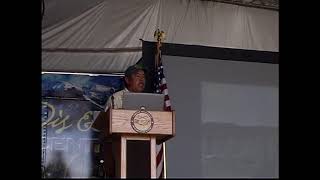
of many voices this tent is part of a traveling exhibit that has been following the Lewis and Clark Trail since January of 2003 started in monachello the place of Jefferson's dream for a western journey and continued through the eastern states in 2004 it was in St Louis and that's where I joined up along with six others and so I have been on this journey from St Louis all the way to the Mandan villages in ' 04 from the Mandan villages to the Pacific Ocean in ' 05 and now here we are in ' 06 and we're on our return journey to St Louis when Lewis and Clark came on this journey 200 years ago part of their mandate was to look around to see what's out there to meet the people who already lived on the land and to make friends with those people that lived on the land for purposes of Commerce that's why this whole journey was undertaken and when the president pitched this to Congress it was for Commerce so commerce was very important in 1803 and four five and six and it's also still important today but the Euro Americans or the Europeans or the Americans none of those had the Monopoly on trade the Native Americans had been trading with each other for many many many years long before the euro Americans came out to this part of the world and right here was one of the largest Trade Centers in North America the Mandan Villages were a huge Trade Center even during Louis and Clark's time they didn't always understand what they saw and that was one that they kind of missed they did see one other huge Trade Center on their journey and that was at salila falls on the Columbia River so today at this program the subject is trade the trade on the upper Missouri and to talk about that I'd like to introduce to you Frederick Baker who is Hada grew up in this area has lived here many years farmed here and we have had him in the tent many times and it's always a pleasure to welcome Frederick Baker so let's please make him Welcome to our stage okay testing one two there we go now if I had something to say we'd be in business uh how this guy seems strange they I've been as that you mentioned you know I've been involved in this tent kind of from Montello on different places I've been fortunate enough to speak at Omaha and Pier cheyen e be uh Stanton here and kind of seems like it's almost like a Sentimental time today because it's probably the last time that this particular group will be anyway uh my name is Frederick Baker by H name is uh yellow bu or gab bishes I as we're a matenal society so I was born into my mother's Clan I belong to the lcap most of the loow caps on this reservation are really from from one family uh and we but the uh and we've always been involved in trade there there were there three different tribes here uh the Mand ANS they had atas and the and the arika and I'll talk today primarily about the Mandan and the hia because so I uh that's that's that's what I know and that's what I am and uh I noticed that looking around that there are some people here that are that know a lot about the erra trade and so forth so I don't I don't dare go there because they they'll pull my ears if I don't say things right I see Ronda Roa sitting over there roaar one of the experts on the ARA people and I won't I won't try to uh try to go there so anyway uh suffice it to say that you know we have we we are three different tribes we have different languages very much different languages and we also have different uh cultures I think people have the mistaking notion that all Indian people are are the same you know that you come up to in Indian and you say how and they say how um but you know we're we're all different we all have our our our all different kind kinds of of culture different way ways of doing things the mandans were probably the first group to actually uh occupy the the Missouri we're not quite sure exactly and then remember most of our history was oral history uh and you know oral history really is kind of what you hear and then what you in turn interpret uh any of you I'm sure a lot of you have read the ilot The Odyssey by y Homer the poet who went around Greece during that time talking about the travels the Trojan War and the travels of of ulyses I'm sure if he came back to life now and read some of the account or read the interpretations of the ilad NY he'd be saying what what is this who are who is a cyclops Etc anyway um so that's the thing with oral history is that know it's kind of what we learned so what I talk about basically is kind of what I've been able to remember from things like you know what my grandparents told me what my parents told me when I've been able to listen to other of my elders tell about you know the the movement or the our our whole uh life as as as they they knew it and as we know it today because culture is a living thing it's Evol evolves constantly and the way we lived when Lewis and Clark was here the way we lived prior to Lewis and Clark you know has has changed and uh good bad or otherwise that's the way culture is and it it it changes so as I was saying you know we're not quite sure there's some looking at the Mandan origin stories you know we probably we our origin stories put us at somewhere by a a big water whether it was the Gulf of Mexico or whether it was maybe further down south you uh we're not quite sure there's some some of us believe that and reason to believe that maybe we we came from somewhere maybe further to the South the southwest and you know somewhere along line we acquired corn which became a stable and corn became very important to us because then that was one of our major trade items as you and we know that from looking at archaeological digs and so forth that at least around the year 700 we were centered we were living somewhere around the area at Fort Pier South Dakota or the bad river that area on there and we were we were living in Earth lodges uh and there were times when our Earth lodges were were heavily fortified and sometimes when they were not so we believe that you know whatever what whatever there was the cause you know there were times when we weren't as fortified as were at other times and sometimes not fortified at all so went through different different eras but I say around 700 some there BS there was this we were living at the at the bad RI around the bad River down in Pier South Dakota and we were agricultural that point in time we raised corn uh certainly and there were corn just wasn't one variety there were 13 clans of the the Mandan tribe Mandan people and each of those Clans had responsibility for a certain variety of corn so we knew that we had at least 13 different varieties of corn that that we that we raised here in this uh part of the world and uh besides being responsible for the corn of course those 13 CLI also had a you know different kinds of roles um then eventually we moved up the river and I suspect that as we used the resources up and the land became uh you know we used land land up and so forth that we began to move slowly up north most of our gardening was done in in the probably in the river valley if any of you remember what the Missouri River used to be like before it is as we see it today because years ago when I was when I was growing up you you look out here and you know we were sitting on this very spot looking out we would see such big trees that we probably wouldn't even see where the river actually actually went through um that's how dense the the forest or the the cottonwood trees were in certain parts and then each each year there would be a big flood when the river broke up uh there would be large chunks of ice going down the river and eventually somewhere along the line they would do what we call Gorge they would kind of get caught in something and then form kind of a Natural Dam and the water would back up and flood and you know and that kind of seemed to enrich the soil as so certain cottonwood trees certainly use that there's a fear nowaday with the r the river system being damned up the way way it is that you know the cottonwood trees may disappear but this was so every year there was kind of a refreshing of the soil so to speak so we planted our our Gardens down where the where these Sandy Loom type soils were for one thing you know they were easy it's easier to dig down there and number two you know we discovered that there you know that they were much would produce good crops so we had and we had some some pretty large uh large crops sometimes they would talk about these things being maybe as the equivalent of a couple of football fields so we raised corn primarily we raised beans squash pumpkins sunflowers those were the the major crops and then ceremonial tobacco so those were the major crops and we've again going back to as early as 700 you we've been raising crops and then because we were living sedentary Villages and because we had these crops and we would raise enough to have extra so that we could use it then the nomadic tribes would come to to us and would trade and it was certain times of the year that that they would do this and and we had a pretty elaborate system you know sometimes they refer to us as the uh the the Walmart of the Missouri and I like to i' like to refer to us really more as the Sam's Club because in Walmart you know anybody can go in and buy things and pay for it and leave well in Sam's Club you know you have to pay a fee and we had that system we got you know early on we discovered that you know we're going to charge these folks a little fee the way we did that was that you know in order to come and trade with us you had to be adopted and so for the privilege of being adopted you had to give you know give some of your some of your goods away to us and so that was the fee part and also you know I suppose we were somewhat arrogant and that we look at some some things that Nifty we didn't think that they were worthy you know nobody nobody if if people didn't agree to adopt you you know you were kind of so you had to pick up your stuff and go back and get some more stuff so we had that system in place and we were also pretty aute Traders you know we understood the importance of customer relations of marketing and all those kind of things but especially customer relations and early on I know that we had uh you know the S we were trying to get in contact we heard about the French and we were trying to get into contact with them because you know they had things that we wanted to trade with but unfortunately the Cino kind of blocked our our way and so we were trying to figure out a way to get these you know get a direct direct contact with the French and get rid of these middle guys because if we had to trade with the cins we had to give them some of our stuff some of our profits and so forth so you know being good businessmen that's not a not a really good deal so one time uh as I think since about 1700 uh we've been trading or we've been dealing with with the French and uh Man by the by the name of lavendre was I think the first one to actually write but there's a story that I heard that you talks about how when the French first came we we heard they were coming somewhere within our vicinity and we wanted to get in contact with them and so they sent out their you know their warriors with the with good horses and all those kind of goods and went out and and they they met these Frenchmen and brought them to our village and we you know I'm sure you know gave them the best place to live give them good food and that kind of thing and made these contacts well most people would probably think that you know we had interpreted these guys as some kind of gods and we were worshiping them in fact one of they took the leader and as they got close to a village They Carried him actually to to the Village well and but the the the actuality is that you know it's like you know if somebody was going to build a big plant here in New Town whole bunch of jobs and all those kind of good things and they were going to land come to visit you know we sure as heck go out there to Minot at the airport meet them and bring them in here and whine and dine them well it's no different than what we did that's how we got our relationship with the French going and then we began to trade trade directly with with the French and uh many many years so um about you know and at one time you know we were the pretty much the kingpins of the Upp up reserving I think there's documentation by the archaeologist by the Anthropologist and of course our own you know stories that tell us that you know we were and we were in we were talking about their Rick a while ago you know we they had a major trade system down probably by the Grand River around the the Grand River near near mrid South Dakota about the time that you know Lewis and Clark came here and we had a major trade system out here that's say about 17 in 1781 we had a major smallpox epidemic the first the first of two major smallpox epidemics and it really affected the mandans uh and proba possibly because number one you know we had no immunity to it had no idea what the disease was and and also the fact that we lived in these Earth lodges so was a ideal place for the uh for the disease to grow and so in a very short time we went from being about 10 Villages each capable of raising it well probably each having maybe a thousand or made more population uh and some of these Villages were much larger to to two Villages all within the blink of an eye I mean just it hit us everybody just died and so a couple of things happened to us one was that we lost a lot of our you know our traditional things you know because in in our culture at that time if one were to have the have medicine or if one were to you know develop certain things so we they they would buy the right to to use that and then they would study very carefully how that person that they bought it from you know used it and would you know so that's how we did those kind of things so everybody was was gone so we lost in 17 uh 81 we lost you know a major portion of the of our culture as far as the mandans were concerned and you know I remember one time I was working at Rosebud South I spent most of my my working life working in uh you know among Indian people I've been a school teacher over in among the chipo and over in Minnesota uh worked as a health educator and all the reservations in North Dakota except this one and then I also worked uh I went into Healthcare Management went to the University of Michigan and uh I worked at as as a healthcare manager also spent 12 years working up in Alaska so I've been kind of a I'm a real nomad you know I've been looking for always looking for the Buffalo and uh so anyway they uh so what that was leading me to by lost my trending of thought somewhere which happens when you're my age you get to the point where you're saying what where am I who are these people you Rose but Rose but thank you roseb are you key anyway uh was a rosebud this talking to an old man one one of their their elders and we kind of talking and he said where are you from and I said up north well that's what they the folks down there uh refer to to us as people up north right Deb you know where where the folks up north and in their language the word for us is to for years you know we've been enemies with with the U with with the Su and their word for us is to which is the word for enemy but anyways he was telling me he said yeah there were those people up north he said they were great Big Fellas and uh you know my my brother Marley sitting here they're probably all about his size you know and uh not only big in size but there were also a whole bunch of them and he said he said though they no no we didn't mess with them he said cuz they were just like Hornets he said you get them mad and they chase you and chase you until they get you so but he said they had a lot of good things to eat and we used to trade we used to take buffalo meat over there and we trade for these good things to eat he said all of a sudden he said they got sick and they all died so he was telling me I'm sure about the old man the Mand Dan and this is kind of how you know so so 17 so by the time Lewis and Clark came here about 20 years or so later in 1804 the one we had a reputation for being uh for being friendly and reason we were friendly was because we understood again the whole idea of customer relations you know trade was very important you know if we would trade our our goods and people would in turn bring us things like you know like hides and and dry meat and all those kind of things so it was a good good exchange and we also traded wide enough so that you know there were evidence of things from the both both oceans that you know with the artifacts or whatever they were making up there I mean it found its way to us at one time we were kind of the Trade Center between the the horses of the Southwest and The Guns of the Northwest so anyway we uh so we came along and uh when when so when lwis and clar came here you know a couple of things one is that we looked at them as a potential chance to get our to get some of our power back because we just gone from being a this large powerful group to all of a sudden being these the this small small group and I'm sure our enemies will begin to start to have a real impact on us and uh so that was um so when lwis and Clark came here again those two things though one we saw the potential we saw the weapons they were carrying and you know and so I thought that was pretty impressive and would like to trade for some of those things so those were the reasons I think that Lewis and Clark were you know were welcom by because really number one in our history and in our stories and stuff there is really virtually nothing nothing about Lewis Clark you know we've been again you know dealing with with white guys since 1700 about so you know these guys were nothing new uh just a bunch of white guys living across the build they made friends with SH shot and and Black Cat the other folks of our our our leaders and so we kind of took a responsibility to take care of them because we knew right away that these guys had no experience living in this part of the world and living out here you know in the uh living out out here in the winter time you know can be can get pretty uh can get pretty wild and so we took we took the responsibility again because of their friendship to Shah sh and to black hat we took the responsibility to try to look out for them so but they wouldn't get in trouble or they wouldn't freeze to death or you know they'd had something to eat or whatever and you know our chief said to them you know if you know you're welcome here when you when we eat you eat if we have to starve you're going to have to starve uh and those kind of things so that's kind of the spirit within we I think the feeling sometimes history gives you kind of the impression that they brought this marvelous culture and so forth over here well really not I mean we took care of them and helped them survive the winter and and saw them leave again we couldn't quite figure out really what they were doing because they weren't Traders they didn't really have anything they had these little medals Freedom peace medals and uh you know saying and then the hanas well let me finish the Mandan part the uh and so that's really what kind of all they had so I think most of us were trying to figure out you know what are these guys doing you know why why are are they on a mission on a Vision Quest trying to find some kind of a big mission our vision by going to the mountains going to that ocean are they are they on that kind of a quest what are they doing CU to us you know exploration really wasn't a wasn't a thing you know we didn't explore for the sake of exploring this is this is Mother Earth created created by the Creator you know and and we we were part of it and we accepted it and and we we adapted to it and so forth but we didn't really you know want to conquer it or explore it or those kind of things and so that was kind of a foreign phenomenon so we we never could figure out really what these guys were were doing but they went up River and uh I guess the Hadas in particular figured that they they'd never see these guys again and here lo and behold about a year later they show up and uh everybody's very surprised to see these guys but so that that was kind of you know the the mandans uh again you know they were major Traders with a agricultural products and we had established a major trade zone right here our competitors were the Eric brick our brothers and sisters who lived around around MD South Dakota at that time and they also had a major trade route and at times we would war with them and at times we were at peace with them you remember if you're reading the uh the journals that the person when they got when they left the ricra village one of their the Rick leaders came with them up here to to the m dance number one for the purpose of introducing them and number two they were they were going to at a time the relations relations were kind of tight between the two and they were out here to make some in indication that they wanted to talk peace and so forth so you know so that was our our relationship there uh there were three different groups of of uh of mandans well men and they alsoa had different languages and the other thing that I talk about you know is that you know the Lewis and Clark expedition really missed really what was going on in in The Villages you know they had some ideas that they were coming to be among Savages uh that this territory was totally uh uncivilized there was really nothing out here they even thought that at one time that there were some woy mammoths W wandering around this this country and so they came here with that with that idea none of those folks really had any Wen not ethnographers although they did some ethnography uh they weren't really scientists although they gathered things um and so they were you know with their own particular um particular frame of reference that they came here looking for evidence that you know we were we were Savages and that you know there should be they're going to bring this marvelous civilization to us what really so happened that when Lewis and Clark came here you know we were uh we were pretty civilized you Organization for one thing you know just our the women you know we were what M matenal society as where they had ASA and so we were all the women kind of own pretty much everything uh they built The Lodges if any of you were at the uh closing Ceremony this morning you know heard uh Amy talk about how hard the women worked and and so forth while we were out protecting and doing you doing hunting and doing those kind of things so we each shared but the women owned everything they owned the lodge you know they owned if there was a big buffalo kill they owned the meat and interestingly enough even in the trade you I'm led to believe from stories that I've heard from my elders that you know when there was a when the people came to trade say a group of asini boans came here to trade and probably this time of the year would have been a good time because they were that's when they're out hunting and so forth come here to trade that you know the women really were the ones that would look at what they had and if they wanted a particular item they would you know give their give the the men some maybe a a Buren basket or two of corn and say you go bring me such and such and so your job was to go out there and to negotiate that you know and bring back to her you know uh what she told you to do with with with with the price that she told you to pay for it so that was the haggling that went on uh was so uh you know our system of life you know we had the family structure was very strong and most of the families were you know uh households where there were you know usually the men had more than one wife um and then they also um when you got married you went to live and become part of your wife's household uh your Mahia tells us tells about how she got married Mahia was you know the last one of the last people that you know lived in in the uh five Villages but she tells about how she got she got married one one of the things in the whole courtship thing was that you know they would at certain times of the day young women would go to the river or go wherever the water was and bring water and they had these big you bladder basket or bags and they'd bring the water up if you were interested in meeting a young lady or if you're interested a certain young lady might go up and ask her for a drink of water and if she shared a common interest you know she'd probably give you a nice glass of water and and go on if she wasn't interested in you you know you go up there and ask her for a glass of water and she'd probably do the bandan H equ equivalent of buzz off Boo and so you wait next turn now and and uh as they got to to be more interested in each other usually the bargaining for the marriage was done and we were kind of symbolic in a lot of ways because we would be kind of told what to do and then we'd go and do it I remember somebody was telling me a story one time about the and then when on the negotiations because when the Christians came here when the other government came here and so forth you know they didn't want to deal with women because remember back about then women were A Step Above shadow in in in the in the major community so they didn't want to deal with the women they deal with the men and a lot of times if we were in a meeting you know we'd be out here sitting out in front talking behind us would probably be sitting our our wives and as we were carrying on the conversation or involved in this negotiation where it was we'd have to stop occasionally and turn around and look and if our wives are going yeah we were in trouble I had to get you get on the stick and if they were going come like this probably has they were going like this and it's say so anyway so the women had a lot anyway going back to this so once in in in W Cas so once her her she got interested the uh her her his father came to their Lodge and brought presents he probably bought some horses maybe some Buffalo robes blankets whatever you know to impress his the family he came in and told W his father that you know you're you're you're a good family you know and you know all those kind of things and then give him all kinds of of praise and he'd say you know I want my son to be a part of your family and then he would leave leaving all those gifts tied outside and so in her case you know his her father son of the star right was what was her oh small ankle I'm sorry small ankle was her anyway uh he might myself confused her but anyway her father decided that she was too young that he didn't want his daughter to marry this guy right right now so he took all the things back and went back to that household and told them that he said you know my my daughter is too young to to Mary but the young man and his father were really insistent so a while later they went back again and brought more gifts and they again went through the same spill saying you you're fine family I want my son to be part of your family so anyway it's only his father thought about that and he thought you know this man is a good Hunter I've been with him on different occasions and he's Brave he's kind he'll be good to my daughter so he he talked to and she agreed that that you know that she would she would marry this guy if it was her father's choice and so they took gifts over there to to him and said you know yes you know we will you allow my allow your son to come and become part of our family so then the next thing they did was the W family then prepared a bunch of what we call Feast food so a big big feed they took that that that meal and went over to his to his lodge and came in and uh so they said yo why are you here and she looked at the young man and said because I want you to come and live in my Lodge and so they set the Feast foods down and they left and so after they got through with a feast and then he then he uh picked up his stuff and went to to live with and became part of that that's how that's how vage was in those days and again you know it's the and you know divorce was really simple you know you have to go to an attorney and argue about anything you know just all she had to do was take your stuff if you weren't good enough she'd take your stuff outside and when you came back from wherever you were you know that was the sign saying adios buddy so you better hope that your one of your female relatives has space for you to to live until you can find somebody else so but that's that's how our you know that part of our culture uh there were a lot of things again the family was the basic group and I say these were you know people had various different roles to play um the and then we also had a a a clanship system or a system of Clans and these clans were composed I was saying the of the people that were born into a your my mother's Clan there were uh at the mandans at one time had 13 clans Clans uh at this point in time there are uh seven clans in existence today right here on this reservation and uh the role of the Clans basically was you know to mediate if there was any problems between families I'm understanding that you know we lived in Earth lodges lived in very close proximity so there had to be some system of keeping order or else you know we couldn't we couldn't afford to have a Hatfield and McCoy type of problem in a small village because would be you can imagine what would happen and so they had this very elaborate system and if my say that I did something to your clan you know and your clan got or this person got hurt as a result my my clan would go to that person with gifts and would try to appease make peace with that clan of course they might come back and you know take it out on me but that which they should have done but so that's and so we kept peace with within our clan within our our Villages by by that system and then further up was also the societies and the the societies were all age gr societ there actually two types of societies one was you know the the leadership the warrior societies and these were all age grade societies and they were societies that you learned that you earned your way into the first society that young people I suppose their people the young men that first came kind of into puberty and so forth people would observe these young men because they were already hunting and doing things and they would take a group like that and they'd recommend that they buy their way into that society and so they would the families and the Clans would support these young men and give them give them things so that they could buy their way in and uh and and then once they were in that Society you know and the first Society was called the stone Hammers and the things they did in these societies were learn learning skills to survive and one of the things that we we did both as a uh partly to prove How brave you were and for other reasons you know we we would go to other tribes and my as my brother Gerard always say you know we never stole things we'd borrow them and unfortunately those other tribes wouldn't appreciate us borrowing them so they come back and they'd borrow something from us you know and this this was kind of a way of but you know the uh the whole system of you know of stealing horses of you know and so these young ston hammers in particular were taught how to how to steal and and and then so one of the rituals that they did when they got through with their ceremony and these guys became ston hammers all the people in the village would line up and these boy young boys would come walking would come running through actually I suppose and then the people of the village would would hit them with whatever you know to to punish them for because they knew they were going to steal from them so that was U an interesting kind of reminds me of the boarding school I went to I I went to school at assumption Abbey and uh we had a rather elaborate year of orientation or initiation and one of the things we did was so we had thing called a paddle line and if you're were a freshman all the seniors would line up and you'd have to crawl through those seniors and they' be paddling you as hard as they could kind of reminded me of all the ston hammer so maybe have a right to be a ston hammer um anyway and then as they got good enough you know they they went on to the N Society they would buy their way into that society and mass and and so forth if and eventually they they were really outstanding Warriors outstanding Hunters good strong medicine would were proven to be good people and were uh were kind and and could be dependent upon and so forth they eventually became black part of the blackma society and that was kind of the epitome of the the men's Warrior Society women also had the same kinds of of societies uh and they came up the line uh as well and then when you got too old to carry out the responsibilities of the uh black Moss Society then you became part of a uh they crazy dog or th those societies and really these old guys were kind of the policy makers they would decide whether a village should move some of the roles of the black mouse were you know that's where our winter Chiefs came from when okay 10 minutes we we have a sign sign language here so don't don't don't mind us uh so um the the crazy dogs were kind of the enforcer I mean they were the ones that made policy we during this during the summer you know we lived up in Earth lodges much like if you were up the Earth Lodge Village you probably see those Earth lodges up there that's that's pretty much where we live in the winter time they the the black mouses among themselves selected a winter Chief and they would break up into groups and they'd go build a smaller Village down in the river where or on the river banks where the the big trees were and where there was plenty of of shelter and pl of uh wood and so forth and if any of you have encountered North Dakota blizzards or been North Dakota in the winter time you know you certainly know that you know it's a good idea not to be sitting on top of a hill but it's blizzarding so so that that that's where we lived in in these and then in the winter time as I was telling you about in the springtime when the floods came through usually they would you know the water and so forth would destroy these Villages and then each year they would build a new Village the in the winter Villages the old folks then they' build the regular Lodge and then there'd be kind of a little like a little addendum or a little porch or another room I suppose you want call it that and in this room you know usually the older the old folks and the youngsters were would pretty much stay in that area you know fantastic place for learning to take place fantastic for bonding between grandparents and and these little little youngsters uh so because of oral tradition you know a lot of their you know the things they would tell and I I kind of had I was fortunate enough to experience some of that because my uh about the first seven years of my life eight years of my life we lived over in Lucky Mountain which is probably about 20 mil the way the crow flies right down down the river here below water of course now and we got a chance to my father my grandfather was a full-blood hiasa couldn't speak a word of English uh my my grandmother on my my my mother site was half pataa and and half English her her father came from probably Liverpool England that's so from what we can gather so I always tell people that I probably related to The Beatles but I haven't uh but and um so I got a chance to to spend know my first years by formative years with them I learned how to speak kataa fluently fact I learned how to speak kataa fluently and English at the same time uh it's uh can't remember when I couldn't speak either either language uh and so I got a chance to you know kind of experience that where my I I was kind of my grandfather's little tale for for years and during this time and learned a lot of things from from him he tell you you know I used to spend time with his with his U old cronies that would come in and would visit he was a he was a full- blood uh but you know carried on very much the tradition because he was a they had a great big Garden uh we used to have a thing called a community garden over in Lucky Mount and all of the people in that area you know had their own garden plot much like they would have back in the days of you know the five Villages or Beyond they had their own garden plot they would raise corn and those kind of things although potatoes came into existence and to and then we also had cattle and we had horses so we were really self-sufficient and uh really took you and everything pretty much much by by horses and so I got chance to learn a lot of the old language remember one of the uh one of the interesting things was that a lot of the my grandfather's old cronies about his age and he was probably the 70s by then would uh come in to visit and you know in the white culture you know when you're visiting it's kind of really uncomfortable if there's if there's quiet there's no one talking well in their situation you know sometimes they they would talk sometimes they wouldn't sometimes one of the guys would tell something he may tell a story or he may know of some incident that happened you know that he would tell the rest rest of these guys so they talk about but sometimes so they just come in there and you know I was their gopher so I'd usually get them something to drink or whatever you know and they'd be sitting there and sitting there and pretty soon they'd say well uh I'm I'm going to go now why said I say oh the go I'm glad I seen you and they go or sometimes somebody would tell something and then the rest of them would sit around uh sometimes they smoke a pipe you know and pass a pipe around we didn't really have cigarettes in those days sometimes we make occasionally Buller and roll their own but basically it was it was a pipe it was you know they just smoke a pipe and pass it so the next person take a few Puffs and pass it on and you know um so that that was kind of our you know our our social structure and back in when I was growing up in the the hosas not too much time to talk about the hias but let me quickly say there were also three different different groups of hiasa the first hiat is probably and they all have different origin Stories the one group came from the sky charred body they think you know their origin story puts them around the uh around the wasburn area another the H of proper probably came from they their their original story puts some under the ground uh and came up and saw Buffalo and so forth and and moved up and the other group came from probably somewhere over in the the north probably up on the other side of the turle mountain somewhere in that area uh there also some theory that at one time maybe the hotas and mandans had been neighbors somewhere down in the in the southwest you know again telling you about you know our our origin story might put us at the mouth of the of the Mississippi or somewhere in that area and they you know they were moving back and forth and uh eventually got back together again the word for the Mandan word for hia is You Know M or people who went across the river and according to that quick Legend there's a uh the a group of hias came over to the to where the the mandans probably somewhere around the Knife River where the the mandans were uh this is probably around 1100 1200 somewhere in there and they saw they saw the the mandans across it they were trying to talk to them sign language or whatever and the hias were talking about you know crossing the river mid bid means you know crossing the river b w across this River and so they thought that that was their name and so you to this day that's the the Mandan word for the hosis he's one of the one of the two dialects is M and so the story is that you know they they shot they put corn on their on their arrows and they shot corn across and motioned them to eat it you know and so they did and it tasted good I mean they parched corn so they said they would come back and uh So eventually they went back and they told the rest of their tribe they said you we found some people over here and they have some really good things to eat and so they decided to go join them and so they came over across the river got together with the Mand Dan and this went on for a while the Mand Dan finally said you know they said if we were different we have different ways and if you stay here eventually our young men are going to fight fight each other because you know our ways are are different and so we want you to to move down or move up north and build your your Villages there but don't go so far away that we we aren't close because then we'll become then we're we're bound to become enemies and then be fighting each other so go until you can no longer see the smoke from our lodges and then build your Villages there and so that's probably why the you know the the major H Villages were built around the Knife River around you know the if you ever go out that way and visit Stanton you know there's a five River or five Village Memorial site there and so that's you know and that's the other Bunches of pataa came over as time went on they so anyway I think my time is let me stop there okay okay uh fisy to say that trade you know we we've been engaged in trade for a long time uh you know even to this day I noticed that you know and we evolve you know and and we kind of go with the flow so to speak and in this day I noticed that one of our one of our young men here was dressed up in his Indian custom and was having tourists take pictures for $2 I thought we've gone you know we we we've adapted we've adapted so with that it's been a pleasure uh glad to answer any questions I'm gonna say we could fit in two questions so if you got a question raise your hand and I'll come to you and then we can uh all hear your question so here we go we'll get it started I'd be interested to know how many people constituted a family a clan and how many people lived in an earth Lodge typically that's that's a it's a good question uh I no one really knows for sure you know depending on on the size of the Earth Lodge and the the uh I don't know maybe 10 12 yeah we have a one final question out here got Frederick Baker here there's a good man the ask okay all right ladies and Gentlemen let's please thank Frederick Baker for his presentation and I would like to also encourage you to come back at 5:00 our next program and it will be our last program here at New Town uh Amy mosset will be here and so come and join her in her program and as I said that will be our last program of the day and we will close at 6:00 so take some time right now go visit our child siiz keelboat The Dugout canoe our American Indian table and our front desk over here in the exhibit tent and the M Montana National Guard is back here in their camouflage so go back and visit with them as well thank you all for coming out