Tent of Many Voices: 11140504TMB
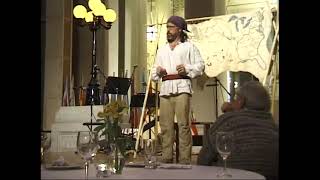
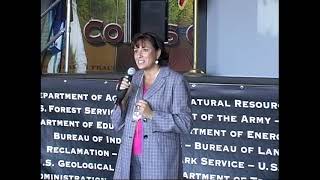
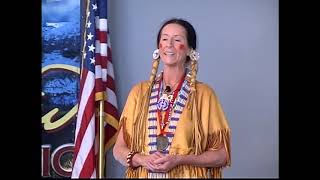
good afternoon ladies and gentlemen welcome to the core Des to and the tene voices for those of you who are just joining us I'll tell you a little bit about us we are a traveling exhibit we've been traveling the trail since January of 2003 and we finally made our way to the Pacific Ocean and we'll also do next year return back to St Louis like Louis Park did 200 years ago and we call this tent the tene voices because we bring in people from all over the country to do programs on Louis and Clark as well as the um tribal stories that the different tribes have and today we have with us two members from the chinuk tribe we have Phil Phil Hawks and Ray Gardner and then be talking about the shinuk at Goose Point so I hand it over to Ray Gardner I'd like to welcome all of you to chinuk Country and Phil is actually going to be the main one speaking about Goose Point but I'd like to give you a little bit more background on Phil Phil is a direct descendant of huxell who is a signature signer of the 1851 Treaty at tany point he's also one of our tribal elders and he's also one of our council members so he's one that those of us that are getting more involved in the tribe as we go along these are the people that we look to to guide us as to how to move forward into the future and Phil is the last member of the chinuk nation to have been born on Goose Point which was a settlement where when people were pushed off of the river went up to Goose Point to settle up there so that I'll turn it over to Phil okay thank you R uh now first of all i' like to acknowledge the core two of Discovery and uh with their Journey out here solidified the claim the United States had on this territory otherwise we possibly we could have been province of uh Canada like South British colia but I think the English knew that the young United States is willing to fight for the country after the results of the Revolutionary War and War of so so I'm sure that was uh the main claim the Lewis and Clark Journey had made the stake to strongest claim to the occupation of this territory like Ray said that the Indians were pushed off of the Lower Columbia by the donation land claims and many of them headed south and U most of them headed north the lower Chino Indians in wakum and cl and even uh showat Indians settled on Goose Point Goose Point wasn't Prime Property it was swamp in one area and and the beaches around them were nice laid between the high point which is Bay Center proper and the higher ground is Goose Point itself and my first Recollections of being aware of uh life starting was during a depression and there were four res or two houses and four residents on Goose Point myself and my great grandmother in one house and my great uncle Willie George and his wife Ida in the next house it was a depression my mother worked in oysters and my father was a fisherman in Alaska and he died when I was 3 years old so therefore my great grandmother raised me until about 8 years old she was raised as Indian and times were changing but she would not would not conformed to actually to the white man's ways we ate we lived out the land which or lived like an Indian which wasn't uh too hard those days during depression we at salmon we ate all of the salmon boiled it smoked it ate the salmon row Fish Head everything but the bones she had the smoke on and whenever fish was available she smoke regularly in the surrounding area had oysters if you didn't like seafood one kind or another he wouldn't want to be living there so many people did move to the lot of adopted the white man's ways non Indian ways and been left to the F reservation when people were allotted on there some went to the cities Tacoma my great aunt went to Tacoma my great grandmother's daughter went to Tacoma she was after her to move up there but it it finally happened when she was taken ill in 1940 to one thing I can recall is uh Japanese had oyster industry there and this one fellow came by the house every day and and when the tide was right and he would share his lunch with me and go on home and uh sometime later some men came down to the point and said World War II was started or we've been attacked and to keep your blinds pulled and your lights out during the what they called the blackout it wasn't difficult for us because we never had electric lights anyhow we had uh kerosene lamp so running water packed water from the well to the to the house and used to run off from the roof into a gutter and into a barrel and that was parti of water supply we B you didn't bathe every day heated the water and maybe once a week take a bath yeah and uh wood wood cutting was one of the main activities from the summer spring summer and part of the Fall you depended on the wood on the wood stove to to cook cook with and for heat so I learned to run a not a chainsaw but a handsaw and it was as soon as I could when it it's old enough to handle it and chop the wood stack it the great grandmother she her Woodshed was full by winter but great Uncle Willie he was considered a grasshopper I guess he he made enough wood to last 2 or 3 days and that was it but what was surprising he could run the handsaw real well he could have probably cut his wood in two weeks but he prefer preferred to go piece peast me but we'd be in the house nice and warm and he'd be out cutting his two days of firewood that was his philosophy I guess different than most of ours when people moved up to Goose Point there were in industrious there was the houses that were left were sturdy and Shak of church and built well they had an orchard I think it was a scan family had a couple dozen trees there apple trees and plums and the grandmother had an apple tree and tum trees and gooseberries and currants and wild blackberries were there when the Indians left most of the houses were dismantled or torn down and used were building uh other houses on on the hill there's only two houses that I can remember that tumbled down Shaker Church was torn down dismantled in the part of a nice house for wowski was the man's name he used that for the their house and and the bell was taken Shaker Church Bell was transported to Oakville and installed in the church over there Grandmother always had a Smoke House and had a garden all the time sometimes a deer would R it or other animals that uh there bear would make a raid through the Orchards once going and they' swim across to Wilson point they never bothered the people know the Indians there I think I mentioned four different five different tribes remnants of five tribes and uh I always heard that Chinooks were extinct or nearly extinct but HW are our great great grandfather which I'm a descendant of and Ray also there there must be two or 300 descendants of him living that are scattered across the country and on my mother's side and M salak there's almost as numerous there that existing or extinct I guess in the government's size but not in reality many have moved up to the canal reservation sh reservation skish cities K mostly Portland so we're not extinct but that is hard to prove I I guess unless we all gather together and have a de count that doesn't count I was trying to think World War II or would that begin uh my friend Japanese that that I share shared lunch with me he disappeared not into the service but he was taken to a concentration camp I met him 20 years later and most of his family moved where I think his last name was muai and his mother had a she returned to the area in Raymond and ran a beauty shop and Rond but most of the Japanese went elsewhere bigger cities when they come back to the the ones that did come back their businesses were confiscated or run down or or stolen that's a different story but it's Injustice so the Indian shared with them the in the winter the High Tides can over Goose Point to maybe four or five high tides in the winter it didn't bother the fruit trees or the or the berries because they bloomed again in the next in the spring but when the High Tides came there were planks firewood pieces of Cedar glass balls that floating around and I can remember willing out there in his skiff one day Gathering up items I think some of it was his wood that he had cut to used but now the it's a different type of vegetation there Le the the beaches are Sandy now with the when the High Tides came later the the Chang that deposited silk on top of the sand and more undesirable plants grew on that and I think that from what I understand it's seems farfetched but uh caused by the jety on the Columbia River changed the currents into Willa Bay and made a lot erosion there was one tiand there about 10 acres that we all gone and that s had to go somewhere and when the High Tides did come it would be discolored brown colored and when cover the beach and that changed the nature of the the growth on there I think the county park took over the lots that the Indians had I don't know what type of title they had for there but Willie George he was the last resident at Goose Point he moved up on the Bas Center Hill and about 1953 and his wife died and he moved to aine h a lot of Indians that left there they came back to be buried in the base Center Cemetery so their hearts they left but their hearts apparently were still in the B Center area still now you read about someone dying and they were born in Bay Center brought back to be buried it's called The Pioneer Cemetery but there there just as many Indians buried there as there there Pioneers you put in context where point is geographically oh it's yeah that's right Bay Center Bay Center is a geographical center of mipa bay on the west side is Nel River the South Bay and the right right side is a paleix river and it's probably about a 3 3 and 1/2 Mile Long Peninsula Cru PO is right on the end swampy area and on Right End there's a high point but in the middle it's it's yeah in the bay on the Wella Bay you uh maybe South a little bit South and W and east of uh lead better coin on the end of the Long Beach P maybe four miles across from toand show water that was a the naming contest in in uh the 1870s in this lady picked B Center that was that was the winning name that's what it it was named and then he established a post office called B Center Lo pointer is on the very Tif not the most Prime area there but that's where most of the Indians were s proba uh I think they had to go voluntarily with a donation land claim on the on the mouth of the Columbia there was no land left for them and they didn't sign a treaty to they could have gone to the qual reservation but but many of them didn't think it was too friendly out there I just settled where wherever they could part part of that too was in the Treaty of 1855 when they came back to have to sign that treaty which is the treaty that we didn't sign then part of the stipulations in the 1855 treaty was for people to move north and with communication being not the best a lot of the tribal people knew that those talks were going on but they never found out that they didn't have to leave so they did leave and went up to this point well it's the goose Point itself is deserted face Center is still there that's south of Goose Point okay actually the the one person that's left that can actually take you and show you where everything was on goose point is is he walks on goose point every day and he can take you through and he can show you where the homes were where the Orchards were where the gardens were where the Shaker Church was where the old well was and a lot of us have had the opportunity to go down there with him which is just a wealth of knowledge for the rest of us to know where a lot of our ancestors lived for a long time was that City Center in 1806 Goose Point no Goose Point was still clear out at the very end of the point and settlements further back in from the point which is where the town of Bas Center Isle I she'll take the mic okay let me come around with microphone if you have a question be best to raise your hand oh well I just curious what's the status today I mean what's happening or not happening uh of getting trbal recognition through the US government right now for those of you that don't know obviously the Chinooks are not recognized at this time it would take all day to get to how we ended up there but where we're at right now is and I'll just kind of go back to 2001 in January 2001 after a long battle with the government the government decided to recognize the chinuk nation and several of our council members went back to Washington DC were there when the recognition was signed they came home it was it was a huge celebration for us after all these years we finally made it it went into a 90-day appeal process and on day 89 there was an appeal filed against our recognition that went to the appet court the appell court upheld the decision they didn't have eight questions that they asked but nowhere in that that finding that say that it would change their verdict which was that they upheld it the Bureau of Indian Affairs used those eight questions as a way to open the entire process back up and basically they took it back to square one the administration in the White House had changed during that time there was a new Administration in place and while our chairman was back in Washington DC actually having lunch at the White House by imitation of George Laura Bush for the first function to kick off the Lewis Park commemoration when he was leaving the White House to go to the airport he received a call on his cell phone and it was from the Bureau of Indian Affairs saying we've just taking your recognition back away so where we're at now we have talked to members of Senate and the Congress and we have hoped that they would be willing to submit a bill on our behalf and grant us our rec recogition back they have claimed that they're in support of us we three of us went back and spent a week in DC and worked out language on the bill and that was 3 years ago and they' yet to put it on the floor so really the option we're left with at this point is to take the federal government court and unfortunately it's a very costly process it's a very lengthy process we know 100% sure that we would win that if we go there uh we've talked with an attorney that that fought the samish case in federal court and one had established some good case law he has gone over our documents and said that we have over eight times the documentation of our existence of what Samy had the nice thing in court is no one else is allowed in the courtroom it would be between the ch nation and the government so the people that have filed appeals and against us in the past would not even be allowed to have a voice in the courtroom so that's kind of where we're at today about how many shinuk tribal members were there at Goose pointed its peak and about how many shinuk tribal members do you think there are today I'm trying to remember uh the the how the lots that were there probably probably eight Lots or eight houses on go point but other indings were up on the hill too also on Baye Center Baye Center was on on the hill you might say or flat and Goose Point was like this and then I mean the where the Indian settle was on the flats and then Goose Point was on so I don't know to just go by the photograph but the the uh Shaker Church were 30 30 some in in the photograph there but I don't think all went to church though so there must there were more Indians there on the on the point than than that and then I think they gradually some moved to base Center they might have been there before Goose Point I'm not sure what if they could afford to buy a a pot of land there but on goose point we might have been more or less squatters but on the maps so there the maps are uh are broken down in the plots or are names on them but when they left I don't know what happened I know the the park has taken a couple of lots there extended out and I don't know what happened to the to the other ones prob be sold for taxes that happened across uh cross on Wilson point in one case where the the owners died Indian and no heirs and the county took it over and after several years they sold it to someone else and then the Indian relatives or descendants challenged it and they checked it and and they were supposed to be look or searched for the relatives to be to inherit it but instead they County confence get it and sold it to the the current buyers which wasn't the the buyers owned it wasn't their fault but I think uh Indians were compensated or the errors for it that was the discrepancy in the title there that they weren't supposed to take it I don't know the the legal wording on it I don't think the Indians had to pay taxes at the time so if they didn't have to pay taxes they were delinquent and the number of travel members now is right at about 2500 um I have two small question can can I ask you about your clothing is this ceremonial clothing that you're wearing the red and the black it's very beautiful and I'm wondering when this is what the tribe War what was it made out of actually this this is would be later in time but it is ceremonial and it's wool and all of the design is is made of buttons and I'll go ahead and turn around not turnning my back on because that's where the design is oh wow your your culture well we would like to believe we are okay uh interestingly enough I know even when the new Museum was built they put a honor wall in and my mother and I submitted my grandmother's name along with chinuk nation and I've yet to have anyone that's been there be able to find it so that's interesting but the Smithsonian does acknowledge us and when we were back in Washington DC we actually went to one branch of the Smithsonian and they turned over to us a documentation that shows that they have 29 of our ancestors back so we would like to in time get those ancestors return so we can bring them back to their own land and reberry them here where they belong what individuals or groups are against shinook recognition by the government and why the main group that is against the chinuk tribe are the corals and the interesting part of having the quals being the one that cost us our recognition is that many members of the qual tribe are actually Chino that were adopted as qu years ago when they were forced out of the area the main reason they're against us is the original Coral reservation was 10,000 acres and that's where the canals resided through other land alotment acts treaties the government bought up more land and put the reservation the size it is now which is a little over 220,000 Acres through the land allotments of the tribes that went up there individual members of the tuneup tribe own 54% of the entire reservation the cornal concern is that if we get recognized they cannot control our land as they have for all these years if our members go up there now they have to ask the's permission to do things along with the bar V Affairs the quals are also in the process of trying to get a bill through Congress that that claims that if you are not from a recognized tribe you canot hold land and Trust which if that bill was to go through every individual member of the tribe to lose their land and the qual will get it where's the qual by up the coast would be gra Harbor County north of north of GRA Harbor probably about 40 mil on the coast yeah yes part of Jefferson County part of GRA Harbor County it's on a the main river is a qual river that flows into the from Lake qual out to the ocean flows right through the middle of uh Ray's uncles are coral too and so am I but I mean on their books you're a chinook but once you're enrolled there you're a qu you're not a chook anymore if it's any cons that's getting into politics and I don't really understand too much of it we're supposed to be the affiliate one of the Affiliated tribes up there with no say that's about what it amounts to it's any consolation I have a book called American Indians and it refers to the chinuk as a tribe and I'm sure all of the other scholarly works and all the other authoritative books produced also with references to the chinuk would refer to the chinuk as a tribe so that's just another volume of information which is I think to your benefit at least in the political sense of talking to somebody that makes up their own criteria of what the tribe is rather than your social un which is your families and your your organization well it is very interesting even in the in the situation we find ourselves in because if a person checks into federal law it clearly states the only way a tribe can be terminated is by an act of Congress there has never been an act of Congress to termin CH tribe it was a single individual in 1967 in the Bureau of Indian Affairs that went through a list of tribes and if they weren't familiar with them they crossed them off the list and we were one of I believe 19 tribes in the state of Washington that were crossed off that list illegally so it's been very aggravating for us because we should not have to prove anything and again I've sat down with members of Congress and the Senate clearly laid out everything that they have done illegally to put us in the situation we're in and they just look at you like oh well does the government does the government the does the government or the qual have a record of those people that were incorporated into the tribe at the you referred to the time that they left you used a certain word which I don't recall but it was like a dispersion of some kind where people left um it sounded like you know they had to migrate somewhere and some you said your grandmother went to Tacoma and many people went to quol uh reservation um I'm just wondering did the does the qual have a record of what Chinooks were taking in at that time or does the government keep track of that nobody has any so some of my older cousins were allotted after I don't know maybe knows what year when they reorganized or or when they said all fish eating tribes can be invited to the to live on the Kunal reservation and and many of them were alloted 80 acres to to farm or whatever but when they got their 8 Acres they discovered it was almost all Timber so they weren't but they were AED whether they were members or not I don't I don't really know like a chinuk member was aot at 8 Aces a college member 80 acres a sheist member 80 acres there were that was their identity but the canal considered them canal and after after they were looted on reservation maybe Ray and answer but yes those records do exist and they do have those it's it's interesting the criteria that the government has chosen to use against us in our recognition and one was one of their comments was that we can't prove that we stay together as a people in our land well that's very interesting when they were the same government that kicked us off the land the other is they claim that the local community doesn't know we exist or acknowledge that we exist well I don't know too too many local people that don't know that we exist they also one of the criteria they used against us was that in the late 1800s that we couldn't prove that we had a government in place well I would just about question any tribe in the United States during that time period to be able to show that they had a government in place CU it's not like we took minutes I mean all of our things were handed down orally that's our stories went from generation to generation so really there would be very few tribes that could prove their existence during that time frame they've been very selective of what they can use against us and whenever they have come up with something like that and we've been able to fill that Gap they immediately had something else one thing I could remember beginning school if I if I didn't belong to a tribe the school in Bay Center they said you kids are Indian and you have to take cod liver oil for your vitamin D because you don't get enough Sunshine now it's just Indian kids and not the non-indians so somehow they identif I mean you recognize as Indian even if he didn't belong to a tribe and also free lunches that was one benefit that hat you're wearing is that part of your Indian clothing yes and that that was something that we wore even prior to Louis CLK time or whatever it was it's one of the reasons why we thought Louis and CLK was pretty pathetic when they got here we had their buck skin clothes which are rotting off their backs which was obviously not good for this climate around here so we had Cedar skirts Cedar caves see your hats we didn't have to worry about it in the follow what can we do as uh residents of Washington to help you in this cause is there anything that we can do one of the things that that I always ask people to do is to write your state representatives your federal representatives and say why aren't you doing something for these people and obviously anybody in a political office doesn't pay any attention to anything unless enough people are asking them why and holding un accountable so it's we have I I know myself I ask everywhere I go if people believe in us to do that to write letters of the representatives we talk to them and when we know letters are being written to them and then we go talk to them they say well nobody acknowledges you then we know that we don't need to talk to them anymore another another affair is some people are afraid that chook are start a casino somewhere so this might sound uh like a silly question but see I have it's really funny but I don't know much about Native American tribes in the state I'm native Oregonian I live in the valley but I've always heard of the shook you know and there's a salmon named after the shinook salmon didn't start out as a shinook it was named after the tribe so can I you have a cultural identity in the minds of many and so the question I would ask is what is the thing that you will gain maybe most and first with the um this country having recognition of the shinuk tribe there's there's several things that that we would like to give back one is we would like to have a land base in our own country there's pieces of land that we have looked at and we even told the state and federal government that we would like to have it's unoccupied land it's owned by the government but it's Old Village sites that are important to us so we would like to have them back the our main goals that we have going forward is to be able to provide health care for our people and we would get that with recognition because we would get federal dollars to be able to put a clinic in place we'd like to be able to provide housing for our elders give them someplace to go some kind of an elder hostel or whatever we don't have that we would like to work cooperatively with the county and bring business back into the county it's a very depressed County no one can argue that so it would be twofold for us to bring business in one our tribal members that had to leave would be able to come home and have a job and be back in their Homeland our youth that are growing up now would know that they would have some place they could stay and and have a viable workplace and not have to leave and as a result of that would just benefit the county as well any other questions is there anything else that you want to add Ray or Phil close no I do want to thank you guys for coming and um sharing his with us and I do apologize to e and he wanted me to mention that he's V chair of his tribe so I forgot to mention that so I'm sorry about that so thank you for coming I I want to thank you folks for coming we do close uh 5:00 today but we will be open tomorrow from 9:00 to 5: and uh we have different program for