Tent of Many Voices: 11190502TMB
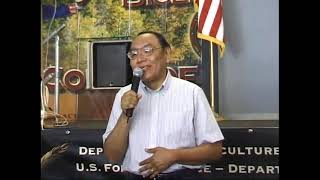
good afternoon ladies and gentlemen welcome to the core of Discovery 2 and the ten many voices for those of you who are not familiar with us we are a child exhibit with' been traveling the Louis and Park Trail since January of 2003 and made our way Westward to the Pacific Ocean we'll also be doing the return trip next year in 2006 back to St Louis from the coast we call this the ten many voices cuz we people from all over the country to do programs and theend voices about L Clark and we also bring in charal presenters to talk about their tribe today we have with us Chief greay wolf Cliff Snider who is an honorary chief of the Shimmer and he's going to be talking about the triel history at the end of the trail so please welcome Cliff Snider is this working can you hear me well here we are at the end of the trail and uh I want to tell you that I've been traveling with myin the last 3 days at the smiter in Portland Fort Vancouver and in order to C disappointment I see some of my people who have been following me all around and it's good to see them here and I want to also tell you that I didn't do a rain dance this week and that's the reason why we have such good I want to say to youya clo is a chinook Indian word for hello or goodby much like aloa and I also want to say that I sometimes I fear following Roger wendley if any of you were here at the last presentation he puts such a great show and we've done things all across America all the way from here to monachello I would like to say also that I don't go through the acts like he does but I will probably be doing a lot of reading off of my notes and I think you can understand that and it is a custom of most of the tribes Across the Nation to welcome visitors into their area and I'd like to take the honor at this point to welcome you to the Eternal homeland of the clat of Indian tribe who lived just a few miles from here in fact they had Villages right out here uh where the rivers go into the ocean above Seaside and geart and the class of tribe history actually goes back over 10,000 years by carbon dating and I'm using that in the same text I would the chook Indian tribe because all that separated us was a river we intermarried and uh we visited each other and we had the same language chin pan language and so nowadays you make territories this is Washington this is Oregon the river runs between but in those days we were just all Indians living here at that particular time to the south of us we had the Kil you've heard about the whale story uh and Below them were the nalum and uh then on the other side of the Columbia River were the lower Chinooks and then the claps of course were the ones that kept Len par at for clap during that winter of 056 and that was the second longest place that they stayed on their entire trip the first one of course was a man Fort mandad and we'll get to that later and the third one was last month when I was visiting the T of many voices in CIA Idaho on the Clearwater River that was the third place they stayed the longest on their return trip I would like to take one minute and I don't know if he's back there in the audience some place to talk talk about a man who is a director of the ten many voices and core Discovery too I worked with him for 25 years on the chinuk Indian Council even though he is a cloud of Indian his name is Dick bash and he works with Daryl Martin and they are running this wonderful wonderful core Discovery all across America and the people who work here I tell you when I visit with them in different places they I've never seen one group of people worked as hard as they do to put on a great show dck bad okay big bash currently is the uh uh ceide resident and chard Baker who preceded him is now the head of Mount Rushmore so I've been working with some really neat people across uh in 2003 monachello uh Gerard Baker asked me to be the first educational speaker on the tour dick bash gave the first blessing and so we were right there at Mello and in Virginia in Charlottesville from the very beginning and here we are again at the end of the trail I feel very blessed to be a manello cameia Seaside and I guess in a few weeks I'll be back in Forth Vancouver when we come back and uh I want to say something about Nick bash we don't say great in the Indian language like great great great great like the white people do we just say great grandfather or grandfather well dick bash's grandfather was Chief K or kable who was in The Young Bay area around asor the river and port platza and he's the one that helped the uh B Clark contingent make it through that terrible winter of op 0405 well I'm getting mixed up on my days but anyway that before they return anyway uh when when LS and Clark left Fort CL and headed back to Jefferson they presented caway with fourth clat pel and that was kind of famous the last few weeks to understand because uh it burned down accidentally and so many times I've had my picture taken there and done interviews that it's going it's a great loss for me but in the other hand they're finding artifacts there and they might rebuild it and it might be better than ever thank God we have Nick bash to okay uh one thing that uh we want to say about the classs in that time and you if you're all oregonians or have been here a long time you know how much it rains he mentioned and for you people who are new from last presentation L Clark spent that winter here and and it rained every day except for 12 days and only six of those days that they even see a glimmer of sunshine so I think we're very fortunate today I guess a couple of weeks ago when I were walking the ASO Bridge across there and doing some Louis and Clark activities and I imagine some of you were there I think you'd got rained up pretty hard now today my story is going to be a little different from the ones that you might have been reading about on this 8,000 Mi trip across America I'm going to be giving you the view from the Indian Villages look at these people coming who are they I'm going to give you the view the view that these are strangers in our land and it's not going to be the same thing that you read about in The White Man's history books so be prepared today to get a different version I would like to ask you though if I could see a show a hands how many of you have a trace of Indian blood in your veins would you please raise your hand wonderful there two or three I must tell you if you are part of Indian and people find this out all the time I know I ask kids this all the time I'm talking to the schools where the teachers are how many of you are Indians and said yeah my dad's an Indian but they never say they are for some reason but if and all possible when I was a small boy walking down the street with my mother holding her hand people had passed by she was a half GRE indan but she told me never to tell anybody that you're part Indian because of discrimination factors now we don't see that today and after playing football at or State catching passes onehanded and being a All America golf coach and things like that wherever I go being an Indian I'm the one that's different and being being different is my greatest asset in the world that's one of the reasons I've even here today because I'm part of India so follow your bud lines back there if you're younger uh sometimes there might be some educational opportuni there be very proud of your heritage and those are my days of being called floating Feather by my coaches in Oregon State and now my story how many of you studied uh anything about the Louis Clark trip most of you know the whole story then uh some of how many have read ger and they're really up on everything there's still a few of you okay the reason I'm asking you that is because sometimes when I'm talking to high school kids or grade school kids they haven't had that experience but sometimes I find people in the audience who know a lot more about it for example like Roger he's had all these journals and he's been studying for years I have to get mine through Legends and talking to other Indians on the trail and sometimes they'll tell me stories that aren't in the white man's history hisory books and you not something that coming along the trail and trying to relate these stories remember there was sign language but the Indians couldn't write and so it would be very difficult for them to portray their history down to the line now I might to say that the way the Legends and the true stories are handed down comes through the campfires at night during the winter when they're sitting around and the elders are teaching the young about what has happened and that's how the history was handed down for example I told you you told her she told him told him back there got back to me the story would be slightly changed and we did it again the next night it would change again and by time the next year or so it would hardly seem like it would be the same story but here's my son I talk to my son I tell him to repeat the story back to me okay he repeats it back to me no you have it wrong you do it again you do it again okay we'll start tomorrow you come back and you do it again and I keep doing that and doing it doing it so that way when he tells his son the story is the same as when I told him and so that's why when you read the history books it's all written out and it goes on for ages but the Indian stories are handed down by Legends and so today we'll talk about that but actually my reflections of this whole business of Louis Park goes clear back to president Jefferson and who set out to buy a little town on the mouth of the Mississippi River called New Orleans and I guess you've been reading about New Orleans and watching that on TV lately quite a bit but to get New Orleans was to uh dominate The River traffic on the Pacific so in negotiating with uh France who had just acquired that territory from Spain he found out that Napoleon of all people wanted to sell some land over here because he wanted to pay off his War debts you know Napoleon was always at War and so Jefferson sent an emissary over and they decided on what we now call the Louisiana Purchase and you know how much that was 3 cents an acre little less than we're paying today around Seaside up there it amounted to $15 million for all the land from the uh East Coast to the Rocky Mountains 15 million well that was smaller than the the budget of the United States at that time when I was in CIA they asked the other speaker about how they pay off those that how do you get rid of it you know where did that money come from and I think President Jefferson died owing a lot of money I don't think it probably ever got paid for but anyway we acquired the land and that was double double the size of America at that time remember at that time there only 17 states in the union and we only had 15 stars on the flag and when Louis and Clark were handing out Flags it wasn't really a true emblem of what was really happening now I miss I did a war Cano over in IO a short time back and I told them how legs were handled down but I told him now I'm 80 years old and so I have to write things down so when I'm turning Pages I'll hope you excuse me for a minute because I don't want to leave anything out anyway Jefferson picked Mary weather Lewis and then Clark to explore this new region and he knew about uh a little bit about what was going to happen but really he didn't know what was going to happen with the Indian tribes he knew that some French Trappers had gone up the Missouri River and he thought maybe there might be a river passage all the way to the Pacific coast McKenzie had done something similar up in Canada before that and the information he received back he knew there were different people out there some of them had never seen a white man so he didn't know whether they're going to be friendly or whether they're going to be treacherous and just wipe out the whole Expedition the only knowledge he has Is that real close to monello and I just love the time when I got chance to be in that area and meet with those people cuz actually it was a sister city of uh the friends of Pacific here across the asor in Long Beach and so I got to go back with them too and see that particular area but the mon tribe was back there they're unrecognized today like that she looks unrecognized by the way I want to tell you even though we're unrecognized tribe of the United States government we got recognized under the Clinton Administration after 30 years of work and then the new Administration came along they took it away again but I want to tell you something we still recognize the United States government he didn't know about like I said about being friendly or being Mass but I want you to just come with me and try and visualize in your mind remember on our trip in the bus and we're going up to Columbia River and we were talking about visualizing what they went through as they came down and you almost get a clear picture even though it's changed and there dams and things like that things have changed and almost every speaker talks about all the horrible things they went through they talk about the Bears they talk about the river problems they talk about Great Falls Taking a month to get around 19 miles I was there I went to the Buffalo Jump and I know how sticky that mud could be I don't know how they did all those things but mainly I just want to say like groger said it was the Indians that helped them all the way now the Expedition had started out and of course they couldn't begin until everything was finalized with France with Napoleon so they kind of sat in wood billies for a while I finally got into St Louis they little dancing and celebration and then they took out now for the next few hundred miles they start running into the oage Indians and the kapoo Indians I always think of that comic strip with the kapoo joy juice I didn't know there Indians like the kiko but anyway they were and they just went for several hundred miles they run into the shauni Indians who are friendly no problem there and uh they were kind of curious about Lewis and Clark but they didn't offer any resistance usually they went in their camps and they just uh did some talking tried to counsel him tell him that the white great white father was back in Washington and then in Iowa they ran into the uh otos I had the honor of making the uh reflection speech of the ver speech on the Lewis Park Trail in Omaha and near there was I got a chance to go to Council Bluffs and leis and Clark held her first First Council in with Indians where they just sat down around the council part and uh what they talked about was the great white father that now he was in charge of this land and now they would have to be subservient to him and not trade with any other Nation except America I don't know how that sounds to you right now but that's the way I was going at that particular time to cancel talked a little bit about the lotas we get into Lota country first of all you get into the Yankton Sue and of course there been a white man or two had been to that area at this point they still haven't got to a place where the Indians had never seen a white man so they picked them up on a carrier it was covered with skins and carried them into camp and they had a big feast and they fiddled and they had a great time and that was swell so they decid okay it's not going to be a bad trip at all well the other lotas the Tetons who were just up the river a aways and you heard about black Buffalo I can't remember the other chief's name they were just having a problem with L and Clark what they wanted to do because they had seen some white Trappers come through there is control it trade so they made High demands of tobacco alcohol Goods of every kind in order to let them go by and actually leis and Clark trained their cannons on them Clark decided to pull out his sword and I'm not going through the whole story so some of you read about it but anyway they finally left and good they left a couple of Chiefs and some of the women ride down the river ways with them and that seemed to satisfy them and they went on so here we are in a situation where we know that Indians can be Troublesome not every tribe is going to help us on the way now we run into the RICO tribes a lot of times they're just sewn in with the Hiatus and the mandans and they shared entertainment with them they danced around the campfire they got out their fiddles and York got out he was dancing they couldn't believe how well this black man could dance of course they were kind of curious too about his skin cover but they handed out some peace medals and some us flags at that particular point and here they still had some trade goods to trade off so that they could proceed and then they reached the Knife River and that's where they found the Mand mandans and Hadas and this is the greatest acquisition of the whole trip a 16-year-old woman called Chicago and people ask me constantly how do you say that if you're a Tri City you say sa Jia with a J some of L sh say there are no J's in the language of the shis and it's spelled with a G so for me to tell you uh how old she is where she's buried there's a lot of things that go on with that but this time she's only 16 years old and she was married to a man called T shano anyway they had a new baby and it was just born just prior to the uh Expedition coming in there they decided anyway she'd been captured actually by the Hadas about 5 years before and had lived with them and so she could be very valuable in translating uh for different tribes and also giving directions and some people say she's not as famous as everybody liked to put her but actually there's so many places along the trail where she found food for them she's able to translate for him and actually she was a greatest acquisition to the tribe and so they were hired on even with the baby and of course remember they had the dog Sean and here's this great big party head off uh uh down down the road but anyway during that winter at Fort M course I mentioned it's a longest they spent in any one place but the winter was cold the snow was 3 or 4 ft deep the Buffalo were scarce and they had a really a hard time making it to that winter as Roger says um if we starve you starve and if we eat you eat and actually they got along with the Indians so well they went out and helped them Hunt went on their trips with them helped them bring the animals back when they couldn't find them and somehow or another they made it through that terrible winter they didn't have too many good Winters I'll tell you that now they haven't seen any natives for a long time the grow bonds I want to call them gross Ventures but I guess they pronounce it Rob darl Mark who's also part of this crew here one of the directors he was from Montana and of course you know the whole story about the great fall so going into that took a month and they finally got to ground that and they nearly lost the Expedition there but they weren't seeing many Indians but then they got through that and now they are reaching the area of the headquarters of the Missouri they're running out of water there is no passage all the way through and so Lewis went on ahead and and uh he had some of some of the core with him and of course you know the story they ran into some Indians and some women and they went back and Clark was going to come and the Indians were all afraid that they were going to kill him they thought this is the end of all of us and they knew another contention was coming of course s Jia was in the uh in that group with Clark who was coming up the river behind him so one of the things that Roger didn't say he that I would say he told the story about the Skins being wrapped around but to make sure that this new Bunch with Clark was not going to kill them all they changed clothes they not only put the Skins around uh Lewis but also Cay wore his clothes with the idea that they wouldn't be killed you know if they show to be friends and the story of a he a he he where they hugged each other and they hugged each other so hard he was almost tired of being hugged so that was good and then you know Chicago comes along and holy smokes this is her tribe and Kamaya away never walks as her brother and so from then on it was a matter of getting together and uh being friends again it was a wonderful homecoming and so they sat down in the wigwams they took off their moccasins and they smoked together because that was the story at the time that meant there's a sign of s sincerity security now in order to proceed now they can't use the canoes anymore so they're going to have to have horses to carry their goods and this is where uh SC become very valuable because she had to work in the translation I'll have to read this because it runs on a little bit Lewis spoke English to Lish who spoke French to shano sharo spoke TOA is Chicago Chicago spoke to kamay and Sh and that's how they translated their bargain and they picked up some horses from them as I recall it was like 28 horses and one mule and the one mule would be more important to them than the 28 horses and then they were going north at this time in into uh Mont ten country and here they ran into the Flathead Indians and they bought 11 more horses and then they traded seven of the horses that they had for other horses and among them were some Colts and you'll understand later how the Cults come into help him get across the bitters now they know that there's no Northwest Passage and were steep they said steep like the like on the house and there were hardly any game living in bits you know now there are but those days they're all down where it was Lush and easy to live now with coming as a white man they all been porched up in woods and on this they were starving and they had to uh kill a coats Colts and use them for food in order to survive and I told to people who have traveled this area by airplane Ron Lowry he's both chasing Across America Uh Kevin cryst who works here with the tribe with the contingent and he says that is the only way that they could have crossed the bitter Roots is the rout that they took and they finally got to the wake per Prairie and in that Spirit they all offered them some food and the young triman looked at these people and said look at all these Goods say had maybe we should kill them all and take everything and we will be rich but as Roger has told you there was a woman there who had lived with the white people for a while and she had returned to Village as an elderly woman her name is what make sure when you're reading about L and Clark journals that you get the book about what pise she said they were good men and do them no harm and that's the phrase that you will see all over the Lewis Park Expedition and so they decided to do that and I've been friends with the N Pi for the last 3 or 4 years fact I'm going to speak at their signature event and they said well maybe we shouldn't have let them go maybe we should have taken everything that they had maybe we'd still have our big Homeland now their reservations have cut into many pieces and they lost a lot of their possessions well they found a way to make canoes they showed them at Canoe Camp how to hollow out cottonwood trees not the cedar trees that we know of or but cottonwood trees you all know what cottonwoods like it's really hard to work with they didn't chip on it they burned out these canoes and they used fire and then chipped away after the fire and they made them so they were good enough to go down the Clearwater River and then eventually into what is now le and tri cities and all those places down the river and they just kept going in their their canoes were okay but they weren't like an ending canoe that you hear about whe the chooks down further down the river they got to the where the Snake River comes into the columia right now I'm working with my on a project at that very point with a with a snake inter Ste Columbia and uh we all have that project done in a couple years but anyway it's just awesome to see the change and how with the dam there ice Harbor and everything has changed the Snake River completely but they decided to go up the river and they uh met with the EAS even and the wabs and then they turned around went back down and they danced with the w the walls that's one of the things they always talk about how had a good time dancing wait a minute there's a human and what's he wearing he's wearing a red sailor jacket and they had sailor clothes on well we must be getting close and according to their Maps they should be about 200 miles from the Pacific Ocean CU here these humel Indians have been trading with the chooks at the mouth of river and they got sailor clo and by this time you know 28 ships had entered the CL River before Louis and park even got them so the Indians have been training with them for quite a while they left there they got the slil of Falls and the Indians stood back with their arms folded let's see if they can get over these without losing all their stuff well the wos who spoke a ventian language and the wish Rams who also spoke the same language they decided they would just let them go over the falls and all the stuff that fall out and anything that's on the shore belongs to us and that's just what I mean I met Stephen Ambrose and I approached him with this one time and I said you discredit the CHS as being thieves and he says weren't they and I said no I said anything's left attended that's yours that's just their way of life and so tting don't say that they're thieves but probably were a little bit anyway they they got a couple of canoes over there old remember Slava Falls was only 40 ft wide at that time I mean between me and Roger at the back of the Tennant all further the was between the the rocks for the salmon were trying to run up over the top and Indians came from all over the West to fish at this particular site it's very important a lot of people talk about the Salo Indians they weren't Salo Indians they were Indians from all the different tribes there were chooks wish RS washos Bas everything everybody came there to catch fish because it was a tough place for the fish to jump over PS so we're meeting these new kind of Indians and they got they look different The Man Dan are 6'5 Tex Hall Baker 63 65 head of all the national things American Indians and I'm telling him and know here we are we're only 5'5 and we got flattened heads and who are these new people coming they got upside down faces and they look like Bears we're going to be all killed no there's a woman and a baby and when you had a situation like that with a group of men they're not going to hurt harm us and so again Chicago wi was one of the reasons why they made it safely down the river and the Indian s said well we'll let you pass we know you're not an our party but there's Indians down Gorge are going to take you out and so they had to worry about that well I got to a place going the walas of course were there and wasu police about where the town of wasu cus is now and Louis and Clark stopped there at Cottonwood Beach and they said this is probably one of the finest places to for human beings to live this side of the Rocky Mountains well of course is a good place to live 16,000 chips liveed in this area at that particular time I mean that from there to the mouth of the river 100 years 100 years before Columbus there was 6 million Indians living on the Columbia drainage and down to California and up to Canada on the coast 6 million Indians as you imagine how many of them have disappeared this time well we're making by Portland for Vancouver now and we're head heading on down to the mouth of the Columbia River and oh joy ocean and view what a mate that was my mother was born and raised and is buried at Pillar Rock Pillar Rock claims that's where they saw thought they saw the ocean for the first time Roger says skak River I'll have to talk that over with we get through anyway there's a sign down on pill Rock now says that's that's where they were anyway a little story goes on they were they were a bad shape that Snooks found them and that uh Portrait by Russell had some Great Falls show Chicago way of doing sign language with my fourth gr grand grandfather Tom Conley that's not the way it was the river was roaring the waves were hot the trees were falling and they were hungry they were starving and they weren't protected in the Dismal Niche for a little protection the Indians bought them three fish and showed them a little place to survive and they finally made it and they ended up a Station Camp I'm going to be running out of time here so I'm going to run along I just want to tell you about how they de decided to go to Fort claton they had run out of trade gr so my grandfather found telling me he said they're no use to us we've already seen 28 ships they had why don't you guys discuss where you're going to spend the winter so they had a vote some say it was a poll York voted first black men to vote Chicago voted Tu son sharo did not vote Shannon I say he was 19 Roger says he was 17 was the first one underage to vote so if you say there's some things that happened there some first did happen but Steph Beckham at Louis clar college says that was not a vote that was a poll and Roger tells me he said Chief you know why they decided to come across river and to uh to the Oregon side I said well no Roger how come he said they didn't want to pay the washon sales tax I'm going to borrow that Roger from now anyway they got for PL you know the story um Roger done that trail to the whale Thea Beach echola is the way that the chuks pronounced it and uh the class went with them of course those clat Indians they kept them through that whole win they help it's kind of funny though every time the Indians shot an elk with a bow and arrow the arrow would still be in the elk and when D went out there and shot the El to have five or six arrows in it that was still living they they had to almost traing so that's the way they kind of got their food but Roger and I were working on the trail I couple years ago from here across to the cola Beach and the state of Oregon wanted to call it uh the Clark Trail well I kind of resisted because the class have been using that trail for 10,000 years and park me over at once even though he took Chicago wi with him to get that BL from the wh well it molded around for about 2 years down the state and finally they invited Roger and I to come up for the big dedication and they decided to call it the classup loop trail and we're very happy about that thank you Roger anyway uh so on the way back they made it through that terrible winter I'm going to end this said by just saying they hey finally they stole a canoe from the Indians they couldn't bargain for one so they stole one they got up to the Cath lamet and they took the wrong Channel and it was a w from cath L who is come running after them and said hey you took the wrong channel the regular river is back here little ways so you can go back there but by way that's my canoe that you stole oh it is well how are we going to work this out so they gave him three Oak skins and he was very happy cuz he had another canoe anyway and so they considered on and then they the scal Indians some chooks stole the dog Sean I he paid $25 for that dog back there so he done at this point go out and get that dog and return it or else and you have to take their lives well they started chasing the uh scools and they gave the dog and they brought it back and he's very happy well they had a lot of different things but the only when I'm talking about being authentic I just want to tell you one story on their way back of course you know they made it back and that's the reason we're all here today and the only reason we're here today is because as Roger says the Indians helped them both coming and going but but they ADM met uh Lewis fields and a couple others had taken a different course going back and uh they meant with some pyan black feed in as you know if you know about history of black feet to there's still a war with the United States but anyway at that time there were some young uh black pans uh staying with them that night so they they B them and they danced together and they did the whole thing and but early in the morning these uh black pig boy I guess they're probably teenagers or something start stealing their horses their guns and taking off with them well feels he runs after one he stabs kills remember in the books it always says there's only one man died as a result of the expedition in Iowa of appendicitis and now we're having this problem so there's one white man died as a result and here's he staus guy and L chased after the other one cuz he had his rifle or something and he shot him so now we got three men died as a result of the Expedition well I'm telling this story all over it's not in history but it's exactly that way so I'm sitting in my house Portland Oregon and I get a call from a black foot man who had met at monello and Omaha and St Louis and all along the way he said I meet you at the truck stop we have a cup of coffee so I told him that story about the cuz he was a black but this is waiting that Che he says that's true the one that feel stabbed did die but the one that Lis shot survived so only two men died as a result of the some Expedition well I'll leave you with that Kum from my heart to you how you Mery for coming today and I hope if you want if there's any questions I'm going to be roaming around with Roger for a few minutes please come up and and we'll discuss anything you want to discuss I Mery for me thank you so much Cliff for coming and speaking he's also going to be speaking again this afternoon at 3:00 want to come back e e