Tent of Many Voices: 11200502TMB
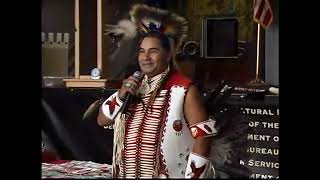
and uh I'm here to basically share with you some of the perspectives of Lou and Clark and I'll tell you first about this tent of many voices and this exhibit here this is a wonderful travel and exhibit it's been on the road since 2003 and we started out in the home of Thomas Jefferson which is inell that's right Wisconsin no it's in monachello and that is where we started in 2003 we've been on the road to Everwood since and we finally have reached the ocean and for some of the people in the core it's quite exciting cuz they've never seen the ocean um and we tell the story of Lucy Clark through exhibits such as a keelboat a junior siiz keelboat we've got a Dugout canoe we've got um a Native American Table of Plains Indian exhibit as well as Northwestern tribes and we even have a 35in audio tour next door so please catch that before you uh leave today here in the Tet voices we have a variety of speakers we have Scholars we have uh Native dancers we have poets we have first person interpreters and today with this we have we have a very special presenter who's presented before and she's a wonderful Storyteller Amy Moss is a nationally recognized scholar consultant and adviser on the life in Legend of Chicago WEA she's been invited to the nation's capital on five occasions to participate in National events honoring Chicago WEA she's been interviewed by major national Publications film radio television on segments featuring Chicago WEA she was actively engaged in planning efforts for the bicentennial commemoration through the National Council of the Louis and Clark bicentennial the circle of tribal advisers and the North Dakota Lewis and Clark Fort mandam Foundation she's a member of the North Dakota Governor's Lewis and Clark advisory committee currently living in bismar North Dakota she is the executive director of the Northern Plains Heritage Foundation am is Manda a member of the three affiliated tribes of North Dakota please give ad Mas a warm welcome thank you it's so good to be out here way out towards the ocean the Great Waters the end of the lisis and Clark Trail I've come a great distance to um to be here and I appreciate all of you being here and I come from the Northern Plains I come from a village called A a is a hiza village on the South Bank of The Knife River in what is now North Dakota and over 200 years ago Lewis and Clark arrived in our villages in October of 1804 and when they traveled up the river long before they ever left St Louis Mary with Lewis had received a letter from president Thomas Jefferson instructing him to follow the Missouri River from its mouth to the mandans to the mandans all the way up onto the Northern Plains Thomas Jefferson who had not traveled more than 100 miles west of his birthplace knew about about the mandans the Mandan the Mandan Indians living on the Northern Plains at the center of one of the greatest most visited International Trade Centers on the Northern Plains Lewis and Clark did not know a whole lot about the hiza Indians but the hiza Indians were more powerful than the mandans at the time the Mandan people our people were actually in a state of decline by the time Maryweather Lewis and William Clark arrived in our Villages but in the hiza villages we numbered about 3,000 people and with the mandad population 7 mil down the river in those two Earth Lodge Villages the entire population of that Trade Center that agricultural Community numbered over 4,000 probably closer to 5,000 people it wasn't from the mandans that Saga we had joined the Lewis and Clark expedition it was from a hza village called a about one year before Maryweather Villages sagaa was taken as a wife by a French fur Trader who was living in our Villages since the middle 1790s his name was tant shinol a free Trader and entrepreneur who had traveled all the way across Canada from Montreal and then come down the rivers and ended up in our Villages like many Frenchmen long before Lewis and Clark ever made their Journey to the Northern Plains sagia met Maryweather Lewis and William Clark in November of 1804 her story is a magnificent one of a magnificent one one of the most compelling of all of the members of the Lewis and Clark expedition Saga would walk away from our villages to spend the winter with the ls and Clark expedition beginning in November of 1804 she would give birth to her child John Baptist shano in February of 18 5 5:00 in the afternoon February 11th Maryweather Lewis the leader of the Expedition would preside over the birth of that little boy and when this little boy was 55 days old he would leave what is now what was then Fort Mandan with his mother sagia a young woman in her late teens he would leave there with his father a French Canadian fur Trader in his late 30s neither said Gaga nor tant sharo her husband spoke English but their key role in this expedition was to serve as interpreters through long chains of communication from the captains of the Expedition tant shano and Saga whe would serve as intermediaries as ambassadors as the critical links and communication to many of the tribes that they would encounter as they traveled to the West not only the shishoni not only the birth tribe of saguia but other tribes that spoke other languages completely different dialects than either saguia tant shano Mary WS Pierre crat or George juliard understood tant Sho and sagaia needed to both attend or they needed to both be participating in this event because sagaia did not speak English she did not speak French tant shano did not read or write he did not speak English and so Lewis and Clark in order to obtain horses from the Shon for example would speak through these long chains of communication from English from one of the captains to perhaps Pierre crat in English Pierre crat understanding and influent Speaker of his native French language would convey that message to tat shano the fur Trader he would convey the message then in in hiza to his young wife saguia hiza the language that they understood in common and then in her native shash language she would convey that message back to her her brother kamit the leader of the shishoni and that is how Lewis and Clark obtained horses from the shishoni that allowed them to cross the mountains and make their journey and continue that journey by water later all the way out to here just sagia there are certain things about sagaa that people are always wanting to know when did she die how long did she live where was she buried Saga returned from the Lewis and Clark expedition not to her Shon Homeland but to that same hi Village a in August of 1806 she remained with our people for three years before she and her husband made that Journey down to St Louis in 1809 we know they went to St Louis because sagaa and tant shano's little boy John Baptist sharbono this little boy that that William Clark so fondly referred to as pomp Pom My Little dancing boy this little boy was baptized in December of 1809 in St Louis at the old Cathedral you can travel to St Louis today and see this little boy's baptismal record the his Godfather was August Shoto the founder of St Louis Louis and Clark or sag to S sharo would make the journey back up the River in 1811 and the last we heard of saga wheel was a recording by John Ling the agent at the Fort Manuel Trading Post at the borders of North and South Dakota on December 20th 1812 John leig recorded in his journal that that evening sagaia had died there was nothing he could do for her she was buried somewhere on the West Bank of the Missouri River near the borders of present day North and South Dakota that town today is called kennel South Dakota the burial site is unknown we don't know where she was buried there we don't know if she was taken onto a hill and buried we don't know if she was buried near the trees along the Missouri River we don't know if she was wrapped in a buffalo hide and placed on a scaffold we don't know if the sight of her burial is now under the Waters of the Missouri River we do know according to John LED that she was a very fine woman about 24 years old and according to John Leed she left behind a very fine infant girl that was the end of the life of sagaia and it was the beginning of her Legend and today this woman this young woman The Interpreter the interpretes as she was so often referred to in the lwis and Clark journals this woman is is the most celebrated woman in all of American history and there are people across the country who lay claim to sagaia who are somehow connected to her who have used her to advance their causes their ideals saga's life was influenced by so much more than her birth tribe the thei Shon her life was impacted by so much more than her life with the hiza sagia is somebody who we would called a very culturally enlightened woman and I want to spend some time just briefly talking about the cultures and the experiences that shaped saga's life and made her who she is or who we have come to know her today there were important men in This Woman's life there was her father a lmai Shon who lived somewhere out there in Southwestern Montana into what is now idah took his people and they ranged all the way up into Northern Canada when they hunted but these people of the lhai Shon were unable to protect her when the enemy came in to what is now three fors Montana and charged in on their horses to this place that is now called The Jefferson River and took this young woman and about six other people and took them back to the Northern Plains there was a h a man who was very important in This Woman's life because he is the person who approved the marriage of sagaia to this French Canadian fur Trader tant shano tant shano was not an American he was a French man and yet we think about the impact of this man on This Woman's life we know that when sagad wheel lived with the hiad as she learn the way of the people there learn the ways of the women in that tribe and we know that the lenai Shon the hiza of North Dakota are matrilineal meaning that when you grow up in these tribes and if saguia had remained with either of those tribes she would have been married either to a shason man she was actually betrothed to a to a shason man who was still there when they returned to shason country but sag wheel left the shishoni culture she left the hia culture she married a French man and so did she lose the same kinds of rights that all the women in those tribes embraced the right to own property the right to decide what or how you raise and educate your child the clan of your child the very name of your child is from your mother's Clan the way you live is by your mother's Clan sagaa had children her children did not grow up in lmh high Shoni culture her children did not grow up in hiza culture their father was a French man and his culture was not matenal and so you have to wonder what kind of rights as a woman she had to leave behind when she left those two Indian cultures when they traveled all the way from our homelands and return back to her the the the homelands of her birth tribe and then continued on people often ask why did she not stay why did she not stay with her birth tribe and when you read the journals you you you begin to realize that the Shon in 1805 were very oppressed by the enemy this was a war Society all tribes were still Waring with each other before Lewis and Clark arrived during the time the Expedition wintered with us long after the Expedition there was still Waring going out there between the tribes the Shon were very much oppressed by the enemy tribes that surrounded them so oppressed in fact that if you read the journals in August of 1805 you realize that these people were nearly starving they were not able to go out and Hunt did sagaia realize that that her people were suffering I think she did but when we think about tant sharo there is an entry in the journal in August 1805 where her husband tant shano was severely reprimanded because he struck his wife and William Clark William Clark protected her and he made certain that that did not ever happen again sagaba didn't remain with her people she continued on was it because she was moving away from her culture now because her husband her husband was not of her birth tribe her husband was not of her adopted tribe her hus her husband was from a completely different culture and we often wonder could she have stayed could she have stayed with the Shon if she really wanted to when Mary with Lewis and William Clark sat down in that council with the limai shishoni leaders they needed her to communicate and when sagad was was sitting there and she looked across she looked across and she saw this young man the leader of the shason and you could see you could see this flicker of recognition and they both Rose at the same time and they walked toward each other speaking speaking in the language of their birth tribe the shason language LS and Clark did not know what sagaia and this young man were saying to each other this young man was her brother Lewis and Clark very much needed this young man's horses and as sagad wheel walked up to that man and they recognized each other as brother and sister and she embraced Ed him and she cried and she was speaking to him and if she so dearly wanted to stay there all she had to tell kamway is give them no horses unless I am allowed to remain but did she want to remain would you have stayed in shason country would you have stayed in hiza country if you were Saga 200 years ago I think not because Saga wheel was traveling and she was she was she was an incredible Young woman she had this sense of adventure and courage and this this Spirit about her she was able to do something that no other woman of the hiza tribe the shishoni tribe and probably not any other tribe that she encountered along the way would would be able to do sagad wheel was traveling with a heavily armed very strong military Expedition and there was a man in that in in that expedition who probably impacted and INF infuenced her life more than anyone and that was William Clark because William Clark protected this young woman as I traveled to the West in June of 1805 Saga became Gravely ill near the Great Falls of Montana so ill that she was near death and it was William Clark who was recording every day what her condition was like as it worsened day by day by Day on June 10th and on June 11th he took drastic remedies trying to trying to heal her trying to get that sickness from her body he bled her on June 10th she wasn't recovering and he knew he had to do something drastic so on on June 11th he bled her again and she was she was near death and a couple days later it was William Clark who picked her up and carried her out to that white Puro and he laid her under a shade to get her out of that hot June sun he was very worried about her he was very concerned for this little boy who now sagaia was no longer able to care for he was not even 4 months old William Clark watched over her and later on that month after she had recovered and the journey went on and at the end of June on June 29th when William Clark looked up into the sky and he saw that there was wind and there was there was hail that was going to come out of those clouds and he got that perog out of the water to seek shelter and it was William Clark not tant chanol who was who was helping saguia up this hill as the mud and the Rocks were sliding down after the hail and the rain and the wind descended upon them it was William Clark it was William Clark on Christmas out here so God we have presented a gift two dozen weasel tals it was Christmas at Fort classup and everybody was exchanging gifts and there was marryt and it was William Clark that sagia presented this Christmas gift to in the cultures that she had just left the Shon and the hiza we had never heard of of Christmas it was probably William Clark who was a little am a little bit amused when sagaia asserted herself and almost demanded that she be able to travel down the beach when she heard about this gigantic this gigantic creature that had come from the sea the Great Waters and she was hearing them describe this thing and she insisted that she she had come such a long way and it would be so hard for her if she were not able to make that Journey down the beach to see this gigantic creature and it was probably William Clark he was perhaps amused by the way she asserted herself she had a child to take care of the weather was not nice but there was Saga and she was able to go down the down the river and see this gigantic Beach whale we don't know if that was a good thing for her we often wonder if that was a good thing for Saga whe because we know that when she lived among her people the lmai Shon they they were salmon they were they were called salmon eaters she saw salmon she saw small salmon she saw big salmon she knew what a salmon looked like and when she was back at our villages on The Knife River she saw the fish that were trapped with our Nets or caught with those bone hooks but they were small they were catfish and and these other fish that were in The Knife River but this was a gigantic creature and imagine imagine what the women back at the Earth Lodge Village thought when sagaia returned after August of 1806 in that winter they were sitting in the earth lodges beside the fire in sagaia was trying to tell her her hia friends that she had seen a sea creature a fish that was bigger than a buffalo imagine what these women thought when Saga wheel was trying to tell them that she had seen a fish that was so big they could not even fit it inside the earth Lodge I think this was a low point in the time for sagaa because it did nothing that whale story did nothing for her credibility William Clark was such a tremendous influence in saga's life nobody protected sagaa the way William Clark did when sagaa was captured from the three fors of Montana nobody rescued her nobody protected her when Saga was given in marriage to this French Canadian fur Trader who was 21 years older than her nobody protected her nobody said you don't have to marry him and although no women of the time had a choice in their marriage to anyone it didn't matter if you were in St Louis or out in Montana or out in out here in this part of the world or back at the Mandan Villages or the ARA Villages down in South Dakota or even out in Virginia 200 years ago no woman no woman had a choice in who she married those marriages were arranged sagaa had a special place in her heart for William Clark you know how we are when when we meet somebody somebody who is very powerful and you know that that person has great influence and when that person protects your child and when that person gives of himself and they give your child opportunity and a life that you know you could never provide for them you have a special place in your heart for them and William Clark in August of 1806 before he left our Villages he told the Sharin family that he wanted to take this little boy John Baptist he wanted to take him he was concerned because now this River was open everybody was going to come into this part of the country to settle to trade to farm he was concerned about the sharol family and he told them that he would take their boy if they allowed him to this little boy Jean Baptist who was now 19 months old in 1806 he would take their son back to St Louis and educate him he promised he would raise him as his own son but he was too young in the shanal family said when he's older when he's older we will bring him to St Louis and William Clark said goodbye to the Shanel family on August 17th 1806 and only 3 days later on August 20th of 1806 as they were leaving what is now North Dakota they were on the Missouri River as they were heading into what is now South Dakota I think that William Clark was overcome with something something was pulling at his heartstrings he looked around that boat and it was too quiet this little boy was no longer hanging over the side and trying to feel the water this little boy was not looking around for that big black dog probably his playmate during this Expedition this little boy was not in the boat John Baptist Charo William Clark named a landmark after him this huge Sandstone outcropping on the east side of what is now Billings Montana that huge Sandstone outcropping which now holds probably the only physical evidence remaining from the Lewis and Clark expedition William Clark's signature on the north side of the Sandstone outcropping that huge Landmark was named pompy's Tower today it's pompy's pillar a National Historic Landmark that William Clark named for sagia son William Clark had seen this little boy shortly after he was born in February of 1805 William Clark saw this little boy I'm sure the first time that little boy smiled and at a couple months old when little John Baptist started to coup and make sounds William Clark was was there and in the first 19 months of his life this little boy was traveling very close in very close proximity to William Clark William Clark was very fond of this little boy he probably heard him the first time he giggled saw him the first time he walked the first time he ran probably reached out and grabbed him many times when he was toppling over over rocks or logs he did everything he needed to do to keep this little boy out of Harm's Way and I think because of all of that sagaia had this tremendous respect and admiration and perhaps love for William Clark and William Clark did keep his promis and he did educate this little boy in St Louis Missouri and by the time John Baptist another very important young man in sagu is like her son her son by the time time he was a young man he was speaking six or seven different languages referred very often by William Clark As an interpreter and a scout up and down the Missouri River sagaa sagaa is the most celebrated woman in all of American History she represents so many things for so many people and I think when when we when we think about the legacy of saga I think that she represents something that's very very important I I mentioned earlier sagaa was probably the most culturally enlightened woman of her time born to the L High Shoni raised and adopted by the hiza married to a French F Trader mother of French Canadian hiza Shoni children but probably most influenced by an American General William Clark Saga we had traveled the entire length of the River she traveled on rivers that most women of our tribes had never even heard of could never even dream of experiencing sagaa has taught us one thing to go out and experience no matter how frightening it might be no matter how unknown it might be sagaa has taught us to to step outside our own cultural Comfort zones and explore new ideas ideas from people from other cultures and yes it might be frightening it might be intimidating but what she learned imagine not just the not just the scenery not just the rivers and the mountains and the Plains and the plateaus but the people it was the people that sagia met that forever changed her and I think she has taught us that when we are willing to go out and explore to explore new new Landscapes new cultural landscapes new to us at least we change we become changed we come we become more enlightened we become more understanding more respectful I think that's probably the greatest Legacy that sagaa has taught or carried forth for all of us when I think about sagaa the one thing that I know for certain is that she has introduced me many of us to people from other cultures she has taken us places that we never dreamed that we would have ever traveled to and when you think about sagadia this woman who is honored across this country with more statues more monuments more landmarks Rivers streams Girl Scout organizations schools Awards lunches there are C bar is named for her she is on the golden dollar coin and last year in 2003 the state of North Dakota took this woman to National Statuary Hall in Washington DC North Dakota made saguia the first Native American woman to be honored in National Statuary Hall and this is the image this is the image that was used for that statue the image of a Kaza woman and yes we know she was born to the Shon but the image that now stands in h in National Statuary Hall is the image of a hiza woman because we too honor her and we do know that there are so many cultures that influen This Woman's life but the one thing that we can say as the descendants of Allah that hiza Earth Lodge Village in North Dakota had it not been for her life with us there is not a soul in the entire universe who would have ever heard of this woman that we call sagaia thank you very much we have we have a lot of time to answer questions but before we before we do some questions I have a couple of quick gifts that I'm going to present and um I promised my friend there's a friend that I met from out here um there were two really important tribes that LS and Clark um wintered with out here and spent a lot of time with and one of them was the classup mum of course for classup was named for the classup and I've met so many people I've been involved in the Louis and Clark planning since about 1996 actually and at the national level of planning since 1999 and when we came out here we met a couple of people very early on and you know we have been together we have been together at every Louis and Clark event from Montello to St Louis all the way out here and bringing tribes into the Lewis and Clark Bicentennial was challenging when I talk about exploring new cultural landscapes I'm talking about myself too because traveling to oage Country and Oto and Missouri and kapoo country in Kansas was real difficult because these are people that were removed from their homelands by William Clark and so to go back and to tell these people that you really need to get involved in the bicentennial was a challenge and and after some of those meetings you know you ended up going home back to not even home back to the hotel feeling really beat up and just really heartbroken but but there were rewarding there was so much of a reward to this because we met so many people and all of those tribes are they all are involved in the bicentennial commemoration presenting their perspectives on Lewis and Clark and about themselves which is so important because when you hear tribes speak they need to speak about themselves they need to do that but there's one guy who traveled the trail so many times with me and um he representing the National Park Service and I the National Council Louis and C Vice and I've been promising you a t-shirt for a long time and Dick bash dick bash you need to come in here got do it a lot of times I know we deserved it because we were working for Louis and Clark and um but we we've been on this Trail for a long time and and when I talk about lasting friendships my friendship with dick bash is one of the most important thank you so much D and there was another gentleman that we met also out here we met in Vancouver and then we made a trip out to Fort classup and and this is where I really met a lot of the first people from the Louis and Clark Bicentennial and this man represents the shanuk nation he's a he's a uh an honorary hereditary chief of the shinuk tribe and I learned so much from him and it is such a joy and an honor my daughter Cedar and I have seen Chief uh Chief Cliff Snider all over the Lewis and Clark Trail and and um my very dear friend I brought you a sweatshirt from North Dakota cuz I know thank you so much my friends um and thanks to this to the community of Seaside and to all the people with the National Park Service for bringing me out here I just would not have missed this for anything and uh questions anyone anything you want to know if you have a question what you do is you raise your hand and then I will come to you and you will um we will basically announce to the whole world so everyone can learn from question go ahead Why did um they pick Sakia over his other wives to go with him that's a good question why did they take sagia and not his other shishoni wife they knew for certain she had to be shishoni but what I've read in the in in the oral histories from our tribe uh that have been documented by wolf Chief and four wolf U from the hiza they said his the other wife was was frail and rather sickly we called her otter woman as far as I know she also had a son who was probably old he was older maybe even a year old and some of the other oral tradition I've heard about otter woman is that she died not long after I'm not sure while the expedition was gone or not long after they returned and you you don't hear about her anymore you hear about many many other wives that tant shano married but you hear nothing more about honor woman got a question back here darl's going to take that I was in spoke an last week and there's a junior high school that's named after her and they pronounce it Sakia and so I've heard different um pron pronunciations of her name how did they did they finally come up with the the correct or what they they think is the correct um name for her very long very long ago we're talking about the correct pronunciation of sag's name very long ago um the American Bureau of ethnography and ethnology I believe um or ethnography adopted a standardized American spelling which was sagya s a c a a we a saga Saga is AA word for bird WEA is an almost Universal Su uh a word from the suan dialects the all the tri all those tribes up on the upper Missouri River the word for woman is MIAA it it all sort of sounds the same bird woman is what we called her she had a name when she was born to the Shon when you are born into a tribe you receive a name if you become very very ill you might get a new name because the name is associated with the with your life if you go off to war if you're a man and you come back as a hero you might get a new name if you become the leader of a Nation even today you might get a new name if a different Clan adopts you into their Clan you can belong to more than one clan if you are adopted into a new Clan you will need a new name of that plan sagaa was a name given to to this woman by the hia sagaia meaning bird woman Rod Arte will tell you that her name really isn't saaka Jia it sounds something more like Su white the which they which he claims and Rod Aro white is a direct descendant of camea he will tell you that that's a name they gave her when she returned to her people Saka JIA is an editing error from 1814 the louison CLK journals write her name over two dozen times in the Louis and Clark journals it is never spelled with a J it is spelled 16 different ways in all of the journals collectively it is never spelled with a J and in 1814 when Nicholas bidd and Allan published the two volume set of the journals because Mary wther Lewis didn't publish the journals William Clark didn't publish the journals in 1814 the J was put in This Woman's name it did not come from any tribe sagaia had a Shon name until she was 12 years old that name was not Sakia it was not sag question over here Amy why did she die so young Saga was I think like many other women of the time was um developed complications following child bir that was a very very common cause of death 200 years ago and if if you if you developed pneumonia or if you had a bad cold or an ear infection and and a lot of these different illnesses that are very treatable today 200 years ago or even 100 years ago when we didn't have the medical technology or the experts to deal with that chances are you might just die from something we would never dream dying of today but she was also very sick 3 months after the birth of John Baptist charal and that was that was related perhaps to child birth but we believe she died from complications following child birth in 1812 what questions let's see a question over here thank you for your presentation iy we all enjoy that in your studies what do you think is the most important contribution and the most visible contribution Saga we have made to the Expedition and are they the same saga's contribution to the Expedition you know there's there's so much debate about that today there are Indian tribes who say sagua is really a NE they see her in a very negative light because they hold her responsible for helping Lewis and Clark open the west and in a sense Thea was an ambassador she was a symbol of peace for l and Clark because if you just think back that LS and Clark traveled all the way across what is now Montana all the way across this is one of the largest states in the United States of America they traveled all the way across Montana and did not see one single Indian and it's not because there were no Indians there from what some of the tribes tell us today they saw Louis and Clark but she was traveling freely with them they were also heavily armed she had a child it didn't look like she was a captive she seemed to be comfortable in traveling with this group of men she was sort of their symbol of peace out here on the Columbia on the on the plateau in October William Clark writes that the presence of this woman reconciles to all that we meet that we are not a war party that we were we are on a peaceful Mission she was an ambassador in 2001 York and Saga were both presented on honorary status as sergeants in the United States Army I was at the I was at the White House I was able to accept that certificate from President Clinton and I thought this is wonderful but you know she was not a sergeant this was a military Expedition she was really not a sergeant but she was she was an ambassador she was the first woman Ambassador for this nation she was not just the first woman Ambassador she was an unpaid Ambassador for the United United States government she was their symbol of peace and friendship but the Legacy that I think is most important is that sagaia was enlightened Thomas Jefferson wanted this to be an En enlightened Nation he wanted uh he wanted this land to be Farm sagu was living in the largest agricultural community on the Northern PLS she met and experienced so many different cultures and she became the better for it and I think because of that if you allow yourself to travel into places that are not so comfortable and perhaps a little dangerous and a little intimidating you never know what your reward will will end up being but even today when I look at I see all the people that I've met from so many different places and so many different cultures I feel like you you're you're carried off you're on you're on a journey yourself you're on a journey to discover yourself and all that you can be and I hope that that's the one thing that Saga teaches all of us is to be brave to be honest to be humble to be generous and to give freely because she had no idea what her reward would be and Saga was not paid she did not receive a land grant she did not receive double pay after the expedition was over but today she is the most rewarded of that whole Expedition and that we all know this woman we all know what she did that was her reward and this in itself for our young people is a tremendous argument against instant gratification isn't it the last thing the last thing I want to say and I think we're we're out of time here we got one minute to get off the stage but um there has never been a national Symposium on Saga we have National symposia all over the lisent clar Trail we are on the return Journey uh all the way back across the country in in North Dakota we have another signature event next summer the final uh signature event in September back in St Louis but next spring Memorial Day weekend for those of you who want to travel to to the homelands of sagaia North Dakota is hosting the first national Symposium on sagaa it's being um sponsored or hosted by the bismar Mandan CVB clay jenkinson and I are both involved in the planning of this Symposium it is called finding sagaia a national Symposium on an American phenomenon it's it's May 25th through the 28th and I am personally inviting all of you to North Dakota to learn more about sagua thank you so much e e e