Tent of Many Voices: 11200504TMB
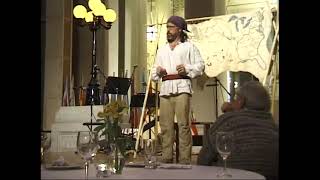
Jeff did you say check check check check check check check check good no that was a mic check so wasn't me to check yeah okay well we're all together now so we're warmer now are we now that's think warm thoughts it's been a beautiful day and uh it's been a great day here at the exhibit and we've had a lot of speakers this is the tent to many vo that you're now sitting in for those you who have not had heard any speakers we're the Louis and Clark core Discovery 2 exhibit we're a traveling National mobile exhibit we started out in 2003 monell and we've come all the way to the ocean and we're going to go all the way to St Louis and finish in 2006 and we have done this with the participation with many different federal agencies everywhere from natural resources conservation service all the way to EPA have made this trip possible there are many different exhibits around this area to see including a 35-minute audio tour right next door if you get a chance to see that and uh we will be open Monday and Tuesday as well here in this tent a tent to many voices this is where we have a variety of speakers everybody from um Scholars that have spent 20 years studying the journals of Lis and Clark all the way to Native poets and dancers and first first person interpreters and today we have with us a special presenter we have Jeff Petter of the class of tribe and he's going to be speaking in the Columbia River Trade Center which is very close to here let's give a really fine Round Round of Applause to defin so uh I'm going to start with a song and then I'll introduce myself in our language and such we'll see if these slides work or not I was wor on that right up until about 5 minutes before I got here so uh we'll see we've had some uh technical issues so I reformatted some of my stuff if not I'm used to speaking Orly in front of my travel people and we can carry on and we'll just have a real pretty picture back there I'm going to need to steal one of these I'm going to be working from down here I open doesn't bug you guys but I I cannot stand up there my elders always told me don't stand higher than the smallest person sitting in the room so you can record this it's okay know know they uh so that's that's a gambling song um or what my grandma to we calls a lucky song and uh gambling's really complicated I I hope you've got to talk to uh Ruby and and uh bite out here with the games and gambling looks like something's going on but that's not what's going on and uh part of gambling especially the guessing games is to have medicine people and singers on your side that can make it possible to see what they're doing over there with their Spirit eyes and they've got people on their side trying to do the same thing to you there's songs like this one that make your side lucky and you're better at guessing what's going on there's songs different songs that we couldn't sing with a recording that are fogging songs that keep the other side from seeing what you're doing and puts up a wall that their Seer can't see through um so these lucky songs like this Grandma T we always says makes you feel good makes you feel so happy they're very upbeat like that and uh she she always tells people go out and buy a lottery ticket now you got luck on you so soon as you leave here let's see today's Sunday so we're at day late right you've got to buy one for Wednesdays but that's a lucky song from uh the EUR Rock in teela people down south so in shanut Jon CL M Taco CL Tope P pelu cook Butler painter Casey MCM nak mway so most of what I said there is uh welcome you to my land um this is the land of the clouds of people that you're sitting on uh cousin of the shanuk tribe and one of the five shinuk and speaking peoples um and we still call it our land because it's untreated unpaid for unsettled and uh has a lot of squatters living on it now no heart fam so mostly no heart um I said that my family members are from the village of quat which is where Seaside sits now with a population of about 6,000 at the time right before loen Clark got here um The Village at necat and Ne coxet which are right next to Highway 101 where the gateway to Discovery natural Coastal Natural History Center is where we have some offices so right there were two little Villages that my family lived in and then the N which is where the two guys dressed in first got lost and built their little stick shed um right near the N Village there um those guys who were celebrating um that's where most of my family lived and most of my family members from U my dad's side my Dad's here uh by the way Bill P where you go Bill most of my family uh lived in that area especially on my dad's side the classup side of my family uh only me uh my great great great great and that's the last time you'll hear me number great cuz native people just a grandpa but uh my great great great great grandpa George W cook owned the entire West Side from the top of the hill there in Ator out across young Bay and Louis and Clark river um to where cook slooh is named after him um and then property up in Old KN and uh so that's where my people are from I said I thank you for your good ears and your good hearts and I hope I don't say anything that vent you but if I do Let It Drop off of you when you walk out of here this is supposed to be fairly light-hearted and and um and I welcomed you traditionally our people what what you would have done on the coast is you would have come by canoe and you would have been off the coast you're not allowed to land it's kind of like boarding a skipper ship and you know may I come aboard yes you may so your canoe would sit off there in the water and nobody touched land and you'd have to sing your song asking to be welcome and then we'd sing one of our songs and one of our songs would be uh see if I can catch it here got a couple hundred songs rattling around your head sometimes it's hard to get that okay so we sing to you you don't know your song so that's all right just sit there be be mute to sign langu and we'd sing he he ho ho we sing that a bun this time and the ladies would be doing hand motions like this as we're singing it saying come this way otherwise the guys would be making hand motions like this don't come to or some some such thing and then you come and you'd be welcome and the first thing that the clouds of are known for they're known as the um peaceful native people and uh they would have sat you down and asked you if you needed something to drink give you some sammon and some salow to eat and made you comfy made you a bed in one of the houses and then asked you what the heck you were doing here U the Lost guys had it all backwards they show up and said we're here and this is what we're going to be doing and uh we're going to be building this thing to make sure you guys don't come visit us and the doors close at dusk and uh we'll open again after Dawn on and by the way we're we're going to be camping out here for a little while cuz we're really hungry U we're really really lost we're really cold our shirts are riding off of our bodies and we need some help and that's how they ended up over here by the way they had a boat over there to decide we want to stay on the Washington side with the Shooks over there who uh most of the tribes on the other side of the river are in constant Warfare um some say still to this day but historically in a lot of warfare no I love my sh cousins but um a lot of warfare from the Columbia river that North Side all the way up into upper BC a lot of tribes dropped there fighting over a lot of resources but very close to each other bumping elbows a lot so they went to war with each other a lot and U Luc and Clark kind of keyed in on that and also found out there's a lot more elk over here they sent a little trip over and gosh there was food that they just couldn't get over how much food there was a lot more Shelter From the weather they ended up up in a toll where Chief cooy said this is the all right place for you to squat just make sure you're leave next year when you're not um so that's that's a brief history um I've got some cute little pictures here if they work so let's see all right come on um this is a shot of our new canoe uh we have a 32t ocean going canoe that we just had a for and it's uh the first clot of oan going canoe that we've had carved in somebody think maybe 150 years probably closer to 200 years and this is a still from the uh movie that was made for the National Park Service um that'll be playing Tuesday but it it's playing up there now in the fort and I might get a chance to tell you a little bit about that so there's the canoe with four folks in it it actually takes about uh 10 to 12 people to pull that canoe through the water well um but it will go all the way out hunt whales uh very sea seaworthy so that's just kind of fun but it is part of trade rivers are are highways the ocean was our Highway around here and the clata people traded all the way up into Alaska or got goods from Alaska by trading with our our relatives up on Vancouver Island all the way down the co Coast to uh middle and Northern California All the Way East at least to Sala Falls and some people ventured all the way out into black blackbeat country uh Lakota country to trade and most of it was because of canoes so it's important to know your geography um you you are here you're kind of sort of let's see if this works you're kind of sort of here all right and uh on the other side there that's where our sh the cousins live um our territory mostly ended at least as far as the government's concerned um we didn't call ourselves tribes in we didn't call ourselves Plata by the way um platza is a name that the sahap people of the Sal Falls call this it means dry pounded dry pounded salmon really really good salmon um the so our territory at least for governmental purposes goes up the river here to Saddle Mountain down here to Cannon Beach at El Creek and then all the way up to the tip so that that's us and then the people next to us said okay well we'll call ourselves this and we'll call this area our and KS said we'll call this us but we didn't call each other that we all shared the same language and uh little variations of it but same custom same spirituality we were intermarried up the kazoo which is really important for trade purposes too um if you want to make a really good deal with somebody marry your son or your daughter off to them and then they'll make a deal with you CU you're in-laws you'll get a better price they get a better price from you they get free stuff from you when you hold a L um and so we had relatives on purpose all the way up past Vancouver Island all the way down into Northern California um all the way up river past Sala Falls and it was mostly for let make a deal so you know where you are let's see um so this is really cool this is something I ran across I was looking for mats to make this presentation and so I Googled um NASA uh photographs of the land to see what I came up with and I'm going to step back so I can enjoy this but um Watch What Happens here so this is an undoctored page right off the web from last week so here's where we're at right down where that little dot is more or less and we start zooming out zooming out let's see if you see it before I outline it for you you see that see that face that woman's face all of our stories from British Columbia all the way down into Southern Central Oregon talk about this land being a woman that would provide for your every need um we always talk about here on the coast When the tide goes out the dinner plate set you didn't have to work too dang hard around here to get fed um at the apologists tell us that the average Club work something like 12 hours a week to meet all of their needs shelter food and clothing now what do you do with all the rest of your time well as is true on most of most of the northwest coast into Southeast Alaska you spend most of that other time free time developing culture spirituality Traditions Customs um hanging out trading visiting relatives telling stories and making sure you have a really deep culture it's one of the reasons why the art on the northwest coast is so intense and so developed had all kinds of the time to do it he didn't have to be running around chasing deer like Lou and Clark or we already knew where they were and ate a bunch of other stuff those guys hated salmon they nearly starved to death cuz they wouldn't eat salmon they wanted to eat dogs they were eating their shoe leather at one point and trying to boil their their jacket um when there were muscles and clams and seaweed all kinds of good stuff to eat they they wanted to eat dogs watch your dog there so uh I thought that was kind of interesting I ran across that totally by accident um so here we are the bigger map of uh our trade area this is for the most part our trade area it actually goes down here um past the Maya um where some of our trade goods came up from and it actually goes across the ocean to China and Russia we've been trading with China Russia and Spain for at least 200 years before Lis and Clark got here in say quite a few more possibly 400 years with China um but when they got here they saw Chinese trade beads Russian Goods iron tools and implements that they didn't think they were going to see cuz they hadn't seen him anywhere else along the trail really seeing him kind of spotty here and there they met fluent English speakers that also spoke French and Spanish aruk jaran had already Incorporated French and Spanish into it and uh so these guys were U pretty surprised they didn't come as Traders too which is an important thing to remember they were explorers hoping to control and dominate and get settlement for the rest of the West so they were going to figure out what all the Rocks were and where all the mountains were they were going to map them and as much as possible identify the tribes and if you listen to Bob Miller last night he really broke down probably better than anybody I've ever heard why are you identifying all these tribes cuz they own the land so when you get back that gives you your laundry list of who you've got to go start meeting with if you want that land or if you want your settlers to be able to settle that land um so they weren Traders they were explorers on a military Expedition and they got to the mouth of the river uh right there at L and Clark river and they told Chief koboy we're just going to hang out pretty much over the winter is what we're thinking at this time um we need a little spot to build a little thing we're going to build a house by the way first folks that we know of that ever came built a house in our land now we had a lot of people from European descent living with us at that time and leis and Clark remark in their journals there's quite a few number of red-haired tall lanky blue-eyed Indians living here U that doesn't explain my genetics though uh I should back up to my introduction my mom's got some kind of scand movian thing going on but we're not really sure cuz part of her family was left on a door doorstep an orphanage in Minnesota so we're not real cool sure on that but we got an oie Olsen in there somewhere which is a pretty good clue um and dad's got French and and who knows what else going on in in his his family history as well as plate um but as native people we never have to bind oursel by Blood um period we had a whole bunch of French guys that are identified as Plaza living with us that's no Indian blood at all it's what's your language what's your spirituality and how do you live and it's still that way people will carry around certified degree of Indian blood cards and that just tells you how much Lota you might be or whatever it is you are but I know full blood lotas that could not get into most of the ceremonies I've been around because they don't speak their language and they don't practice their religion and they they just lost too much so blood doesn't really mean a whole lot it means who do you live with how do you live your life um I have a really hard time living as a cloudon person I live in southern Oregon right now I'm surrounded by L Telma K HOA clam um so that's how I live most of the year is I follow their seasonal cycle I speak their language I practice their culture when I'm in my backyard it's a lot easier to practice my culture um so here we are Russians all kinds of people that we're trading with see if this keeps working so these are the major Trade Centers at least according to Anthropologist um the big big dots are the big major ones and then the little ones are what they consider minor ones but still a whole lot of activity going on you know when Le and Clark got to Sala Falls for instance they remarked that there were at least 40 30 to 40 different tribes gathered at that place at that time doing a bunch of trading and that's one of them big dots right there now underwater and uh I think I put a picture in that for you uh somewhere here so these are the Trade Centers and the routes connecting them at least as far as anthropology knows these are the ones that are well-worn Trails well-known stories about trade that was going on um and notice out from Florida going all the way to Cuba and uh out in South America there was a lot of traveling going on people visiting a whole lot of folks so from the northwest coast and on up into Alaska um this is what they had to offer baskets skins berries whale blubber whale oil and ulon oil salmon canoes blankets shells and uh they were bringing that to the party we had dellia from Vancouver Island all kinds of other shells and shell money Roots salmon ulon again whale oil and we had armor we had the clups made in armor and still know how to make that armor called clamens clamens were used all the way down into Mexico and all the way up into Alaska and what there is an elk hiide that's shrunk over a fire about a dozen times so you wet it shrink it wet it shrink it wet it shrink it and you take a whole elk heite and you end up with a little bitty shrunken thing about this big but it's about that thick and an arrow can't penetrate it and they would rig them up like Viking it looked like Viking and medieval armor long before medieval armor they'd rig them up like this around their sides they' have Willows around their necks and a shield that dropped down made of bar and those for the Waring tribes that was a good thing to have but they cost you a bunch a bunch of money one report is it was the equivalent of three canoes a canoe was the equivalent of a wife which is about as spendy as anything you get it was three canoes to get a clamon outfit and they still talk about that out there why don't you guys start making your clam again um down from California and down into Mexico uh today Mexico beads bows obsidian most of the slaves came from Northern California on down in the slave trade although people became slaves just like sagaa by getting captured from other people at War and stuff like that um shells and then the basket work we all had basket work but this is really like big time they were known for it go ahead ulon ulon is a real small fish kind of like a smell and it's so oily that once you dry a ulon you can light it and it burns like a candle and that's what they were used for a lot as well as seasoning food ulon oil is really good you have to kind of acquire taste for it if you weren't born you know eating it but it's poured on everything dried salmon you pour ulon oil into it freshens it back up and you can eat it Pour it on berries it's mixed with salow soap berries um snow Berry soup is one of the best things you'll ever eat but it is kind of an odd taste and they make it up in DC and Alaska and they take soapberries mix it up with ulon oil and it served to you it looks like ice cream doesn't taste thing like ice cream tastes like eating bare fat but youon oil is very good very healthy if the Luc and Clark expedition knew about the benefits of Cedar uh Pine and ulon oil they could have survived and never and none of these shippers would ever suffer from scouring you could live on it it wouldn't taste very good e that all the time down in the southwest blankets Pottery axes and stone tools as well as uh tools up from the northern Arctic too from the plains horses Roots Buffalo hides and Flint were their main trade items uh from the Northeast shell beads in wome was their big thing uh Southeast woven clothes and cloth and then now from the Florida area area turtle eggs and bird feathers these things made their way all over the dang place and uh I'm I'm kind of wearing let me make sure that's my last one yeah so I'm kind of wearing a blend of some of this um these cowy shells don't belong here these are from uh further down into Baja and and uh the coast down in there but they do belong here because we always traded for them these hiqua the big dentalium shelves these come from the west coast of Vancouver Island and so do the little dentium um but we always had them here cuz they were money money um these big ones are worth more CU it takes fewer of them to make a string these little ones aren't worth as much cuz it takes a whole bunch of them to make a string um these other shells I'm trying to do this without bumping you on my mic these are all laella shells these are from California dowy New Mexico and Baja um this vest can you tell what this this guy's doing here that kind of looks like the Raven's puking right um this this is a design you can't just make a a design people own these designs just like people own these songs right so I can't just make this design for one thing we didn't have Raven Clan Eagle Clan and all that kind of stuff here that's more an Alaskan and British Columbia kind of thing that dies out once you get Washington um but this vest design Was Made For Me by heida clink lady who is from The Raven Clan and I was teaching some of her kids and speaking like I do and uh she's just crying at the end of it and she says I have to make you something I have this design I saw in my head so she made this design for the best and I asked her what it meant and she said well we have a origin story where Raven skco brought the first salmon eggs and sketo was flying over the rivers and streams and dropped those salmon eggs to make the first salmon people which came before us and uh so this is Raven dropping the first salmon eggs out of his mouth and she I said well how did that come you and she said because um you feed our children just the same way that the Raven fed us but by dropping those eggs you drop ideas that makes them feel good about being native people and proud and they want to learn more and and so I wear this um in honor of those people up there but this kind of design would be common down here as well as chat blankets and other things from there um let's see this hide is from here so is this one so is this one this stellia like I already said is not from here this Cattail headband is from here as well as this Cedar headband this is a common person's headband so it's that Cattail one um don't have to be achieved to have one just any any old buddy um these shells uh these are from here but these are not and this is uh clamshell beads and you got to imagine the kind of work that goes into this so somebody takes clamshells like this squares them off Cuts them off squares them off strings puts a hole through them and then strings all these square and they're about that square pieces together and then starts working on them on a piece of sandstone like this until they get round and they make them in a uniform thickness like that for the most part so these are actually from California um these beads which we're known for the cobalt blue beads actually come from Russia for the most part um and got here from there what else on my belt these trade beads these blue trade beads these are the ones we kept asking Louis and Clark for that they said had to send back home for more this these were our favorites um these are from China for the most part these antler tips are from Southern Oregon this is from Florida these these uh abalon are from Southern California so we're a whole blend of all kind of stuff up here but it's because of where we are at the mouth of the Columbia River there we had um what's called a one for two sale so you guys are used to two for one sales right buy one get one free we had a one for two sale which meant um you want one of this you got to give us twice as much so why would you do that well if you were coming down from Alaska and you needed something from all the way out in the plains I could save your life possibly by selling you that item here you wouldn't have to make the rest of that journey and now Vice Versa if somebody out the plains needed something from Alaska or from the coast they could come down to salila Falls and pick it up there when we came to trade and we we didn't just sit here and make our money we ventured out in the ocean all the way up to Vancouver Island down to Northern California and up the river at least to Salo Falls and so we were going and making deals all the time are one for two deals and so we got very very rich um L and Clark and I don't normally mention them but because that's what we're here for I keep bringing them up L and Clark didn't come as Traders remember so they didn't bring a whole lot actually they had some stuff to trade when they started out but they had squat when they got here they' given it all away for the most part and they didn't understand trading they didn't know a thing about trading and so those guys have come up and in our stories I think they're some of this in the journals but in our stories they talk about those guys would come up and say um I have an alide and I want I want four otter for that and think that was trading now trading to us is a whole another thing it's a social thing it's not just an economic thing it happens normally around a house inside a house around a fire we sit and chat for a while I get to know you you get to know me you might bring up what it is that you're here for and I tell you to shut up we're busy visiting still and eating and we drag this out for hours with gambling those gambling songs and trading songs we drag it out get to know why are we doing all that well you're our newspaper there is no newspaper so if you come trading from the East Coast I want you to hang out tell me everything you saw on the way out who' you run into maybe I know them how's the fishing up in salad are they coming in yet should I start going up there do they have the C Roots should we take a a bushel up and sell them cuz they're dry and uh the whole point of it is the visiting these guys didn't want to visit and they didn't want to hang out so they'd show up and say here's what I want here's what I'll give you and then of course the classup guys would say all right um I want twice as much as I usually want then if you're not going to do the chatting part and the visiting part and you're not going to hang then you know it'll cost you twice as much and they said well what kind of deal is that it's like well you could hang out if you want and I it'll probably come down later on tonight when we're tired you know you could wear me down but if you just want to make a deal and go back to the Fort it's going to cost you twice as much and they complain to no end in their journals about the catsup and their Wy Traders you know speak the English and know what we want to do before we tell them we want to do it and um they just didn't understand trading trading is a social activity it's building bonds you know if they were really smart with they would have done was build some really strong bonds and said you know there's going to be some people coming behind us in a few years that want your land and it would beo you to have really close relationships with us and for us to have really close relationships with you we could help each other out they weren't really thinking that way they were tired they were worn out you know they finally saw the ocean they got to see the whale and they're ready to go home you know we're going to make some salt we're going to repair our moccasins make some extra paars and we're going to try to stay out of the rain as as much as we can um and this is a NOA house another typical uh kind of trading scenario cooking scenario fish drying hanging from the ceiling folks sitting around telling stories now this is uh cilo right before it went underwater and uh these two ladies are pretty pleased aren't they they got all their dried fish in um all kinds of fish dried up their fish down here in the lower right dry and filets drying they' pound their salmon and then they'd air dry it they didn't smoke it um and they got a good haul um anthropologists tell us that Salo typically moved about a million pounds of salmon every year just for trade that's not what they kept for themselves Sal still is a functioning Community they just don't have the falls and they don't have the ability to get salmon like that anymore and like mention it's a social activity this is the last dance held at the Salo trading house before the Falls went underwater and notice these guys got some funny regalia for Coastal people they got PLS regalia for the most part and that's really typical of our people to use other people's ideas for clothing for Customs we would share songs with one another so while we're sitting there haggling and trading you might try to humiliate me by saying um you try to outdo the other one by bettering them like our Potlatch is I can give you more than you can give me you know I can give you more Salon than you can give me back I can give you more blankets I can give you better songs I can give you better dances and so what would happen here is and also at our our side on the mouth of the river here folks would come together and a guy would say I got a song for healing a really bad big toe that I'm going to give you guys and he'd sing that song and gift it to him now that would look like he's giv them something but really what he's doing is saying he don't have the song for theing the big toe so I'm going to have to give that to you now he's going to be known forever as the guy that gave you the big to heing song so that increases his honor now you're walking around with this big tow Healing Song and so every time you sing it you would say this is the big toing song that I got from Big Charlie from you know sahap people so you know now you got this obvious link going on between the two families and it's a big social activity this dance went on until the we hours of the morning cuz the adults didn't get to dance together until after midnight so you got the boys dance then you got the Warriors dance then you got the women's dance then everybody eats all this food that's laid out and then around midnight the teenagers and people that aren't hooked up get to do their ow dance and it's only time men and women dance together and this is just go on forever this is a contemporary celebration similar to the one at Salo this is last year I believe the Nill people up in the sound um or British Columbia singing a welcoming song to start their pot their kids are learning here's the Lal Falls in full force right before it went underwater um and that fed a lot of our trade by the way at least from Inland a lot of fall and notice in the back right hand corner that big structure that's a fish wheel an Indian invention um we had the wheel long time and what a fish wheel does is it's a big you seen the paddle Wheels on the side of the ship it's big one one of those but it's got catch cans that are made out of wheels and later on um reinforced with wire that are open baskets and as that big wheel moves through the water it Scoops up salmon and drops them in a catch Basin on the other side A lot of times it was holding Pence down in the water but sometimes it would just be a big box so you go and leave your wheel all day long sitting in one spot come back the next morning and have 60 salmon laying there in your box or in your holding pent and dipping them out um fish Wheels operated in the Columbia right up until the late 50s and these guys are dip netting off these platforms very dangerous way to fish these guys are on the bank oh and you saw a fish wheel behind them too let's see if I can go back a couple big ones back there um this is full-blown and this would be about 1937 fish are in guys are all down on the Rocks there were several different levels of waterfalls that's theal uh this is around the same time there you go there's a busy spot we got a couple dip Nets just laying down in the water waiting for a salmon to swim into them and then they pull them up real fast and they have a cinch rope that locks them in there so they can work up and imagine trying to yank a 60 70 lb Sal the side of a cliff and you notice this guy's roped in but they're all roped in cuz you can get pulled off and die and so they ROP them themselves in it was still a very dangerous thing to do none of these guys are roped in they at the bank there's the village in the background Sal Wan Village um what's left of that Village is on the other side of the railroad tracks and be the uh I got to think of my directions now south of the railroad tracks in Columbia River Highway there's still a long house there they still have a first Sal ceremony there and other ceremonies there this is Chief Tommy Cooney Thompson he was the last Chief um alive when the D when before the dam filled up um his people agreed to sell the Falls but didn't know what they were selling really they thought they were selling uh the right to visit it it wasn't very clear that they knew in 1960 U what they were actually selling and he died of heartbreak soon after um The Falls before and after um this is shot from the exact same spot the photo on the left now let me see if I get this right yeah the photo on the left was taken in 53 photo on the right was taken in 74 and you can see see how it's changed the water level and the landscape and it's actually filled in quite a bit more this Falls is really not there like that anymore on the right hand side at all uh the water levels come up and buried the entire complex including burial islands building sites there's Tommy wearing his Plains regelia my friend Brent Flo's mom beat at all this regali for him when she was a little girl she used Warm Springs there's those trade beeds that we love I just got a few slides here uh arrowheads which we're known for all over the world the best arrowheads came from the clouds of people and the people of Oregon uh Beaver which the Trappers love dear hell oh Nature Bears this is a cedar we did everything with cedar we made our clothes out of cedar boxes cooking implements um our houses some of the berri from here and look at that that's a rich woman she's got coppers on her arm coppers hanging from her ear elaborate in her nose copper on her hat Big Cedar cap and a cedar hat those are all trade goods too okay come on the big canoes these are Edward edwardes Curtis photos uh taken from here Cattail mats which were used to cover houses as well as for eating on and sleeping on and uh we'll put that as the end one um SO trading is basically why we're here we're one of the few tribes in the area that don't have a story about us coming from someplace else we were created here at Saddle Mountain that's our origin story um the shinook share the same story that we do some of the neighboring tribes have stories about coming from Inland and moving down toward the coast and getting stopped by the clups and the shnooks on the other side they were too strong to conquer but they kind of conquered their way down and and uh from the Inland to the coast trying to get to the goods here cu the economy was here all the food was here and it's harder living except for maybe in the W valy but you go out toward the Great Basin and out in the plateau um it's a lot harder living than it is living here on the coast and so people would try to move into the area another good reason have alliances is somebody was trying to move into your area and you could call up to the sahap people and say by the way stop these guys or come back down here and reinforce us or down to the Teel or to tun come on up and give us some help kick these guys back out it was really easy to maintain in our territory and then you'd get a better trade next time you know that that would be our debt to you for helping us out is maybe we potat you and give you a whole bunch of stuff and then from then on your trade would be at a discount you know you get a red tag every time you come uh and that's just one of the Trade Centers for your your research purposes it's really interesting to read about itoda choco Canyon um kado all the different Trade Centers Great Slave Lake is an amazing trade Trade Center up there they still have a huge Trade Center up in Noka and Colona um Port Al Bernie a house at husatv Lively trade as we do uh still here um and we're still we're trying to Revive Our traditional Trade Practices which means hang out talk a lot chat eat some food and uh do some gambling with us uh people are just scared to gamble with us so we got to teach them that it's okay to hang out um we were the Walmart of the Northwest anybody work for Walmart here I don't want to offend anybody Walmart of the Northwest you might have already heard me say this in another presentation but we and uh they have no heal plan but it was One-Stop shopping and you were willing to pay twice as much in order to to make that One-Stop shopping the peaceful classs of people are are still here you know still an active presence although we lay pretty low most of the time Louis and Clark's been a reason to be more visible um but we're still here we're still active come up to the coastal Natural History Center hang out talk a bit um talk to the volunteers when you see there's an activity going on uh come down and participate you know there's a lot happening and I just want to open it up for a few questions before wrapping it up for a close ladies and gentlemen if you have a question you raise your hand I'll come to you and then yeah go ahead everyone can hear it you said earlier that your grandfather owned a large piece of land in aoria the traditional lore that I've always heard is basically the Indians did not have have a concept of so my my grandpa wasn't Indian George W cook married Mary cook who is a full blood classet um in 1838 and he acquired maybe I shouldn't make this so public but he actually ended up with two homesteads and an Oregon donation land claim and uh so he kind of a Wy guy he was a friend of the local judge and magistrate and on top of that he was a very wealthy guy he owned a log piling business was responsible for building most of the canies most of the docks and providing wood for that so he had a bunch of money and what he decided to do when they opened up the territory for settlement he saw that the Indian people were getting um I don't know how to say this nicely taken and uh that they couldn't purchase the land because anybody that wasn't half blood or less was con considered too Savage to land title and so what he did was he bought up as much of the land as they as he could with his own money and let the people continue living on there and he held it in trust as soon as they had halfblood children that could hold Land Title and uh there's records of him and his daughter signing off these titles to them giving them their land um in most cases free of charge but it included some of the burial grounds many of the Sacred sites although we lost a lot of them up at Fort Stevens and in that area but he bought up as much as he could as did other um allies so people for the most part up until Lou and Clark people married into these families and became clata you know that was the deal is you can marry my daughter but you got to learn our language live with the Four Seasons or you better have a really good job that's bringing in income um but you got to live with us you can't just be a squatter or resident or Foreigner you need to become us because it's us we're here and then once sellers start coming in then you got this odd thing where people buy land and like today people are transiting you know you grow up in a family in one area and then you just pick up because you got a job well native people didn't just pick up cuzz they're connected to the land and needed to work with those plants and animals and roots and and could be transient like that you know time for a very very short question has to be a short question who has a short question my buddy right here right here yeah actually I lived in a TV but we didn't live in TVs here yeah yeah ladies and gentlemen we're out of time right now if you have more questions you can ask them right after oh hang on out there n w m in our language thank you for your good ears thank you for your good Hearts if I heard any feelings drop it as you go coming up next we're going to have uh Bud Clark e e for