Tent of Many Voices: 11220503TMB
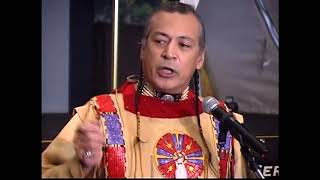
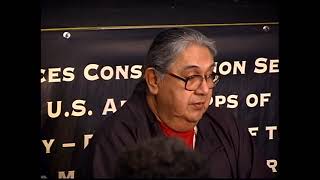
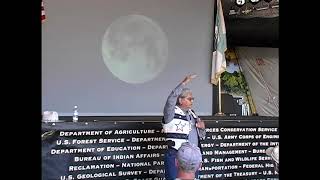
got he they were never good afternoon ladies and gentlemen welcome to the core Discovery 2 and the teny horses I see some familiar faces um for our next presenter this is Neil M and he's going to talk about the gateway to Discovery and he does work for a land trust that manages the gateway to Discovery so I'm going to hand it over to new M please welcome him well thank you it's a pleasure to uh be Mak your presentation both representing the Gateway Discovery and then the North Coast L con servy is who I work for and kind of the focus of my part of the program for those of you that have heard Doug Durer you you kind of got the historical context in terms of na na American element I'm going to focus a little more kind of the scientific side of uh the perspective of not only the historical context by which the the core Discovery come to because as you know for those of you that follow the concept of Discovery usually that includes some element of some unknown or new information and if you make your group small enough uh then everything is new information that is if you're just telling your friend next door uh then you could well be be the source of Discovery for a certain piece of information for the person next door although the information may have been known for decades or centuries so the whole idea of Discovery is is kind of squishy and I know people have sort of wrestled with this on the core of Discovery and in a way it's been a struggle to say what did they discover you know people had already been living here carrying on ecological interactions with every single element of the landscape for 10,000 years kind of what's left to discover so that that's one of it is sort of what wasn't discovered that people might think was discovered and then what was actually discovered kind of in our cultural context and then the really challenging part and the part we're all faced with today is what's left to discover that is do we know enough to um sustain a culture like ours uh for the same period of time that the cultures had been functioning in the landscape we now uh inhabit so you can kind of set the time frame for what I'm talking about is 10,000 years and we'll kind of pick 200 years as our operation period and that's sort of appropriate given today and all the time that's going on a couple of things that uh that I I'll mention real quick one is Gateway to Discovery it's a real place it's uh 850 Square ft it's on the south in the seaside for the local people you know it as the laabi gallery but it's now uh the Natural History Center and there we we have initially started out to create a center where people would really dis use that Center as the gateway to Discovery that is discovering the incredible place that we have here uh we had to adjust a little bit because once we got going we realized that it wasn't really so much in the gateway to e Cola State Park and sadle mountain and hug point and Fort Stevens but that just walking through through the building to the de that overlooks the Estuary ended up being the gateway to a Wildlife Museum I mean so much going on every single day and having been in science for 30 years You' think I would have known that and I knew there were a lot of Critters around but the Dynamics of it when we have people staff there and volunteers there every day every minute making notes about what just happened out over the deck from the Otters coming in and catching flounders and eating on the logs to the bald eagles catching the fish to the deer quum swimming across the river to millions of anchois coming in to the golds being so stuck with anchois they couldn't even move to the blue herand and the king fisher fights and well it just goes on and on so in a way it's kind of portrays this idea that when you look closely at anything you you usually find action something's going on and that's what we found so we sort of modifi you see you get an experience with Discovery at the Gateway Center and then that also leads you to all of the other incredible places uh in this neck of the woods for those of you that maybe haven't uh done some of the homework with the Louis and Clark expedition to understand it the best I think you have to understand Jefferson because Jefferson's mind was scientific that's where he was he was probably the top meteorologist in the nation at that time and he would even make his kids keep notes on the temperature when they were somewhere else you know I mean it was just almost fanatical about it and he had already tried to mount this very Expedition uh in 1783 he was already ated trying to make it happen and they even even collected funds and had someone that he thought that he was going to hire to make this same trip and that sort of didn't work out so working through the Philadelphia Phil philosophy Society he had started to organize this Expedition and he just never could get it together and he had all the geography and the scientific information that he was wanting to collect so sort of think about and even by the time he was in Congress he had tried a little run at it just at as a congressional person and had gotten people to put up a whole th000 to to finance the Expedition but it sort of fell on De ears he wasn't able to make that happen so it's not surprising not too long after he became president that really just kind of pulled the old notes out of his pocket and said okay now nobody can tell me we're not going to do this but scientific a scientific expedition in 1800 probably wasn't a real hot item and so his challenge was to cloak it in the thing that Americans are pretty good at and that's getting more material wealth okay economic get the Furs get the products so that transition you can see it in the documents and in a way you can see the documents being restructured to have this sort of grand benefit to the economics and kind of the social dynamics including one of Jefferson's greatest passions which was this idea that unless everybody had a piece of land they were farming there was really no hope for democracy so need a lot more territory to begin with and what he wanted to know was is that all nice and flat and plowable so to speak and of course as you know they come out here and found all these dirty rotten trees just covering the landscape almost as Pest and so it wasn't seen as very productive in that very productive what would you do with a tree I mean not that many trees so they were looking for farmland well uh when I say cloaking I I mean that literally I mean including very sophisticated ciphering messages that were written in code to Congress and between Lewis and Jefferson and Jefferson and Congress uh secret coded messages about this Expedition and again that was sort of the political reality of it was Jefferson had already asked the French ambassadors that about what would people think of this if we went into this territory and you know he says that would definitely be considered um by you know by our government and so it be trespassing on our land which at that point was basically Louisiana what became the Louisiana Purchase and of course when we bought the Louisiana that s took care of that problem on that angle but of course we still had the English you know in the west and so there that sort of secret uh continued on until just about the time in which the Expedition left were still sending these coded messages uh so that kind of set the stage but it again I think starts to bring up the idea about Jefferson's thought process on this and keep in mind he thought they were going to go find Masons I mean you know they sort of had a little bit of a science fiction perspective this that this West even though like I say you know I think the folks in near San Museum to you know a Funny Thing Happened on the Way to the Louis Clark expedition you know and that the further they got away from a culture the more culture they found you know literally millions of people already there with full cultures that had uh evolved to very very sophisticated levels and in their own way have developed a science that we're still trying to get to that is we haven't figured out the kind of Science in which you can uh make interpretations without our seven steps of the scientific method and yet cultures that had been here had resolved most of those science questions about what to eat what to use how to use it how to prepare it how to treat it just about everything you can think of in terms of the the cultural uh adaptations so when it come time for sort of the eventual expedition to to leave there was you know a lot of training that had gone on Le had spent a lot of time with sort of major scientist of of the era uh describing animals describing technique uh spent weeks and weeks getting trained to just run the instruments that were necessary to collect the data about main about survey and geography so um as primitive as it might have been at that point in time compared to today with our you know we just got through mapping the plat of planes the very land that that Clark walked on with a handheld GPS with a aerial photo of the site that wherever you move on the classet planes a new aial photo for that spot Scrolls up cuz it's reading the satellites and then it tracks a little red dot on that aerial photo of everywh exactly where you are in the context of that aerial photo and then if you see something there then you just scroll up your little data sheet and plug in US saw these plants that plant this plant this animal that and then it's all recorded for that single site you know and then think about the technology but in reality plus or minus a few miles probably in some cases feet uh with those primitive instruments using sort of scientific methodology uh Le was able to make incredible uh Records so again this is Jefferson kind of making sure that all of the elements of making this Expedition uh quite documentary uh had been done with the planning process so that whatever skills Lewis mainly Clark as well didn't have they got this through some of the top people in the nation at that point in time so it it it sort of sets the stage for for that uh that part of it uh let me just shift a little bit to sort of what I see as the um historical Sciences of let's say the West Coast uh and and in some ways I think people don't consider real science if you're doing it for basic in a cultural context or for sort of fundamental survival that the s is something that often times is considered abstraction from the context of the culture and you go to some separate environment for the science and then you work up the experiment and the design and do all that and you bring it back to the cultural context so when the when the native Eskimos native alaskans got together with some of the top scientists in the world they started a Cooperative project in which uh the two Sciences merged and what come out of that was that uh they were both inadequate somewhat they both added there were pieces missing from the Native culture uh in their form of Science and then there were pieces missing from out of the western version of it and so out of that come really a whole new powerful kind of science that was embedded in the cultural process it wasn't separate or separate from and I think that's well that has a lot of Merit it also advances my own Prejudice which is the way we tend to select what we think is good bad and so in a way we've been promoting this idea of Citizen science that is that science is not something that's relegated to the science room or to the scientist that it's a cultural process and that it benef could benefit benefit us in every way we just been working with a mid that was uh opened up from a little excavation was going on for somebody's driveway and uh in that in that mid was uh these shells and um we just s these out just last week really to get some analysis I've already been through them with the stereoscope and there is nothing but clam shells in this entire layer and also with that was the uh was the charcoal that was left after the Clam Lake okay so if you can imagine razor clams I mean this sounds so good to me baking razor clams you know on a dune uh and leaving nothing but the shells and that's about as good as it can get but you know when you think about it even with Lewis Lewis is bringing his his science here doesn't mention razor clams okay in in the journals so can't quite make that connection but you might have had some bad time of the year to be digging plams but think about the weather now get plans just in the last few days here so here's this sort of common ground of the razor clown uh not something that's found in the 3 to 4,000 year old men in this area very few razor clams but if you get to the 2,000 year radiocarbon material see razor clamps that's what this this is all 2000 somewhere between 2,300 years old and razor plans are everywhere uh keep in mind we didn't have any sand here until starting about 5,000 years ago the ocean was right back against the head walls all Cobble ridges there almost no sand whatsoever and then somewhere in that intermediate time between 4 and 2000 we start seeing these dudes start to grow and they're Grow Again from back against the head wall and then start migrating to the West um so there's probably if we get enough good dates there there a point where sort of all of a sudden razor clamps are showing up because we have sand we've got Beach whereas if you look at the mid material from say the pomos site which is in the 4,000 year old era it's all Bay material almost zero Marine materials okay cockal Tres gacks Gaper clams all those kind of bay things so there's a big transition that went on in terms of the geography here and then you see the razor clam showing up and and this is where I just try to make one point about this idea of how incredibly valuable and exciting it is to know about the place you live because it's it gives you an Insight that would be comparable to the native science in which you knew about the processes of the natural landscape because you were a part of that landscape okay unlike our culture which is aart from for the most part some of you maybe living out in the woods and digging roots and stuff but not a lot of folks doing that now so this is that sort of comparative in which knowing about the processes now I could probably almost guarantee you that the folks that dug these plans 2,000 years ago would have been hard to imagine the life cycle of a razor PL and I think that was probably a decade ago or so there used to be a program called Beach was it beach festival or something everybody brought all their stuff to the convention center and it was just about Beach things what you found on the beach and all about the beach materials I remember I had my students setting up a little program there on razor Clans and they had microscopes to look at the CL lby and all the different parts of the plan they had the life cycle put up well we spent the whole night arguing mostly with commercial CL ders about our life cycle of these razor plants because we had them releasing eggs and sperm cells into the water right on the shoreline and then we had these razor clams going all the way out into the ocean 15 20 mi off shore and they were like no way I found little baby razor clams on the beach and they don't do that but of course they do but it's hard to imagine razor plants could successfully reproduce by sending little swimming protozoa type Critters all the way out into the ocean spending 6 to8 weeks out there and then eventually starting to grow just the tiniest little piece of calcium carbonate on that little lar microscopic laring which then makes the lar drop down to the bottom of the ocean and then the currents on the bottom of the ocean slowly start moving all of these spat of baby plams back onto the beach by the millions and of course they dig in and some of you may have seen this event I mean it's an incredible thing when they come in and you're walking and you're the pressure of your feet makes these tiny little r clams come to the surface uh and we aren't the only one that has noticed that if you happen to be there on those few evenings in the spring when that happens then you'll see these goals down there doing this dance going like this and then take a three steps dance p and what they're doing is the same thing that we end up doing and that's they're making making these little baby razor clamps come to the surface and then they eat it so they're tied into it so I I I kind of where I'm going on this is to is to make one point for the presentation and that's that when you're digging razor clams which is the way these razor clams were dug with a cedar stick stuck into a uh El time and that's your digging instrument and you and their in your 30 or 40 fellow tribes people have got the entire class of beach to yourself it's hard to change have an impact on the ecology because one the efficiency level is not real high yeah if you can imagine stick about 3 ft long in the end of this poking it in the sand proing it around and trying to catch razor clam uh the productivity was low and even if you could have caught a million what would you do with them you know because you got the ones you needed for that point in time so this kind of leads to the S of The Next Step even without knowing how it worked um as we saw the sort of cultural shifts from one in which culture was embedded in the science the life science landscape then we saw the transition to harvest strategies that no longer were embedded in just day-to-day survival but were then being uh exploited uh and relocated uh as a product material as much as you can get and you kind of see that sweep all the way through the culture uh which that big conversion in which the Technologies started to drive not better lifestyle not better subsistence but uh alternative products from the product that you were collecting whether it was razor plants or fish or trees whatever that might be so you just see that huge uh cultural uh transition so my the razor Clan is kind of my example of of how it changes the way of look at the landscape here in plon county and the say all the Oregan coast and that as you see the phenomena that plays out and in a way it seems It's not surprising that commercial PL diers were saying those kids I don't know what they're talking about was because it just kind of hard to imagine and it turns out that just about everything that we look at closely ends up being wow how how does that work how does that all happen uh to to even have any of these systems work and even though the reverence was there for the salmon uh you can imagine how difficult it would have been for cultures uh these really very sophisticated cultures from 3 to 5,000 years ago to imagine that a salmon was going to swim three or 4,000 miles of the Bearing Sea be gone for 3 years and then come back and find that piece of water that it was reared in and not find it by luck but find it by science that is that that piece of water has t been tagged coated by the unique combination of the material in that particular Watershed 36 71 Cedars 4,221 henlock 851 sword Ferns and then stir well and you get this product that is so unique that it's can only be in one place there is no other landscape would have that particular set of materials and all of that of course all the pine needles falling under the water being processed by an in a whole series of of invertebrate organisms which then pass that through the body which then add in well you can kind of see the picture you have a chemical potion so unique that it's Unique on the planet so if you have a o factory system like salmon do that can sort out individual molecules at the rate of about one out of a million they can find that molecule then it's not surprising uh that a salmon wood swim out of the neana river swim out into the ocean go to the Bearing Sea swing by the Asian coast and come back up the California coast and swim into the mouth of the the canum and start making choices and so this is the first one it has to make big one left or right okay I mean you either go neana or you go in the can so that's the first move so the messages start getting read first of all you had to just find this place okay to begin with and then you had to start reading these messages about which water as that set of material that was here when I was here last four years ago and sniff sniff sniff sniff you know trying to sort that out and making that hard left and then you know was it mil Creek it is my did my parents live in mil Creek H not quite right there it's four molecules off so it goes on by and uh and what about shangar Creek and what about China crate and oh coo crate that's Bells are going off match up match up um and so it takes a hard left up the hill by the elementary school and it's headed back now to that unique place where those S would would uh you know have their origin and got that that unique code I say unique on on the planet so sometime we call this St and people say that is so amazing I me how in the world can these s to do that you know and not trying to detract from the absolute Marvel of what at all I sort remind people you know what's really amazing at least to me that's that's all it can do it could have not done anything else okay so in a way it sort of changes a conversation and that there's a certain amount of sort of Destiny to this process that is it isn't really left little left and maybe it'll work out be nice and you know it's quite precise and so if you look at some of the things that creatures do and it's and it's kind of surprising that you know you think about January and Clark is mentioning waiting in 3 ft of water across and I got a right across the first time and then waited across this Grand River um and in those 4 days at least the part was here um you know going through all this salmon territory kind of no mention of salmon no mention of Tides which would have been in January would have been like the big deal of all like as you know you know go to the cove and the waves are going over throwing rocks into the parking lot you know very high water so it's no small item that and 3 ft of water across the mou of the river so kind of I know it was bad weather but wasn't bad weather that day you wouldn't be waiting across the mountain mechanical I can tell you there wouldn't be a low tide to go across there and yet they waited across that but kind of no mention of the salmon but when we look at the Salmon today in the minana system native salmon in January December and January you know we we sort of consider that we're looking at the same fish that were running through those Waters 200 years ago the same fish that were running through those Waters 10,000 years ago these are all the progeny of those uh individual ation and the irony of it is that there's a there's a population of about 500 coo that sort out that neana system every year and spawn in all those little screams there's eight streams in the city of seaside's boundary and seven of them have spawning coal and some cases as many as 100 fish sort of still there today and yet you go to the ne mon system and you look at it it looks kind of well might be a little smelly looks kind of Muddy looks kind of dirty and uh so in some cases when on our sort of sarcastic days we say well it looks so bad that no one tried to fix it so it's still working so that's kind of the conclusion we got out of that one well the other thing that I'll mention I've covered I've covered the razor clams I didn't mention the ghost shrimp just because that had to be a freebie but the material is so limp you know the kiten on a ghost shrimp is just you know it's going to go away pretty fast and when we went back well in the 70s you know Smithsonian did an excavation at palro site and they used qu in sivs to SI all the material and they got thousands of artifacts hundreds of thousands of funnel material bones and things and but when we went back and found their SI piles and they took the SI piles the stuff went through the screens and they at that under stereoscope that was where a lot of the world was I mean it turns out that almost all of the verra of the small fish went through that quartering screen and all the little pieces of ghost shrimp went through it and so there's kind of a a pretty big missing part of the story about this because and I guess maybe if they didn't have a low tide you wouldn't have noticed all those gin poles but you know if I was going someplace for the first time and looking across the mud flats of the neana and that's all I saw I think it would come up I me say wow what are all those holes in there you know and then if you had noticed some creatures doing this you like what are they doing and if you stuck around long enough and then you saw what they were doing you know that long long Bill Cruise off here every year and they gr shrimp okay so just about every creature and if you tell the story of the ghost shrimp people shake their head like the salmon story like the clam story like wait a minute now you're telling me that those ghost shrimp they build this U u-shaped tube and then those Flappers that they have on the bottom of their body they use those to pump water through and invite other guests in into that tube and then pump 400 gallons of water through there and then the bottom of the tube is where all the debris settles and then they pick through it with those very delicate little mandibles that can almost handle things at the size of a Micon little decaying particles of of Marsh Grass and well it kind of keeps going on and then there's things that live on their claws that then feed off of some of the material that they well it just you know it's sort of like everything we talk about here just keeps going a little bit off the chart because it's like wow and then take all the complexity of every one of those creatures and adapting to sand and reading molecular structure and and then stir that all cuz that's all going on together and a whole bunch of those things have to interact to survive so then you take all that complex and then multiply you know by factors three or four or 10 or 10,000 so when I look at when I look at materials from Native American mens in this area and sort of think about a culture that was embedded in that process themselves with their complexity and their delicate inter action at precise times and many of the as Doug was talking about in the last session many of those were I'll call them esoteric not that they weren't incredibly be but they were imposed views on the system they didn't arise out of the system but at the same time they were imposed over time and therefore their accuracy was comparable to having analyzed the same that situ situation for analytical values so you have to think about it sort of in in that context well the other one would be the life cycles of the of the Nearshore Birds uh sheer Waters and wh scers uh in the in the palmrose site uh 25 Marine birds were found uh in the following makes at 25 species and of that about 10 of them you could find them as drift once in a while but if you're going to get get them in new numbers you have to get in a boat and go offshore a fair amount to start catching up to Albatross and and City Shear Waters and things like that so that's another part of this sort of grand story is the kind of science that would be embedded in your culture deep enough that you could repeated over time to go offshore and collect up green birds where they I mean the rating there are big numbers Millions even now sh City sh Waters you see you can see 300,000 you stand at the C looking offshore and binoculars so there's lots of them but getting to them and getting to them at the right time and then of course understanding how to process and make them a part of their culture so like I say 25 species have identified uh right now in just one uh mid sight the other creature that was found at Great rates uh was the sea which is another challenging creature very mobile they're large they're strong you know you going have to know a lot about their ecology to catch one um where are they how do they feed when can you get there kind of all the all the sort of insight into uh otter culture in some of the inventories um the bone material from a given meter of B remains it was as high as 44 to 46 bone structures from CR and I mean there that kind of density so there was also some U sort of collective effects that occurred from getting individual organisms that come out at incredibly High rates keep in mind the SE are you know long gone here but more than likely they were managing large kelp BS off tomad and were a part of that help sea urch and seaotter S which is kind of say another one of those sort of complex features um we're out of time got a couple of little giveaways this is just a reminder a little bit about today's discussion and that's that uh my goal here is kind of help you change the way you look at a tree and when you see the limbs on a tree it's easy to think the limbs are on the outside of the tree but when you sort of see this picture this is a stump in which everything inside the stump rotted away except the limbs okay and even though it looks like a torture chamber it's really the inside of a tree and what the limb looks like from the trees perspective okay so grab one of these if you're interested it's got a nice little reminder uh for you which is kind of my party comment uh and it's a challenge for all of us as we sort of head into this next uh decade about thinking about our place and how to live sustainably in it so thus the task is not so much to see what no one yet has seen but to think what nobody yet has thought about that which everyone has seen thank you does anybody have any questions for now I um it's just that I wondered what the word is it mid m i d d n I'm not and how would you define that a lay of Earth I'm not sure I would okay it's it's kind of the cultural living site may have been a short ter campsite or may have been a long-term living site in which uh lacking Garbage Service uh it just kind of went out the back door of the long house and all the organic material and it piled up and it decayed and sank down and some turned soil and and so it become the the history of that culturals for the most part food Gathering and and see side there's maybe the greatest Legacy of any City on the entire Pacific coast of mittens where there was cultural uh inhabitants for thousands of years uh starting about 4,000 years ago and those are maybe 10 ft deep and then every inch of this some piece of History going back thousands of years and so there were lots of sand in this year lots of sand bur not too many the next year so you you can sort of restructure the history of the culture by going through that V AR pardon would that be an archeological term it is yeah it's uh yeah it's a common term for the West Coast anyway where yeah okay yeah that's that's it it's the and many of them do have just shells because the the uh natives moved from one location to the other depending on availability of a harvest at that particular time so you find these clam mittens only clam shells nothing else uh sort of from here North what did they what did they do with the grimp you said there was go shrimp there oh what did they do with what did they do why were they in the mid um that they might have eaten them I there's not much there for for eating part of it so they may well have used app claws for something or some portion of it but they they're just there so how they were used I I don't know we haven't seen anything made out of them like unlike let's say the uh the little sand snail that you find down on the beach um all about uh you know they collected those probably didn't eat them but if you take a fingernail file and just rub on the very end of it it takes just a few swipes and you knock the end off and then it's Hollow all the way through so that become a really nice bead really plus one the first be that you have time for one more question okay i' like to get back to je Jefferson you said that Jefferson had his son's report temperature so I'd like to ask a couple of temperature questions to the presentation one is did leis and Clark record any temperatures they want I don't think they did they had what what sort of therometer would they have used and the third sort of related question is the salmon going up stream do they respond to gradients in temperature in the migration or is it a chemical gradient in the what far as we know it's gradient but can temperature can be a barrier that is it you know if you those who were in the west 2 years ago when fish started going up Basin and the largest fish die off in history occurred in the pouth river 78,000 sh salmon died from a temperature barrier because so much water is be in that system so temperature for salmon can be Buri I don't I don't know about thermometers U but and I haven't looked at the journals to see if there is any Precision about temperature I don't I don't remember seeing anything but there might be something there right we're going to have to we're going to have to wrap up our program for the day I'll be here for a few minutes so thank NE M for coming in and talking with us this afternoon this does complete our schedule of programs here in the tent to many voices today and