Tent of Many Voices: 11280502TMB
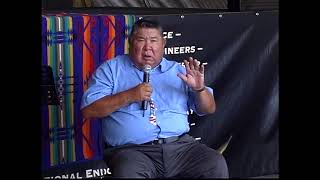
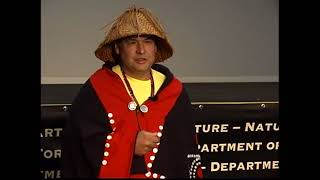
oh you're so quiet and timid we got to get you together get you focused we're going to have a speaker so we I get ready so everybody hands on your knees eyes forward 1 2 3 good morning boys and girls good morning all right good morning good to see you glad you can be here you are now the tense of many voices and this is called core Discovery 2 and we are traveling National mobile exhibit we've been traveling all over the country we've seen so many places since we started out we started out in the year 2003 in the home of Thomas Jefferson in monachello in Virginia and we've been traveling all the way across the country and we finally reached the ocean and next year we'll be coming all the way back and we'll end up in St Louis that's where Louis and Clark were 200 years ago and we'll finish up there in September 23 2006 now here in this Mobile T what we do is we have a lot of presenters and speakers they come from all over the country to tell their story and interpretation of lwis and Clark we have native presenters such as singers and dancers and Poets we have Scholars people that have studied lisis and Clark they take the old um journals and they research them every day and they look at them so we have a lot of different people that come to this tent and tell the story of Louis and Clark so here today we have a special presenter we have Mike iel he's a director of Natural Resources Council for the CIS tribe he's also the vice chair of the tribal council so let's give a nice warm welcome put your hands together for Mike AEL good morning good morning uh going to tell you some things you probably know and some stuff you don't know uh first start out by welcoming you to ket's Country um some of you may not be aware but before after it was CET country you are in Prince rubberland you didn't know that one yeah Prince rubberland you're part of Great Britain right here you're in you're you're English now and then later on this would become part of Oregon over there except this was part of Oregon too and later on after that it would become Washington territory a part of Nebraska so in just a few moments we've gone from England to Oregon to Nebraska we're back to Washington he didn't even feel like you moved so anyway I'll start out with a little bit of History uh in 1827 Governor Simpson said skena track runs from off the pet sound and Strikes the Colombia near point bellw skena was the college Chief and skena was the high chief cic were a little unusual in that we had 20,000 people many different villages with one Chief one high chief and that was skena he was my great great grandfather uh later on Governor Stevens would call skena track the C Trail and so you're at the southern end of this the cets trail we were Traders we we like to trade uh our money in a long time ago was a special little shell called the dent talum and that little shell was also called hiqua and that was our money and it was exchanged in in what they called a fathom which was like 3 ft long and a fathom of the large shells was worth a huge amount of money and we know that that those little shells had great value because in South Dakota which is over over here right in here clear over there they had our dentum shells and we know that because the spiral flute D taum shell comes from only one place in the world and it's right up the map right here on the Northern point of Vancouver Island and the queen Charlottes it's the only place in the world that little shell comes from and I've talked to people from uh Connecticut that tell me that they have Den talum shells there as well so Vancouver was a trading post hundreds if not thousands of years before Lewis and Clark got here when Lewis and Clark came here they said said that this was a Marketplace equal to any in the world they saw people with sailor suits rifles pistols metal pots all things that they' got from Europeans when Lewis and Clark came down the river and one of the big things that I have to laugh at my ancestors is we didn't pick up on the significance of a boat loaded tour us coming down the river we'd seen people come up the river but we never realized anything important would be from somebody coming down the river so when you look at the map you see that me they came from here we'd seen people come from the ocean but we didn't realize that they came from the other ocean too and that's something that we didn't realize so we'll move on uh we traded and we traded from Canada down to California and in to the mountains of Idaho that's how far we traveled uh I know that leis and Clark never met my ancestors because skena and all his sons were were large tall men for the time they were all over 6 foot tall Captain Clark was a very tall man he was 6ot and he would have noticed if there were tall indans there so I know that he didn't meet them because our uh tribal history said that skena was away in business in in Canada when Louis and Clark came through so we know that that that those people didn't meet with them so now I need to to talk about what did we eat well we ate salmon we had deer elk wapo Camas and berries and we would the fish came to us it was pretty neat setup really we grew the the the cus and the wapo and uh we would go to the mountains and pick the berries our tribe had a a special arrangement with the akamas we would trade salmon on the cetz river for berries on Mount Adams which today it seems kind of funny but at the time salmon were almost as common of sand on the beach and we could get berries for those salmon so uh and we had berries and we were able to preserve our food something that Louis and Clark couldn't do you guys know that uh were Louis and Clark really hungry when they got hairs anybody know that yeah they were starving all the time they got here because they didn't have the ability to preserve their food we preserved our food and we were able to do it better than than they would and uh as a result when they come into our villages we were able to serve them meals and we gave them berries we gave them berries in November and December like right now we were able to go and pull them out of the cupboard and there was some nice fresh you know berries that we could serve up for our guests so that was that was how we what we ate and that was how we preserved our food we had large houses some of the houses were huge they're like modern apartment houses the uh large bigger uh plank houses were 200 ft long that's almost as big as a football field and inside those houses there'd be partitions to where there would be each family would live inside the house just like an apartment house today and some of those houses were called plank houses and some were called long houses it just depended on where you lived but they were made out of boards and they were easily bigger than this tent and uh they were warm and comfortable houses so I already posed a question did we meet with Lewis and Clark and the answer is Maybe uh Lewis and Clark called us scutes which when you say callets and scutes uh it could well be uh because it's really important to know that that the way we set our words the pronunciation of of Indian words was impossible for the Europeans and the Europeans their words were impossible for us to say so we had this case to where we couldn't communicate so we had to guess and Lois and Clark called us scutes they called us huel and ketc now ketc means place of the cets and place of the cets is right here on the CET River and the Lewis River and along the Columbia River now for a very very long time I had read and I'd studied and i' i' even seen that one of the the great historians had misunderstood kitc he thought it meant River of the Kitz but once you understand that kitc means a place of the CET then it can be applied to more than one River and uh Lewis and Clark said of us we hear they are numerous they said that a couple different times and how numerous were we we were one of the biggest tribes in the Northwest we were 20,000 and uh we look right here see off the Puget Sound is Olympia and down here to point bellw is the Confluence of the wamit in the Columbia so we lived between Olympia and Portland and out to the West we lived out to Modern Raymond down through the wipa hills to the Columbia and then back up the the Columbia River to the Wind River and up the Cascades up to mount reineer and then over to Olympia it was a huge area we were a very large tribe and we had a huge amount of area so that's that's who we were that's where we lived after Lewis and Clark the fur Traders came and our his our history said that our chief went to Fort George and Fort George is down right here by the mouth of the Columbia we call it asoria today and our chief went to the to the fur Traders and said I don't like traveling this far can you move your your Trading Post closer to home and the Trading Post closer to home is here so the reason that Vancouver is here is because our chief went to Fort George and asked the fur traders to relocate closer to home and that closer to home became Vancouver so that's that's our connection with this area and after the fur Traders came then the settlers moved in and there were Indian Wars and during the Indian Wars our people joined the army my name my first name is Francis and I was I took me a long time to get used to that name and then I found out that that my first name is really someone else's last name because my great-grandfather served with a lieutenant Francis in the Indian Wars and that name came into the family and he named his son my grandfather and then my father had the name and now me so I my first name is actually somebody else's last name after the Indian Wars we we resisted signing a treaty after we had fought the wars the settler or the the United States wanted us to go live on the reservation and turn in our guns and go live with the people that we just defeated we didn't think that'd be a good idea so we told them no and then at a later date we decided we're going to have to to struggle for a recognition and prove who we are and we had a chief his name was atan stockham and he was appointed Chief by Lieutenant ulyses Grant and just right over here is Grant house and uh ulyses Grant made Antoine stockham the chief of the colge and atan started the the fight for recognition and 150 years later we finished that fight for recognition and we we were granted status that's special to us it's called acknowledged it means we knew you were here but now we understand that you really are the cat's people and that was our history up to now so what do we do today well I'm director of Natural Resources Department today I have two dams in Rel lensing one on the callets one on the Lewis we're working on salmon tracking on the toodle River and uh I've got biologists working for me that are checking gear for chronic wasting disease we're checking Goose populations for their health we're working to uh restore salmon passages to different areas and uh we're working to protect cultural resources right here this bridge that's if you could look out and see it just right you'd see there's a bridge across the Columbia River that's going to be replaced and when that's replaced it's going to disrupt a whole bunch of of uh surface and under that surface because people lived here for maybe 10,000 years there will be the the graves of of people so that's things that we do so if anyone has any questions I'd be happy to answer it if you have a question what I do is I come to you after you raise your hand and then you ask the question and everyone can hear it so go ahead raise your hand if you have a question for Mike clat of people were did did they who was their last Chief or who was the courage I don't know the name of the last chief of the classup but I can tell you that uh the classup people came up here and traded and if you this is an assignment for the teachers now you read the Molton Lois and Clark Journal set in book six and book seven and in book Seven it explains the role of the classup and the scutes and I'll use the more modern map though the clups live down here the clups were intermediaries between the people on the the Upper Valley and the Lower Valley and so when Lewis and Clark said the Chinooks have been at war with the scales and the scal the Chinooks are not allowed above the war kayaks the clups were free to come up here the shinook weren't the clups came up traded took the goods back down to the shinuk and the shinuk would give them goods and the clups would take them back and so that's the role of the clups any other questions more questions okay let's go back here what is your question are science are scientists still working on the project to find um where Lu and Clark are or where they also went are scientists still working on the project to find where L and Clark um also went uh I think we know where they went but I uh I know that uh one of the people in the Park Service Doug Wilson is out at Fort classup today and they're working to find out all of the information they can at the the site of the fort classic to find out how long they were there and and what they ate while they were there and other things like that any more questions we got one back here all right good have you been able to preserve your native language and do you personally speak anything other than English uh I don't speak anything other than English um I was probably the worst student on the planet so I always tell people English is my only foreign language but uh not me but other people in our tribe are preserving our Salish language the Kat had two languages the Salish we shared with the shahis the two languages are almost identical and the sahaptin we shared with the yakas in fact all of the yakam or the sahaptin speakers when they came here they were called click itats and click attat is really means sahap speaker we have a question over here I will come over here to you and you can tell your question how do you know that they used it all the stuff that you have here how do they know that they use what all the stuff that's here all the Stu it's here you mean like here on the table out there you mean like uh salmon and and Cedar that type of thing I I can tell you that Lois and Clark took really good notes and when you read those journals uh teachers it's book six and book seven and then maybe one of the neatest one is the one that nobody knows about and that's the White House journals does any of the teachers know about the White House journals raise your hand okay Joseph White House was a private with Lewis and Clark and Joseph sometimes he had Duty and he was gathering firewood and peeling potatoes and doing Army things but other days Joseph had some free time and when Joseph wrote Joseph was one of the only Journal keeper to write active entries so Joseph's entries were written as they occurred everybody else wrote their entries they took notes and then they recreated them years later so sometimes on the days Joseph was free he gives us the best picture of everything and that's book 11 and for you guys to study the journals the easiest and best way is to pick the date so like we would just say November 28th 1805 and go back and look and find out what happened any other questions question over let's go it over here did any of the uh Eastern Oregon Indian tribes like the ellos and the caus did they were they involved in any of the trading down here oh absolutely uh the word Shoni in jargon means person from the interior so we know that people from Idaho came here we know that uh people from California came here and traded and we know that the uh well at least I've been studying it I believe there's a people called wakan Nish Waki and I believe wanas SE and those are people called nutkin from the northern tip of Vancouver Island and those people were here all right we have uh time for maybe one more question let's go over here how do you how do you know uh where Lis and Clark is bed how do you know where Lu and Clark are buried well um I think it's written in in a history book uh Lewis is buried and I don't know where somewhere down South Tennessee Tennessee yeah just Trail they see and then Clark lived a long happy life and died a very old man so they and and he he he wrote down a lot of stories and I think he I don't know where he's buried but St Louis St Louis Missouri right I I think it's time for us to go but we got one more question if somebody's ready let's have one more question from this young man right over here go ahead do you do you think or know if leis and Clark pass through this spot where this T of voes is that do you think or no if leis and Clark passed where this spot is right here I think it's really quite likely that yes they did pass by here uh the only thing is is on the way down I think they stopped on the airport side I don't think they stopped on this side of the river so but on the way back they spent a couple days here because uh they sent a scouting party up the wamit river so uh they've certainly looked at this place if they didn't stand here all right let's give a nice big round of applause for Mike iel