Tent of Many Voices: 12080501TED
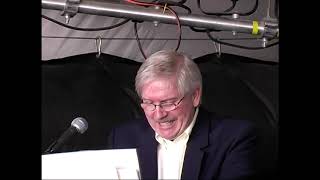
Good afternoon, ladies and gentlemen. On behalf of the National Park Service and our cooperating federal agencies, I would like to welcome you to the Core of Discovery 2. This traveling exhibit is making its way across the United States following the route taken by Louiswis and Clark 200 years ago. Our core of Discovery 2 has an exhibit tent next door that tells the story of Louiswis and Clark and their expedition. We also have other exhibits set up, including a child-sized version of Louiswis and Clark's keelboat and a Plains Indian tepee, so you can get a sense of life on the expedition and at least a glimpse into the lives of some of the people Louiswis and Clark met as they went along. But the centerpiece of our core
of discovery 2 is the 10 to many voices where you are now seated. The ten of many voices is a place for films, programs, presentations, and activities that take a look at the many facets of the stories of Louiswis and Clark and the stories of the people that they met. Our next presenter here in the tend to many voices, Keith Bearer, comes to us today from North Dakota and he's going to share some stories and he's going to share some music with you. So, join me in welcoming Keith Bear as he adds his voice to the tent of many voices. Ah, okay. You guys
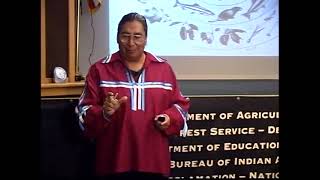
understand? Couldn't talk. Hello. Okay. Most of you speak English. All
right. But in the Mandan language, the language of my mother's people, my name is O Mashir. O Mashirutah translates to the bright light that waves in the north sky. In English, my name is Northern Lights. And as you know, Northern Lights is only a reflection. So, as you see me
standing here today, I'm a reflection of my family, my clans, my tribes, our people of the history. And when I go overseas, I'm a reflection of you also. Because many people say that because I'm born with this skin, they call me a Native American. But my grandfather long ago when I was about the age of these young men here, he told me that if you're born here like the grass and you're born here like the trees and the buffalo. If you're born here like the buff the bird and the the uh eagles. If you're born in
this land, then you're native here. So I ask you, my friends, where were you born? If you were born here in this land, you are as much a Native American as I am. It's not the color of our skin. It's a birthright and something we should be proud of because long ago there was a dream that came true. They
said from under the sun will come a log and on that log pushed by a cloud. There will be new beings. And one day from the east came this little wooden ship with a full sail. And when those people came ashore, they had two legs like we did and two arms and two eyes. They had a different language. And we raised our
hands to greet them as I greeted you. But they saw someone who looked different and dressed different. And so they chased them away with their sticks of fire and thunder. But it was one of our warriors that came together when these two people were going to argue and fight and destroy each other. One of our best warriors stepped forward and said, "This is not the way of our people. This
is not what we were taught. This is not how you showed me to live." She spoke to her father, her grandfather. And that warrior, maybe you saw her movie Pocahontas, a young woman. You see, to be a warrior is not to go out and to hurt somebody, to conquer somebody. To be a warriors like Boy Scouts and Girl Scouts. You go out in the community and
the National Guard. You go out in the community and you help those who can't help themselves. You help the elders to have no young ones. And you help the women who have no man. You help those children, all everybody to learn. And
then when we face the enemy, we put our life on the line. Some of these young men that are here, the post that we sit upon today, maybe some of your family stand under our flag today. I have two sons have returned. And I have one who is in there now and a second one who's in there now training. All going to be 82nd Airborne. And so we're very proud
of these young men, these young women who offer their lives for us, the people. Those are warriors. And so every morning at home, I'm taught that we should give thanks for this new day. Some people say you're not supposed to go around and and pray. But to be a warrior, you always need help. You need
guidance. And you may not have your mother and your father. You may not have your brother and your sister. Sometimes you have to look within yourself. And you close your eyes. You turn your heart
to the heavens above. And so we offer those morning words. And so on the prairie where I live in North Dakota, we have a beautiful bird called the metoarch. And we say that when we hear the metoarch, he's bringing us songs and stories and thoughts of love and respect from those who are far away. And we offer that back to them in the evening. And then when we hear that
and they hear that song, then they take our prayers and our words to them. So today, I'd like to share with you a song that I call the middlearch song. It's fortunate that I have this gift. I can play a flute. And I was raised and when I was raised as a young man and a little boy, I watched my grandfathers, my uncles, and they would take those flutes out at certain times of the year or on special occasions when somebody would ask them for a prayer or for a certain thing and they would take those out and they would play them. You see, I
can sing, but I've never been able to play a piano or any of these. They tried to make me do the piano, but when I look at the music, it moves. I I can't look at sheet music. But I have had the great opportunity and the honor of playing with about 19 symphony orchestras around this country and around the world. I'm self-taught. I listen to the flute and
it sings to me. And this is very important that you listen because when you're young, you learn from many different ways and many different creatures. We use creatures in our stories. And one of the first stories I learned when I began to play the flute, it song came to me. I didn't know how to play. I sat on a hill for three nights
and four days and when I came down I have no water, no food. I I went to my home and I took that flute with me when I was up there because these are holy and sacred. These are the medicine of the soul and the spirit. Many times people take the pipe with them. But I laid that flute there and when I came down from that hill I began to try to play that flute and I kind of tried too hard maybe. How's that? Not as good as the
last one. Huh? But then as I began to listen to the flute, it sang me a song. And it sang of a warrior who is much smaller than myself, but I have great respect for him. I have seen men bigger than me back up when he comes. I have
seen women running, screaming away, but I have seen children in their innocence reach out and touch this warrior. You see, it's not how big you are here. It matters what you have here. And when you use this muscle and this muscle, you don't need so much of this muscle. And people will have great respect for you.
And so I want to play for you the very first song I taught myself how to play. I'm going to start with my language, the Mandan language. Kind of got fancy there because we literally sing the song when we play the flute. Then I'm going to play it in my Hata language a little bit faster. And then I'm going to play it in the language we share, the English language. And maybe you have heard the
song before. Maybe you have seen the warrior recently. Maybe you even have some of his medicine at your home. But this was where I began my journey. And so this is the first song I learned and it sounds like this.
You know the song. You guys must be part Indian, huh? But how many of you men have been cleaning the yard or or moving boxes around? Oh, look out. Made you step back, didn't he?
Spider. How big is he? And how big are you? Ah, don't laugh, ladies. I've seen you dance across the room. Look. Oh my
god. But how many of you as children, how many of you children have seen spiders in the bush or in the window on the water? Did you reach out with your finger maybe or a piece of stick or a leaf and touch that spider? You see, those spiders are a lot like us as human beings. They're very delicate. They're
very powerful. You see, they're red and they're white. They're yellow. They're black. They're spotted. They're bald.
They're hairy. They're ugly. They're beautiful. But they also have great medicine within them. We use some of that medicine for our elders when we when they have arthritis and bcitis like myself. We use it for the women who have
the time of the moon and we give it to our children medicine from the spider as their bones grow and stretch and it helps them to heal faster than Tylenol does from a spider. Something so small, something so powerful. You see, our stories have many different characters in many different ways. Sometimes we have to listen to our teachers. Some of us go to school and some of us are homeschooled, which is good, too. And so
we always learn. You see, we always have someone around us that's trying to tease us, to get us in trouble. Sometimes that's us, isn't it? Sometimes we're our own worst enemy. But one day along the prairie, there was this coyote. And this
coyote was kind of hungry. When he woke up that morning, oh boy, I don't have very much to eat right now. I'm pretty hungry. And you know how them coyotes are all mangy and scratching. He went up over the hill and he was trying to figure out what he was going to eat. As
he came close to the top of the hill, he could hear the prairie chickens on the other side singing. Have you ever seen the prairie chickens dancing the spring? Those young men with their big red chest sticking out and their wings pulled back. And those pretty little girls with their pin feathers pulled back. Yeah. And they were all dancing
and looking at each other. And they always have a scout sitting up there. And that scout said, "He's coming. He's coming. Coyote is coming." They all started to run away. And Coyote said,
"Hey, how am I going to get those?" and he turned and he looked. He said, "I know. I'll use my bag." So he took his medicine bag and he put it over his shoulder and he said, "I know you guys are just trying to steal my songs. I want you birds to get away from me." And the bird said, "You got songs? We like to dance. You got songs?"
You know how young ones are. They're always liking to dance. They always like to sing. And so Kyle was there. But these are special songs. These are
sacred songs. Can you share one with us? Can you give us one? He Well, I'll only share one with you. He said, "But you guys got to stay back. Make a big circle
around here so I can see you." And the prayer chick is all gathered in a circle around him. But they were kind of back a little bit farther. He dug in his bag. Put a song in his mouth. Not that one. He
said, "No, not that one." This is a good one. He said, "Are you ready?" Now, I'm going to need some help from the audience, okay? You guys are going to be my prairie chickens. All right? So, I need your help. And so,
Coyote, he said, "This is the song I want to give you." It says, "Can you say that? Say modia. You guys are some pitiful chickens. No, you guys got to sing a little louder. Prayer chickens, they like to sing loud. So now this time, pretend
you're trying to sing to the people across the street. All right, you know how it is. You when somebody's far away, you kind of lift your head up and talk, right? Say a little bit louder. So let me see you lift your head. Here we go
again. Ready? Well, that's not too bad, but you know, maybe gain a little bit of weight. Maybe you ate too much breakfast. What I want you to do is I want you to sing like somebody's on the highway and you're trying to stop them. Let them hear this
song. All right, this time put your head way up and close your eyes and really holler loud. Okay, ready? Holler loud. I want to hear you. Ready? Gaga
mod. That's not bad. So now let's try it one more time together. Now you guys were dancing around. So put your heads back and all the prairie chickens was dancing around in a circle around coyote. And they were all
singing. It's oak. And as they had their heads back, Kyle, he bunkked one on the head and he threw it in the bag. He bunked another one on the head. He threw it in the bag.
He took that fat one, bunked it, and he threw it in the bag. And pretty soon that scout said, "Hey, open your eyes. Look what he's doing. He's killing us." And they all took off. But coyote, he didn't care because he had a whole bag full. And he put that bag over his
shoulder and he was going home and he was singing that song. It's oaka. You know what he was saying? I'm going to eat chicken tonight. Haha. I'm going to eat chicken tonight.
Haha. See, in other words, you got to watch out cuz you know that coyote's out there. And we have plenty of coyotes in the cities. We have them in the countries. Sometimes we see those pictures of children on the wall at the store, on a grocery bag, on a milk carton. It says missing. What happened
to those children? Did some coyote come along and get them to close their eyes? You see, we as adults have to watch out for our children. We need to look out for each other. Sometimes they say, "That's your child. That's not my
child." Children are sacred. And we as the adults, we need to watch over them. And you as the children, you need to listen to the mothers and the fathers and those that are around you because those are the leaders of tomorrow, our protectors of tomorrow. That's you. And so we don't want some coyote singing what's the oak maz. That's the song of the coyote
song. See, most people when they think of flutes and natives, they think of the love songs. And that young man has to be a good young man to provide for a woman because I want my son to have a big belly like me. You know, I want his wife to be able to cook for him and make him clothes. Could you think, can you make clothes like this? They didn't have
Kmart back then, you know. They had to hunt. Can you boys take a stick and make a bow? Do you boys know how to make a knife from a rock? Can you girls skin those animals? Can you make clothes for your
family and food from your family from those animals? You see, we can do that. And I teach my sons and my daughters how to do that. And so my sons and my daughters are very handsome and very beautiful always in my heart. Don't you think your children are the best, too? Of course we
do. See, but we know better. Huh? So, this is a song and a young man would prove himself to the family. He would tell what clan he was from because we're born to our mother's clan among my people. I belong to the Nagadawi clan.
That's the three clan. There's the Low Cap, the Prairie Chicken, and the Flint Knife. My mother is a Flint Knife clan. And so, my children are children of the Flint Knife. We're always born to our mother's side.
We have these clans so that we don't be like Elvis Presley or there's no kissing cousins and we want to know who our relatives are. You know, we don't kiss our cousins cuz if you have kissing cousins, then you have inner breeding. You know what? You end up with politicians. And then they No, I'm just teasing.
But if a young man is good and he can hunt and he can tell about who he is and they can talk about that young woman, what she has made for them, what kind of medicine she has. You see, my daughters, they have sweet uh gummy corn and they have blue corn and pumpkin seeds. My sons belong to the to the buffalo dance society. I'm the lead buffalo of the Mandens. You see these pictures around here, that buffalo headdress. I'm the
number one buffalo today. You see, I have to protect the people. Watch out. My wife, she comes from South Dakota. That's why I made sure that she wasn't my relative. I'm half Sue on my dad's
side. She's half Sue and half German, kind of half crazy, too. So, you know, that that's why I got to make sure that we we get along, you know, and so if a young man gets a good beautiful flute and the song comes from his heart, he will put himself somewhere where she walks by and in the evening he may come out of those bushes and he will say loud enough for everyone to hear. All through the night, I have dreamed of you and all through the night you have been my dream. I woke this morning and I sat on the hill and I waited for you to bring sunlight into the day. As I sat upon the hill, I
twisted flowers with the sweet grass that grows there. When you stepped from your lodge upon the earth, the sun began to shine, the birds began to sing, the butterflies began to dance, and my heart began to pound. As you walked towards me, I wanted to say beautiful things to you, but my mind became a cloud. And my tongue was so thick I couldn't move it. When you looked at me, I lowered my eyes and I raised my hand with that bracelet.
When you took this from me and you walked past, I said, "There goes the light of my life. There goes the source of my desire. There goes the woman of my dreams. And all through the night, I have dreamed of you. And all through the night, I shall dream of you again.
You see, among our people, we didn't have schools. We homeschooled. We would send our sons to those who could make good bows and teach them how. We'd send our daughters to those who could plant corn or to plant beans or squash. We would send our sons to those who could show them and our daughters to those who could show them in a good way. And then they would come
back. You see, I learned how to make flutes from my uncle using my fingers and my hands to measure. A year later, he passed away. And so, I was very honored, but also very sad. But I'm very thankful because this is how I feed my family today, traveling and playing flute. I also teach at a community
college. And so, I'm very fortunate because I can read music. I feel music and I hear music. And so, my sons and daughters, they sing, "Dad, can you show me how?" That's all you have to do is watch and listen. My daughter made this flute when she was 9 years old. Her very
first one she made when she was five, and I had the privilege to play both of them at the Kennedy Center in Washington, DC. What a great honor. Now she's 16. I'm hoping she makes me another one pretty soon. I'd like to go back to Washington. What do you teach your
children? Everything we say and everything we do, we are teaching somebody something. We teach the old people. We teach those who are younger than us. What have you done today that you have taught somebody? Did you teach
them how to point and to criticize or do you teach them how to open their hands and welcome? Because when you look at another human being, are we so different? How many legs do you have? How about a black man? How many arms do you have? How about an Asian? How many
eyes do you have? Don't I also you see how many hearts do we have? We all share one heart. Just like mother earth has one heart. All the animals that walk, that crawl, that swim, that fly, they too have one heart. They have
a mother and a father. They have dreams and wants and desires for them. As I play this next song, I hope that you will take a deep breath and allow yourself to fly for just a moment. Fly up past the clouds. Go near grandfather sun. Feel how warm he is.
Maybe go all the way up to grandma moon. Catch up with her. She's there beyond the horizon. Catch her and dance and feel her cool face. Make the children, the stars laugh as you touch them. Come back
to this earth and fly over these beautiful mountains you have here. Touch that top of that mountain with your wing and watch the snow sparkle as it rolls down the hill. Fly over the forest. I heard a waterfall this morning. Do you have you heard one? Fly
out over this ocean and see the whales swimming. Maybe jump in the water there and swim with them for a moment. Maybe some of you want to go lay on the bottom with Spongebob and check out the sky dancing on top of the water. Maybe you've left someone behind or someone has left us recently and they're in your heart. All you have to do is close your eyes and you can be with them again for a moment. So my
friends, I ask you take a deep breath, please, as you take this next breath, I hope that you will close your eyes and listen to the music and maybe even fly for a moment. Take a deep breath. Close your eyes. Did anybody fly? Did anybody leave this room for just a moment? Let me see your
hand. Did I make you fly? No, I didn't. I said I want you to believe. If you closed your eyes for just a moment, if you left this room for just a moment, you did what every warrior must do, you believe that you could do the impossible. And sometimes
the possible is not that hard to do. Let me show you another example. Take your fingers and go like this. All right, just one hand. One hand. All right, nice
and tight. Ready? Poke your head through there. Come on. Poke your head through there. Does that seem impossible? Now
watch how simple this is. Poke, poke, poke. Poke, poke. Now you thought that was impossible, didn't you? See how simple it is? Sometimes we just have to
look a little bit differently, try something new. You see, we are no different. But if we learn together, we live together, we walk together, and we have respect for one another. No matter how someone dresses, no matter what language they speak, no matter what kind of food they eat, experience it, meet them, learn their language, learn about their clothes, learn about their food and their dances. Because are we so different? You see, here in this land,
we have as native people lived together in harmony with the land and the people of all tribes forever. We welcomed many of your relatives long ago. They said when those people got off that boat, some of them, they looked holy and sacred. The being, the sacred being at that time was the great white buffalo. And that white buffalo is big. Some of
those men that got off that boat, they were pretty big. And they had hair all over them like the buffalo, too, on the top and on the bottom. And they kind of smell like buffalo, too. But, you know, but see, are we so different? So, as I play this last song, I want to say thank you very much for coming here today. And
if you heard anything that's good, take it with you. Share with those that are around you. Thank the National Park Service for being here and giving us this opportunity. And so this is a song I call walking in harmony. As you leave here today, I hope that we can all walk in harmony.
Thank you very much. Okay. All right, ladies and gentlemen. Well, we won't use that one. Let's try.
Ladies and gentlemen, would you like to hear Keith with maybe a few more stories and a few more songs? What do you think? All right. Thank you, Keith. We do have a little bit more time, so if it's all right with him, we'd like to have you stay a few more minutes. All
right. Thank you very much. Thank you for the honor. You see, these flutes are made out of trees, the tree of life. We usually use cedar because it it lasts longer. It
doesn't warp. It's a thing of life. We use that cedar, the the branch. We use that for incense in our homes. The girls, they put it on themselves to smell good for the boys. You see the
mandatas, where I come from, we were living way up on the top of the Missouri River, way up here. We did not live in the little mobile homes. Those tepeees that you see out here, it's pretty cold on the prairie in that tepee. You're going to shiver off your fat. So those boys, they come to see us, they had knobbyby elbows and high cheekbones, you know, their face was all sunk in, ribs sticking out, knobbyby knees. Well, that's how you'd
look too if you shivered off your fat, right? Look at me. Harad says, "Mand we lived in earth lodges the big size as this tent here. We were condominium people." See, and when those other tribes came, they would bring their skinny little boys to look at our pretty little girls, and they bring their pretty little girls to look at us handsome men, too. You know, well, it's not that we were so much bigger and better than the other tribes, but like I said, we had good homes. And when those people came, they
would come and they would bring the best that they had and they would trade because we were the commerce center of America. We were the medicine center of America. From the north, east, south, and west, they came to the middle of our great land to the Missouri River that we called the great smoky water because the earth and the dirt that swirled in that water looked like smoke in the sky. Great smoky water. We took our life from that. We lived along the river bottoms,
those trees. And when those young men would come, they would bring the good things from their tribes. They would stand and they would sing songs. You see, there's a song when you try to snag that woman. They're called snagging songs. Seeking nice American girls.
Hey, snag and get it. So, a young man, he might see that girl and he want to sing his heart to her. So, he might sing a song something like this down by the river. Oh my honey, don't you know that I'll be with you tonight? We'll go walking by the waters. We'll hold hands in the
moonlight. I yo oh I oh yo oh yaho. Down by the river where the water flows cold and clear. I whisper sweet words to you honey. Words you want to hear.
Io honey in the evening when the sweet grass smells so strong. Go walking by the willows. Honey, there I'll be along. Io. Honey, don't you know that I'll be the waters. We'll make love till morning
light. Io. Data. Doo doo doo doo doo doo doo doo doo doo. You see, like I said, we offer ourselves to the creator every morning. We thank him every night. Maybe
today was rough. Tomorrow might be better. Maybe today was real good. tomorrow could be worse. So we always say thank you for this day in our life for the challenges. You see my mother taught me
how to walk in both worlds, the white man's world and the Indian world. I studied Catholicism because my girlfriend was Catholic. I went to Baptist because I like the way they preach. I went and studied Judaism because those were my friends. I studied Shinto because I took martial arts. But
I find my prayers are answered through our ways, the Sundance way. As long as you offer yourself and you remember where you came from, our sons and our daughters, they will do what we have done and they will say what we have said. What have you taught and what do you teach every day? You see, this is one of those songs that my mother shot taught me when I was very young. And I hope that you recognize this. And so I'd
like to share this song. It sounds like this. Thank you very much for your time this morning this morning. It's afternoon now. I'm think I'm on jet lag here. But
thank you very much for coming. I hope you enjoy the rest of your day and I hope you invite your family to come back and share this great opportunity of the only na traveling national park in the whole United States. Mazgidads, thank you for coming today. Thank you very much Keith Bear from the Mandan and Hadata and it's always a pleasure to have you in the tent Keith. Uh by the way folks, our next program will start at the top of the hour at 3:00. So
please come back and join us at that time. Our next program is from the mountains beyond and it is about some of the native uses of the land around this area. So please come back and join us then at 4:00 we have a program about the plants of Louiswis and Clark. So please come back for that as well.