Tent of Many Voices: M07100502TMB
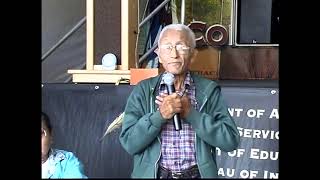
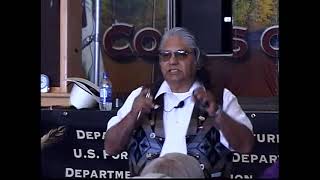
good evening ladies and gentlemen welcome to the tent of many voices my name is Aaron I'm one of the Rangers traveling with this exhibit we're a traveling exhibit with National Park Service as well as many other multiple agencies that have sponsored us traveling along the Lewis and Clark Trail 200 years in the future um everywhere we stop we stop in various cities or towns or Big Towns like this one and we invite presenters to our tent of many voices to share their voice their perspective of Lewis and Clark or something related and with us at this hour are uh Samuel so and Merill sandal who are code talkers with the Navajo Nation and they did a lot well they did they're going to tell you a lot of what they did for World War II in 1942 to 45 so let's all welcome these two gentlemen good afternoon my name is Marl Sanol just like she said and uh I'm from uh right at the present time I live in Arizona a place named Tuba City it's between uh black staff Arizona and uh Lake Paul paig Arizona just east of Grand Canyon and uh we're here to present a little bit about what we did I know it'll take a long time to tell quite a bit of the co- talkers but it's our duty we're if we're requested from all over the country even across the ocean we try to do our best to explain why what for why and who is and where and all that people still they read about us and they heard about us so we try to Sam and I going to explain a little bit about what we did as best as we can and uh today uh Sam is here with his wife and I'm here with my wife uh can you stand there her name is Lorraine sand ofal July 27th will'll be married for 54 years and also uh was the responsible from Phoenix Arizona Scott stale Arizona is our coordinator Miss Mrs Town Miss town he's the one that thank you I'll do a little demonstration how we use our code we're on now Indians and uh we went to school in several uh most of uh one that participated in this program for the United States Marine Corps we they were selected from at least seven or eight boarding schools on the reservation and that we do have a uh a big reservation as a lot of you probably know a reservation covers uh part of Arizona part of Utah and part of New Mexico and the state I mean the reservation alone they figure is about the size of West Virginia and our population is 250,000 and more and uh we were picked from 1942 and uh all the way up to 1946 to use our language and we didn't know that we going to use our language until we got through with our boot camp in uh San Diego California just like any other Marine we volunteered I volunteered when I was 17 years old that was 1943 and we went through our regular training as a marine and that's the way we figured we were we're just going to be fighting and we're going to help we're going to go against the Japanese and help out but when we got to further training after boot camp rifles school we went to another camp Camp Penland that's where we found out when we got there there was a whole bunch of navajos there that went ahead of us in a classroom what they were doing they were they were decoding our common language the ne language I use every day we they were decoding that and we they made their own alphabet don't right secret right there you're right there you go maybe right on the other side I don't know anyway uh there was 29 older on there older ones that uh were recruited or volunteered it was 29 around 30 they used them to start the program and they decoded U the language you know in our alphabet and all the other general terms and uh the reason was that we never had an alajo coat uh dictionary on the reservation so on top of that we didn't have know anything and any word about military cuz we have to learn all that and I'll show you how we did we changed our alphabet from A to Z and uh comprised of mainly animals or whatever uh mostly animals from A to Z like for a be like an ant A and T and B would be bear C would be cat D would be dog on down the line and so the other codee that they were using in the other military service they they uh have what they call American moris code and that was commonly used in all the other military service and the Japanese were decoding them so much they were pretty expert on decoding messages and this the one that we had made was like this a n t b a r k a t compared to the other ones like Abel Baker Charlie and all that some of you probably veterans remember that in the communications in the army or in the Air Force or all the other the Navy and this was an abajo code is American Moors code so there was a difference was there we we started off with that and any messages that we had and say in combat you say we got an order I had to be with a major general a just two star general and onear general big General and I got a bunch of Colonels in headquarters Signal Company and that's how we were separated and each division each division was about 20,000 Marines in combat and it goes on Down the Line like regiments companies battalions down to down to the front line and they placed all the way down because the messages I had to go down or orders had to go down directives had to go down requests coming back or messages and all that so say any message like in combat say we would we have an order from the front line or request that it's getting rough up there we need some help help they may be asking for maybe Naval gunfire aerial gunfire artillery gunfire mot gun fire and that was our job we had we had navajos on the command ships also out there in the sea so they got the message and then they respond whatever we they're asking for from the ground if they say we're asking for Port they want to bomb a certain place like a hill in combat your coordinates just like a blueprint there was always a hill wherever you go there might be a hill is a location like that and they usually number them or letter them like Hill one Hill two or Hill three give you an example bomb to that's the kind of message that we get and uh what they do the commander of that say in the company down there they'll give a message just on an ordinary piece of paper maybe the colonel or somebody give it to the N could talk he writes out in English just that message because the order is got going back so he goes to the radio and then he t uh transmitt it back to us in headquarters in uh Navajo code and then I receive it and I get it n whole code and I translate it into English and we print it that's the fastest way of doing it we don't use long hand typewriter or anything like that or we short is and then we just give it to our officer we translate it in English then they got the message right away so then it goes out to the ship no to the air and uh we need some help from that H too probably the the Japanese were there fired on the Machine Gun Nest or whatever and they want that out of the way so we transmit this this is already coded through this alphabet a bomb we didn't have to spell that because it it'll take a little longer to spell it we could go we could say bear oh oh is an owl down here owl and I forget what mom was I think it was Mouse we can't say bear owl Mouse bear there two bees in there so two bears and instead of that they they gave us the decoder gave us the Navajo that went ahead of us they call it an egg it's like a chicken egg so and then there come the heel heel instead of spelling it which take a little time we go back to the alphabet H was a horse so we got this horse now but there's another word there I L L you all know what a is a a sick person or a sick horse or whatever so we've made we name it sick Horse backwards and this was uh common more common we just say n which means two so the message it is and horse Ino is s and this is this common not which means two so that was how fast it was and people on reservation they could hear us talking Nao if they could hear us but they wouldn't know what make or ta heads or tails of it it was all mixed up like that that's how the code there's a lot of other words that that we we we use against the Japanese and uh of course the Japanese were there they get out of frequency and uh they're real smart probably you know they were trained in over there over the United States and they really smart expert on decoding messages like this code Naval code or Army code or Mor code that was commonly used it was but they know we know they're listening to us because they tried to jam us they play a old uh record or something make a lot of noise or they do scratching noise to interrupt us but they never did we knew each other so much we trained together we trained we knew each other's voices real good and we knew the code real good and that was all memorized we the messages went through and there's a lot of other ways they Tred to do it like I I explained here about Hill 2 see our troops are on Hill one and the Japanese on Hill two in that area maybe they fired on our our troops on Hill one that's why we ask for support and they'll come on the air while we're doing that uh they figure that that they uh somehow they know if there's a plane going over or something like that they try to throw us off somehow in English and uh we knew better they were not our commanding officers that gave us the message so everything was done in in the Navajo coded language and uh they try to throw us off on some on some reports that we had and we knew that was then but unless we got another message from our commanding officer even if to happened another message behind it it had to be done by could talk not in English again from there so what they try to do is divert us from one Hill to the other and create a friendly fire and they couldn't succeed on that and there's a lot of things that happen that we could talk about it all day but uh that's the how we start using there was other words and we never had any um NV words for military planes like uh torpedo bomber or observation plane or fighter planes the same way was ships and the ships we never had a Navajo word for ships all kinds like submarine battleships Cruisers destroyers and all that then we had no no language for rank like a general or Colonel sergeants all the way down the L and we had no no words for outfits like a br uh a regiment or Battalion or company those we had to for planes we use Birds we use birds for ples and we use the ships we use fish for ships but in our language we had a rough time on it cuz we don't have all kinds of birds like these bird watchers know maybe the only thing we knew is like crows and owes and that's it they're pretty prominent all over same way with ships we don't we don't have lakes out there we don't have rivers or anything we didn't know all the we didn't know any name for fish we have to learn that like for a submarine cuz there was no na language we called it iron fish cuz that's made of iron and gold goes underwater and Battleship we don't have no word Navajo they call it bird carrier City there yeah see birds are up there so they carry the birds you know like that and the same way were uh planes like an owl like an observation plane we had a lot of observation ples that fly over all the time they spot things we call that an owl because you know how an owl is there always observing all that sub that's how we get that language was decoded and it worked real good our own people wouldn't even know nobody went to that nav who code School wouldn't know and hardly any mistakes if we didn't make mistakes nobody would know just us not even not even the general would know it but they they'll correct it real fast you know so that's how we operated uh it was supposed to be a n Sergeant with us he was supposed to monitor us but he didn't get it done you know comat go ahead you language anyway uh that's part of the uh the the language that we're could go more and more on that demonstration on that and and uh how it started was uh through a angle fellow at the time he was working Los Angeles as an engineer civil engineer and years back he was raised on a naval reservation he was a son of a Navajo I mean a a missionary and he learned that language when he was a little boy playing with the nav kids and he thought about it because they found out that he heard that there was too much code being being deciphered decoded which was true they knew the Japanese knew where we were where we're going when we're going how many of us are going all that ahead of time on top of that Tokyo Rose coming to trying to follow us up and uh otherwise you know any way she wanted to that's how uh this code was used and he suggested that to the Marine Corps in San Diego and uh it took quite a while for them to decide they had a demonstration some navajos over here and the regular Morse code users and they sent gave gave them messages identical messages s it s it and the receiver over there and there two n over here and then the other two that uh not now was but they operated the other form so they send a message the N message went through about 2 minutes and over here it took about 15 20 minutes it's how fast it was to so a lot of lives were saved on that because decoding they had the little machine with buttons like numbers and letters they had decod it send it over air and then the other side they have another machine then they decode it took time took time so and that's where our language came in real fast so I think a lot of times that that they really help I think being a speed and hardly any any um State I my last operation was iima you probably heard of it iima that Island had to be taken and it toss us a lot of casualties well that's another thing that my job was from headquarters every day I had to transmit uh casually kill in action wounded an action missing an action all day fighting there's a lot of casualties and we transmitt it to a board ship where there was some more commanders higher ranking generals and Admirals and there's some naho up there they got the message relate to them and then in the morning the same way all night fighting course we got a lot of Catal again they transmit that they transmit to Pearl Harbor which was our General headquarters and from Pearl Harbor he transmitted to the president at that time was Franklin deel so the president knew what was going on that day and uh that's about when I going to tell you I have more to tell but want to let time take over at this time yeah race they don't write on that side don't think can this be erased sure somehow oh need's a rag good afternoon I see we made the Full House again and that's good this shows me that there are a lot of people that are very patriotic to us here let me tell you when I went in 1943 March 13 when I went in I didn't even know what was I was getting into I didn't know whether I was coming or going just completely off the reservation and uh but I learn I learn otherwise I wouldn't be a coat talker I had to know how to speak NE whole language fluently and understand it on top of that I have to know how to speak English read right with good grammars otherwise if you don't have the tool you can't become a coat talker they won't let you but uh uh I'll tell you something what major Connors of the uh communication officer said he was the one that was with fifth Marine Division and he said if it were not for the Navajo Co talkers the Marines would have never taken eima if you doubt me ask major Conor now I'll tell you about the U flag raising on Mount sbach for on February 23rd just before noon we were all dug in and a foxhole all of a sudden this message came in on the radio I just only caught from this part on from this part on but I heard this one but I wrote this one down on on a pad and every time I receive a message on a pad the Marines right around me they always had now and then they look at us and then when we receive the message and write it down they always say what's up Chief you know I used to resent being called Chief I don't know it just guys I think about it ping you down there but later on I found out that they were giving me a promotion then I accepted and uh when I wrote this down and uh the message in my ears it came in and the English interpretation this one Mount zachi is secured by the Marines but uh it said means space if you uh watch the uh movie on on um wind talker those guys are talking to each other they keep saying that means space space space otherwise if there's no space everything will be all together and uh when I received it uh this one the M is for Mouse and then it says Mouse a capital letter is Big so this one will be big big mouse that's for m capital M and the T is for turkey and then space and then this one we don't have any of these uh verbs like this it comes afterward not before what it describes so uh this is the only one I heard this letter here stands for sheep e like that it say uh big mouse turkey space she's I is cured see this one here's the word cured this one is for I and this one is for she and that's the sort of became the famous one even our own people always asked us about that it says what was that phrase that you uh said about the black being raised on top of M M bar so we say this one to them that's the one I received as soon as I wrote it up and then they asked the Marines asked me what's up so all I did was point up to the top of the mountain and they look over there and they just jump out and start yelling and dancing there those guys are kind of nutty they forgot Japanese bullets were still flying around there and then the sergeant is just bark at us and say get back in the fox hole there so they just all jump back in there there I don't know if anybody got hit or not there but I also jumped on in too anyway this is one of them uh we receive it decode it in our head and write it down in English uh like this and then write it down and either give it to our runner or our Sergeant or the others there and another one that I was a number of them I was involved in it like ordering tanks flamethrower or dive bombers to strafe Bomb by the way dive bombers is called g g means chicken hawk and then also the uh I'll give you the quote word America it means our mother that's the Cod word for America USA and then uh another incident that uh we also were directly involved was that yesterday I explained that running across the Death Valley and that Death Valley when we came back back to Hill number 368 and he told us to report so uh my buddy that uh ran across with he went in the report and the sergeant pull us over to the side and boy he really cheed us up and down there haven't you learned learn how to take orders yet and said when we were trying to help that was not your order your order was to locate the Machine Gun N and report back oh he kept chewing us up on the and then I thought he was going to give us a 100 push-ups here but he never did anyway one of the coat talkers there sent a message for artillery rocket fire and motor all at the same time on those Machine Gun Nest and then it only took less than 5 minutes before all those artillery fires rockets and motor shells start coming in on the machine gunness they just completely pize that area so when I said less than 5 minutes that mean we to send the coded message and then start firing in less than 5 minutes that's how quick it anyway when that thing start exploding boy it's sty your ears there and then when they stopped firing they ordered the Marines a across and they just walk across no Fires at all and uh afterward some of the Marines said I didn't think about it I never thought it I was just taking orders hey you guys don't you you understand what we what they did to us I said what they sent you guys that there for the Japanese machine gun target and we were out there being used as a Target to locate the Machine Gun N why they put pick us to do that is beyond me they could have done it to the same marines that were trying to cross there but as they pull us out of the front line and they March us over there and boy I tell you now I really resent it if they going to punish me why don't they punish the other guys not me anyway that's one that was used again also my own outfit the Recon company they sent him out to iima Island 3 days before The Invasion just before down they were out there on the beach looking for obstacle I never knew why demolition expert were included in the con company and that's what they were mostly the demolition expert were went into the submarine and they went ahead and then it's a good thing they didn't blow up anything because there was no obstacles they came back and they told us we found out we going to hit iima and then here's the M he showed us the m and I took a look at it and I found out it was only about 8 oh 7 mil long the lengthwise the widest part was uh about miles and then I said I went on top of the deck of the ship we're moving forward with I look to the right and I look to the left oh my God all kinds of ships battleships going forward and right there I said with all that help if we get on top of the island we'll all sink it in less than a day but I found out that that iima Island was really fortified they have block houses they have underground tunnel oh man is really a fortress when we move forward and we get pinned down by the machine guns we can't move forward so they have to call in flamethrower for help we lay behind some of the bowlers and stuff like that and the flamethrower finally crawls in and he start putting the flames on them you can hear the Japanese screaming and some of them running and you know what I was very happy that they were on our side if it's on the other side we would have really gotten the hot foot too even when they ask for support with a tank when the tank comes in they start blasting away direct right at them and you go behind it while they put their heads done we move forward and that's another help that you have your own team with you when the dive bomber comes in they start diving it and then dropping bombs and uh strafing it you almost get up and start clapping thank your air boys for helping boy that that was some experience i' lived through there and up to this day what did I do and I realized that it is worth fighting America and the freedom that it has for us and I'll be glad to do it again if they need me and I also like to thank all the American people finally they beginning to know what we did in the second world war and boy are s of Bas in glory now thank ladies and gentlemen fir private first class Samuel so and Corporal Merill sandavol thank you very much my name is Ronnie town and as Merill mentioned earlier I'm a special events coordinator for the Navajo Co Cod talkers my involvement began with my father who was an instructor based in Camp Elliott which is now Camp Pendleton um this is the place where most of the code talkers were sent um because there was a special school there called the Navajo communication school this is where they learned the code and it was strictly done by memorization there were about three waves of Code Talkers sent over the first began with a group of 29 which created the code um they us the Navajo language and the American alphabet and Military method of code combining the three and that's how they came up with the Navajo code there are about 13 uh Native American tribes Across the Nation that were used as code talkers during World War II and um from the research that I've done it looks like the military went straight down the United States and everybody west of a certain line went to the Pacific everybody east of a certain line went to Europe um American Native um American natives have been fighting for the United States as far back as long before Lewis and Clark um our basic ma um you will notice among most tribes our basic understanding of human nature is to assist rather than to attack um we were not always met with gratitude and friendship but um our first effort was always to befriend because it was another human life um we have always defended Mother Earth and when it is um threatened at any point in time you will see most Native Americans come up to defend firsthand um out of the three groups that were sent over the 29 were sent first the second wave was probably the largest they were sent from 1942 uh to 1944 recruited and they were the ones who saw battle um these gentlemen were part of that group um the last group was recruited in 19 from 1945 to 46 most of which did not see battle um they were trained in the code they were given basic military training but they never actually went overseas because by then the war had ended um it has been my great Fortune um to receive a history lesson a very fast history lesson because my father as most of these gentlemen um were told never said anything about what they were involved in we all knew they were military men military veterans in World War II but they never said that they were involved in um such a secret military Mission um I did not learn about my father involvement until 3 years before he received his silver medal um the four five gentlemen that you saw on national TV receiving the gold medal from the president were the last five remaining of the original 29 since then we have lost one of those gentlemen so there are only four of that original 29 group still alive there were overall in the past in the four years that they were recruited about 450 men um the Navajo Cod talker Memorial Foundation took a sensus just recently this past October and they were able to locate um about 325 of those 450 men and they are still as far as we know still resigning within the states of Arizona New Mexico and Utah and I believe we even found one in California and also one in Oklahoma it has been our deep honor and pleasure to be here in Montana it is my first trip here and I'm ready to move to Montana now so um we thank you so much for the invitation and for attending I will take these gentlemen in the back we do have some of our um Books available for their your purchase and they will be happy to autograph that we also have a photo of the largest group that I've ever worked with there are 15 co- talkers who attended the Santa Fe Indian market in 2001 these two gentlemen were in um involved in that um event and they are also in that photo and so they will be happy to talk to you and uh shake your hand and and take whatever greeting you have and and oh and Sam of course is not done 13 coat talk K there were 13 code talkers missing in action or killed in action that never returned back so um again thank you so much and God bless America and God bless you thank you thank you so much for sharing your story with us you can sign some books okay