Tent of Many Voices: M07110502TEG
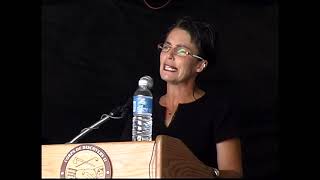
the exhibit here you're sitting in the tent of many voices I want to welcome you here thank you so much for inviting us to your community everywhere we go we stop in a few communities along the Lewis and Clark Trail 200 years later we're trying to follow thank you thank you for that nice introductiona good afternoon how are you all doing there okay it's a little warm today we call this in my language Nest purse which is namu timki this we would call ikasa which means a hot place but it's not too hot I I really appreciate you coming out in this warm weather and spending some time with me what I'd like to do today is tell you a little bit about myself what I do and then introduce this video that we've all been working on and I think you're going to enjoy it my background is I'm part nesp Pur I'm half and half I'm nesp Pur and I'm French which is not very uncommon as French Trappers were coming into our area which I was born in Montana but I live in Idaho now and they were marrying Indian women and so that's where my Heritage comes from my maiden name is Broncho and my family comes from the champagne Valley in France the other part of my family grew up in nesp country as I was growing up I grew up in a very traditional home where my entire family was made up of extended relatives Aunts Uncles grandparents cousins we all lived together and we all spoke our name our language of NES Pur which is namu Tim and even my mother who was non- Nest Pur spoke the language as well when I went on to college we didn't have much of an opportunity to speak the language and we start to forget words and lose the ability to speak it it's a very difficult language because there's a lot of glutide down in the throat where you have to work on your language to keep those muscles intact to be able to speak it correctly my background is by trade I'm an archaeologist I have a master's degree in anthropology my minor is in Wildland Recreation and tourism I worked as an archaeologist for a number of years for private corporations I went to work for my own tribe in lapo Idaho as a cultural resource director I did that for about four years and then I went to the forest Service as an archaeologist I've been with the forest service almost 15 years now and I've had various jobs I worked as an archaeologist for six years I worked as an interpretive specialist for a couple years I went on to work for Regions 24 6 and one as a tribal leason and currently I am the administrator of the nesp namu national Historic Trail are you all familiar with the trail yes great I see some hands out there wonderful well as you know then the nesp National Historic Trail was designated such in 1986 by Congress it's the only National Historical trail that the forest service administers which is very unusual because the Park Service administers all of the other National Historic Trails of course we administer some of the scenic Trails but it's our only National Historic Trail we work very closely with the forest Service Bureau Land Management fish and wildlife service we also work with private State people in administering this Trail the trail is 1,180 MIL long approximately depending on who's doing the mileage counting on it it goes through four states of Oregon Idaho Montana and what one did I leave out Idaho Wyoming thank you it goes through two national parks which is both Yellowstone and the nest person National Historical Park I just want to tell you a little bit about myself as growing up I told you that we grew up in a very traditional house um my maiden name as I told you was Broncho my married name is McFarland my husband is full-blooded Nest purse we have three children I have twin sons that are 20 years old and my youngest son is 17 my husband's name is McFarland which is not un usual to have different names that were assigned to you and this was because when they came in they couldn't spell the nesp names or pronounce them so they would give you names so they would often give you names of missionaries or the Catholic priests that came in McFarland is actually a military name they were named after a lieutenant during the war of 1877 and so that's why he has the name of McFarland excuse me a little dry today the allergy season is here and my medication is acting overtime thank you um what I'd like to do is is talk a little bit about the video you're going to see it's going to be 20 minutes long and it covers what happened during the flight of 1877 but what I want to share with you is that this Trail has been used since time indefinite by The Nest Pur people they used it on their seasonal rounds when they went to hunt to fish to gather medicines to dig roots and other food items they also used this Trail as they were going into the Plains and they would go there to hunt Buffalo sometimes staying upwards of three years before returning home they would visit they were doing intermarriages with the Plains Indians people they were copying different people's traits their dress their games so there was very shared culture that was going on the other reason that they using this Trail was it was a major Trade Network that was going on the nisp were considered the Tradesmen of the plateau they would travel as far as modern-day doota dtas and they also went down into modern-day California where they traded a number of items back and forth so they knew the area very well when Lewis and Clark came through the area you probably know from your history that they stayed with a nest purse a considerable amount of time time and the nesp Not only cared for their horses they fed them took care of them and of course if it wouldn't have been for the nesp taking care of them they probably would have starved to death it's ironic when we look back on what happened of the great care that the nesp shared with Lewis and Clark they made them Maps they taught them as their culture of burning out ponderosa pine trees and making canoes and using adses so that they could further their Journey from the clearw river down into the Columbia River the nesp often traded clear to the Dallas Oregon at Major Trade Centers excuse me they also would go into the oceans on the Pacific coast and trade there as well so that's why they knew these waterways so well all this information they freely shared with Louis and Clark party and partly It is believed as part of the Manifest Destiny Lewis and Clark really did open in the way for more settlers and the miners to come into the area and subsequently to force the nesp onto a reduced reservation the video that we're going to show you today uh we're very proud of because we had a lot of people work on it the script was largely written by nesp people we have nesters voices in The Script we have nesters people who did some of the artwork that you're going to see in the paintings we have Native Americans and nesters that are doing all of the music of the video and I work very closely with Jean calling out of the regional office in Missoula who I work for who is recently retired and researching and traveling and making this video to decide exactly what was going to shoot and what we weren't going to shoot so without talking more about what the video is about and the true story so it's not repetitive I want to show you this video and then we'll take time if you have comments for me or questions I'd be happy to answer answer those at the back table I've brought a few brochures Maps posters I would invite you to get go back there on your way out after the presentation and help yourself we have some pens we have water hold water bottle holders we have a number of items that we'd like to share with you you will notice that our contact information is on them as well as our website and we invite you to come and visit us on our website we have won three national awards on our website in the last year one was for best kids website so if you're a grandparent a teacher homeschooler or you have children that your family members we invite you to share that with them so that they can become better acquainted with who the nest purse really are with that we're going to go ahead and cue the video and then I will be here with you so that I can answer questions and listen to your comments so with that can we go ahead and start the video video thank you a short video Kat thank you oh one thing about the video was very meaningful to me is I am a direct descendant of the Chief Joseph waaa ban my nesper name is tin Kama which means like the first snowfall and so the video was very uh touching and close to my heart even though it happened over hundred years ago or more as we March forward in time these memories are very close to many of us because we're not that far removed my great great grandfather was watan and his son many wounds who both served as tribal historians and passed on this information if you're familiar with the LV McCarter books Chief Joseph and his other book on Yellow Wolf it is my great great grandfather watan and many wounds U many wounds his son who served as an interpreter in taking him to these Battlefield sites and recreating those books for the story to be told to all of you today so um the story is very touching and close because having a great great grandfather who is involved um in the war is not that far removed my grandmother who passed away a year ago was that course that was her father so it is pretty close in time when we look at it from that standpoint as opposed to looking at how many years have passed this video is going to be made free to the public it'll be shown in visitor centers interpretive centers it's being shown right now back in DC at the new Native American Museum and we will make it available for public schools um none of our items we charge for whether it's our brochures our videos anything that you'll see on the back table and I'll be back there shortly to join you to get some more items out for uh you to enjoy are do you have any comments for me on what we could do we're still kind of tweaking this video a little bit sir question uh his question so you can hear it was when the people were moved out to Oklahoma what was the mode of transportation to to transport the people thank you for clarifying both to Oklahoma and from Oklahoma what was used was flatboats and box cars railroad that's how they were shipped good question sir uh his question was the course of the nesp trail did not go totally East is that what you said to avoid the black feet um is that true or not true uh not necessarily uh the video does not bring this out very strongly because we have to cut so much out to keep it to a short period but the black feet on and off were friends of the nest p it was a uh what would you call relationship that sometimes they were friends and sometimes they weren't but there was at least 12 other Indian tribes that was involved with the conflict of 1877 many times they were friends of the nesters sometimes they were foes sometimes they were both friends and foes at the same time but not necessarily was that true as uh why the RO the route they took they primarily took that route because that was a known route for them to go into Yellowstone and then into the plains yes the question is the nest Pur were famous for the Appaloosa horse and the answer to that is yes that is a big part of their Heritage um my family raises appolis we have the my Sweetwater Ranch we have about 2,000 horses and we raise those um breed them train them and sell them throughout the world and um many other families are still perpetuating the Appaloosa horse herd today and they were practicing gilding techniques when Lewis and Clark came through and that's something that was noted in the journals that the npers what made their horse herd so valuable because of their um technique of gilding yes um it was the chief Joseph's band that left the WWA there were five different bands that went on the flight of 1877 out of 13 different bands of nesp people some chose not to go on the flight obviously which was referred to as the as the treaty Indians and then of course the non-treaty Indians and they did have to cross your question of the rivers both the Snake River and also the salmon uh the Snake River was at Springtime so there was a runoff within the Hell's Canyon and it was swollen and pretty high for them to cross but yes they did C Joseph's band did cross there with with all of his people and as many belongs as they could pack on their horses and on themselves yes the question is is there more than one tribe within the nest Pur um The Nest purse were composed of 13 different bands but they were all one people of NES Pur people good question are there any other questions what in English does n person mean it comes from a French term n per which means pierced nose in English and a lot of people claim that the nest purse never really pierced their noses but when you have 13 different bands of people and they were borrowing dresses a way of beautifying themselves there is the possibility that some of them did just like today if we Pierce our ears or we have one earring or two earrings or whatever so I think people were very IND individualistic on how they Adorn themselves so I think it's a possibility that shouldn't be ruled out but as a general rule of thumb for the culture they did not Pierce their noses are there any other questions or do you have a comment on what we could do to make the video better or what you would like to see changed yes ma'am this was the narrator's voice you're referring to in the video that his voice drops a lot so we lose some of that sound you're saying all right okay I appreciate that comment we'll look into that thank you is there anything else that I could answer for you or do you have a comment for me that I can take back in trying to make this a better production no well I will turn it back over to Aaron then and cut the out you thank you very much