Tent of Many Voices: M07130502TMB
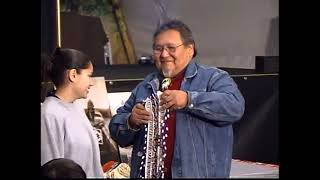
of Discovery 2 and the tent of many voices this tent has been set up as an opportunity for us to learn from different individuals with different backgrounds different areas of expertise also gives us a chance to hear different sides different aspects of that Lewis and Clark story today we are very fortunate to have with us Lloyd tops Sky who is chipa walk Cree from the Rocky Boy reservation and he will be giving program on cultural language so if You' please help me welcome Lloyd topy thank you very much uh that was a good welcome I had to clap for you too because you look like you're going to be a good audience uh as Native Americans when we greet each other you've probably often seen some of the sign language that we're known for because it's universal language and tomorrow I'd be doing the sign language within the planes but I have a commitment back home and with a youth group that I'll be working with but when don't we see each other uh from different reservations or different communities among our the plains tribe we go like this to each other when we wave at each other or look at each other we do that that's a sign language universal language that means good and so if you ever look at the CM Russell Prince sometimes you'll see some of the the illustrations there indicate that when they meet each other they're going to have a hand up like this and what they're doing in that is there they're giving the language good so that's what I'm doing to you today I'm glad to see all of you and I feel good about it and seeing you here today but um I'm a uh Adjunct professor at MSU Northern in h Montana and I've taught there for a while and I teach the cre language there and sometimes I have a a good turnout of students that are non Indian so when we have a class we um I'm used to seen a lot of non-indian faces within my class they say they'd rather take that than take in French or Spanish or German they'd rather see something that they're going to you utilize within the community of H and I once I had been in in the hospital in Hab Montana and this guy started talking to me in my language and I thought yeah I was answering him and uh then he says do you remember me and I said no I turned around and here it was that guy he was a student of mine and he was talking C to me in there and I got a good kick out of that one but I'll remember that for a long time but he took that because he can speak to people that were admitted into the hospital and and have her somewh in long-term care and some were were there shortly but some are in dialysis and different places and and surgery and they need people in there to kind of relate to the language of the people that that utilize that facility but those are the reasons why a lot of them are enrolled there but um again I I also taught the chipa language which is another form of the alonquin language the family tree of our language and uh that comes from the Great Lakes area and into Canada and the cree language extends down from Canada into the mountain the Rocky Mountain Area here so that's a brief background of our of our tribal ways we' are actually refugees from the Canadian area and also the Great Lake area that's where here due to Western span expansion that we we arrived at this area here so that gives you a little a little background of our tribe here and um uh the language itself is made up of an alonquin language which is made up about oh about 50 or 40 Tribe 40 50 tribes and in the in the this area here there's about three or four Algonquin families they're the black feet tribe that'll be up here Northern Glacier country that's now gonin tribe we have the chip was they're in the area here we have the cre they're Al gonin and then we go back outside a little bit further we run into the shaune tribe down in Oklahoma the Delware tribe and then we have different tribes scattered out the Mohan Indians out toward the East uh you'll see a lot of Al gonan words out there but today I'm going to guarantee you when you walk out of this tent you're going to know at least 8 to 10 terms a cre and you're going to you're going to live with those the rest of your life and these are words you'll always know on the definitions and you're going to remember them forever until until uh until the sun will shine no more forever I think I heard that someplace before and the Ricks the cricks Run dry or so anyway um going back into the philosophies and culture that we speak of today this is a cultural Exchange in diversity hopefully that gave you a little background and understanding of where we came from and there there were at least 500 languages on this continent here of North America and Canada they say that the alanin language is the largest speaking tribe of people in in the North American continent and statistics and the census show that the Navajo Nation is the largest tribe in the United States but the cre that that we're uh introducing today is the largest tribe in North America so those those two estimates are true but they don't count the cre as being the largest tribe of the continent of North America so it is a widely known tribe goes all the way from this area back into New York and that area so I'd like to just go ahead and start right now uh we're going to identify this area here as we come through Lewis and Clark had traveled in this area he came down the Missouri River and as we talk about Missouri River he had ran into rivers that were very very rapid and Swift I guess you'd known that that some of the rivers can get very bad out there in the Missouri and uh in our language when they call the rapid the Rapid River we call it SU chian suu one that means the water is really rapid and you you get in there and it'll just flow you down the river as fast as you you could possibly go and those there's dangers involved in that so that's the word so getu one and that that's the word there and then in there when you go into the rivers and stuff you'll see little names running off the CCS or running toward the river of uh the Missouri you'll see these little words are CP CP those means ccs that go toward the the river so those that's a subject matter today as we talk about the the different areas of this mountains here and in the terrain here soan is a water that runs rapid and as you as we talk about things we talk about pollution in this area and then we we we talk about places pollution is so strong here in some areas that pollution runs off and we say that word notos so we talk about it's better to have a place that's pure with the way the ground is and the earth and the air we talk about pure ground so we say so that's uh the definitions of the nice clean air we have around in this area the next one is where I'm going to go into animals and boy you probably come across the area where you smell that strong smell it's kind of very fumigating in your body it just clears your nostrils and what would that be skunk we call that a seog seog that's what we say oh boy that seog is too much you know it's Cog one getting plug your nose you know that's one of the things you'll find the open air here that's about the only thing we smelled long ago was to to kind of dampen the air here would be shag that meant that it was very very strong in the smell and also we talk about the uh different animals we had here and stuff from one of the who's a hunter in here who's one of our Mighty hunters and in here must have did a little bit of hunting boy we're all conservative huh con the only thing we hunt is down at IG or Albertson's to get our meat anyhow uh who's familiar with the word w te okay that's a familiar so see W te actually means and so what that means is the elk has a white rump and that's how they describe it that's how they describe that elk now that's an animal that we're very familiar with in Montana Boseman boy they're bow and arrow crazy here and they gun crazy and boy they take weeks off to go hunting over here a lot of people hunt just really a good a good exercise and also a good thing to do also we talk about tribes that we had who's familiar the uh the uh tribes around here who who knows that some of the tribes around in the area okay give me one okay black feet okay Flathead groon Crow cinin okay those are all tribes there's one little boy in a bike just rode in and said I know one show shony okay most those words derived from uh from the traders that came here the French the story I heard about the black feed was when the Indians were first noticed in this area that they had a lot of black black uh feet on their moxin their feet were black that was because there's a a roaring fire that went through and they walked across and did some hunting and when the French came here or whoever they disc discovered them first they had uh black feet on there and also the Flathead were known for having been put in a cradle and they had a board put on their head and that's how their their children grew with a flat forehead and you know and these little kids they're U when they're little they call them TIG or you direct that L that little boy so that's how they would say that when these little kids are very tiny they have lot of words that indicate that too they believe in the mythology as we refer to today is as a the little people and I think they call them dorfs or the little people in in in Western thought of Mythology of of the little people that they have too in in their culture but here they also had people that up and um these are some of the uh ways also if you look back at that Tepe back there that's known as uh we go we go from the people that that that live there we that's what that meant we and so these are terms that we use throughout the time to to know that we means your or them and also who's uh what do you what do you call your shoes shoes that's what you call them all right and we call them the same thing thing in in our language too we call them musna and what that means you can term those as boots shoes or slippers or anything anything that covers your feet we we refer to those as musk and U these are parts of the clothing that we have um in this in this culture too when we refer to animals we refer to Montana as being a a protector of U conversation of the conservative people that that conserve animals here we talk about the wolf as being a as being a protected animal within the forest here in cre we call him mahik and he's a protected animal here too mahik and so these words that we talk about here uh we talk about the land being pure and and uh how it feels and to be here and open there and the waters also being defined area as being polluted in in cre we call it a a that's what that means the water we then we say a particular place we say that means that the water is very dirty and stinky so we can apply that to things that are very polluted right now so we call that so as we go back into our language we see all these patterns of things that are important around our area here there through the culture and the gift from from God and we we look at it in a beautiful way and so I want to start right now by saying have you heard anything in within that definition that I gave about the nouns that I presented has anybody in there um perceived anything that we applied to the English language did anybody hear anything in there nobody anybody okay Blackfoot okay moccas you heard of that huh okay good that's very your very uh uh really Keen sense of hearing there moccasin I said we said that we talked about that I said muskin that's where the word mockasin came from in our society musk sin okay that's one term when you leave here you're going to know that word mus moxen that means musen that's a cre word okay anybody else he another word what was that anybody Wigwam good you hear the word uh Wigwam Wigwam that's a cre word that meant that their Lodge that's what that means their Lodge and so that's two now you learned two terms anybody else here another word seog what that what do you think means stink what what stinks yes skunk yeah okay Chicago Chicago means shagu it really stinks okay that's three you've learned anybody else learned another word in our content TP okay that was Wigwam any others W he heard that right away w w means white rump and that's wasu WAP that's what they meant the elk has a white rump it's what you heard WAP te that's the a word they use here all the time I mean even we don't know the word sometimes we say hey they're going to go I think they're going to get a and all the creaser on well what is that you know they don't even know their language sometimes it's kind of reversed into a different a different sounding word what else did you hear how about the rapid water when I said soet one did you hear anything in there sayu one holy smoke that was a very keen AED person Saskatchewan I think she's she's doing better than my wife here and learning some of it's new to her no I'm just kidding uh Saskatchewan okay that's five anybody else hear anything okay well how about when I said CP what does that kind of catch the tune of a word nationally and internationally known all over the world in other places okay what if you made it bigger it would be Mississippi the Big River or the Big Creek that's another word that's six Mississippi okay somebody said no sir okay no I'm kidding okay how about the word when I said AB Abu did you hear anything in there Abu that means Sue Indian Sue remember we we we talk about the Sue tribe the lotas well that's Sue that's where they got the word when we wanted to intimidate them when we wanted to make war against them we'd say up the little people let's go ahead and knock the tar out of them today you know and take take all their women and forget their horses but that was Sue that's where it came from excuse me how about uh mahik can you think of anything that sounds like Mikan mohin oh boy there's another one there Mohan probably heard of The Last mohin by the famous famous author James ww Longfellow I think that was his name I just made that it sounded good okay moan how about how about a state what sounds like moan that's a State Michigan holy smoke these guys are ahead of me Michigan okay now we're down to eight now what's left boy I don't have anything left do you think you guys clean me out here words okay that's 10 turn terms you learned these are all cre words but just a different sounding way of saying it in the English language for instance in h it's not Indian word but H when the French got a hold of that word they called it La larve and when they got when we got a hold of it we messed it all up and said have her and then there's there's old stories that go back into how they changed that word and how got to be have her there's a couple guys are fighting and and they were so fed up with the the fight that finally the other guy well go ahead you can have her after he got the tar knock out him that's how the name came out to be H Montana but they never tell you they'll they'll come up with a real fancy way of saying it was the French had called it laar they always say that it was these two drunk guys that fought over a woman but those are names of the things that we know in our area have uh the chip was have named a lot of words in in their their places in min soda and the Great Lakes area there's a lot of names I hear there I think there's a song they had long too long ago the uh the boat that God lost out there was a mitoi or something like that I think some of you might have heard that it's a real old song but that song is the the lake that's very big and the monster that got those guys that that W monster got was under the water well that's a legend of the chipa but he sings it into a tune where you can't understand what what he's saying but that's that's actually a tune of that of the chipo language that turned into a contemporary song but those are some of the things that I'm glad that I got to show you some words that you already knew all this time so I'm not telling you anything you don't know I guess but uh I just gave you a brief rundown definitions and the way we say them but uh I'd like to go ahead and go over to some of you folks in here and see if anybody wants to ask me any kind of a question something you always wanted to ask but didn't want to ask anybody like me okay anybody okay we got one and I have a microphone that I can come around so we can all hear your question that's a good idea yes this has to do with sign language was that is sign language Universal or was each tribe uh it was it peculiar to each tribe okay that's a good question in the Plains area there was so many tribes that had about uh they say there was about over 100 tribes in this area here in the Plains area all the way from some of the tribes that you spoke black feet Flathead Crow CVO Grove on uh the different tribes that that we had here but there's more that extended down the Shoni knew the language the crows the cheyen uh the excuse me Mandan hota rarra and different lotas had Dakota Lota and they had the cabins up in Canada and there were just a whole bunch of tribes the reason why that came about there's so many dialects that they couldn't communicate all in one language so they they devised a hand a hand signed signal system that would indicate what they were saying for for home you crossed you crossed your hands into a point with your two index fingers that meant home which actually an indication illustrating that is a teepee and when you went to go go and to your teepe you wanted to eat you'd make that sign language of putting something in your mouth and then if you wanted to buy something You' put your two index fingers and cross them together that meant you're trading but now we called it buying so that that was a thing about buying and so those are some of the the signs that they had everybody had that universal language packed down to to knowing everything about your age how old You' be and how what what people were there what tribe they were if they were white if they were black if they were Flathead Indian or or Japanese or whatever people were here all the Races they they indicated through sign language what they were and so that was that was the purpose of that because there's so many languages that they couldn't all talk the same language similar to The Babylon story where there's so many languages involved there that EV eventually one there was only one language but uh I think it's kind of turning into that too like in a in a sense and and in a way that we speak today that most tribes are learning the English language as their first language and our language is decaying I should say that that not all of us know the language there's some out there that acculturated into languages and of uh the Western the Western thought of language presentations the way they speak is there any other uh questions I think I had one more over there okay during the time of the Expedition where did the cre tribe live and did the Crees have traditional enemies and or and traditional allies good question when the when the arrival of Lewis and Clark we had had philosophers and we had practitioners we had forecasters I'm not talking about forecasters on Channel 3 but forecasters that could can tell the the future of time and when they when the future was was shaken in a particular place by a practitioner that practiced the forecast they said that when these people come across they're going to bring a large number of people behind them but with that langu with that idea that there's going to be a lot more there was going to be a lot of epidemic of sickness and death and what occurred after that does anybody know what occurred after the yes small poox that wiped out lit literally almost 34s of the people here and so when the cre heard about that they backed back up into the Canadian area of Saskatchewan and that's how uh Saskatchewan in Alberta and uh Manitoba they went back in there and they stayed there for a long time until around the mid 1800s they came back down into the sweet grass area around from all the way from sweet grass all the way back to the Trenton area of North Dakota and that was where they were at our allies are actually the CBS they helped us through a lot of Wars our enemies were the forever enemies almost were the black feet today we're comfortable with each other but we go back to the old times when black feet and the creep people were were enemies almost forever and uh those are those are the people that we had had fought for a long time the sue people are also our our most you know forever enemy almost and so those those are the people we're friendly with who had enemies with where were we were at at the time when LS and Clark was here so if it wasn't for the forecasters and the practitioners and the people we refer spirituality people with medicine the medicine men and the shamans that were sometimes referred to we' probably been one of the one of the U uh people that couldn't have survived in this area too it was very terrible yes you had one question back there sir the wamp I not very sure of the from but I I think it was around from the Mohan tribe or in that area back there past the great lakes that that tribe uh also practices different ways but they're identical to us but they're so far back to the east of the AL gonan tribe that some of the culture that they know in definition of a certain tribe a certain thing that signified something is something we didn't practice in our area we didn't practice the the wamp and belt which stood for The Prestige and also the value of something we didn't go by that value system and we didn't go by that significance so we were very sure of what that really meant for our our people we had different ways of identifying significance of different different values here too yes anybody else two quick questions uh one do did the moccasin designs distinguish the various tribes and secondly are there dwindling numbers of purebred cre or black feet now and uh to be a member of the tribal council do you have to be a purebred full-blooded uh Native American yes yes no yes yes no I just kidding no the BL the moccasin represented different things as as he answered it was a very important way of identifying the significance moxin sometimes the baby moxin would have a little hole on the bottom of the soul that indicated the place where the Soul was not able to to be taken away by an evil spirit or something that would be a nightmarish way of harming the child so the little moxen hole at the bottom protected the child from that and so that was a way of keeping the soul of the baby as it grew into a different stage of manhood they would get different designs and moxin as an older person you may earn the the uh the right to have a certain design knowing that you are a medic Medicine Man a shaman or a practitioner of certain things those would be indicated in your moxin finally if your moxin are beat at the very bottom the top and the bottom that means those are moxin used in burials so you hardly ever see those they're only a limited commodity those was long ago and uh sometimes they'd make those at the last minute and quill them and later on they start beating them at the bottom so when people died they put these moxin on them finally and that's what they're called IAL moxin and sometimes it's kind of a scary thing people didn't have them around the house or in their camps or anything it was a very delicate thing to have around the house usually a message of of death uh anything else oh the the council yes very very good question you don't have to be a full-blooded member you could be a quarter down to the bottom of the of the blood Quantum to be uh just as long as you're enrolled an enroll member of that tribe that you can be a councilman a councilman has a different version today as it did before long ago it was leadership uh regarding wisdom to be kind to other people be helpful other people an ambassador of good faith from a religious background as well as a a warrior status today you could you could be involved in drugs you can be involved in alcohol you can be abuser of all these things you don't have to have an education and all these things that we used to have have high value in are not applied and now we have a lot of mismanagement in our funds and of our management of our tribal our tribal duties that we should have long ago if you mismanaged anything you were taken from your camp like like that Tepee and takeen to a Little Thicket of trees over there and they would beat the living tar out of you if you mismanaged anything and they would your hands would be cut bad and have two black eyes and boy you couldn't sit down for about a month but now today nothing happens I mean there's a lot of mismanagement like in other places corporations are a good example of where mismanagement of funds are but that's that's the the the differences from long ago and today so that's just a brief background of our ways I hate to say that but that's the way it is in reality yes um how have the traditional animosities between tribes carried over to Modern Life um politically politically now we speak politically today before it was a animosity because we had did so much uh tear between each other I mean it wasn't even safe to go to the bathroom in the middle of the night and it wasn't safe even for a baby to cry at night because the enemy was always there you never knew if they were there or not uh they used to put water in noses of babies when they started to cry cuz that was an indication there was a baby in that camp and they could steal that baby or the woman in there and kill the man and take whatever he had or they could take the the the horses that he had those are of high value and these are the things they had an animosity of fighting all the time back and forth and in one in one way uh my my aunt had said we were in through so much tear throughout the days and months and years of Our Lives that all the tribes are always against each other and that maybe maybe this is was a sign that we should go into a different pattern of getting along that's why the white man came here because we was we was always in Terror whenever we did anything and you couldn't even go out to the bathroom middle of the night without getting your head crushed by an enemy it was that dangerous at night and so those are the things that we went through you know that it would just payback payback payback all the time it was hardly a good a good way of living you know but it was a brave way of living that's why we had some many warriors yes but we are friendly today we don't do that no more you please comment on the role of the mate uh with your tribe the chipa Crees are they fully assimilated now the mate te the mate the mate te are they assimilated I I had did a lot of uh study and long ago they had called the mate te they had called them in in English the translation of their their of their group was known as the burnt wood wood people what that meant was the wood was burnt on the outside but inside it was white and so that's the way they Define the the mate when you may meet a mate te they say they're German they're French and they're uh uh any other tribe that's from the western part and also Native American they're chipa they're cre Cabo and these are the tribes they are and so when you say they're fully assimilated they've always had that trait with them to always play the fiddle and they've always even across in the 1800s when they come across them 18 a Plains he'd be sitting on his he'd be kneeling on a prairie and he would be praying to the in a Christian way so you could see that in 1800s most of the tribes are still uh conservative in their way their thoughts were in religion and the way they attended these these religious Services we call ceremonies but mate they they practiced Christianity at that time since they were met here in Plains so I think they've always been assimilated into the Western World all these all these times and they didn't really attend too many too many Native American Events or activities or too many things that they would include themselves in but they were more into these newer newer things that are coming out yes chip tribe and then I've also read a lot about the L little shell yes little shell are actually uh the people that are the people from they mixed of mate and the tribe that were here the cre people that arrived and married any intermarried with different cultures around the area the people that were in cities like Helena but Great Falls and that's what we call the little shell people I just gave definition of what they were in 1800s when they were here the red Cart People the Burntwood people there are different names for that for that group and they arrived here back in a long time ago actually they're from the French area of the Great Lakes from Manitoba and Ontario and that way and as western expansion they came out this way and they developed different relationships as they came along and that's where we get the little shell people yes was there an actual desire for those two tribes to kill one another or what was the was there any of this counting coup okay that was a good question uh we never invented killing we invented Ved coups like he said counting coup it was better to shame a person to death rather than to kill him by touching him while he a warrior if he touched him on a head and rode by his rode right by him while he armed with a spear and a knife and a bow and arrow and a shield and if you touched him that's how close you came to death and he never even got to kill you well that shamed that person into being humiliated when he got back to his camp and that's how we counted coup if you went over there and took his gun away from him that was even worse I mean this guy he practically lived out in the sticks by himself he was a shame to come back but that's the way we had War long ago but black feet and cre were always at War and the one the one thing we always had as creep people we had arms we had uh rifles and knives that we got from the French traders in Great Lakes and they were we had a trade system going from the Great Lakes to the Plains area and we're always ahead of them also another thing that we had we had practitioners that forecasted and also the the way of the medicine man he was he was the person that can predict danger within the next few days of the war war path that they would go on and so if it's going to be good they would go on a story behind that is the one in h Montana South there's a place called squab and there's they say there's a spirit up there and when the war path would go by a group of Warriors they would camp overnight there and if they're going toward the area of the the black feet country they would stop there and they would pray overnight and if they heard the woman give the sign of a of a woman crying that meant they would turn back the next day and go back if the woman made a victory sign in her voice they would continue on and that mountain still stands there and they call it squab beute but because of the derogatory uh historic word for squa has been changed to a a woman some kind of woman Mountain up or something something like that but it's been changed now but Squall in our language mean is squil that meant the woman that has power lives there in that mountain and so that's a story behind that war and that story so uh those are the things Victory yes follow up on that question how do you account for the reports that when the Hada reportedly kidnapped Saka near the Three Forks that there was a number of that uh Shon band that were killed in that raid what would have happened there okay according to our cultural background I had said that we had it was unsafe to live in certain areas when you went Camp uh doing hunting or or certain areas of the country you were bound to be killed you're bound to be captured you're bound to be to be uh to be some way your health would be affected and this at this time time they were practicing raiding the camp and that was a victory when they took those horses and they took this young gdle back that was a victory and so there are probably a number of U captives there so that was counted as a victory at that time and that's how they got they got a hold of this gal here that was Saga Goya is their is their name for that weah means woman in the Sue language and part of those tribes over there part of the suenan language a family tree of them uh again they have no such language in the Shoni language so I don't know how that that came about where her name is sagaia there's conflicts in that quite a bit where they use the Sue language in there to Define her we have a question back here yes we heard we heard a great deal about uh interpretation of the English to the French to the Hada to the U uh Shashi in uh leis and Clark history um I'm wondering how much uh sign language was actually used uh between uh Lis and Clark and their people and Indian tribes again a lot of these are real sketchy that was in the 1700s what we know we don't have an oral literature of the the incidents that happened there was nobody there to record them all these were oral literature that was brought down from certain individuals to certain individuals even the documentary sometimes get questionable from Lewis and Clark when they when they indicate anything that happened a serious a certain time in that time when they're in a certain area so sometimes there's there's conflicting things that happen because some tribes didn't affiliate themselves with a certain activity that they did in their so it's always questionable whether these stories they gave are actually true and I'm not the person that's a historian all I can talk is about the culture that we practiced so that's that's a good question it should go to a very authorative person that was uh researched a lot on History the document the documents and other people's uh stories in there but that's that's a good question I think I'm going to go ahead and close here because uh I think they're having another I'd like to sit here all day and just speak with you and order some hamburgers and boney sandwiches and chips and potato salad but boy I think these guys go right on time here that's one thing Native Americans do we're always on Indian time I mean Indian time means whenever you're going to be there whenever you're going to leave that's when we're going to that's when it's over it starts so we never say yeah let's go because we don't have that kind of a schedule on our watch we always go on Indian time whenever you're there yeah that's right okay well I'm going to close here I guess that's a conclusion I really enoy enjoyed you I hope when you leave here you take those words with you cuz you always knew them but now you know what they mean so uh whatever you do don't head to Chicago okay thank you very much thank you once again Lloyd top Sky we appreciate you coming out and sharing your history and culture with us today our next presentation