Tent of Many Voices: M07130505TMB
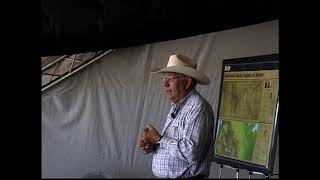
good afternoon everyone and welcome to the core of Discovery 2 in the tent of many voices this tent has been set up for us as an opportunity to learn from different individuals with different backgrounds different areas of expertise hear different sides of the Lewis and Clark Story and also to learn more about the people that Lewis and Clark met as they were heading Westward we are very fortunate to have with us today Amy mosset who is is Mandan Hada from the three affiliated tribes of North Dakota and today she will be giving a presentation on traditional gardening so if you would please help me welcome Amy mosset thank you thank you it's nice to be here thanks for coming out it's um the the weather is kind of intimidating out there but it's nice once you get under the under this tent here it's um cool it's a lot cooler here than it is being out in a garden today even if you went out early this morning it would it would already be quite warm out there um 200 years ago Lewis and Clark um while they traveled across Montana but before they crossed Montana they spent a winter with us and they spent a winter with the Mandan and the hiza from October of 1804 through April 7th of 1805 when they left our villages and Lewis and Clark were not the first non-indian people to come into our Villages and this this is actually one of the villages that Lewis and Clark would have come into 200 years ago this is the village of aad and you see the Earth lodges that are standing here in this hiza Village this is in North Dakota north of present or north of bismar North Dakota I don't know how many of you have ever been to Stanton North Dakota it's um it's it's about six or seven miles up the river from where the Knife River would meet the Missouri river which is where about the spot where Lewis and Clark built Fort Mandan their winter quarters and the Mandan were living down um at the at the Confluence of the knife in the Missouri but up the river about 7 miles were three had odds of villages and they looked something like this from a distance this is there were uh close to 60 Earth lodges maybe over 60 Earth Lodges at a the reason I put this slide up on the screen this is the village that I'm descended from I can trace my hiza ancestry all the way back to aad and it's also the village that sagaa lived in for about four years before she joined the Lewis and Clark expedition and when she was taken captive she ended up in this Village and then eventually was married to her French Canadian husband to S shano well of course uh sagaia and any other non-agricultural person who came into our Villages would discover that we were a little different than most of the Indians on the Northern Plains and that we farmed and the farming that we did was so extensive that it drew people from great distances because you know that living on the Northern Plains is pretty tough in whether that's as Extreme as it is and in the winter time if there were no Buffalo herds nearby if the Buffalo calling ceremonies that we we usually had in December didn't bring the Buffalo into the villages or if we had a a bad a drought season uh if we were not able to do the kind of hunting that we would that we would need to do to dry enough meat to store throughout the winter um life would be pretty tough but with the Mandan and the hiza villages in North Dakota and then also with the arika further on down in what is now South Dakota we had food we had an abundance of food enough food that in the years that we had a surplus we were able to trade this food and that's what brought people from great distances first other tribal groups even our enemies would make peace with us at the end of the growing season late in the summer the Sue in particular the the the arikara were actually our our enemies 200 years ago and it took a very long time for us to ever befriend the arikara uh eventually when you when you look about the village and you you're living in the Mandan or a hiza village and you look around and you see that you're related to everybody in that Village either by Clan by a marriage or by an extended kinship system or through adoption and you realize you can't marry anybody in your village anymore so you have to go down and perhaps you know marry somebody from the Mandan Village or as things got worse we ended up having to marry into the arikara tribe and I shouldn't say that I shouldn't make jokes about the ARA because my daughter is are Mandan hiza and Ara so um but anyway we were agricultural people and the the women did the gardening I think that's the thing that the men are are most impressed about is that the women did the gardening in our Villages and people ask well what did you grow in your Gardens and I'm just going to run through all the different kinds of crops that we grew in our uh hiza and Mandan Villages the gardens were not located right within the villages the gardens would be located Outside The Villages not on the Prairie but on the river bottom and the Mandan have lived on the Missouri River for thousands of years and even 1,000 years ago the Mandan my Mandan ancestors were farming down in the southern part of South Dakota near the South Dakota Nebraska border and archaeological evidence indicates that we farmed to a great extent at the borders of South Dakota and Nebraska 1,000 years ago and so it's a centuries old old tradition that we pass on from generation to generation from mother to daughter and it just continues into every single generation and we're still doing that today the the women did the gardening and the Mandan according to what we've learned about our history is the Mandan had 13 different varieties of corn just corn alone and of course you know that you you have to keep corn separated you cannot plant it close to another plot of another another variety of corn and so we also had accordingly 13 different 13 different Clans within the hiza tribe A lot of times people are confused between Clans and tribes and bands and societies and and so on but all tribes are very different and then within tribes you have different bands of people you have different Clans within the tribes and the Mandan had about 13 different Clans the hiza also had about 13 different Clans and those Clans really Define who you are what you do the kind of corn that you plant every year who you can tease who you can marry um just it sets the rules and it sort of sets the stage for your whole life and how you live and the way you live is always determined by your mother's Clan and so that's that's where you receive your identity and receive really identify who you are and what Clan and what tribe you belong to is through your mother through your father's clan that is the clan you go back to the spirit world uh through when you die and so your father's Clan is also very important because the afterlife is forever whereas this life is just temporary but we had 13 different varieties of corn and today we have still grown or we still grow quite a few of those varieties we had flour corn which is a a softer corn that you can grind and then we had sweet corn and then we also had a flint corn which is really a very hard corn this is blue flour corn which and and all of this is corn that that my daughters and my granddaughters and I have been growing over the years but we have blue flour corn yellow flour corn red flour corn Mandan sweet corn and then I have some gummy corn around here someplace but it's probably down here in my burden basket my tupperware box um in addition to all the different varieties of corn that we planted we also planted beans squash Sun flowers and when we were able to we planted melons melons watermelons are really uh crops or seeds that we acquired from the arara so there were some positive things about the arara in that they were able to grow watermelon further down south and in when they were in South Dakota you can still grow melons in North Dakota if you have a real long growing season but just to give you an example uh last year in June we had a frost and I think it was about June 18th the temperature in Dickinson North Dakota was 25° and so we lost a lot of um June berries and some of the other berries we didn't have any plums but we we also had a very cold August um and and in order to grow these crops you need to have long hot days and you know that on the Northern Plains we have light for a very long time it doesn't get dark until about 10 10:30 but we also have really extreme heat very long days a lot of light and so because of that that we we are able to grow or we have been able to grow crops in a relatively short growing season The Way We Grow our crops um this is a Mandan Village here you can actually visit this replicated Mandan Village this is h a slant Mandan Village on the west side of the Missouri River just south of Mandan North Dakota and my Mandan ancestry is U goes back to the west side to the newa tandan Villages this is my garden that that's growing right now west of New Town North Dakota and you can see how it's growing in nice neat RADS well 200 years ago when or even 500 years ago the gardens weren't planted in nice neat tilled Rose The Gardens were planted as as soon as spring arrived and we know that all winter long the women who would be going out there to Garden were probably very um they they probably held very prominent positions in one of the women's societies and we had you know I mentioned Clans and then bands and and societies within tribes there are societies that are um specific to different activities and societies are they're very similar to societies that we have today they really regulate a lot of the social and the ceremonial and political organization of the tribe and one of the most important societies that we had was the goose woman Society and it's it was a garden society and the goose woman Society was comprised of women who were in their childbearing years and of course that makes sense because women in their childbearing years are fruitful and they're productive and they are the women who are in who are uh charged with this um this task of going out and harvesting and or and planting and and nurturing this this crop these these you know acres and Acres of crops All Summer Long singing the ceremonial songs engaging in the kinds of prayers and the ceremonies that are associated with traditional gardening now not everybody belonged to the goose woman Society you had to purchase your way into that society and my and and I think it it makes sense that the women who belonged to the goose woman Society or to any of the women's Society were were Daughters of very prominent families and and prominent families were Pro were those families that possessed and and uh were the keepers of very important medicine bundles and there are medicine bundles of course that are associated with Gardens and so the goose women society would engage in all of these activities throughout the years now there are and I'm sure that that women are of course curious about what happens when you're beyond your childbearing years then what Society do you belong to then well the women who were beyond their childbearing years W moved into or sort of graduated into the ne to probably the most important women's society and that was the White Buffalo C Society for the years and that was a society comprised of the wisest women the teachers the keepers of the tradition the women who taught and who advised all of the younger women of the village and so the older you were the more important you became in our culture now with the with our Gardens um you see that it looks it it looks like there's weeds growing in that Garden um because you the there is all this stuff around the bottom of the Corn stock those are beans and corn was planted the very first thing we planted in in the beginning of the year of course was sunflowers and I'll show you some images of my sunflower plants but this is the way we planted this corn um in not in row but in Hills and this is this corn is not actually planted in Hills like it was long ago you know hundreds of years ago the at in the beginning of the spring or let's say in the fall the men would help with the women they would go down into the the river bottoms and they would chop down some of the trees and they would let them fall onto the ground and the pieces of that tree that could be used for firewood or that could be cut for firewood would be taken back to the Village but the rest of the tree was left laying there on the ground to dry out and by Spring they would come back and they would pull all of the the organic matter all of the grass and the weeds and the stubble out of the ground and then they would leave it laying on the ground and then they would burn it all and of course those of you who are farming the land know that when you burn any organic matter and it is absorbed into the ground it softens the ground and it nourishes the ground and so that was the whole purpose of not dragging this organic matter off the garden site then the the sunflowers were planted the very earliest they were the as soon as the the water on the Missouri River started to bre break up and thaw and the geese were flying back from the south that was those were the signs those were the signs out in the environment that it was time to put in the sunflowers and those sunflowers would then be planted the very first crop they were the last crop to be harvested in the late in the fall now the corn would be planted in late May or early June and sometimes again if a frost came in early in June or late in May after the corn had come up we would just go back out and plant more seed which of course is why it was so important that when we gathered seed at the end of the year and saved it you always saved enough seed every single year for several more plantings because the following year if the insects or a drought or a hail storm came in and wiped out your whole Harvest you couldn't be sitting there without seed so you'd have to have enough seed for at least a couple more years of planting now why is this corn planted in with the beans around it well the women of of The Villages knew that there was this symbiotic relationship between corn and beans and when you plant corn and beans together you kind of have a mess oh that's a sunflower when you plant corn and beans together well let's just go back and talk about the sunflowers for a second since I have them on here this is our sunflower notice it doesn't have that one single tall long stock this is the our sunflowers grew with multiple flowering heads and in one of one of my sunflowers from last year I counted uh 41 41 flowers or 41 heads on the sunflower but only the top ones were about 6 in across and of course the very largest very the very first sunflower that that grew and and got the largest that was my seed for the next year but um the the the largest uh head you know it would it could have been up to 11 in across but for the most part they weren't much bigger than 8 in across and the very top one would be this big and then as you go down the whole um plant they get smaller and smaller but with the one of the sunflowers that I planted last year I had 41 um flowering seeds on there or seed heads with the sunflowers they're real sticky and these sunflower plants get very tall and what you do with sunflowers you is you plant them around the edge of the garden and I planted all of mine on the north side of the garden so that they wouldn't shade any really shade any more of my garden but the other thing that these sunflowers do because they are real sticky and and they have real rough you know rough stems they sort of keep they help to keep your corn from cross-pollinating and when these sunflowers get to be about 13 ft high they make a very good barrier in between Gardens they also help to keep your Gardens separate so you never have to get into an argument with your sister-in-law about Whose Garden you're working in because you have this long row of sunflowers that sort of borders your garden and separates you from your sister-in-law and you might have lots of sister-in-laws depending on how many brothers you have um and you just don't want to get into any hassles with your sister-in-law okay this is just a little bit closer image you can see all the way down the stem how the sunflower is flowering and of course this is the the flower at the top of the sunflower and it's not very big but the you see all the leaves and the the foilage and everything is is quite extensive on the sunflower this is um the I just put a pen in here so you could kind of get an idea of the size of my sunflower and then of course that is um I I sprouted the plants and long ago the women would just take a piece of hide and and damp it and put the sunflowers in the hive and let it let them Sprout and soften up the seed before they put them into the ground um I let mine Sprout quite a lot before I put them in the ground um not because they need it to sprout a lot but because I really travel a lot and I'm not home as much as I should be these are the beans these are aara beans oh here I am growing aara beans I can't believe it but um I was I was I was working with an elder uh of my an elder relative of mine and she for the longest time just insisted that these are not they these are not arikara beans these are Mandan beans but um you know I think a lot of times depending on who these seeds were collected from um there would always be an interpretation of whether they were Mandan or hiza or arika but you know I would I would say that since I've been planting these things for quite a few years by now they got to be Mandan beans so or hia beans beans at least but um this is what the the bean plant looks like and this is what the bean plant looks like when it's growing up and remember I said there was a symbiotic relationship between corn and beans as the plant grows the beans these Beans really need something to cling to um yeah maybe they are Rara they're um they're they are they just twine around that corn and they are just stuck there um you're stuck with that bean plant all the way through Harvest but uh but but these plants need each other you know this is Mandan blue flower corn growing and the beans that are growing on this plant actually are shield beans and these Shield beans these are my favorite beans they're so pretty and they're white they're white and they're they're big white plump beans and they have um kind of a red uh shield on them and they're called Shield beans but you can come up and take a look at this stuff when my program is through here and um corn and beans there's a there's the symbiotic relationship because you know that corn does not have a very extensive root system and beans do um this is corn before I healed it and you can see that if a if a strong wind came along it would just knock this corn right over but when you have a bean plant growing at the base of that corn and and the bean plant has a real extensive root system and it also because it's a legum it nourishes the soil and so the root of the of the Bean nourishes the root of the Corn and helps it to grow better the corn stock provides um a climbing device for the Bean to grow on because if you let one of these beans grow by itself and I did this last year and you have these long stringers and Runners just looking for something to cling on to and you just you just almost feel sorry for that poor little bean plant because it's just out there looking for something to climb on and so the cornstock provides that that climbing device for the bean and then the corn also provides shade for the bean plant and corn that grows in shade grows better than I mean beans that grow in shade grow a lot better and produce more quickly than beans that are growing right directly in the Sun and so you know the women and this I think this is amazing that the women knew that there was this relationship between these plants and that's the way they planted them the only downside to all of this is that when you go to harvest this in the fall it is just an absolute mess that's why it's a good thing to have many daughters and many granddaughters this is uh one of my um favorite plants this is red flower corn Mandan red flower corn and this is what's growing out in my traditional Garden West of new town and again we would put the we would put the corn in in late may very late May and early June and again if we were able to if we had a frost all the way into the middle of June we still might be able to put some corn in and hope that that we didn't have an early Frost um at the base of these beans I think we have um arikara beans growing and you can see the stocks on that corn the stock on the corn is actually red also it's not all green uh this is a close-up of my red flower corn I love red flower corn because it's just so red the whole the whole stock and when you pull the husk or when you pull the corn off the um stock in the fall the outside of the husk is all red and you can make all kinds of beautiful things with that red with that red corn husk this is the top of the the the tassel or the top of the Corn and that too is red it's very pretty it's or burgundy I guess it's a it's a very pretty color this is a a Rara sunflower all or an aara melon all by itself out there in the garden we only planted three of them and it was just so difficult for us to um to to get these arura seeds sprouted and my arikara seeds would Sprout and this year I even put them in little pots and they came out of the pot and I was so pleased and I was crossing my fingers and then I left for a few days and came home and those arar Rob plants were just laying there just dead and I couldn't figure out what happened to them and and my daughter Nicole looked at me and she said well Mom you know you really are not a riara and I said yeah I know and I I don't think it's because I'm not AA that my ARA melons absolutely refuse to grow I think it's just because of all those terrible ARA jokes I'm telling constantly the squash was planted at the very end of the garden because these plants take up so much space and um they they just the the leaves just grow all over and and with the squash plants um I'll talk a little bit well I'll talk about it now we dried everything when we harvested our crops everything was dried there was no Refrigeration no ice no canning everything was dried the beans were dried um with the beans we didn't pull them off individually you could just go into the garden and sort of thrash the beans and they'll just pop right out of these pods the squashes and and I have a few pictures of some some squash flowers or you can hardly see these these are my squash seeds that I sprouted and then put into the garden and then here we have squash growing and up in the corner there you can see that little green and white and that was the first of one of my squashes that I grew last year and then of course the Squash Blossom plants now not only did we eat the squash we also ate the flowers and we have recipes for all of this stuff and and with squashes we would eat them fresh as soon as we harvested them but also we would we would dry them and we would cut the squashes in slices about almost an inch thick and and and imagine how difficult this would be for the women because we had different kinds of squash some of that squash had real soft um the the outer you know the outer part of the squash is real soft and some of it is really hard and as you're cutting it it just sort of cracks while you're cutting it and imagine trying to cut that stuff with a flint knife you know we didn't we didn't have knives until the Europeans came into the villages and introduced um introduce metal and the men the men just loved metal but the women you know the women used used well we we eventually began to use metal knives and metal OLS and metal hose and those kinds of things but before we had metal all of our tools were made W made out of everything that we could take from our environment our hose for the garden were made from a Blacktail deer ant I mean antlers and then of course you'd put a ash wood digging stick or an Ashwood um handle on this because Ashwood is very hard and you could um and and it's very durable it would last for a long time and um that Ashwood would get real it would get real smooth but it would would also be very um very sturdy we also use the shoulder blade of a buffalo and of course this is not a shoulder blade from a buffalo but this is a little shoulder blade um and we would attach a um an ash an ash stick here and use raw hide or senu to wrap it real tight and then you'd have just a perfect hole you know to to go and work in the garden you know I mean we had to do something before Martha Stewart had her TV series and so we had many many things that we were able to use in addition to our our Blacktail antler rakes we also had Willow rakes and we would make rakes out of Willow and and so we had tools our digging sticks we did not have holes we did not have tillers we had digging sticks and the digging sticks were also made from Ashwood and we really Shar the end of it and then burn the end and then that digging stick was perfect it lasted throughout the Summer with the digging sticks you know again I said we didn't we didn't till these long roads you went out and you dug a hole you dug one Mound and you would you would you would plant in Hills and you would plant your corn and beans in that one Hill you didn't dig anything up in between but you'd move four feet over and then you dig up another hole chop up the dirt where it was nice and soft and then You' put another um few corn kernel of corn and beans in there and then you'd move down another 4T and then you know dig another Hill and so everything was done in Hills and we didn't really mess around with the area in between the hills except to take out the weeds and and then and keep it clean with um my garden that I that I grew up in New Town um my rows are 4 feet apart the the all of the Corn that I planted is about 2 ft apart and so um it's and and the beans are planted in really not actually in the same Hill but my beans are planted in between the two corns and so as they grow they're going to attach onto One stock or the other and so that's kind of how my my garden is growing right now with um oh with these um sun with the with the um squash flowers we would take the little green stem off the bottom and flat them out and dry them so that in the winter time you could have fresh squash flowers in your soup or in the in the recipe that we had or else we would we would cook them immediately and they were pretty tasty here again is another squash um squash U Blossom and the the name for this you know I'm not really sure I guess you can call it a Squash Blossom or a pumpkin flower or a squash flower but in hiza the name for that yellow flower is gagui nagab that's in your test when we finish this is um everyone has to spell that correctly gagui nagab here's another squash plant um I'll this is my last slide here and I'll leave it I'll leave it there with um with the gardening gardening is a really important part of our uh has always been a very important part of our culture and people often wonder like where do Indians get their names and Indian names traditional names I I guess you could call them come from medicine bundles and so you can imagine in our culture how many medicine bundles were in our Mandan and hiza culture that were associated with gardening if you come into our Villages you will never find anybody with a name that's that has anything to do with salmon we don't have too many names um that have anything to do with elk or we we don't have a lot of names that are named after shells because those are really not things that are in our environment but we have we have many names that are associated with gardening we have many names we have um names with like corn silk and and um names that are associated with the squashes and many names that that come from gardening and and that's still a very important part of our culture today this is actually my name in my hiza name and in Mandan my relatives would would call this and again in hiza it's gagi nagab or gagi nagab and so my name when I was given this name I was given the traditional name of gaki nagab bish and the the reason I say it in hiza is that the clan relative of mine who gave me the name um was hiza and she was a member of the hiza clan and the hiza clan that I belong to is also the hiza clan that was um that this Village at the beginning here this um the the village of aad on the South Bank of The Knife River was a village comprised mostly of Mandan or hia people who belonged to a clan called the Mida day and just one little interesting note Clans had sort of subdivisions and there was a subdivision of this of the of this hiza clan the midi and that subdivision was called Iuka and I've just learned through my studies that saga's son belonged to the Iuka Clan and I I find that really interesting because we don't really know for certain which clan sagaia belong to but we can sort of speculate that perhaps the clan she was adopted into was Iuka because when her son was born he would automatically be a member of that plan and so with um the only thing I wanted the last thing I really would like to say about traditional gardening you know is is to talk about why you know why do we still do this we can we can go to the store and buy a bag of beans or a can of corn um but you know you can and and you can go to to flea markets or to farmers markets and you can get corn you know like colored corn but I think it's really important for us to keep all of these different varieties of corn pure and to reestablish a seed bank which is specifically seed grown by Mandan hiza and women agriculturalists horticulturalists gardeners and it's important because that was really part of our culture it really defined who we were and every time I think about you traditional gardening and or not well gardening any kind of gardening and what it meant to the to the survival of our Villages it was so significant it was so important it's really what brought people into the Knife River Indian Villages trade area because the women's work produced enough of a surplus of an item that was used for trade and before the Mandan moved into this part of the country and brought all of their corn um culture the hiza traded uh Flint Knife River flint and that was the main item of trade but once the Mandan came into the Northern Plains then the hiza adopted that that part of their culture and really the two cultures started to Mel um to the point where today there's really no no distinguishing between Mandan and hiza except in name only but it's also very important because it's it's part of our culture and and no matter what culture you are whether it's Norwegian or German or you know Chinese or or shinuk or or nees Pur it's always really important I think for all of us to teach our children as much about our culture as we can the other thing about gardening is that um for young people I I think every single Community should have a gardening club for children and the reason for that is that when you when a child when a young person plants in the earth if you talk to a lot of young children and ask them where does celery come from or where does a potato come from you know a lot of young people do not know where potatoes come from and so when you when you take children out and have them plant one plant a tomato plant and they see this little white flower growing on that tomato plant and then all of a sudden there's this little green ball on that plant and then before you know it it turns kind of red and it gets bigger and bigger and then you can take that tomato off that plant you can eat it you can make it into all kinds of different things and this child will all of a sudden have a whole new kind of respect for the Earth and for every living thing that comes out of the earth and I really do think that people who till the soil and people people who plant who people who plant flowers people who plant trees people who plant food and people who use the Earth in a real respectful way and teach that to children just have a whole different kind of respect for all living things and I think that's why it's so important for us to carry on these kinds of traditions because our children today all of our children I I say that about my own children my grandchildren really need to learn lessons in respect and I think gardening is one of the ways that we can teach that without you know lecturing and pounding all these things and plus it also helps to sort of um it it helps to sort of uh lessen your burden because if you can take a bunch of kids out into the garden and have them help you to pull weeds around 194 corn plants it'll really shorten your day and and uh it's a lot of hard work but I think it's all really worth it and and I love gardening and my daughters all garden with me my my daughters all have um traditional names that are associated also with with growing with food that grows off the the Earth my oldest daughter's name is midua Mau which in hiza is Cedar berries my second daughter who is 19 years old um is her traditional name is um Mau debash which is juneberries and my youngest daughter who is 17 is Young turtle and her name is madaki my granddaughter who's here with me also has a traditional hiza name and her name is um AR SIDS and her name our our names were had all belonged to somebody in the past my oldest daughter has her own very original name which was given to her and my granddaughter has her own original name that did not ever belong to anybody else and her name in hiza again is arug SIDS and in English her name means good Garden um I'm uh have uh time to answer a few questions if you would like to ask me anything you would like and we have a mic here so everybody can hear the question I have two I have two questions the first one's easy uh the second one if you don't want to share I understand uh the first one is do you use traditional Tools in your garden or do you use stuff you buy at the hardware store I use traditional tools when I do my programs and I use the most modern conveniences I can when I'm in the garden the other one if you're free to share um how does your creation story line up with your gardening culture we have um we have a few different creation stories and you know I'm I'm I I think I can even tell you some creation stories here because you know we have a certain time of the year when we can tell creation stories here in my my medicine bag um we have uh you know different all tribes have creation stories and you know I can tell you the story because it's right at the beginning of this book if you wanted to learn more about traditional gardening this is a a hia it's a book about life with a hiza woman it's called buffalo bird woman's Garden mahish is her name and at the very beginning she talks about the hiza creation story and in that creation story it actually and in in the hiza creation the hiza believed that we lived under the Earth and um in eastern North Dakota near Devil's Lake or what is now called Devil's Lake North Dakota and there was um there was a Vine and and the people Came Upon This Vine and it went up into the sky and so they climbed the vine and here they came out and this they came out onto the Earth and there was a one woman who was Heavy with child she was expecting you know she was very large um and expecting her child and they when they sent her up the vine the vine broke and so the vine was gone and everybody hadn't come out of the earth yet and so there's the belief that many of our hiad or relatives are still living under the Earth near the Devil's Lake in it's not Devil's Lake it's Spirit Lake in um or East Central North Dakota and then with the Mandan creation story it's a very similar story We There are several variations depending on which side of the river you're on but according to the Mandan story um it's believed that we came out of the water also and um at the center of the universe and so there's kind of some um difference of opinion on where we actually came out of the Earth to the center of the universe because a lot of U people believe that our culture or that the mandam agricultural people actually migrated up the Miss Mississippi and Missouri River and they have been somehow connected to the cahokian um mound builders culture um I'm just wondering how if you or how you can obtain some of the corn seeds if you want to try some in your own garden how do you obtain the corn seeds there's a there's a a place in Ames Iowa that um I think has really taken over a lot of the Oscar will seeds Oscar will was a Pioneer in in in gardening and in seed collecting espec you know particularly the seeds from the Mandan hiad and arura and he was in North Dakota for many many years and I think that the ases uh Seed Company in or that that Seed Company in ases Iowa has a lot of the Mandan hiad and a raras seed there's also on the internet you can check into Seed Savers and you can you can find uh corn seed and a lot of different kinds of seed um through through the internet the internet you know you can find anything on eBay I hear um but uh Seed Savers has uh corn seed we are packaging our seed and after this year's Harvest we do hope that we will have enough seed and that the corn will be good enough that we'll be able to package it and we do have a signature event and the whole Lewis and Clark Bicentennial coming back through North Dakota and 2006 and we do have our signature event in 2006 and so we will be selling um our corn seed during that time and then probably on the internet in in the future do we have any okay back here do you do any irrigating how do you keep the water to the plants um my garden in in New Town North Dakota is planted right in my yard so I have my my oldest daughter lives at my house in New Town um in in this Garden here out at this this is actually a land lab this is there's a huge land lab west of Newtown North Dakota and Fort berl Community College is a four-year college and at this college the the whole well what it it's the mission of all tribal colleges to to strengthen and perpetuate the history and culture of the people of that particular college and our college has really taken on um a huge role in uh perpetuating and strengthening the whole agricultural um culture of our tribe the traditional agriculture of our tribe and so we have a huge agricultural division at our tribal College uh they they go around to different parts of the whole reservation they actually till plots throughout the reservation and then this land lab the whole um surrounding area of our garden is tilled uh weekly it kept really uh clear of uh weeds and in between it's tilled and they actually um uh dug a well and they have water piped all the way over here so thank goodness you know we don't have to go hauling water with any water vessels or Buffalo stomachs or anything like that you know we just grab the garden holes and sometimes they even water it for us if we're on extended travel are there any stories or Traditions related to the Walling about of the different plots by the sunflowers as they create that barrier are there stories that go with those walls I mean we have Paradise Gardens and Paradise really means wall and it's original what are there any stories that go with the wall with separation with sunflowers the only stories I know with the the separation of the sunflowers is that you just don't want to get into a hassle with your sister-in-law um no you know the the walls it it just makes sense there I I don't know any stories there are a lot of stories there are songs there are prayers all associated with gardening and uh I I didn't mention this but in in 18 I mean in in 1912 through about 1915 I think there was a oh I'm not sure if she was um ethnomusicologist or something like this Francis denmore came out to the Northern Plains and and she was Commissioned I think by the Smithsonian or it was an Eastern Museum she was commissioned to come out there and record tonu Warrior songs and different songs on those wax cylinders and so while she came out to the Northern Plains on the train the State Historical Society of North Dakota commissioned her to record Mandan and hiza songs and she recorded Mandan and hiza songs from The Men Who sang War war songs trapping songs all of these magnificent songs and she also recorded my great great great grandmother um otter woman who was singing Garden songs and it was just it's it's extraordinary because a friend of mine in makoche recording in bismar had some of the recordings and I had I had I people have sent me some of the recordings in the mail and I was and and I could you can listen to the recordings they're on tape they're on a cassette tape now they've T they took took them from the wax cylinders and put them onto reels they put them onto the reels at the wrong speed or from the reels to the cassettes they were done in at the wrong speed and so those songs that that people thought were men singing were actually women singing some Garden songs and so in the last couple of years they've kind of um they speeded up or adjusted the speed and re-recorded them onto a cassettes and CDs and so we can actually reorder all of these songs now that were sung by our ancestors but to be able to sit in a Sound Studio where you have this magnificent sound and he had all the technology to clean up the pounding and the scratching that was on the original wax cylinders but to sit there and listen to my great great great grandmother singing Garden songs was just the most extraordinary experience of my whole gardening career and so um that it it's pretty special and there are lots of stories and there are sacred stories that are associated with gardening and there are prayers and songs and um just so much information out there that we're trying to sort of pass on down to the kids when they listen uh did you raise blue corn I got some from gurnie one year do we yes we did um blue potatoes blue potatoes I have never I have never planted blue potatoes I I was just trying to think if I ever planted potatoes but I'm not sure you you can't drop that on the cor you have to pick up all the little shells that fell on the ground now um I've never planted blue potatoes I just I rarely planted white potatoes I've you know most of that stuff that's really not traditional I I don't plant I and it's because just because it's so much work just to plant all of this and and take care of it and you know it's it's tough to do that in between um other jobs and so this to me is just so important to to get this stuff planted and then of course with the fort Berle Community College what we're doing is we are trying to reestablish a seed bank there there's a lot of seed there on the reservation but people can't tell you where they got the seed or when it was planted or who planted it and with a lot of this corn I can trace this corn all the way back to who planted the Original Seed and I think that's very important to do that and to catalog that so you know where all of this is coming from and you you know the history of it we have time for one last question Monsanto seed company just created a thing called The Terminator Gene and within 5 days after 911 they bought up 56 seed companies which means that all our seeds are now either hybrid are owned by one company which owns a gene to terminate that seed after one production so what you're doing is extremely vitally important to our survival we have to keep the genetic seed being produced being held in it in fact we went into the hopy land and into the Navajo land to find pure seed it it rarely exists anymore except held by the native tribes so my question is how do you keep it from Crossing how do you keep one line pure of corn from Crossing with the other line we we we plant one variety of corn in each of our Gardens and the traditional garden plot out at uh west of new town at the the land lab is completely separated by a great distance and a and a huge Grove of trees from the other garden and every year we plant one variety of corn and and I do have an I I have an older sister and three brothers and they all are they're actually better gardeners than I am except for my older sister she's always planting her corn too close together and and I was telling her to um you know don't plant your corn close together it's going to cross and she said well yeah but when it grows it's so pretty and I'm telling her but your Mandan and hiza and having pretty corn is not the point what you're trying to do is maintain the Integrity of one variety of seed uh and corn and so hopefully she's she's um you know planting her corn but we do plant only one variety of corn in one location which is so far away from any other corn that there's no chance of it Crossing well thank you so very much for being here this afternoon thank you very much once again Amy mset we appreciate e a right on oh w for sh what h you