Tent of Many Voices: M07260502TED
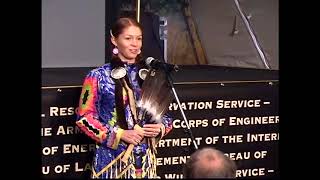
e good afternoon ladies and gentlemen how are you good you're getting better as the day goes on you're becoming more learned Scholars of Lewis and Clark are you not you are indeed and I see you've moved up for this next presenter just as I asked you to do that's great did you find that windscreen microphone no all right if you find that little tiny windscreen I will give you a little loose Clark pin all right good so we' lost little windscreen thing if you see a little spongy thing Beneath Your Feet around here just pick it up and give it to us okay so we are the core of Discovery 2 and uh we are traveling mobile exhibit and we travel the country telling the story of lwis and Clark and of course to do that we have some props we have a junior siiz kebo back there we have a wonderful uh Dugout canoe right over here and uh that is provided by the Bureau of Reclamation with with Steve Morehouse we also have a planes TP exhibit and we have a 35-minute audio tour and we have indigenous games provided by Harry Anderson back there so if you want to girls if you played the games yet please do uh they're right back there you can scream and yell and hacky sack and have lots of fun so those are back there and we also have a free Art Exhibit right over here in building number two and that is uh photos and drawings of interpretation done by the children in the area about Louis and Clark as well here in the Tet Min voices this is where things get exciting because we have a dialog of different speakers and a variety of different people and they come from all over the country we have poets we have Scholars we have uh musicians we have dancers all interpreting their story of Lis and Clark and their perspective and coming up next we have Gloria Wells and she's from the little shell band chipa she's a cultural leader and she's going to tell a story of Buffalo and their perspective let's give a warm welcome to Gloria Wells thank you very much and I whoa that's a little louder than what I had thought am I drowning you guys out okay well first of all I'd like to say welcome to the tent of many voices um I would like to thank you all for um being here and at this presentation and for um participating in such a historic event as this 200-year um I call it a celebration so I I thank you very much for coming and I want you to know that I'm very very very honored to be here as an Indian woman from the state of Montana I would also like to take just a minute to thank the the people who have put together produced the tent of many voices all along the Lewis and Clark Trail these the crew have have worked extremely hard in tearing down the equipment resetting it up tearing it down resetting it up but the thing that impr impressed me the most about what they've done is they've offered us native people an Avenue to voice our stories and that hasn't been heard too much here in Montana so so I I thank them very much for that and hold them in high esteem my name is Gloria Wells and I am a member of the little shell band of Chipawa here in the state of Montana our band of Chipawa people are the most easterly tribe of chipas in the United States our Nations like many came from the Woodland Woodland I hate reading off from this I try to do this and I'm not going to do it I just can't our people came from the Woodland Lakes area the the the Great Lakes Minnesota Wisconsin area as did many of the other nations the Sue Nation um many of them F came out here following the Buffalo herds because as they begin to become less and less and less on the Eastern bench they were pushed over to the western side much like our native people before I start to talk about the Buffalo I want to talk about two other things that are are very near and dear to my heart and the first one is Native American spirituality and and I will tell you about that and tell you how that ties into the use of the Buffalo um as as I go on the second thing I would like to give um honor to are the eight Nations that are here in the state of Montana and I for those of you who who are not aware um of the Indian nations I'd just like to give a a quick rundown of who they are and where they are and um while I don't need a a a a cheat sheet to remember this I I bear with me we have the Flathead Nation that's up in the Missoula area Salish coutney tribe and that would be the Northwestern part of the United States then if you come across along the Canadian borderline you run into the black feet Nation they're right on the Canadian borderline it's black feet in Montana it's black foot in Canada uh of the black feet Nation there are the pigan and the Bloods then you come a little bit more East and you run into the rocky boys reservation which is Chip walk Cree they're around the H box elder area as you go further east you run into um Fort peek and Fort bellnap um one being a grovont and the other being a cabin Sue they're in the Hayes Lodge pole area and then over at the Fort peek Reservoir as you drop Southward you will run into the Crow Nation just about an hour south of Billings Crow um the crow people for the state of Montana they were the first reservation Indians for the state of Montana and their reservation stretched between Livingston and Gardner Montana that was the first Indian reservation in the state then next to the crow the United States government put their favorite friends the Northern Cheyenne who at that time were they were fighting enemies and and we believe now and then that that that was a part of the ploy I think they thought if they just put us all together we would annihilate one another and take care of the whole the whole issue but we didn't do that and then we have my band the little shell band we are the only non-federally recognized tribe of Indians in the state of Montana in 1863 we owned 10 million acres of land that stretch from H Montana to the Minnesota North Dakota borderline I jokingly say when our chiefs were hunting in Lewistown which had not yet been founded um the United States government appointed four trustees Indian agents to oversee our people and to uh to present them with the food and the um uh the housing materials and uh the educational materials that they promised us if we would stay on the reserv um during the course of that um 3 Monon hunting trip the United States government appointed four Native America or non-indian trustees to be our Indian agents at um on at our land base during that time in 1863 the United States government made a treaty with the four Indian agents who were then taken care of the little shell band of chipa people those agents took 10 million Acres of our land and they sold it back to the United States government at 10 cents an acre the going rate was a125 to 425 an acre it's called the 10-cent treaty so if you if you if you have a computer get on the computer and go Google the 10-cent treaty and you'll come up with the the little shell history in 1863 one of Let's see our 10 million acres of land was reduced to 7 square miles 7 square miles of land so that means over 5,500 Indian people were placed on 7 square miles of land one of the Indian agents at that time wrote a letter to the government to the president of the United States and said if you do not send Farming tools seeds herds of cattle you will see our prisons fill with Native people from this band because they will be forced to steal just to survive no truer words were ever spoken when I think about our ancestors and the struggle they must have had to have gone through in hunting in preparing food preparing shelter clothing all summer long just to enable them to survive during the winter my heart grows very very sad the first thing before I go into the Buffalo that I want to talk to you about along with the the tribes is some of the commonalities that we had as Indian nations because each Indian Nation stands alone stands separate a lot of people like to group us together but each individual nation has their own Traditions has their own way of spirituality has their own cultures that were passed down thousands and thousands of years there's one common theme two actually that that that that I want to talk about today that are the very basis and the core of of our of our peoples the first thing that I would like to touch base on today is our traditional spirituality and I will show you how that ties into the buffalo in a short period of time one of the things that all the tribes that I have just described to you had in common was their traditional spirituality their traditional pipe carrying ceremonies their Sundance ceremonies the sweat lodge ceremonies those were carried on well after the reservation era a lot of the native people took the spiritual ceremonies like to call underground they had to hide them from the United States government because the government had come through and outlawed every one of them um while this is kind of a sobering uh sobering story and it is it's it's a tragedy however we were still able to through um through tenacious spirit and through the gift of Grandfather the spirit he gave us the will and the strength to keep those ceremonies going I I have a quick funny story that I want to interject because I want to bring a little bit of light and laughter to this but yet still tell the story um one of the ceremonies that we had traditionally and that most tribes had was called the keeping of the Soul ceremony and that means when an individual passed away their belongings all of their belongings were taken and they were put into a bundle um a hide whether it be an elk hide moose hide Buffalo hide their belongings were put into a bundle and they were rolled up and they were set on a tripod that faced East just three Lodge poles outside the camp outside the lodge of the individual whose family he belonged to the three tripods came out the bundle was placed on those tripods and for one year that bundle remained there it was kept there for our nation at the end of that year we had what you call it this the ceremony was called the keeping of the Soul ceremony and you had had one year to keep that Soul so to speak you could cry over that Soul you could weep you could grieve you cut your hair you went through the whole grieving process but at the end of that year you had to quit grieving so that individual who had passed could go on to the other side that that was it could not continue to cry for that individual you had to quit your grieving process and move on what a wonderful psychother y we had going on back then all right this is it this the end of the year you've got to quit now and you've got to move on what a wonderful way to handle death so when the United States government outlawed the keeping of the Soul ceremony have have any of you seen The Far Side uh cartoons Victor I I just think he could do such a wonderful job with that bringing an enforcement agent into the reservations saying all right I know you have some Souls around here don't try to hide them from me I know you have them and it's against the law but you can imagine how how silly it was how could they monitor something like that how could they you know so you kind of have to bring my opinion is that you have to bring light to some of that because we still kept our ceremonies we kept them ongoing and at the end of the year whether whether there was a an enforcement agent there or not we did release the soul Spirit to go to the other side our pipe ceremonies our Sundance ceremonies our sweat lodge ceremonies each and every one of them have been kept and continued on and I feel very blessed that we have that when I travel back East to the tribes in the Eastern from New York all the way down to Florida I go and I visit the reservation there and I speak to the people about their traditional ceremonies their traditional culture and I've asked I remember one band specifically the Chaka from down in Philadelphia Mississippi I I asked Chief Philip Martin I'd like to see some of your traditional regalia and much to my dismay they brought out cotton dresses with kind of can cans underneath and then I really realized just how blessed we are out here to still be living in TS to still be doing our ceremonies our dances and I just hope and pray that if you get one opportunity this year to go to a powow or go and meet native people learn a little bit about their culture just that one specific thing they don't have that back East any longer we're blessed because from the PLS on we've kept those ongo so with that in mind I I have to say that the Northern Plains and the pblos down south and the West Coast native people to me are farther advanced than the eastern coast native people who've lost the very core of of of what they're about our spirituality has been the Saving Grace for our people and it remains so today we know that whenever there are issues or problems through the pipe ceremony if those problems are taken to the pipe then answers will come very soon they'll come directly from Grandfather we believe there's only one God and we all we all have that in common there is one book that I would like you to at least take a minute to look at it's called Black Elk speaks Black Elk was a lotas sue Chief medicine man who knew absolutely no English but if you read his book he had to have an interpreter to put this book together if you read his book Black Elk speaks and you read Revelations from the Bible you will be amazed at how much our native spirituality coincides with the Bible now having read both and having grown from that and have having the light come on for me and saying look this is how we're alike Black Elk talks about four directions north south east and west and four colors red white black and yellow isn't that strange that this Indian man knew not one bit of English yet knew about the the four colors of the people of the world just like the Bible revelations talks about the four horsemen coming from four directions and the horses were red white black and yellow so one of my goals along the way is to try to help to educate myself as much as I can about the encounters that Lewis and Clark had but I also want to educate at others about what we're doing right here right now today and and spirituality to me is the main gift that we've been given from God from Grandfather that's the number one gift so if I can share a little bit of my spirituality with you then I will have I will be able to consider myself a great success even if I don't get all to the Buffalo I can still consider that a great success my prayer goes something like this we use four different pieces of of plant life to burn to prey with we use sweet grass Sage Cedar and tobacco and our beliefs are that as we light that Sage or sweet grass that our prayers our words land on the smoke and and our prayers are carried Skyward to grandfather we call that process smudging many of the churches that are alive and running today use incense in the same manner that that we do so again look for the likenesses um with the spiritual ceremonies that we have passed on over the course of the years the Buffalo was the main animal mammal used in in the ceremonies the eagle was also held high very high in a steam but the Buffalo was our main main source of subsistence pre-columbia days many authors have quoted between 60 and 100 million Buffalo Roam this country by 1990 there were documented 750 Buffalo left some of them a large portion of them were at the Bronx Zoo I have a couple of uh pictures here that I uh want to hand out so that you um or just pass around so that you get an idea of exactly what transpired because it is so and I'll and I will pass these around through the through the audience and as I'm speaking just go you can continue to um pass them on it's a small picture I wish I would have blown it up so you could have gotten a better idea but this is this is Two Gentlemen Standing On Top of thousands and thousands and thousands of Buffalo skulls that were taken for the most part just for their tongues um at the same time period when when the Buffalo were being shot off the railroad cars over the many numerous wagons that came and and and only the hides and the were taken much of the meat was just left this was the same time period when our Indian people were being put on reservations so with that in mind I'll just start over here and pass this picture around I think you'll be amazed the Buffalo had for us many many uses too numerous for me to be able to uh um list them all off the top of my head so I did bring a little list here or at least I think I did of course we use the robes for clothing for winter count it was a way for us to uh write down our traditional history we use the the Hooves and the sizing the scraping from the hides for a glue that's what we mixed our paints with the list goes on and on and I'd like to to to read some of this off to you because you just won't believe how every part was used we've kind of put this in a somewhat of a chronological order for the hides of course it was used for The Lodges um paint bags pouches pipe bags dresses belts Lance covers leggings shirts breach cloth bedding winter robes cradles moccasin tops dolls C flag covers Quivers teepe covers gun cases the hair the hair of the Buffalo and and I'll pass this around because I want you to see the different the hair mhm this is actually one side of a face of a buffalo short hair this is down around the shap of the leg on the top of the leg mhm the Buffalo hair was used for headdresses saddle pad filler pillows rope ornament in other words as you made a shirt you would hang Buffalo hair locks off from your your shirt halters they the the Buffalo hair was braided to make a complete Buffalo hair halter and and and Medicine bags the tail the tail it's the Buffalo tail it was used as a medicine uh switch I got a kick out of this one a fly brush I don't know thought that fly brush Lodge exterior decorations the old Buffalo hide tepes the Tails were left on so as the tepes were rounded around the top the Tails were left on it was such a beautiful site you'd start with one Lodge here the tail and then come around with three lodges in the Tails and and I was so blessed because I I've brain tanned many many Buffalo but I I I got to see on this core of Discovery in Great Falls one gentleman from the black feet Nation had the traditional Buffalo hide Lodge with all the taals on it and it was simply gorgeous it was just beautiful in the front of the lodge where the door came the two taals came and tied together it was just it was just a wonderful beautiful beautiful Lodge the hooves like I've told you um and I wanted I brought a couple different sizes because I wanted you to see just just the size of their foot deer hoof Buffalo huge aren't they and you know what if there are questions along the way just just raise your hand if you have questions because I'll go ahead I understand the word cover repat your question C flag CP okay traditionally an a Native American an Indian traditionally found more strength and prestige in his tribe if he counted coup on okay well much like our drum uh covers would have been or our par flesh would have been used as a suitcase it would have been like a suitcase covering or that would have been actually on the stick when when I think of a coup flag cover I think of those folding chairs that fit in a sack about this bigger around about this same difference it would have just been acoustic cover that would have covered the whole thing also most of our most of our ceremonial things um were kept wrapped up in bundles and those bundles were only opened once once a year to either add to or and there was a huge ceremony it was the bundle Opening Ceremonies so exactly that was it that's exactly it good good good so you how long were you at Great Falls did you go good good yeah were they were you able to see anything down on the where they had the perau did you go down with the core good that Buffalo High Tepe was there yes yes it was that beautiful when you when we talk about this Buffalo High Lodge I I cannot express to you how extremely difficult it is to brain tan Buffalo hides let me tell you a little bit about about brain tanning just touch lightly on it how are we doing for time 15 minutes okay I'll hurry uh brain tanning process every animal has enough brains to tanny's own hide every hide is white it's not this color this is a dyed commercial hide hide every hide is white about this color I brought two pieces of brain tan this is brain tan deer I wanted you to be able to feel the softness and feel what this is like the brains of the animal are used mixed up a buffalo horn used with oneir um of the horn being Buffalo fat poured in with the brains that conglomeration was mixed together after the Buffalo hide was rawh hided which is what this form is the hair has been taken off and it's been fleshed you then take the brains and you rub it into this Raw Hide and I'll and to feel just how thick and how heavy well and you can see what the Buffalo hide did when I made this drum and I didn't give the tension all the way around the full the full the same uh amount of uh pressure it just took this Frame and warped it this is what we use the shields the the part of the back that we use the shields this hide was so thick it would uh deflect the arrows so I I wanted you to see this now the brains are rubbed into the Raw Hide like that and then left for a couple of days and then they are they are rubbed over a tree or anything sharp that would kind of give it a a little Edge or a little Edge that you could rub it across and soften it with that process is unbelievably hard 5 years ago south of Livingston I put together a buffalo TP encampment and and I thought I was going to do things the old way so I brought my trusty scrapers and I brought my um Buffalo leg bone scrapers and after the third day I said bring on the metal this is not working I can't get this done it was extremely hard the Buffalo hides are so heavy when they're wet that it's very very difficult to pick them up most of them were cut down the middle and this was all women's work then a beaded strip was added down the middle so the two halves could be sewn together whether that was hair on or hair off let me pass around a couple of things here this little soft one being deer hide brain tan deer hide this one being brain tan Buffalo hides this the smoke that you smell on this it was smoked to waterproof it we didn't smoke things for color we smoked them to waterproof it so as you as you pass this around I'm sure you'll be able to smell the Smoky smell of it dear Buffalo and then of course I'll pass around a couple of these tools that that we used to to work on these sides with and I I'll never do it again but at least you will have gotten an idea of of what we um what we used to to do this process I also wanted to pass around a couple of these Hammerheads because I wanted you to see the difference in this would have been a head smashed in hammerhead very heavy that means they would have actually used this just to Corral the Buffalo and then and smash their heads with these this would have been used as a war club but I wanted you to feel the difference in how hard that would have been too very heavy oh my good isn't that something to to pick that up okay now let me finish off the horns the horns were used for cups fire carriers powder horns spoons ladles headdresses signals and toys the meat I have a problem with this one every part was eaten and I do have a little cartoon From The Far Side where this one little Indian is walking in front of four others and he said I'm not sure what this is but I think it's the only part we didn't eat but there was not a part we didn't eat or utilize so every part was used um the skin of the hind leg that was used for the most part which would been something like this for the leggings that Go Wrap around the individual's leg the rawh hide in the drum form everything containers clothing headdress food medicine bags Shields buckets moccasin soles rattles drums drumsticks splints cinches ropes belts bullet pouches Saddles horse masks Lance cases armbands quarts bull boats knife cases stups thongs and horse ornaments that Raw Hide was so important to us um if you didn't get to go to the Great Falls uh show I am so sad that you didn't I hope that you'll be able to come out to Three Forks and and meet with the core of Discovery a couple of those members are actually um ancestors of the real Shannon that was playing Josh and the real Clark that was playing so if you if you can possibly get a chance to get out there and uh meet them I would love that they had quite a Time stretching that Buffalo hide over that iron cage that they brought up from uh St Louis in trying to make a buffalo bull boat it sank we still haven't figured out where that was and that was part of the iron um any questions are there any questions if you have a question just raise your hand I'll come to you I think you have a question did you not ma'am when when you said about the um The Rock was that carried all the time as as the tribes uh trial or were they left or I have to say that as far as as as many arrow heads and hammerheads as we have found out in the Missouri River breakes area they they I don't think they left them behind on purpose and because I cannot imagine working so hard to nap an arrowhead or or fashioning a hammerhead such as these and then leaving them behind I think they were you I think that they were lost in battle or lost in in in utilizing them for the buffalo hunt or for the deer hunt or elk or whatever it was but I don't think that they left them behind we did however leave a prayer behind for every animal that was taken there was always tobacco or sweet grass or Cedar Sage something left behind back to the Earth to give thanks for for the Buffalo so as far as the tools go I wouldn't think that they they would have wanted to left leave those behind there's another question over here do you know anything about the panop Scott Indians from Maine I do wonderful I do are you a panop Scot no my husband is a descended from them and we're curious about that tribe well I have to tell you I I I have been traveling back to the east coast and in doing so they have an organization called United South and East tribes and what they they are second in line to the National Congress of the American Indian they are a group of the most economic developed nations in in the United States um they come from Maine I have a friend who is a um he is the University of Maine Native American studies Professor I can give you his name after this and your husband can get in contact with John be Mitchell and learn all about your people good for you absolutely absolutely I I I would encourage everyone I don't care what nationality you are go back and do that Alex Haley thing find your RS find out exactly what you're about where you come from and and what your culture is about question over here um do you know about the North Carolina Cherokee a some there are many nations of Cherokees yes there are yes I'm I'm about an eighth North Carolina Cherokee and my father uh was a forehand Cherokee name I don't have enough in me to really you know claim a lot but it's I I just love this because I see people in the crowd who in in Montana I grew up here and so I just love it that you are honoring your native side because for so many years our our families were told not to tell you know I don't see how you could not tell I'm not an Indian I I don't think I could get away with it but but many of our people were told to keep quiet about it claim Italian claim anything else other than Native American spirituality so I I it just makes my heart sing to see um the people wanting to to get back to where they're from good for you find out about it I'm originally from Oklahoma but I know of some yuchi the yuchi tribe there but I don't know where they originated do you I have you heard of them I don't but I bet I can put you in touch with the p patami Nation there and M root Nikki is the tribal chairwoman and she will help you in any way shape or form that she can she can to help you find your your people good for you good got a question over here I was going to ask you about the pamies um I believe that was my where my grandmother came from and you mentioned people keeping quiet her mother had died and she was the oldest of seven children so she was helping her father who was a white man raise these children and when I would later in years when I would ask her about this Indian ancestry she'd say sh that's exactly it she was afraid at that time when her mother died that they would be put on reservations or split up the family do you know about the pamies I do and also you mentioned something at Three Forks will you tell us the date on that um Three Forks the core of Discovery will be set up at Three Forks help me on this one I think for the next 3 days then pardon me they're coming back though so they've already set up there went back to the gates towns and and then they'll be back toward the end of the week there will be a person an individual here with a schedule that that can tell you but I know we'll be back over there I think they're going to be back at Three Forks tomorrow afternoon at the Headwater we can find out can't we we have a we may have a schedule I don't know how detailed it is the front desk but it may not be up to the moment um they may have a website too right and you can go on there and find out exactly where they're at yes can you speak your native language I cannot that is one of the many things that we lost when our tribe was taken away however um Henry Anderson who's over here at the traditional games he can speak our native language and we have been able to preserve that as well as the other Seven Nations in the in the state here thank goodness we're very blessed yes you mentioned the PAB Scot how about the nipmuck out of Massachusetts I haven't heard of that but again I can put you I can put anyone in touch with any of the tribes back East through United South and Eastern tribes their their huge conference people they know those tribes back East they know them very well it was it was a little difficult for me to go back there because because there were so many nations that I hadn't heard of to think there's 575 federally recognized Indian nations right here in the United States there has been 280 that have been completely annihilated and there's 270 that are waiting to regain their Federal recognition those are approxim why were the little shell people denied recognition well um there were so many issues behind that uh first of all that you know the horrible thing about that when that 10-cent treaty happened with our people that money Gail Norton still has that money in her bank account that was in 1863 in 19 1964 it's it drew for a 100 years 101 years it drew 0% interest zero in 1964 our money began to draw 4% interest when the going rate was like 11 or 12% and why did let's see why aren't we getting recognized they wanted us to prove that we were an entity inside of a community and so we when the Anthropologist came up to help us with our re Federal recognition she was from Cal State um Long Beach she came up we went to L we traveled to Lewistown to but to Great Falls Hill 57 we traveled to uh H 25 of our family heads got to join the rocky boy that's how it became chipa Cree as opposed to just cre for the rocky boys we had to show we had to we had to gather all of this material and prove to them that even though we were out here living in the non-indian community that we were still a community within ourselves so that meant going back for school records and on and I think the funniest thing I found was um the 1902 marah County census because Mar County at that time it wasn't Fergus County it was Mar County so they came up with a 1902 um Mar County census and and this just I was so pleased to find this but I I found such humor in it again the United States Government Federal Government wanted us to prove that we were an entity within in an entity and when we found the 1902 Half Breed census I went yes that means they didn't even count us but now I finally figured out where that one little two little three little Indian thing came from I have that one down pat now excuse me we're having to go and it was those kinds of documents we had a half breed School in ltown that just Indians went to we you know we had to come we had to go back through all these historical records and come up with all this information and resubmit it to our uh to um um the department of interior for a federal recognition I think we're going to get it I do I I know the tribes back East are pulling for us very very much I I I have some issues regarding some of the management of our Native American Funds through the department of interior and and and our own management much like I have issues with what our president is doing with our funds it's just on a bigger level with him I do I I don't ever want to create and we've been one of the legislators from the area that I live in was quoted as saying we don't want to give those Indians their Federal recognition because if we do they will just create another ghetto likee atmosphere and a Welfare Society well I own a few houses in this state and I don't think that um I will would ever move to a piece of land that the United States government gave me back for land that they had taken you know a 100 years ago 150 years ago I I would never personally do that I would like to see a land base happen for us for one purpose well actually two culture and education those two things culture culture and education how many there's over 5,000 of us enrolled and another 4,000 waiting to be enrolled so we're there there are lot of us maybe really don't have time it's almost 10 to so um there but let's give a wonderful thank you more questions for Gloria I'm sure you could answer a few in the back over there after you yeah good all right and uh basically we have more speakers coming up uh from NASA and he's going to be uh stuff with satellites and uh GPS findings kind of like going along the locen Clark Trail but doing it through satellite so it's really wonderful stuff it's kind of fascinating 4:00 and we'll up until 8 o'clock so other exhibits in the area