Tent of Many Voices: M08130501TMB
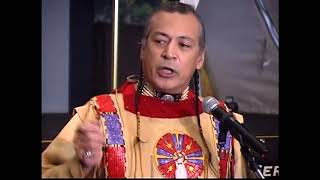
well good morning everyone and welcome to the tent of many voices the tent of many voices is part of the core of Discovery 2 traveling Lewis and Clark exhibit this is a multi- agency Federal exhibit with the National Park Service being the lead agency and what we do is we travel around the country primarily on the Lewis and Clark Trail and as we set up in these different communities we have this tenin voices where we can bring in a wide variety of presenters to share with us these different voices these different perspectives both on the Lewis and Clark expedition its Legacy but we also like to hear from the descendants of those indigenous Nations those American Indian peoples that have been living had been living where Louis and Clark traveled for thousands of years and that's what we're going to do this morning to start off we're going to hear from Ron snake edmo Ron is a member of the sh shony banic tribe he is a uh veteran of the US Military and a warrior in the traditional sense he is a published author a poet he's also a linguistic Anthropologist and he's going to talk share with us some of the language and culture of the shishoni banak people so let's give him a warm welcome here to the T mini voices thank you n DOA for Hall Knight I am a called snake I'm from Fort Hall that's my introduction my language uh first off I would like to welcome you to uh this tent of many voices this tent is located in what we call Nua soia Nua means the people that's what the Shian people call ourselves is the newer but other people call Shon and bionic and all that that stuff but our term for us is Nua soia means the mother earth Soo is the word for the land B is our word for mother and in our traditional ways we believe that the Earth is our mother we're the same color we come from the earth we've been here forever archaeologists have gone down to the 8,000 foot 8 8,000 year level in their digs and it's been been straight As shonan for that whole time there so we've been here for a long time when I was a child I was adopted out and lived away from my people for quite a few years when I was in my 40s I came back to my people and when I came back into our homeland I felt the spirits of my ancestors now uh we've lived our homeland our traditional homelands this is just one small portion of it our homeland stretched from from the Sierra Nevadas to the Black Hills from Canada to Mexico we have the largest homeland of any uh Indian peoples in this country but as you know now we only possess a small portion just a little drop of our homelands and that's uh one of the things I'll be talking about so anyway welcome to New hogia now I an anthropologist in other words I study cultures of different people I'm a ling istic Anthropologist so I studied languages how languages work what the meaning is and especially the part I work on is language preservation a people lose a portion of their culture if they lose their language now unfortunately English is the common language that all indigenous peoples in North America speak now some of us speak our own language but that's not very many and that's a problem because as our elders die they're the last fluent speakers of our language when they die that knowledge is gone but we can only uh we can only express certain things in our language that can't be translated adequately into another language because we translate not just the language but also the culture for example one of my poems is called on beichi beep in shishoni and that me that tells the whole story just the title of the poem itself and what it means is English translation of that title is stranger arrives when I write I always called the American stranger with capital S like John Wayne and his Pilgrim so that's if you see my writings when I talk about stranger I'm talking about the American so andab beichi wo is a combination of two words a coined word it's on the beach means people of another tribe and wo is enemy and until things change that's how I have to describe the American but the second word bedp is a verb and our verbs are very active compared to English verbs and so Bida is the actual verb itself the p is the suffix but that what that p means is uh the Strang came the L and Clark expedition came into our homeland with just a few people but now that small group of people has grown into a large population so now we're outnumbered by the visitors to our country so that's I tell the whole story just with the title but in English of course I have to tell the story because there's nothing there's no equivalent in English of telling a whole story just one or two words which is unfortunate but English itself is a very complex language because has so many other languages that are a part of it that have been adopted or borrowed so it's it's you know even English itself is a complex language okay but what what is main thing is this this idea that we can only say certain things like with a couple words in our language or Express a whole concept but when we try to translate that word into English we have to tell the whole concept behind the whole culture behind it because like when I talk about soia to me she the Earth she's my mother and when I die I'll return back to her I'm of her I'm the same color as our mother and but when uh I but when I talk to people of different culture they don't have that same concept now that concept is kind of coming into the American Viewpoint because of the environmental movement and the environmental movement is finally starting to get the message that we have to protect our mother we have to protect the Earth we have to protect the water that we drink we have to protect the air that we breathe and the closer you get to cities you're going to find you can't breathe the air because it's so polluted uh you can't drink the water in law places because it's polluted with chemicals or other things so you know this is a concern for our people because we're kind of stewards of the land because we've been here for thousands and thousands of years but our visitors that come into our lands it's a concern for them too because they have to breathe the same air that we breathe they have to drink the same water we drink so you know you don't want to poison your own self that's essentially what that message is so the visitors that come into our land if they understand who we are are tied to the land then they can appreciate better what they're seeing and like when you buy a piece of property you have a responsibility to protect that land you can't just pollute that land you know there's a responsibility because you're only here for a short time and then you're going to walk on to the next World and then somebody else is going to have that piece of property and it would just go in perpetuity but if you poison that land or you destroy that land then pretty soon it's just Wasteland it's not good for anything not even a plants will grow on it in some areas so this is things that we ask that everybody else that comes into our country to respect our land because we'll be here we're survivors and we'll be here long after the American goes uh I don't know what will happen that causes you go but it probably won't be very good uh and since we live you live amongst us we'll also be affected by that too so you know even though people pray we some of our people pray that you all disappear uh what would make you disappear will also probably make us disappear so you know it's a a two-edged sword so to speak now another thing about culture uh the American government has tried to destroy our cultures over the years and even still going on today uh in my lifetime I was born 1945 in my lifetime I saw termination and relocation termination and relocation was a policy set forth in the eyes and how years and what that entailed was to remove all the Indians from the reservations move us to the cities and then take the land to give away to the non-indian people why they would want to take our lands from us what we got left is beyond me cuz they have everything else and another thing that was involved was taking our children from us from our people without benefit of law uh you could go in and just say I want that kid as a souvenir and take that kid that's what happened to me I was taken by missionaries also uh we weren't allowed to speak our languages in schools it resulted in severe beatings but we learned English and through the through the whip through that yard stick that those teachers used to have so this is so now for me it's difficult for me to speak my language because I as an adopti I wasn't around my people so I didn't hear our language after I was 8 years old now today my hearing isn't very well from being in war you know those artillery rounds and stuff like that they kind of ruin your hearing so to speak so now I can't hear all the sounds when I'm trying to learn my language so I write my language better than I speak it or hear it because I can only speak what I can hear so I will never be fluent speaker because of that which is sad because I can't pass on a lot of knowledge to my children and my grandchild so that means the elders today the 70 and 80 and 90 and 100 year olds that are still fluent speakers uh I if they talk to me I can't understand what they're saying because I I only have one good ear so that knowledge is lost when they die as linguistic Anthropologist one of the things that we're doing we have a Shon language program at Idaho State University and we're we developed a writing system we call as anthropologists and linguists call writing system orthographies know that's a technical term but anyway we created an orthography that's user friendly that can be used on a computer or if anybody still has them typewriters it was originally developed for typewriters but Technologies rendered those uh obsolete I've seen one typewriter in the last 10 years anyway uh our languages have never been written before so as a linguist we have to understand the rules of the language in other words we have to know what verbs know identify the verbs how they work identify the nouns identify the adverbs and adjectives and all that other stuff and then figure out how the sentences are structured and that is a the English and Shoni sentence structure is completely different English you have the subject your verb followed by the object that the verb is acts upon once sh sh we start out with the subject but then we have the verb I mean sorry we have the object and then we have the verb but the verb our verbs have a lot of prefixes and suffixes so you just we rarely use just the root verb itself but we modify that with uh uh the ad the uh prefixes and suffixes for example uh when we uh here is something or there is something uh we have different we have six different words that we use depending on the location of that object from the speaker it's always from the speaker's point of view in other words can touch something one uh word if it's close enough but not close enough to touch then I'd use a different verb or different word location word like in In Crowd here throw there a different word then as far as I can see when I sorry they can't hear you you're covering up the transmitter here hold it up a can you can you hear me okay let me move this here not used to this new Fango stuff so anyway we have that distance uh verb or distance word that describes the location from the speaker's position but in English there's no you can't tell where an object is located when you speak about it like I could say I'd have to say like okay on such and such a corner and salmon to give you a location but I don't know my way around salon so I can't give an example what's where so anyway that that's a a that makes translation difficult so we have to when we translate from shason into English we have to try to convey some of that distance that we're talking about another word is to go somewhere well our word for go depends on the manner in which you go uh like if you go like I'm from Fort Hall right now that's where my home is so I came here to Salmon but then I would return back to Fort Hall so I'd use one word for that to for go and so I like if I'm telling some I'm going to go uh somewhere but when I use that that verb to go they'll know that I'm going to come back in a short time I'm just going to go do my business come right back but if I'm going to come here and then go to Missoula then build or somewhere else and then Yellowstone and then finally come back home then I'd use a different verb for that and you could tell just by that but again when I translate into English I'd have to say well I'm going to go to Sam and then to be and mulu whatever it was and finally back home again in about a month or whatever so that's you know that's what makes translation difficult along with the sentence structure itself we also have as far as person uh in English you have a singular and you have plural plural is two or more well in Shon languages we have three uh persons you have the singular then you have dual which is two and that comes inclusive and exclusive if it's exclusive then say for example I use the Dual form and it's exclusive then be just you two but not me but if I use the inclusive form then be you and me but he would be excluded then we have plural which is three or more and again you have that uh uh inclusive and exclusive and the inclusive means the speaker itself him or herself so again that that shows you the difference in our languages and so that again that has to be translated you know are we talking two people are we talking 20 people we have have to or three or more people we have to specify that in our translations then again certain things like soia our concept of our of the earth we have to explain the whole concept the whole cultural concept to people that don't have that same uh Concept in their worldview in other words we have to translate worldview into a different worldview now if you're a shy person that's lived in the Shon land on the reservations your whole life and you've had very little contact outside of that then it'd be more difficult because in order to be a successful translator you have to translate into another culture but you have to understand that culture to do it so for me I thought it was unfortunate I was adopted but then it turned to be a positive thing because I understand the other culture Plus in my milit I was a Green Beret so I work with indigenous peoples throughout the world and so this learning a new culture uh was a benefit to me when I went to different different countries because working with indigenous people one of the things you have to do is do a cultural study before you go in so you know who they are what their uh belief system is what the uh government in their world is what their system is is there a conflict are we going to overthrow that government are we going to strengthen that government of course you know our government makes that decision but when we go in we do what the our government wants us to do but if you have people go in and they don't have any idea about culture how important culture is then they might blow the whole mission and unfortunately the United States tends to do that quite a bit uh let's see now also when I write in my language uh I can transform this is something I've been experimenting with in my Poes making Transformations from an Ordinary World to the spiritual world now in our traditional ways the spiritual world is just as valid as this physical world that we have here like we see some of us can see the spirits and hear them others they're completely blind and deaf to that but I'm I don't know if I'm fortunate or if I'm cursed but I I see things sometimes I hear things and things come to me so in that way uh some stuff I try to I can try to explain in my writing but others I just can't do it because there's no corresponding Concept in the American world but again so uh we live in two cultures you know we live with within our culture which is struggling but we're also living within your culture but again even though like we have a town called Pocatello next to us but a lot of our people if they do go in town they just go in shop or unfortunately some go to drink but that's the only contact they have with that culture out there but the people that live in poel 50,000 probably 90% of them have never been to the reservation so they don't really know who we are either which makes it difficult because that causes problems because since we don't know them and they don't know us when we talk about a subject we might be thinking we're talking about the same subject but we're not so again uh we have to learn to talk with your culture and you have to learn to talk with ours to get good Communications and without communication you're going to have hard hardship you're going to have heartburn and everything else okay and what we're doing right now in this location is there's the Lewis and Clark expedition came through in the early 1800s and as they came through they met different Indian peoples and they went to find the Pacific Ocean find a way to there that was just the first of many non-natives to come into our country and there's a legacy a result of that our the Legacy could have been different but unfortunately it wasn't it was a more Legacy of Conquest so the Americans came in they took our lands they well basically what they happened they'd be on the Oregon Trail or California Trail and some just got tired and end up setting foot where setting up where they got tired at and then Town started growing then all these people like Fort Hall uh we have 50,000 people come through there in one year and when you think about that that is a big problem because when you have 50,000 people coming through on a On A TRU somewhere they have to eat so the early ones they find game right alongside the roads or the trails but the next group of people that come through they have to go a little bit further away and then pretty soon they have to go miles and miles and pretty soon there might not be anything for them to eat so a lot of these wagon trains the later ones they had lost starvation because there's nothing to eat and like we were nomad so like we'd come to Fort Hall for the winter time and the lamh high people they'd be up here in the winter time because the rivers don't freeze so you have water year round and the temperatures are pretty mild here compared to other places around here so we would winter here but then in the summer we'd be elsewhere we'd be out looking for sammon we'd be out hunting we'd be gathering berries C root and everything else that we need to survive the following winter or we be over chasing the Buffalo but when we come back all a sudden there's a town here now what do we do we're dispossessed without even knowing it so then we have to find somewhere else to live because if we try to stay here there'll be conflict because we're all competing for the same resource but where we used to Camp there's a town so where we go and so that's part of the aftermath of the leou Expedition the second aftermath is there is a we faced almost a century and a half of genocide and uh ethnic cleansing and part of was unintentional ethnic cleansing because like what just the example I gave you when we come back here uh there's somebody else here and they are staying year round so we're no longer here we have to go somewhere else or will be killed off because you know numbers count so that was the Legacy and then of course then the government wanted to assimilate us turn us into non-indians and so they took all of our young people and sent them to these boarding schools something like in the first 10 years of boarding school something like 20,000 kids died of disease and homesickness CU as soon as the kid went into a boarding school their hair was shaved off all the uh tradition additional clothing were taken away they were put in the uniforms and uh were forced to speak English males were forced to uh become uh laborers uh they try to teach them to farm uh the females were basically made into house servants but if if a a kid had a lot of intelligence unfortunately that intelligence was wasted because they were forced into menial roles so that the cultural uh genocide that was going on and unfortunately the boarding school system just ended in the last 20 years there's young people today uh your age and younger probably that went to the boarding schools of course the brutality ended in the 80s or in the uh 70s in the 60s the brutality was still there God keep remembering about this and tan here so anyway that's part of the Legacy but we are survivors too we have survived that uh and our population has risen since the 1920s 1920s was a bad time for us uh but that was good for anthropology because uh at that time uh the main idea was to Sage all the knowledge of the indigenous peoples because they was truly thought that we would become extinct because we're at our lowest population uh tuberculosis is rampant uh people were starving to death because there was no food and of course right after the 20s came the the Great Depression and of course everybody suffered then not just Indian people but everybody and then you had another Mass migration with the the Dust Bowl occurring at the same time so you know there's been a uh there's been major Dynamics have occurred in our continent over the last uh few hundred years major uh pop relation shifts major uh land shifts and everything so and it's still going on uh you probably all read about all these Californians comeing here to Idaho want to change things around to their way well if you go to California people as far as you can see if you go to the east coast it's the same way it's only in between that's relatively empty but they're filling up fast but where are they going to all go and they can't big bu build big cities everywhere in the desert cuz there no water but again people are starting to learn well you you know you going have to start recycling the water because there's only so much water available especially during a drought like we've had a seven-year drought here this is the wetest year we've had in seven years but we haven't had any rain oh couple months now is this going to produce anything well for me I hope not because I have to ride my motorcycle through it but but we need that rain we need the water we we need everything cuzz I if I just read in the paper this morning the reservoirs are almost some of them are only a third full now and we've got a winter ahead before those things start filling up again so what's going to happen you know are we going to run out of water again we don't know so anyway you know our lives and your lives are all interconnected what about the future well I would like to to see the environmental movement become more educated about the world that they live in because some of them are really radical and they don't really understand what they're doing you know putting a spike in a tree to stop somebody from cutting it down is nonproductive uh poisoning animals so there's no research that's nonproductive you're supposed to be trying to save the animals but yet you poison them or you put them let them out of their cages well these animals can't live on their own because they've never known Freedom so you let a a a rat out of its cage well what's going to happen is going to get eaten up by the first Predator that sees it so you know that's some things you have to think what about uh things that you know what happens if the animal that you release if you're one of these Peta people what if this animal is released has a communicable disease you might start a major pandemic so again you know the environmental movement has some crazes in that but those crazy es need to be policed by the environmental movement the environmental movement overall though is a good thing because government tends to be like a bulldozer they want to remove one tree but they destroy the whole Forest to remove one tree so and of course what happens when you do that you've destroyed everything that lives within that forest or is affected by it you uh pollute the water because the land that's water that's absorbed abbed in the ground now runs off and pollutes the rivers and eventually we have to drink that water so you know it's important to have an movement what else do I see for the future I see the American people starting to think more like we do in other words being part of the world not being separate I see hopefully more tolerance of people other than yourselves I see hopefully the end to Wars unnecessary Wars some Wars are necessary to protect other people to stop an aggressor those are necessary Wars but like this current war that we're in I think is totally unnecessary and I I've been to war I've killed people I've had I have people's blood on my hands I have those nightmares those Ghosts of War will be with me rest my life and the people that decide to go to war should have that same experience because these are our children that we're sending off to war now our grandchildren by people have never seen combat so it's easy if you've never seen combat to say hey let's go to war it's big and glorious and you know we'll project our power to some helpless people somewhere else well right now there's close to 2,000 dead and I think I saw in paper something like 13 to 15,000 wounded but the UN the un uh counted wounds of that war are the ghosts that these soldiers male and female have to see their friends Blown Away the enemy Blown Away innocent people blown away and is there any real need for that war uh right now we're kind of stuck in it but it should have never happened so I would you know that's what you know my vision My Hope in F the future is that our Future Leaders will think many many times before they react with military force and of course as Native Americans it's our Legacy to go to war no we're warriors and a warrior doesn't Sher his duty his or her Duty and so even though we don't agree with the war we go because that's what we have to do to be to live with ourselves but then one thing that happens with our peoples is when we come back we go through healing ceremonies which helps considerably I went almost 10 years before I got my healing but I still have the nightmares I still see those ghosts I will till the day I die but anyway I would like to uh conclude by welcoming you here and then also a question and answer period and how do we stand on time you got about 15 minutes so we have plenty of time for questions if you folks do have some questions uh please raise your hand I bring the microphone around that way everybody can share in the question we can hear them does anyone have any questions for Ron okay we'll start right up here first of all it saddens me for the loss of the language and of course with the language is the associated culture um what is happening as far as are they recording or how are the elders and their language being archived and that well with language pre with language preservation uh it's kind of been hdden miss years and one of the first things you do is you try to get a hold of the elders and tape as much as you can even videotape them and of course with new technology and stuff it's getting easier and easier to collect information but the major problem there is uh in the 60s and 70s was termo turmoil for the whole country with that war and the uh hippie movement all that but the generation of anthropologists that are the teachers today or the old the oldtimers they were of the school where they'd come into the reservation and go right in people's houses and and do their studies and they're pretty arrogant as a result of that our elders today that were young people like my age back then they don't want to talk to anthropologists and Native Americans going into anthropology there's only a handful of us that are anthropologists and we will become the new anthropology new anthropologists know cuz who better study our people than us to explain our our cultures To The World At Large so but as but as we go in like if we we have elders and we know we need to record their stories we need to record the language and everything but some of them don't even want to talk to us because of the abuses that occurred in the 60s and 70s so that's the you know but that's the first step is to collect that information the second step is to uh start teaching the language and all the different Indian nations have have these language preservation programs they teach but only the little ones the people my generation and my children you know who are in their 30s they don't speak the language and we need to do it across all all age ranges not just that uh small you know the little ones and we only do it for a certain amount but see we're write starting to write our languages but we have to write in our language and we have to have more than one or two people writing because if you teach people how to read and write but you have nothing to read and write you're wasting your time and that's the next step in language preservation is to develop literature in the language and that's what I work on okay any more questions all right another question I'll come around with the microphone do you know why the spelling of limh high changed from Li to l over the years that I don't know in fact it's that word was given by the the Mormons uh you know it's one of their words our the people that lived up here they were called the AA in other words the salmon eaters they didn't call themselves lamh high now today they call themselves lamh high but you know that's not what they're originally called it's basically like you know that that's came into common use you know in other words but it's not what they would call if they had their choice they wouldn't call themselves that uh a lot of things changed from the original spellings to today probably some person thought thought the I was a e so they wrote a e and yeah so you know like when you go from handwritten to typewritten somebody might have mistr know thought that was an e instead of a I so that's how the lamh high came in then once you start having what lot of documents with that then that's how it came in that's probably how it happened I don't know for sure but that's why I'd speculate on all right do we have any other questions all right let's please give a Ron a warm welcome or a warm thank you actually for joining us here in the 10 of many voices thank you again and remember folks we do have programs here in the tenam Min voices every hour on the hour our program schedule is located in the back please check that out our next program coming up at the