Tent of Many Voices: M09210501TMB
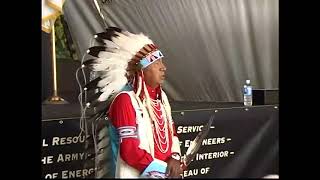
good morning everybody how are you good good good welcome to core of Discovery 2 and the tent of many voices we're a traveling exhibit been traveling for over 2 years have another year to go we'll finish up in 2006 September 2006 so we have a full year and when we started over two years ago in Montello Virginia one of our first presenters was Mr Chief Snider he's here with you today he's here from the shinuk tribe he's the honorary chief of the shook peoples from the mouth of the Columbia River so let's give him a nice warm welcome nice introduction are you everyone as she said I am the fourth great grandson of Chief con Conley who met Lewis and Clark at the mouth of the Columbia in 1805 I was going to ask this question I thought I was going to be talking to third graders but you guys look like you're about Juniors from Kendrick high is that correct okay I'm all right on there I went out and checked the buses says Hey to see where you guys were from so I'm I'm not too familiar with this area but it's wonderful to see you we're here to uh actually celebrate the survival of the Indian tribes on the trail and we're here to commemorate Lewis and Clark on our Expedition I had to be part of that in lewison about five four or five years ago when uh people kept saying we're going to celebrate Lewis and Clark we're going to celebrate this and that and I took offense to that and said well I think you want to use another word because the Indians are not going to celebrate the loss of their land and the loss of their country and the loss of their culture and so what happened at that very meeting they decided to impude all unrecognized tribes on the trail at that time they had about 15 tribes and they went on and then right now we're over 60 tribes on the trail recognized or Not by the United States government but don't get me wrong we Indians who are not recognized like the monans at the beginning of the tra the Chinooks at the end of the trail we still recognize the United States government so I don't want that to be confused now I wanted to ask you how many of you people have Indian blood 1 2 3 4 I've talked to some schools for almost 80% of the people of the kids uh thought they had Indian blood but they didn't know how much they didn't know uh what kind what tribe they belong to or anything else so I always encourage you if you do have some Indian blood because of college scholarships money and things that might be available to you to find out what your ancestry is and be very proud of your heritage when I was growing up my mother told me don't tell anybody you're part Indian because of discrimination other people have that same problem America today we think we're perfect but we're not so as I grew up I started catching passes Oregon State University I was floating feather and I was the only one on the stage that wasn't quite I was the only Indian we didn't have uh the black people playing football at that time and so I was kind of an odity but I want to tell you something now after working with the uh circle of tribal advisors nationally working with myin out of New York on the Confluence projects and visiting schools visiting teachers and everything else being part Indian is a plus not to say that if you're not Indian you shouldn't be proud of your heritage if you're sweet go for it I always say that okay I just wonder um you know in your school have you kids uh been studying anything about lisis and Clark If you have raise your hands couple of you or some of you so you know the whole story so probably I'm just up here for nothing today but I I want to tell you some of the Indian story how many of you know how to speak uh some chinuk language or some Indian language you know any words well let me tell you how to how to say a couple by the way I want to recognize one of my great friends Rocky Rockwell he's also known as uh Captain Clark uh really a lieutenant but we'll call him Captain CLK anyway I I'm going to do this in three syllables for you the first one is CLA second one is how the third one is y and I goes CL how y that means in chinuk language hello or goodbye much like aloa is in Hawaii Hello Goodbye it's just a greeting that you do on three 1 2 3 say it again whenever you see me on the road wandering around your bus or anything say how you Chief I know what you're talking about okay in the old days we had a situation where uh president Jefferson wanted to explore the West he thought it might be good to explore the Missouri River and see if I went all the way across America and I any of the tributaries and who I think what was interested in was having some Commerce but the thing that happened was is that he'd never been on the other side of alany mountains we had Trappers back here mostly Franks and so forth that were wandering around some of these tribes but he hadn't been there at all so he got leis and Clark and they got 30 31 men or whatever and and uh go decided to go across the country and see if they could find a passageway mainly for uh Commerce and or get the land so to speak uh so he was in uh making a deal with some people in Europe any of you know who uh we bought the Louisiana Purchase from anybody know he knows we bought it from the French you can imagine it all start a guy named Napoleon bonapart you ever heard of him about 18 cents per square mile he didn't know how Jefferson didn't know what he was buying he didn't know how many trees uh who was out there he knew there were some Indians because the monan nation was only 40 miles away he knew there were Indians out there but he didn't know whether they're going to be friendly or Not by listening to Trappers he felt that they were going to be okay and that they would let him through well after they bought the Louisiana Purchase they doubled the size of America and did you know so at that time there were more Indians living on the west than there were white men living on the Atlantic coast can you imagine that they're more of a population of course they only been there for 10,000 years as everybody knows about they didn't come from any place great spirit the Creator put them there at the beginning of time the mountains and The Valleys plants and the animals and the lifegiving rivers no matter what relig you belong to or which one you pray for I use the word creator that encompasses anybody that's higher than all of us or the great spirit so in saying I might use that term uh throughout my discourse well they finally got that sold and they bought and they so he's added on the Louisiana Purchase well let's start out well can't go because it's not finalized yet and the Spanish and the frch AR going to let you through so they started at Wood River and then when everything got done they went into St Louis and then on the way and my text today is how are they treated by the Indians and what part did the Indians play in their Journey Across America and they hadn't hardly got out and they run into the kapoo most of you remember the kapoo joy juice whatever that was in that strip uh maybe you don't but I know you do anyway kick the food geers they uh they traded uh some supplies with them begin the trading already for three deer and then they moved on but as she mentioned in the last one we started running into some Indians that weren't quite so friendly sha e were friendly they let them to but we got to uh the yank and Sue the yank and Sue oh they greeted him came out wanted to carry him up into the village on a carrier with skins and of course they'd seen some Frenchmen up this time so everything was great and they were getting along fine they wanted to tell them about the great white father back there who now owned the land and I'm not going to get into that but they didn't understand that at all this was their land it wasn't really their land they belonged to the land the land was not owned by anyone so that was fine they parted and they say hey these Indians are okay we're going to make it fine well they moved on a little further and I ran into back black Buffalo of the Teton suit and he wasn't going to let them through that's his River that's his tribe's uh place and he's not going to let them anybody through there unless he wanted and then he wanted everything from him he wanted cigarettes he wanted liquor he wanted everything else they had to trade and so they finally got held up and as she mentioned last class it was a confrontation and it got down to the place where they were hanging on to the Rope on the boat and they weren't going to let him go in the kill booat and dark he started to draw his sword and they had their guns up on the ship starting the train and these Indians after a lot of two or three different kinds of scuffles they wanted to show let their women come aboard and see what kbo was like and they wanted to spend the night on the boat but finally they got through all that nobody got killed nobody got injured so what happened then they just let them go on there was no to Fe they thought maybe that anybody coming down their river is going to have to pay that was their River and nobody else could go unless they said so so wow we got through that pass and on down the river to other tribes that they met there were over 60 tribes kind of on the trail I think it was 58 in my recollection and they got to the mandad Village I'm just hitting the high spots for you now because there other little tribes along the way but the M Dan was a very harsh winter the snow is put up to here it was freezing they built their Court over here the mandans were over here there also the raras and the Hiatus and they're all one big family and uh those three tribes were looking for Buffalo and there's nothing to be found so they had a big buffalo dance and the core decided to pits right in with them they got in on the dancing and they were out there some of these Indians didn't have shoes and they're snow clear up their knees but finally they did find some Buffalo they did survive that harsh winter and it was the longest that they had stayed in any one spot up to that point and it turned out there's one of the two longest stays they had on the whole trip the other being at Fort plat at the end of the trail well there was Chicago there was saak joia and it depends on who you're talking to how you want to pronounce it I always said saaka because in Oregon Washington we have statues and this A J then I go back and I talk to Amy moset as a man Dan and she'll say it's with a G it's sh not sack we so like she said in her last performance if I say it one way one time and I say it another way next time you'll have to excuse me because I've been using both on the trail the most famous woman in American history there are more statues of Sakia Chicago than any other woman in America history one of the most famous women in all the world and here's a young teenage girl with a baby P John Baptist shardo and the dad taken along as guides and interpreters well they made it to that Winter thank God they got to their command an told them okay you're going down the road you're going to the river's going to do this the river's going to do that one of these days you're going to run into this big hurling waterfalls and they're probably talking about Great Falls as we know it today it's it's changed a lot since those days well that's okay we'll get around the falls and in a couple of days and be on our way that was about 3 weeks I've been there I know what it's like I went up to the Buffalo Jump you know where they ran the Buffalo off the hill and uh and the Buffalo would die and they go down and they pick them up that was they just her them out over the sink and the gummy substance on the ground is so sticky that when you pick your feet up you got about that much mud on the bottom of your shoe and they had storms and the rivulets and they almost got drowned in a couple of them but you know that was the home of the the uh Grant and the uh asons some of those tribes and back and forth they finally discovered their way and they gave them directions all this time when we're making our move we're getting directions from the Indians Chicago we is trying to interpret the Frenchmen are trying to interpret because there have been some French Trappers in there some of these Indians have never seen a white person some of these Indians had seen a couple there were a couple that had married Indians and were living there and were used as interpreters to help them guide their way CU it didn't know where that Missouri was going and finally they did they kept going and going and uh they got into a country where the Missouri just petered out and this on the way up they didn't know whether to go to this River or that River or follow up this way and they finally picked the right direction they got down there and so wait a minute you see a couple Indians out here they see us they run back to camp they're scared but we finally get into Camp did some trading proved that they were friends and who is there but Caya cay was saia's brother so they're brother sister and her sister also was there and SC remember was captured by the Hadas earlier uh 3 or four years years earlier and some of her relatives had been killed and that captured and so she'd come back and she now she's okay and uh they decided to because they were friends Chicago we had decided to keep on going with them and so they went on they're heading for what they're heading for the bot mountains and they had to get across I was talking to Kevin the other day he says he's gone over with a helicopter he says they took the only route that was available by helicopter looking down on it and getting through the mountains and getting to this place right here it's the only way through the L path that they could have made and they had guides to help and there they were on top of the mountains with snow they had to kill their horses to have something to eat there was no food and so they finally made it over the way Perry and you guys had a big celebration over there yesterday I wish I could have seen it and finally into this country here thees Pier well thez Pierce hey look at these guys what are we going to do with them look at all those goods they have well let's have a counsel they had a counsel and they said shall we kill them and take all those for positions they have guns they have everything medicine everything and ammunition well there was a lady there named wat kuis who is very famous and she's in all the history books and what kise says I've been captured like Chicago Leah had been and I've been out living with the heights for a while and they're good people don't kill them don't take their stuff but do them no harm and that's the by word now in this people when I talk to Otis half moon when I talk to Alan pink and I talk to carag as in Miss Pi some of my ramblings they say well maybe the nest Pierce should have taken everything America would be quite different today if that had been the case anyway then what we going going to do we're down the Clear Water you finally got across the bitter Ro down the clear water into the Snake River and then down to uh Tri Cities and I just been lucky enough to work with Mile in on the Le Park Trail remember sheisa gal did the uh Vietnam Wall in Washington DC and we're doing uh seven projects on the rivers $22 million in the last two years all I have to do is get talk and we go to places and pick up money we picked up $18 million the last two years so when you get to Portland you folks you come down for these other events come look what we're doing on the on the Louis clar table of the conference here well it's all fine we got to the mouth of the uh Snake River now and who's there they're Indians there of course well let's take a little trip up to Columbia now we know that we're getting someplace it's not going to be long before we're going to be down at the mouth of the columia cuz they had known that the ships had come in in fact 28 ships had come into the river already and had been trading with a chook Indian at them up but the UPR River Chinooks had not seen a white man they' heard about so they run into the wallala wal in they danc with the Walla walas had a good time saw the wanon the bills and the yamas and they came back and said well that's not the way to go but we've met some real friendly animal and everybody's got these fish dried salmon we part soon we got something to eat but we're not too sure that we're going to eat this every day but do you have some dog we like the dog better and so I think Park he didn't like the dog too much but Lewis he did but all the guys just waiting for something like geese or whatever fevers whatever they could find at that point and they decided to go down the river and maybe you've heard the Umatilla Confederate tribes of the Umatilla were there and before they got the SL of CLS and I got five okay so I'm going to run run through this quick uh at the mouth there I saw an Indian with a s coat blue and red sailor jacket they saw s Indians with beads white man's beads and so uh now we're getting close then there's cilo Falls and here are these Indians with flat heads remember Indians are not all one big monolithic group mandans are 6'5 Gerard Baker and tex Hall is 67 I say to them what part of white person are you we're not white at all we're full blooded Indians and they're that tall they're seeing a chook now that's 5' five wearing something wood eating salmon not chasing Buffalo not riding horses doing canoes and these Chinook SE them coming and they they started ringing their hands and crying out loud saying we're all going to be killed oh there Chicago Le and there's P so if you have a woman and a baby with your war party it's not a war part it's a traveling party so now the chinups had discovered Le part this point as you mentioned it's just the other way around we've been here for 10,000 years and and by the way we did find a basket that was 16,000 years old made of Willow twigs and put together with pine pits when they were doing the dams in Oregon 16 that's before the Brett's floods remember the Brett's floods when they were the top of our buildings in P so on down the river as swall Falls they were hoping that when they went through it was only 40 yard right from here that green can up there and the Indians had been fishing there dip Nets and things like that so what happened there was that the Indians would hope that these canoes would be turned upside down and they'd go and take whatever lands on the shore cuz stepen Ambrose who is one of my friends back east and when he wrote in his book he said that the S Indians were thieves but not really anything left alone was theirs for the tapable canoes hatchets fishing stuff medicine whatever they it isn't that they borrowed it but he like to say that they were they were stealing it that isn't the way the indans fell about it so on down the river Vancouver was sco show toes and Sue Vancouver and down to the mouth of Columbia that CH Indian tribe at the end my fourth great grandfather Chief K you see his picture in Charles Russell's painting greeing the Sakia doing hand signals for the Chinooks and what I'm saying today I'm giving you the Indian viewpoint but I'll tell you something there were no words spoken Chicago we could not interpret that chuk gutal language no way and so the painting shows them standing up in the canoe waving at each other here was stormy the trees were falling they had gone back into a niche and and the chooks gave them two or three salmon and I'm going to skip over some stuff because now they went down to the tree and carved the name in the tree they went down to the whale and saw where the whale was then they came back and they decided where are we going to stay for the winter and they took a boat York got the boat Chicago WEA got the boat first that time and decided to stay at Fort plet where the more El and they could see The Ships coming in but leave you with this while they there what a paradox it was that while they were there the ship lyia came into Port of Baker's day and the chuks told them they had left and gone back so they missed the bus ride home so the rest of the story is that you know what happened the white man you mentioned that there one man died of appendicitis on the trail then there were three men who died because they killed two black feet uh pan Indians who were stealing their guns and their horses and I'm talking to a black man in Portland this last year not true at all he says the one the field stabbed died the one that Lewis shot while he was running away recovered and didn't die so not one man died on the trail not three men died on the trail but two men died on the trail so I'll leave you with that I say cop from my heart Kaka so it but I want to leave you with this seven chinuk directions never forget them they're East and there's West there's North and there's South there's up and there's down there's a direction of your Hearts Kaka I'm glad you could come thank you Chief Snider and thank you for coming um before we let you take off at the top of the next hour at 11:30 we will be showing a film across the Divide for e