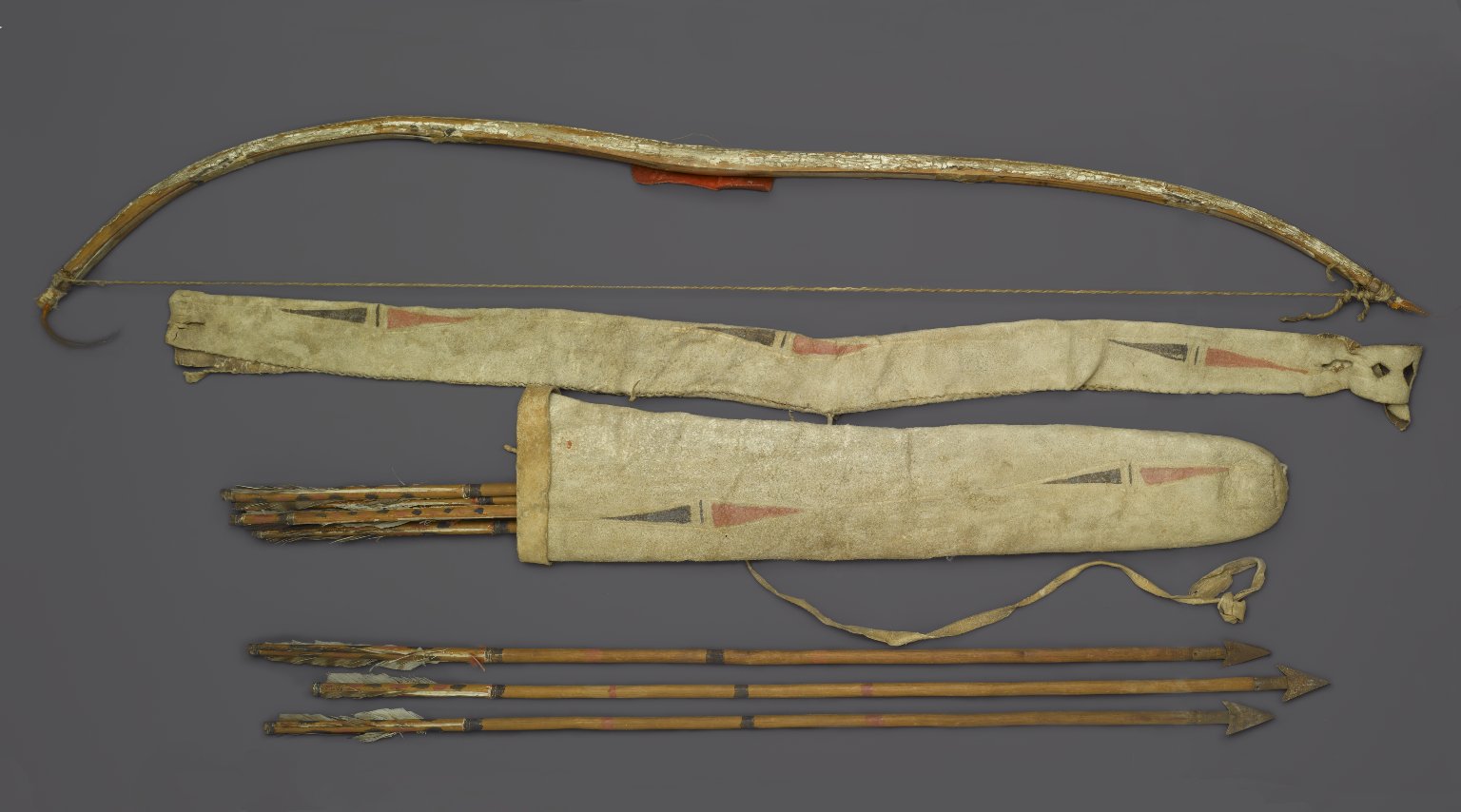
Plains Indian Bow and Arrows
The bow and arrow remained the primary ranged weapon of most Native American nations encountered by the Lewis and Clark Expedition, even as trade guns became increasingly available. The short, powerful horse bows of the Plains nations were designed for mounted combat and could launch arrows with devastating force at close range — skilled warriors could fire multiple arrows in the time it took to reload a single-shot flintlock rifle. Lewis noted the effectiveness of Native archery in his journal, observing that the Shoshone and other mountain peoples were exceptionally skilled bowmen. Arrow points varied from traditional flint, obsidian, and bone to increasingly common iron points made from barrel hoops and other trade metal. The expedition collected numerous bows and arrows, many of which were sent to Jefferson.
Specifications
Where It Was Used
Journal entries mentioning this weapon along the expedition route.
Showing 6 of 56 journal entries that mention this weapon.