26 Items
Weapons & Arms
Firearms, edged weapons, Native American arms, and diplomatic items carried and encountered during the Lewis and Clark Expedition.
No weapons match your search.
Corps Firearms (11)

1792 Contract Rifle (Expedition Primary Rifle)
The primary long arm of the Corps of Discovery was not, as long believed, the Model 1803 Harpers Ferry Rifle,...
Blunderbusses (Pirogue-Mounted)
Two blunderbusses were mounted on swivel pivots on the sterns of the two pirogues (large open boats) that accompanied the...
Clark's Elegant Fusil
Clark brought what the expedition journals describe as "an elegant fusil" — a lightweight gentleman's sporting smoothbore. A fusil (from...
Clark's Squirrel Rifle
William Clark brought a personal small-caliber rifle of .36 caliber, commonly known as a "squirrel rifle." These were light, accurate...

Girandoni Air Rifle
The Girandoni air rifle was arguably the most significant weapon of the entire expedition, serving more as a diplomatic instrument...

Keelboat Swivel Gun
A small naval cannon mounted on a swivel in the bow of the keelboat (the 55-foot vessel that carried the...

Kentucky/Pennsylvania Long Rifle
Several members of the Corps of Discovery carried personal Kentucky (or Pennsylvania) long rifles, the iconic frontier weapon of early...
Lewis's Fowling Piece
Lewis brought a personal fowling piece — an extra-long smoothbore shoulder gun used primarily for bird hunting. Fowlers were common...
Model 1795 Springfield Musket
The Model 1795 was the first standard U.S. military musket, closely copied from the French Charleville Model 1763/66 that had...

Model 1799 Horseman's Pistols
In 1803, Lewis requisitioned a pair of horse pistols from the Schuylkill Arsenal in Philadelphia. These were large-caliber, single-shot flintlock...
Pocket Pistols with Secret Triggers
On May 21, 1803, Lewis purchased a pair of pocket pistols from Robert Barnhill's gun shop at 63 North Second...
Corps Edged Weapons (5)
Battle Axes (Shields's Fort Mandan Manufacture)
During the winter of 1804-1805 at Fort Mandan, expedition blacksmith John Shields and fellow smith Alexander Willard devised an ingenious...

Espontoon (Spontoon)
The espontoon was a traditional officer's polearm, a descendant of the pike, carried as both a symbol of rank and...
Officers' Swords
Both Lewis and Clark carried swords as commissioned officers, though the exact pattern each carried is unknown. The 1787 U.S....

Scalping Knife / Hunting Knife
Every member of the Corps of Discovery carried a large knife that served as an all-purpose tool for butchering game,...
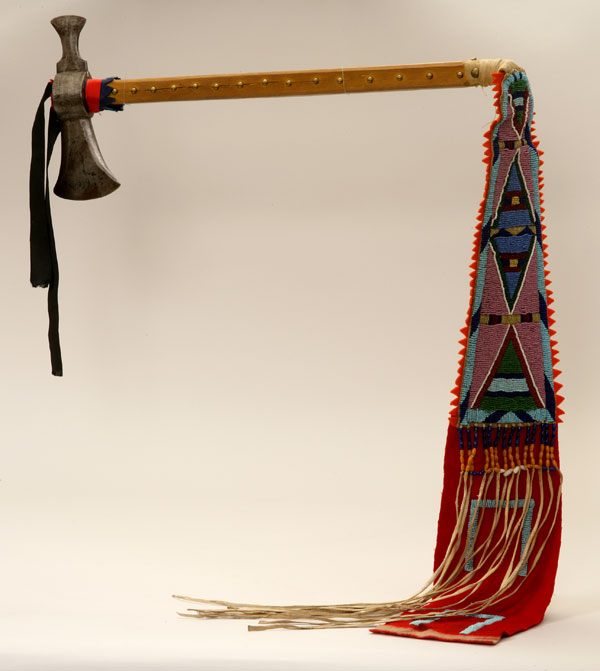
Tomahawk (Trade and Military)
Tomahawks were among the most ubiquitous and versatile tools carried by the Corps of Discovery. Each member was issued a...
Native American Weapons (7)

Buffalo Hide Shield
Buffalo hide shields were among the most important defensive weapons and spiritual objects of the Plains nations. Made from the...

Coup Stick
The coup stick was a ceremonial weapon unique to Plains Indian warfare, used to "count coup" — the act of...

Lance / War Spear
War lances were prestige weapons carried by prominent warriors and military society leaders among the Plains nations. Unlike bows and...
Native Tomahawks (Traditional and Trade)
The tomahawk existed in two broad categories during the Lewis and Clark era: traditional stone-headed versions (a shaped stone lashed...

Northwest Trade Gun (Fusil)
By the time of the Lewis and Clark Expedition, Northwest trade guns were the most common firearms among Native peoples...
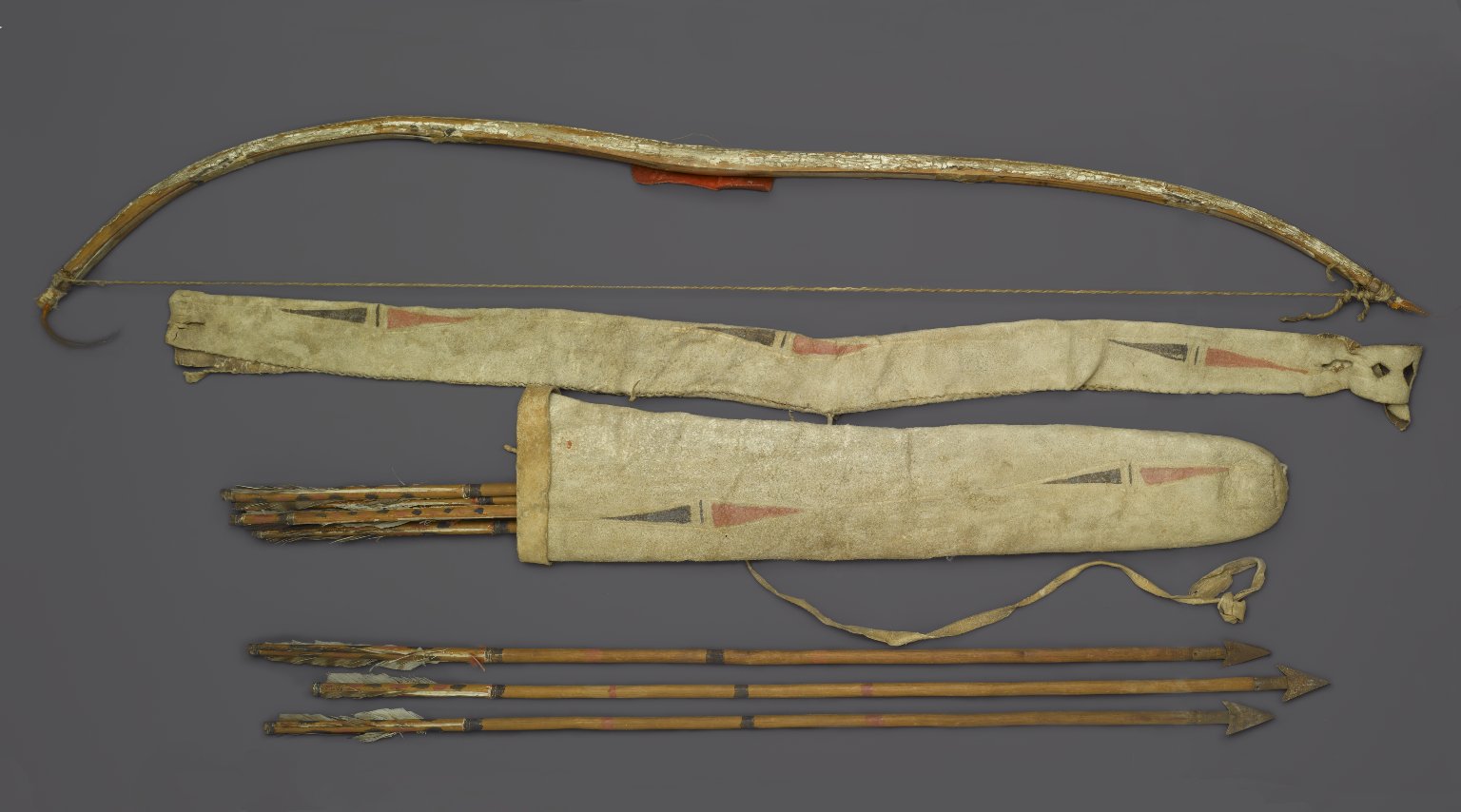
Plains Indian Bow and Arrows
The bow and arrow remained the primary ranged weapon of most Native American nations encountered by the Lewis and Clark...

Plains Indian War Club
War clubs were among the most important weapons and status symbols of the Northern Plains nations encountered by the Lewis...